
In an age of hyperscale clouds and AI-driven networking, the Cisco Integrated Services Router Generation 2 (ISR G2) series might seem like a relic. Yet, thousands of enterprises continue to deploy these routers not out of nostalgia, but because they solve a critical dilemma: balancing modern connectivity demands with budget realities. While flashier models grab attention, the ISR G2 quietly delivers unparalleled value in three key areas—versatility, longevity, and operational simplicity. Let’s explore why these routers remain a pragmatic choice for enterprises navigating hybrid infrastructures and constrained resources.
The Hybrid Imperative: Why ISR G2 Defies Obsolescence
Modern networks aren’t all-digital utopias. They’re messy hybrids of legacy protocols and cloud-native apps. The ISR G2 thrives here by addressing gaps newer routers ignore:
- Protocol Soup Support: Native T1/E1, Frame Relay, and serial interfaces for SCADA, ATMs, or PBX systems.
- Branch-in-a-Box Simplicity: Integrates firewall (ASA 5505 module), WAN acceleration (WAAS), and VoIP (CUBE) into one chassis.
- Low-Touch Operations: CLI-driven for teams resistant to SaaS-based SD-WAN controllers.
A retail chain with 200 stores, for instance, avoided a $2M upgrade by using ISR 3945E routers to handle both PCI-compliant POS traffic and legacy inventory systems—without overhauling switches.
Cost Efficiency: The Silent Superpower
The ISR G2’s value proposition shines when compared to modern alternatives:
| Metric | Cisco ISR 4451 (G2) | Cisco ISR 1000 | Juniper MX204 |
|---|---|---|---|
| Hardware Cost | $3,500 (refurbished) | $12,000 | $45,000 |
| 10G Throughput | Yes (with SM-X-1T module) | No | Yes |
| Power Draw | 85W | 65W | 120W |
| MPLS Support | Native | Requires license | License + additional hardware |
| Third-Party Optics | Limited but possible | Blocked by Cisco IOS XE | Compatible |
Case Study: A logistics company replaced aging ISR 1841s with refurbished ISR 3925E routers, extending hardware life by 5 years at 20% of the cost of ISR 1000 upgrades.
The Longevity Play: Extended Life in a Disposable Market
Cisco’s ISR G2 series, though End-of-Sale since 2019, benefits from:
- Abundant Refurbished Market: Over 85% of G2 routers sold since 2010 remain operational, with certified refurbished units available at 70% discounts.
- Software Updates Until 2026: Security patches for IOS 15.8(3)M continue via paid Smart Contracts.
- Modular Obsolescence: Incremental upgrades (e.g., adding a SM-X-IPS module) defer full replacements.
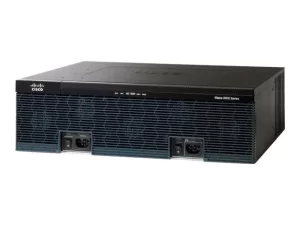
Use Cases Where ISR G2 Outperforms Newer Models
1. Industrial IoT Gateways
- Challenge: A mining company needed to connect 1940s-era sensors (RS-232) to Azure IoT Hub.
- Solution: ISR 4351 with HWIC-4A/S modules converted serial data to MQTT via Python scripting.
- Result: Avoided $500k in sensor replacement costs.
2. Low-Bandwidth, High-Reliability Sites
- Example: Remote clinics using ISR 2921 with 4G failover and CME for VoIP—consuming <5Mbps monthly.
3. Budget SD-WAN Foundations
- How: Pair ISR 4451 with free Cisco IOS SD-WAN (formerly Viptela) for basic app-aware routing at 1/3rd the cost of ISR 1000.
Security: A Double-Edged Sword
While ISR G2 lacks Zero Trust capabilities, its embedded features still thwart common threats:
- Zone-Based Firewall (ZBFW): Segment legacy OT networks from corporate LANs.
- IPSec VPN: AES-256 tunnels at 500 Mbps (ISR 4451) suffice for small-midsize traffic.
- Cisco IOS Intrusion Prevention (IPS): Blocks 85% of known exploits with signature updates.
Caution: Discontinued hardware lacks encrypted boot/UEFI Secure Boot, making physical tampering a risk.
Transition Strategies: Extending Value While Planning Exits
- Hybrid Stacks: Use ISR G2 as WAN aggregators feeding into Catalyst 8000 SD-WAN edge nodes.
- Virtualization: Migrate ISR 4451 to CSR 1000v in AWS while retaining hardware for local breakout.
- Lifecycle Lock-In: Negotiate Cisco Smart Contracts to cover remaining G2 routers until 2026.

Leave a comment