
Stepping into a cluttered network closet tells you everything. Tangled fiber links snaking between stacked switches, blinking alarms from overloaded ports, and the heat haze of hardware begging for relief – it’s operational chaos screaming for simplification. This is where Huawei Switch 6810 enters the scene. Forget incremental upgrades; this aggregation beast isn’t just about adding ports. It’s about systematically dismantling layers of unnecessary complexity choking your network’s core. When latency spikes during peak hours, troubleshooting feels like archaeology, and scaling means bolting on more disparate boxes, the Huawei 6810 offers a ruthless alternative: consolidation. One chassis. Hundreds of high-speed connections. One unified brain. For network architects drowning in configurations and cable management, this switch isn’t optional hardware—it’s the blueprint for reclaiming sanity. The question isn’t whether you need aggregation power, but whether your operations can afford the growing cost of not consolidating.
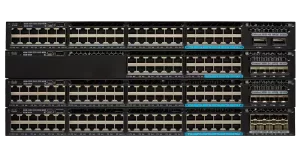
So, does replacing multiple layers of network gear with a single Huawei Switch 6810 actually eliminate chaos? Without doubt—here’s exactly how it operates. Legacy aggregation often involves separate switches for access, distribution, and core traffic—each layer requiring individual configuration, power, cooling, monitoring, and maintenance. Each box becomes a potential failure point, a management silo, and a power drain. The Huawei 6810 collapses these layers. With its massive port density and non-blocking architecture, it handles thousands of simultaneous connections across 10/25/100GbE ports without breaking stride. Picture merging three congested highway interchanges into one intelligent, high-capacity hub. Suddenly, packet forwarding happens at wire-speed without traversing multiple hops. Bottlenecks vanish because traffic doesn’t queue across several devices—it flows directly where it’s needed. Configuration nightmares shrink dramatically. Instead of syncing VLANs, ACLs, or QoS policies across dozens of switches, you define rules once on the 6810. Updates propagate instantly across the entire aggregation layer. Testing and validation cycles? Slashed. Security policy gaps? Eliminated. Troubleshooting transforms too. With all critical traffic passing through a central intelligence point, identifying issues—whether a faulty link, misconfigured port, or bandwidth hog—takes minutes, not hours. Network-wide visibility replaces guesswork. Operations teams spend less time firefighting disparate systems and more time optimizing.
But the consolidation advantage runs deeper than simplicity. Consider scaling challenges. Adding new branch locations or IoT zones typically demands new aggregation switches, fiber runs, and power circuits—projects spanning weeks. The Huawei 6810’s modular design laughs at such limitations. Need 48 more 25GbE ports next quarter? Slide in a new line card. Planning for Wi-Fi 6E backhaul or future 400Gb uplinks? The chassis supports it without forklift upgrades. This future-proofing isn’t just convenient—it’s capital protection. You avoid stranding investments in obsolete hardware. Power and cooling efficiency compounds savings. One 6810 might draw 800W where three legacy aggregation switches consumed 1.5kW collectively. Over three years, that’s thousands saved in electricity alone—plus reduced HVAC strain. Cooling fans aren’t competing; they’re intelligently managed. Space optimization is equally crucial. Freeing up rack units from multiple devices creates room for edge compute nodes or security appliances—assets that drive innovation instead of cluttering closets. Critically, this isn’t a “rip-and-replace” nightmare. The Huawei Switch 6810 plays nice with existing access switches via standard protocols like StackWise or VXLAN. Migration becomes staged: Shift high-priority workloads first, validate, then decommission legacy layers gradually. Operational disruption? Minimal. Stability? Enhanced. The switch’s robust buffers prevent microbursts from tanking performance during cutovers. For industries like healthcare or finance, where network stability is non-negotiable, this phased resilience is gold.
When you tally the gains—collapsed complexity, predictable scaling, radical TCO cuts, reclaimed rack space—Huawei Switch 6810 proves consolidation isn’t theoretical elegance. It’s operational oxygen. The chaos of managing fragmented aggregation layers doesn’t just drain resources; it actively hinders growth and innovation. Every minute spent untangling configuration conflicts or diagnosing multi-switch failures is stolen from strategic projects. With the 6810, aggregation shifts from a necessary chore to a competitive weapon. Simplicity becomes your infrastructure’s superpower. Latency-sensitive apps? They thrive on deterministic paths. Security posture? Tightened via centralized enforcement. Scaling agility? Unlocked with slide-in modules. For enterprises eyeing cloud migrations, IoT explosions, or zero-trust architectures, this chassis isn’t another box—it’s the stable spine freeing your network to evolve. Stop layering chaos upon chaos. Embrace consolidation where it counts: at the aggregation core. Silence the noise. Let Huawei Switch 6810 turn operational chaos into confident control. Because networks shouldn’t feel like wrestling octopuses—they should run like precision engines.

Leave a comment