
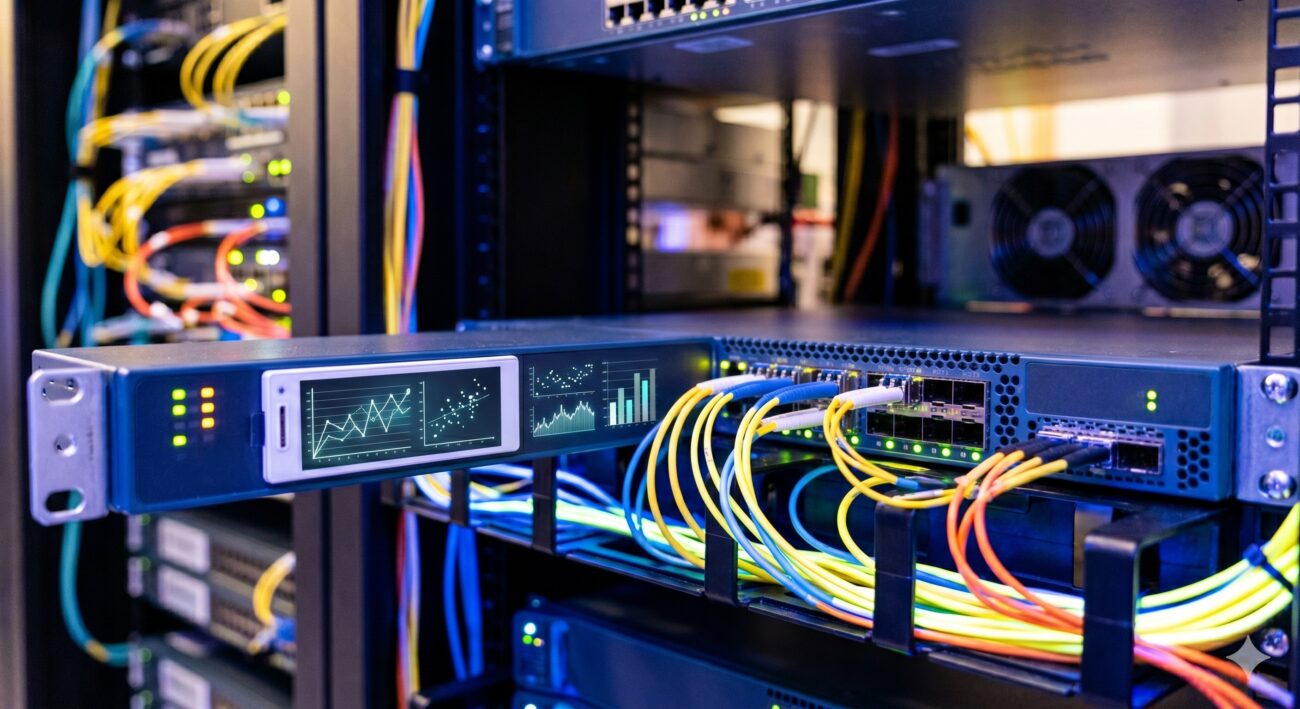
Executive Summary: The Economic Reality of Fixed Configuration Switching
In the current telecom hardware landscape, the fixed configuration switch price point is often a primary driver for enterprise architecture decisions. However, focusing solely on initial CapEx ignores the nuanced Total Cost of Ownership (TCO) that includes power efficiency (as low as 0.3 Watts per Gbps), Mean Time Between Failures (MTBF exceeding 500,000 hours), and forwarding latency (sub-microsecond on modern ASICs). This guide dissects the architectural trade-offs, industry standards compliance (IEEE 802.3bz, ITU-T G.8032), and real-world deployment costs of fixed form-factor switches versus modular chassis systems.

Core Architecture vs. Upfront Cost: The ASIC Decision
The primary differentiator affecting fixed configuration switch price is the underlying forwarding architecture. Unlike modular chassis that rely on fabric cards, fixed switches integrate the switching fabric, CPU, and port PHYs onto a single PCB. Entry-level units utilize merchant silicon (e.g., Broadcom Trident or Marvel Prestera) which drives costs down to sub-$100 per port for Gigabit speeds. Conversely, high-density 100GbE/400GbE fixed switches employ application-specific integrated circuits (ASICs) with built-in pipeline for line-rate forwarding.
Silicon Cost Drivers
- Buffer Architecture: Shared vs. ingress-dynamic buffers impact latency consistency (jitter) under microbursts.
- MACsec Support: Hardware encryption at Layer 2 adds $15-$30 per port in BOM cost.
- Forwarding Table Sizes: L3 IPv4 routes (e.g., 32k vs 128k entries) dictate enterprise vs. carrier-grade pricing.
| Key Parameter | Technical Specification & Cost Impact | |||||||||||||||||||||||||||||||||||||||||||||||||||||||||||||
|---|---|---|---|---|---|---|---|---|---|---|---|---|---|---|---|---|---|---|---|---|---|---|---|---|---|---|---|---|---|---|---|---|---|---|---|---|---|---|---|---|---|---|---|---|---|---|---|---|---|---|---|---|---|---|---|---|---|---|---|---|---|---|
| Switching Capacity (Non-blocking) | 88 Gbps to 3.2 Tbps; correlates directly with silicon cost tier | |||||||||||||||||||||||||||||||||||||||||||||||||||||||||||||
| Forwarding Rate (Mpps) | 66 Mpps (1G) to 4 Bpps (400G); higher rates demand larger TCAM | |||||||||||||||||||||||||||||||||||||||||||||||||||||||||||||
| L | a | t | e | n | c | y | ( | C | u | t | – | t | h | r | o | u | g | h | ) | |||||||||||||||||||||||||||||||||||||||||||
| 3 | 2 | 0 | n | s | t | o | 3 | µ | s | ; | s | u | b | – | 1 | µ | s | a | d | d | s | 2 | 5 | % | t | o | A | S | I | C | c | o | s | t | ||||||||||||||||||||||||||||
| M | T | B | F | ( | T | e | l | c | o | r | d | i | a | S | R | – | 3 | 3 | 2 | ) | ||||||||||||||||||||||||||||||||||||||||||
| 2 | 5 | 0 | , | 0 | 0 | 0 | t | o | 7 | 5 | 0 | , | 0 | 0 | 0 | h | o | u | r | s | ; | f | a | n | – | l | e | s | s | d | e | s | i | g | n | s | i | n | c | r | e | a | s | e | r | e | l | i | a | b | i | l | i | t | y | |||||||
| P | o | w | e | r | E | f | f | i | c | i | e | n | c | y | ( | W | a | t | t | s | / | G | b | p | s | ) | ||||||||||||||||||||||||||||||||||||
| 0 | . | 1 | 5 | W | ( | c | o | p | p | e | r | 1 | G | ) | t | o | 1 | . | 8 | W | ( | o | p | t | i | c | a | l | 4 | 0 | 0 | G | ) | ; | i | m | p | a | c | t | s | 5 | – | y | e | a | r | O | p | E | x |
Deployment Scenario Analysis: Where Fixed Form-Factor Wins
The true value equation for fixed configuration switch price emerges at the network edge and collapsed core topologies. For Top-of-Rack (ToR) in hyperconverged infrastructure, the deterministic 1U height and front-to-back airflow of fixed switches reduce cooling costs by up to 18% compared to equivalent modular line cards. Data from the Uptime Institute indicates that for port densities under 48 x 25GbE, fixed switches yield a 37% lower OpEx over 5 years due to simplified spares management and faster Mean Time to Repair (MTTR).

Total Cost of Ownership (TCO) Model: CapEx vs. OpEx
Network architects must evaluate three layers: Acquisition cost (hardware + NOS licensing), Consumption cost (power/cooling per active port), and Replacement cost. Fixed switches typically consume 45-80 watts for a 48-port PoE+ model, translating to annual energy costs of $120-$210 at $0.12/kWh. Over a 7-year lifecycle, energy can represent 31% of the total fixed configuration switch price paid. Environmentally, RoHS compliance ensures recyclability, but the lack of line-card hot-swap means entire unit replacement for hardware failure—a factor priced into insurance and maintenance SLAs.
Interoperability & Standards Compliance
Enterprise procurement must verify IEEE 802.1Qbb (Priority Flow Control) and 802.1Qaz (Enhanced Transmission Selection) for converged networks. Fixed switches in the sub-$5k range often implement shallow buffers (1-4MB) causing tail drops on iSCSI traffic; this necessitates tuning PFC thresholds. For carrier-grade deployments, confirm support for ITU-T Y.1731 performance monitoring and Ethernet OAM (802.1ag). Despite fixed form factor, modern units achieve VRRP or MLAG peer links—a software feature that carries zero hardware cost premium but requires dual units, doubling base fixed configuration switch price.
Conclusion: Vendor Selection & 3-Year Roadmap
While fixed configuration switch price ranges from $200 (unmanaged 8-port) to $25,000 (48-port 100GbE PTP grandmaster), the intelligent purchase aligns port speed, buffer depth, and programmability (e.g., P4 pipelines) with application requirements. For greenfield campuses, fixed switching provides the highest price-to-performance ratio, especially when leveraging disaggregated NOS options (SONiC, Pica8) to avoid vendor lock-in. Validate MTBF datasheets and request thermal imaging from vendors—a 10°C reduction in operating temperature extends electrolytic capacitor life by 50%, directly impacting long-term TCO.

Leave a comment