
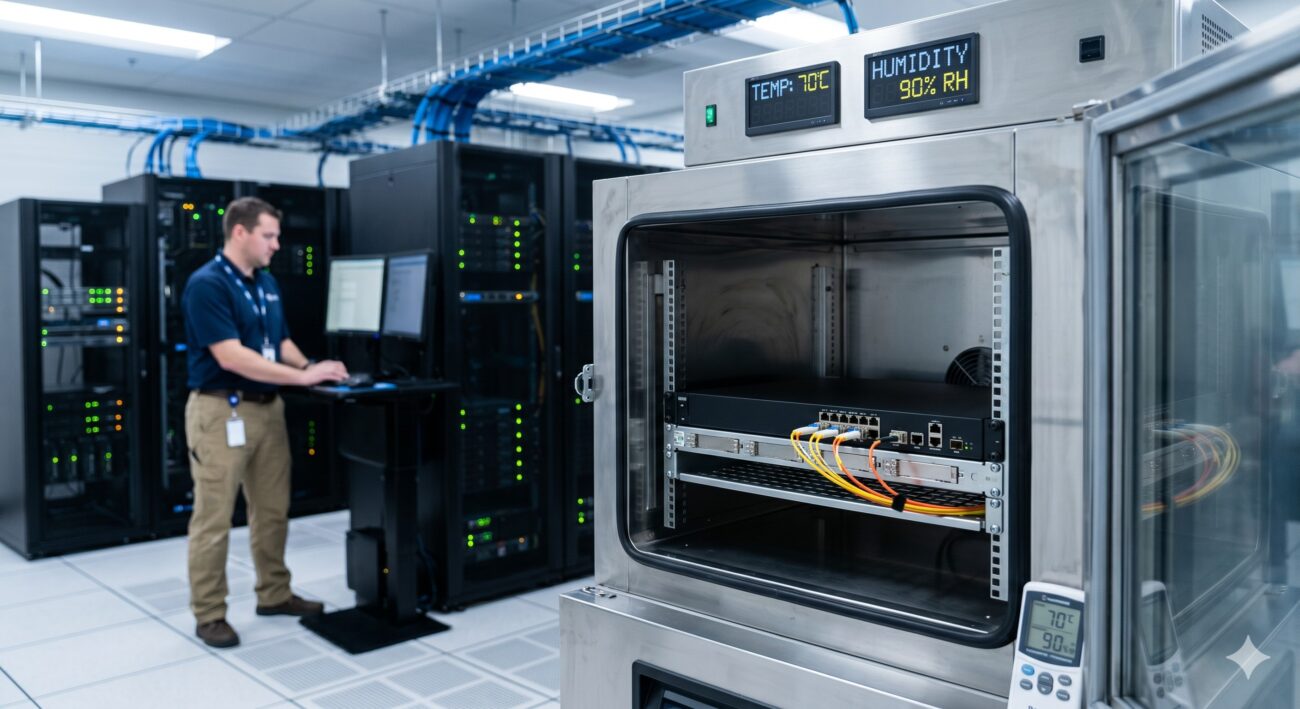
Overview & Thematic Scope
This FAQ addresses the most critical technical and procurement questions surrounding storage temperature and humidity tolerances for B2B telecom hardware (routers, switches, transceivers, base stations). Proper environmental storage prevents corrosion, solder joint failure, and premature component aging. The following answers are engineered to support network engineers, procurement specialists, and deployment teams.
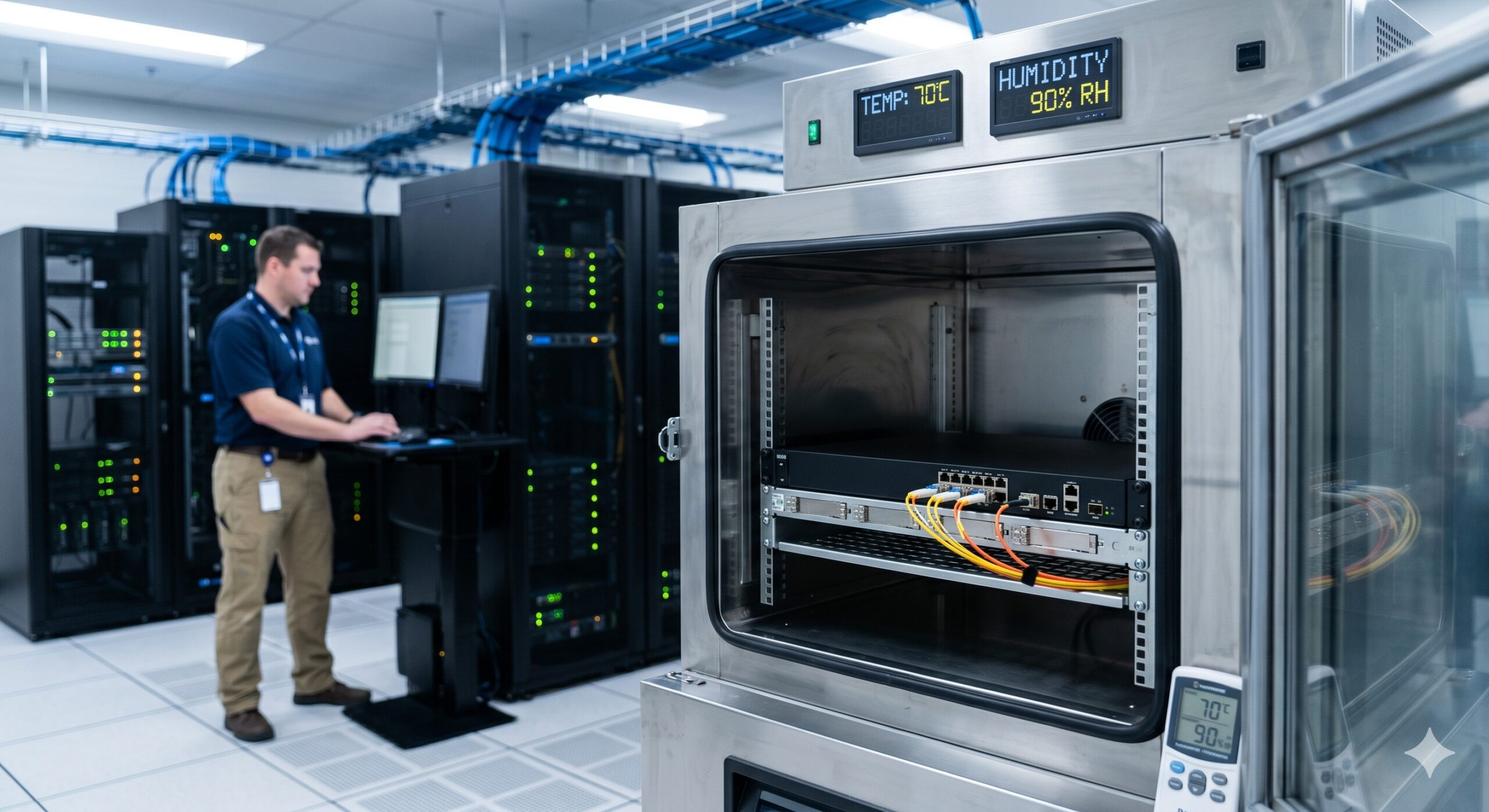
Frequently Asked Questions
- Q1: What are the standard storage temperature and humidity tolerance ranges for telecom hardware?
- Standard storage tolerance is -40°C to +70°C (-40°F to +158°F) with relative humidity (RH) between 5% and 95% non-condensing. These ranges align with Telcordia GR-63-CORE and ETSI EN 300 019-1-1 Class 1.2 specifications. Non-condensing means that while humidity can reach 95%, the dew point must remain below the ambient storage temperature to prevent liquid water formation on circuitry.
- Q2: How long can telecom equipment safely remain in storage outside of recommended temperature ranges?
- Exceeding rated storage limits for more than 72 continuous hours significantly increases risk of irreversible damage. Electrolytic capacitors degrade above +85°C, while below -45°C, LCD screens and solder joints become brittle. For short-term excursions (e.g., 24 hours at +75°C), most carrier-grade equipment survives, but cumulative exposure beyond 100 hours voids many OEM warranties. Always use climate-controlled logistics if expected storage exceeds 30 days.
- Q3: What happens if you store fiber optic transceivers (SFPs/QSFP) at incorrect humidity levels?
- High humidity (>85% RH) causes oxidation on gold-plated contact pins, leading to intermittent link flaps and CRC errors. Low humidity (
- Q4: What is the difference between storage temperature and operating temperature tolerances?
- Storage temperature tolerances are typically wider, ranging from -40°C to +70°C, while operating temperature is narrower, usually 0°C to +45°C for commercial-grade or -5°C to +50°C for industrial-grade. Operating limits include self-heating from power dissipation; storage limits assume unpowered, non-condensing conditions. Never power on equipment that has been stored below -25°C without a 24-hour acclimation period at room temperature to prevent internal condensation.
- Q5: How should telecom hardware be re-acclimated after extreme cold storage?
- Follow the 2-2-24 rule: 2 hours in sealed original packaging at intermediate temperature (e.g., 0°C to +10°C), then 2 hours unboxed but unpowered at room temperature (20°C to 25°C), then 24 hours powered in standby mode before full load. This prevents condensation-induced short circuits and mechanical stress from thermal shock. For hard-disk-based gear, extend the final standby period to 48 hours to allow spindle bearings to relubricate.
- Q6: Can temperature and humidity cycling during storage trigger latent defects?
- Yes, repeated thermal cycling (e.g., 12 cycles of -25°C to +50°C over 6 months) accelerates solder joint fatigue and PCB delamination per IPC-9701 standards. Humidity cycling (alternating 95% RH / 20% RH) causes “hygroscopic swelling” in PCB substrates, leading to micro-via cracking. For long-term spares storage (>12 months), maintain temperature within ±5°C and RH within ±10% to eliminate cycling stress.
- Q7: What monitoring and logging are recommended for compliance during hardware storage?
- Deploy IoT-enabled data loggers (e.g., Lascar EL-SIE-1 or Sensaphone) recording temperature every 15 minutes and humidity every hour. Retain logs for 7 years to support warranty claims or root-cause analysis. For high-value spares (exceeding $10,000 per unit), use real-time alerts for excursions beyond -30°C, +60°C, 10% RH, or 90% RH. Many OEMs, including Cisco and Juniper, require proof of compliant storage before honoring advanced replacement RMA.
- Q8: How do storage humidity tolerances differ between coastal and arid deployment regions?
- Coastal pre-deployment storage requires stricter lower humidity limits (max 60% RH) to prevent salt spray corrosion, even indoors. Arid region storage (e.g., Middle East) requires upper humidity limits of 80% RH and active humidification if ambient drops below 15% RH to prevent ESD damage. Always add silica gel or desiccant breathers in coastal storage, and anti-static humidifiers in desert storage. Consult MIL-STD-810H Method 507.6 for region-specific profiles.

Leave a comment