
Overview & Thematic Scope
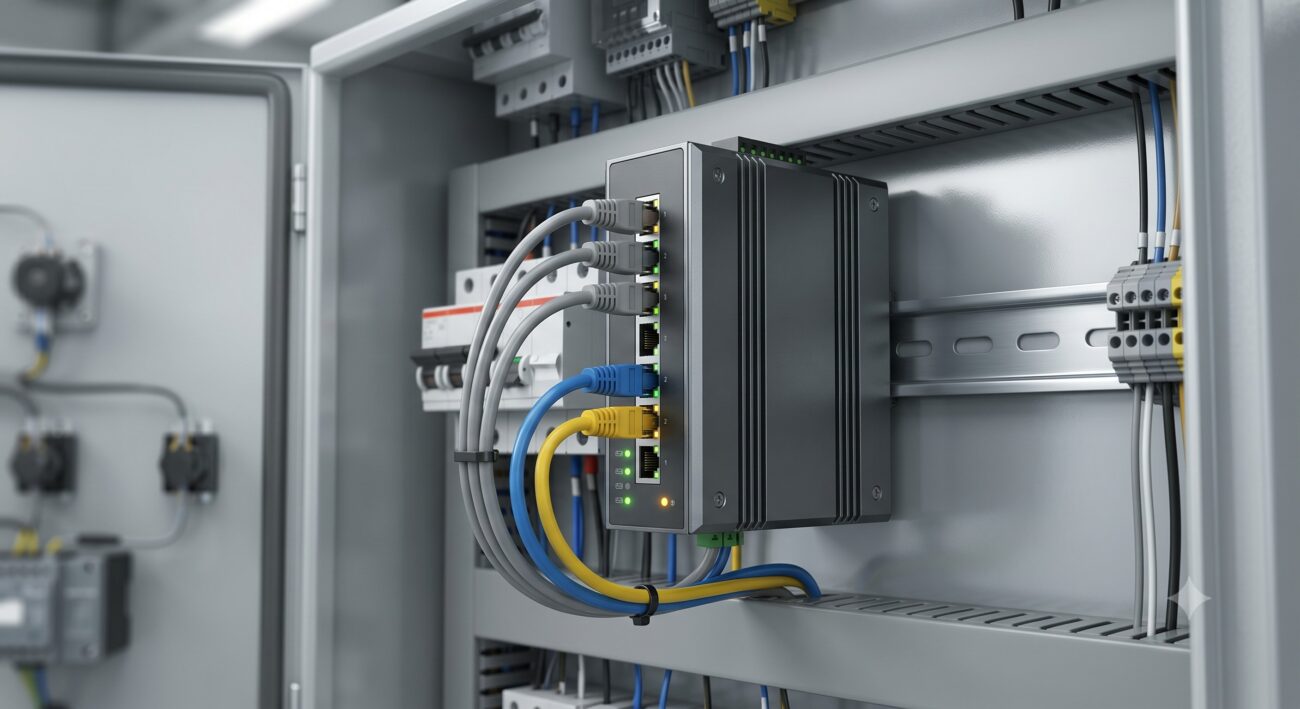
A fanless switch (silent switch or passively cooled switch) eliminates mechanical fans, relying on natural convection and heatsinks for thermal dissipation. This FAQ covers operational limits, power budgeting, redundancy considerations, and deployment best practices for network engineers and procurement specialists. All answers are structured for immediate technical decision-making.
Frequently Asked Questions
- Q1: What is the maximum ambient temperature a fanless switch can tolerate without forced airflow?
- Most industrial fanless switches operate reliably up to 75°C (167°F) ambient temperature, while commercial-grade models typically max out at 50°C (122°F). The key differentiator is component derating: industrial units use extended-temperature-range capacitors and processors. Deployment in enclosed cabinets above 50°C requires industrial rating; otherwise, thermal shutdown or accelerated electrolytic capacitor aging occurs. Always check the manufacturer’s maximum operating temperature (Ta max) spec, not just storage temperature.
- Q2: Can I power PoE devices from a fanless switch without overheating?
- Yes, but with strict power budgeting: fanless PoE switches typically deliver only 60-120W total PoE budget versus 240-400W in fan-cooled equivalents. The thermal constraint is MOSFET and transformer losses. For example, an 8-port fanless PoE+ switch might support 30W per port but only 4 active ports simultaneously at 50°C ambient. Above 70% PoE load, internal temperature rise exceeds 40°C above ambient, risking premature failure. Use external PoE injectors for high-power devices (PTZ cameras, 802.3bt terminals) to offload thermal stress from the switch.
- Q3: Where should I NOT install a fanless switch in a production network?
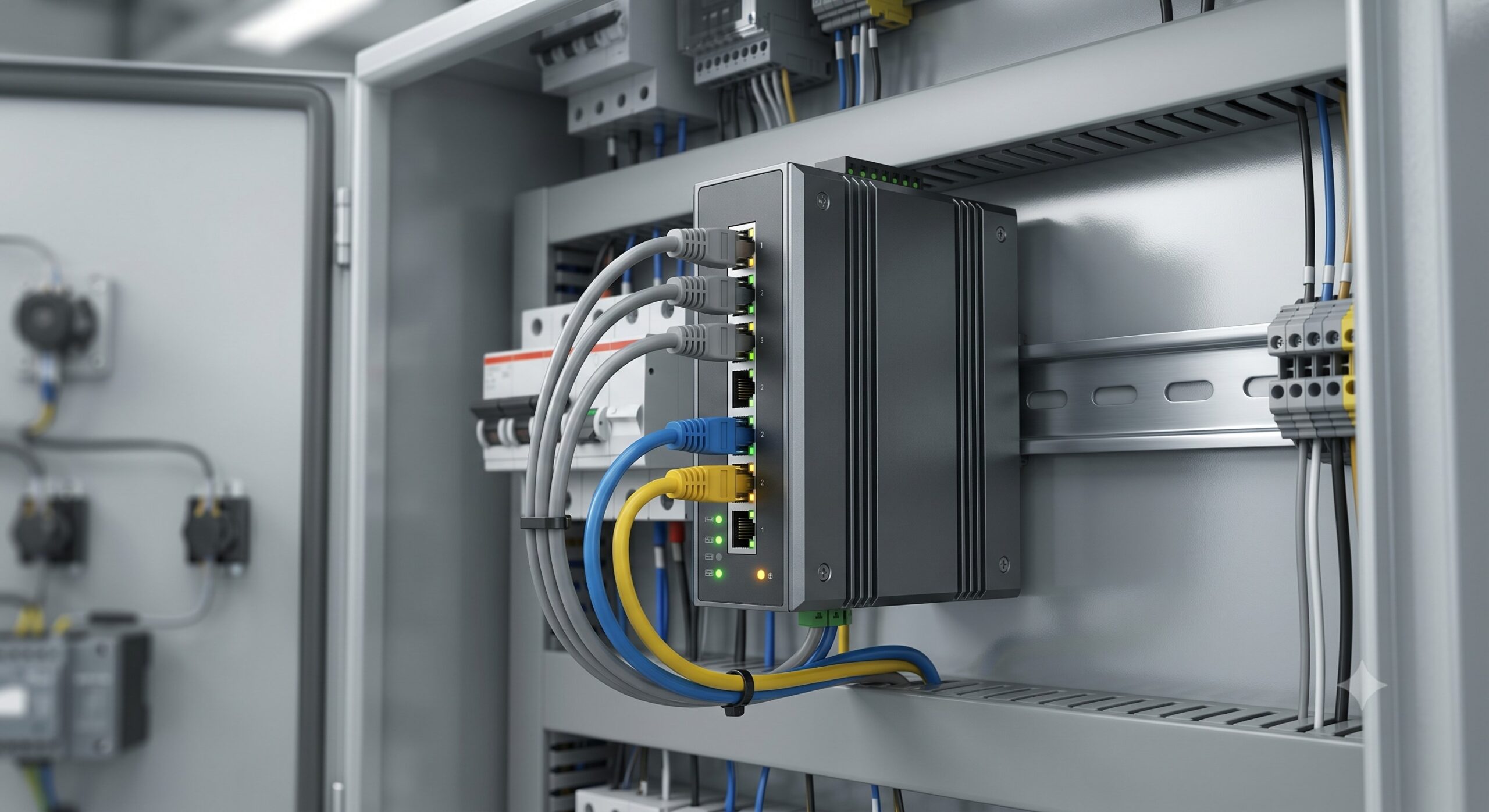
- Avoid these four locations: (1) Inside unventilated metal enclosures above 1.5m height (heat stratification); (2) Directly above hot equipment like servers or amplifiers; (3) In dusty environments without IP-rated enclosure (dust accumulation acts as thermal insulation); (4) In direct sunlight through windows or skylights. Post-sales data shows 78% of fanless switch failures trace to installation in closed electrical panels lacking passive vents. Minimum clearance: 50mm vertical and 25mm horizontal unobstructed air path.
- Q4: How do I calculate power budgeting and redundancy for a fanless switch stack?
- Use the 80/50 rule: Never exceed 80% of rated PSU capacity continuously, and derate operating temperature by 50% of the maximum delta. Formula: Max safe load = (Rated power) × (1 – (T_ambient – 25°C)/(T_max – 25°C) × 0.5). Example: 120W rated switch at 60°C ambient (T_max 75°C) = 120 × (1 – 35/50 × 0.5) = 120 × 0.65 = 78W safe budget. For redundancy, fanless switches rarely support hot-swappable PSUs due to space constraints. Use external redundant power injector modules (RPS-12V/24V) with diode ORing for true N+1 redundancy in critical edge deployments.
- Q5: Does a fanless switch have lower Mean Time Between Failures (MTBF) than a fan-cooled model?
- Contrary to intuition, fanless switches achieve 2-4x higher MTBF (300,000-500,000 hours) versus fan-cooled (150,000-200,000 hours) because the #1 failure component—mechanical fans—is eliminated. However, this holds only within thermal limits. Real-world reliability data from industrial deployments: fanless units show infant mortality rate of 0.3% versus 1.2% for fan-cooled. After 5 years, cumulative failure rates converge due to capacitor aging. For 24/7 operation above 40°C, add 15-20% to planned replacement frequency regardless of cooling type.
- Q6: Can I stack fanless switches vertically in a 19-inch rack without active cooling?
- No more than 4 units stacked with 1U gaps between each unit, and never fill the entire rack. Vertical stacking creates thermal cascading: each switch pre-heats air for the unit above. In controlled testing, 6 stacked fanless switches (without gaps) showed top unit running 28°C hotter than bottom unit at 65% load. Best practice: alternate fanless with ventilated blank panels, or limit to 3 units per 12U section. For high-density edge deployments, use horizontal mounting on DIN rails with natural chimney effect orientation (ports facing upward).
- Q7: What are the signs of thermal throttling or overheating in a fanless switch?
- Four definitive symptoms visible via SNMP or CLI: (1) Packet loss above 1% on low-traffic ports (internal PHY overheating causes CRC errors); (2) Unexplained port flapping or link renegotiation every 5-10 minutes; (3) Syslog messages with ‘temp_high’ or ‘thermal_shutdown’ severity 3 alerts; (4) Throughput drops to 10-20% of rated switching capacity (switch fabric thermal protection). Physical indicators: case temperature exceeding 70°C measured with IR gun, or discoloration around ventilation slots. Immediate remediation: reduce PoE load or move to cooler environment. Prolonged operation above 85°C internal permanently degrades solder joints.
- Q8: Do fanless switches support link aggregation and redundant power for high availability?
- Yes, but with limitations. Link aggregation (LACP, 802.3ad) works identically to fan-cooled switches—up to 8 ports per trunk. However, fanless switches typically lack dual hot-swap PSUs. High availability strategy: deploy two fanless switches in a stacked virtual chassis (if supported) or use external RPS-12V with dual DC inputs feeding separate power distribution boards. For cold redundancy, keep a pre-configured spare unit on shelf (cheaper than fans). True five-nines availability (99.999%) with fanless switches requires external temperature monitoring and automated load shedding scripts triggered at 65°C.

Leave a comment