
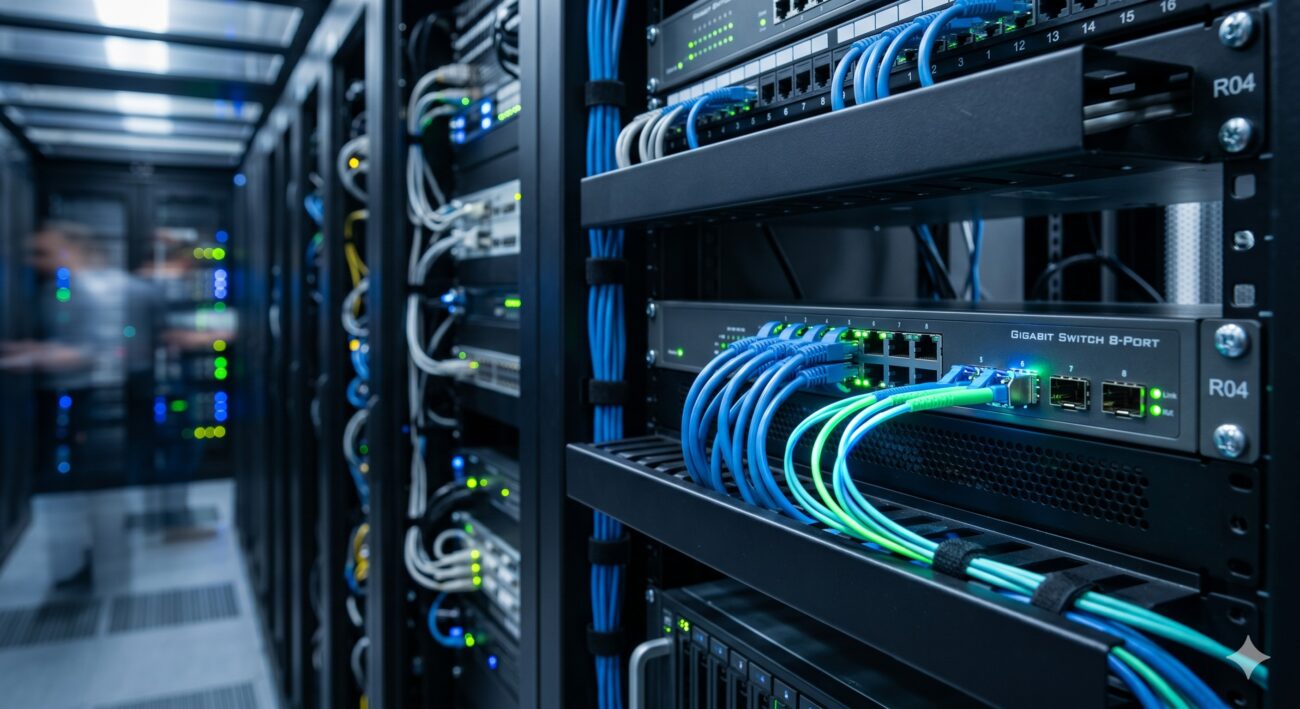
Introduction: The Indispensable Role of the Gigabit Ethernet Switch 8 Port
In the complex and demanding landscape of modern enterprise and telecommunications networking, the humble 8-port gigabit Ethernet switch often remains an unsung hero. While core and distribution layers boast massive chassis systems, the access and edge layers demand a blend of performance, reliability, and cost-efficiency that is perfectly met by this form factor. This comprehensive guide serves as a definitive resource for network architects, systems integrators, and telecom hardware procurement specialists. We will dissect the internal architecture, scrutinize key performance specifications against IEEE and ITU-T standards, and provide a data-driven deployment framework for the gigabit Ethernet switch 8 port. As networks evolve to support bandwidth-intensive applications and IoT proliferation, understanding the nuances of this critical device is paramount. We will explore its role beyond simple connectivity, delving into its switching capacity, latency characteristics, and the hardware engineering that ensures carrier-grade reliability in demanding environments.
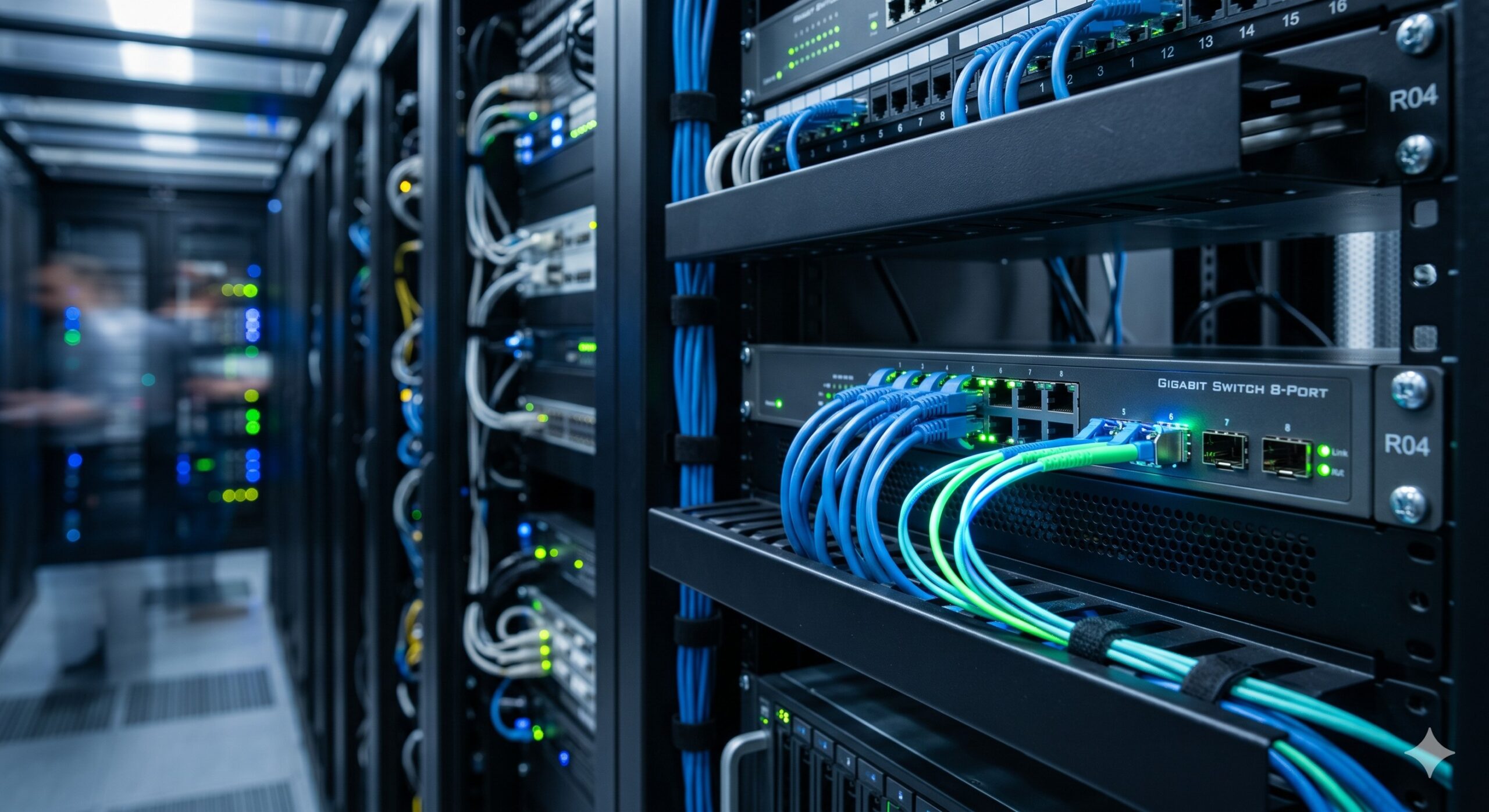
Core Architecture & Hardware Topology
At its heart, a gigabit Ethernet switch 8 port is a sophisticated piece of hardware, far more complex than a simple hub. Its primary function is to intelligently forward data frames based on Media Access Control (MAC) addresses. The cornerstone of this operation is the internal Application-Specific Integrated Circuit (ASIC), the engine that drives non-blocking performance. Unlike consumer-grade devices, enterprise-class switches utilize a robust silicon design that ensures full wire-speed forwarding across all ports simultaneously. The architecture typically comprises the switching ASIC, physical layer transceivers (PHYs), a central processing unit (CPU) for management tasks, and memory buffers. These components are integrated onto a single printed circuit board (PCB), with careful design considerations for signal integrity and thermal dissipation. The switching fabric, often with a capacity of 16 Gbps for an 8-port model, is a critical metric; this means the switch can handle full-duplex traffic on all ports simultaneously without dropping packets. Non-blocking architecture is a key differentiator, ensuring that the internal backplane can handle the aggregate bandwidth of all ports without contention, a crucial factor in high-traffic edge deployments.
Logic Layer Deep Dive: Packet Processing and Forwarding
Understanding the logic layer is essential for optimizing network performance. The packet processing pipeline within the ASIC is a marvel of engineering, designed for speed and efficiency. When a frame arrives at a port, the switch examines its destination MAC address. It then consults its MAC address table, or Content Addressable Memory (CAM), to determine the egress port. This entire process, known as store-and-forward switching, introduces a measurable latency. For a high-performance 8-port switch, this latency is typically in the low microsecond range (often IEEE 802.1p and IEEE 802.1Q standards are critical for VLAN tagging and Quality of Service (QoS). The ASIC must be able to prioritize traffic based on these tags, ensuring that voice and video data are given precedence over less time-sensitive traffic. The hardware also implements IEEE 802.3x flow control to manage network congestion, preventing packet loss in high-throughput scenarios. These logic-layer functions are the bedrock of predictable, high-performance network behavior.
Technical Specifications and Performance Benchmarks
For the discerning network engineer, specifications are the language of trust. A comprehensive evaluation of a gigabit Ethernet switch 8 port must go beyond simple port count. The forwarding rate, measured in packets per second (pps), is a vital performance indicator. An 8-port switch operating at line rate can process approximately 11.9 million pps (for 64-byte packets). This metric is crucial for environments with high volumes of small packets, such as financial trading floors or VoIP networks. Similarly, the buffer memory, which stores packets during periods of congestion, plays a pivotal role in preventing drops. Enterprise-grade switches often feature a shared memory architecture for efficient buffer utilization. Let’s examine the key technical parameters that define a superior device.
| Key Parameter | Technical Specification |
|---|---|
| Switching Capacity | 16 Gbps (Non-blocking) |
| Forwarding Rate | 11.9 Mpps (for 64-byte packets) |
| Latency (Store-and-Forward) | |
| Buffer Memory | 4 MB (Shared) |
| MTBF | > 120,000 hours |
| Standards Compliance | IEEE 802.3ab, 802.3x, 802.1p, 802.1Q, RoHS |
Compliance and Reliability Standards
Adherence to industry standards is non-negotiable for professional deployment. Compliance with IEEE 802.3ab ensures 1000BASE-T operation over Category 5e/6 cabling. Beyond networking protocols, hardware reliability is governed by metrics like Mean Time Between Failures (MTBF). A high-quality enterprise switch will often have an MTBF exceeding 100,000 hours, a testament to its robust design and high-quality components. RoHS (Restriction of Hazardous Substances) compliance is also a standard requirement for modern equipment, reflecting a commitment to environmental sustainability. In carrier-grade or industrial environments, wider operating temperature ranges (-40°C to 75°C) and dual-redundant power inputs may be specified, offering the resilience required for mission-critical infrastructure.
Benchmark vs. Legacy and Comparative Edge
Legacy infrastructure, often based on 10/100 Mbps Ethernet, is a significant bottleneck in modern networks. The migration to a gigabit Ethernet switch 8 port represents a quantum leap in performance. A 100 Mbps link offers a theoretical maximum of 12.5 MB/s, whereas a gigabit link provides a staggering 125 MB/s. This 10x increase in bandwidth is transformative. In a comparative scenario, consider a network with several high-definition IP cameras. A single 1080p stream can consume up to 8 Mbps. An 8-port switch can easily aggregate these streams, but a legacy 100 Mbps switch would quickly become saturated, leading to packet loss and degraded video quality. The advanced ASIC in a modern gigabit switch also offers lower latency and better packet processing capabilities compared to the older, less efficient silicon found in legacy hardware. This directly translates to improved application performance, reduced network congestion, and a future-proofed infrastructure ready for increasing bandwidth demands.
ISP and Enterprise Case Study: Practical Deployment Scenarios
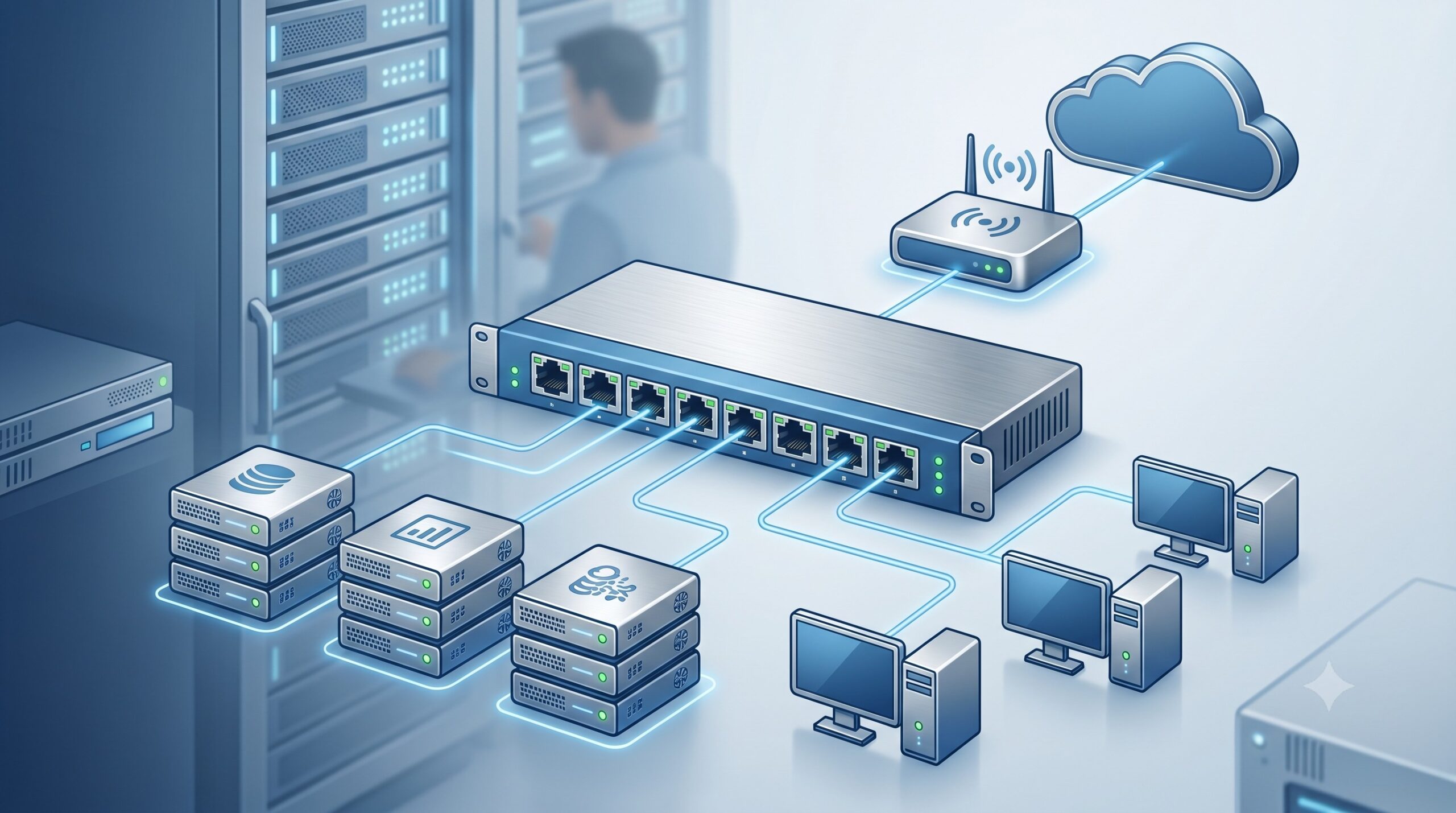
To illustrate the practical value of these devices, let’s examine a common deployment scenario for a small-to-medium business (SMB) or a branch office. A typical deployment might involve connecting a router, a network-attached storage (NAS) device, a couple of servers, and several workstations. The gigabit Ethernet switch 8 port serves as the central aggregation point. The internal ASIC ensures that the NAS, capable of delivering data at high speeds, can serve multiple clients concurrently without creating a bottleneck. The switch’s support for VLANs allows the network administrator to logically separate voice traffic from data traffic, improving overall quality and security. Furthermore, the implementation of link aggregation, where two or more ports are combined to increase throughput, provides a path for expansion and redundancy. In an ISP context, these switches are frequently deployed as customer premises equipment (CPE) for delivering high-speed fiber or cable internet, offering a reliable and cost-effective demarcation point that supports modern service level agreements (SLAs).
Deployment Best Practices and Optimization
Deploying an 8-port gigabit switch is often a straightforward process, but following best practices ensures optimal performance and longevity. Physical placement is critical; ensure the device is in a well-ventilated area, as excessive heat can significantly impact the MTBF and lead to premature failure. Use high-quality, shielded Cat6 or Cat6a cabling to achieve full gigabit speeds and minimize electromagnetic interference. From a configuration perspective, enabling flow control (IEEE 802.3x) is recommended to prevent packet drops during burst traffic. For enhanced security, implement port security features to restrict access based on MAC addresses, and disable any unused ports. In environments with mixed traffic, configuring VLANs and QoS policies will be essential. Link aggregation (LACP) should be considered for uplink connections to core switches, providing a redundant and high-bandwidth path back to the data center. Regularly updating the switch’s firmware is also a critical, albeit often overlooked, step to patch security vulnerabilities and improve performance.
Conclusion: The Foundation of a Robust Network
The gigabit Ethernet switch 8 port is more than just a simple piece of hardware; it is a foundational element of a resilient and high-performance network. Its importance lies in its ability to deliver carrier-grade reliability, low latency, and high throughput at the edge of the network, where user experience is ultimately defined. This guide has explored its core architecture, highlighting the critical role of the ASIC and its adherence to essential IEEE standards. We have provided a detailed analysis of key specifications such as switching capacity, forwarding rate, and MTBF, equipping you with the knowledge to make informed procurement decisions. The evolution from legacy 100 Mbps to 1 Gbps is not merely a step; it is a leap that unlocks the true potential of modern applications. Whether you are a systems integrator planning a new deployment or a network architect optimizing an existing one, the thoughtful selection and deployment of an enterprise-grade 8-port gigabit switch is a strategic investment in network excellence.

Leave a comment