
Introduction: The Imperative of Next-Generation Routing Performance
In the contemporary digital landscape, the performance of core routing infrastructure is not merely a technical specification—it is the bedrock of commercial viability and operational excellence. As enterprises accelerate their digital transformation, network architects are confronted with the challenge of scaling infrastructure to support AI-driven workloads, 400GE/800GE connectivity, and the deterministic latency requirements of 5G and cloud-native applications . The Huawei NetEngine series, encompassing the flagship NetEngine 8000 and 5000E families, represents a paradigm shift in routing performance, moving beyond simple throughput metrics to encompass intelligent, programmable, and energy-efficient architectures . This analysis dissects the architectural DNA of the NetEngine series, providing a data-driven evaluation of its switching capacity, packet forwarding mechanics, and operational parameters to illustrate why it is redefining the benchmarks for telecom hardware.
Core Architecture and Hardware Topology: The Silicon Foundation
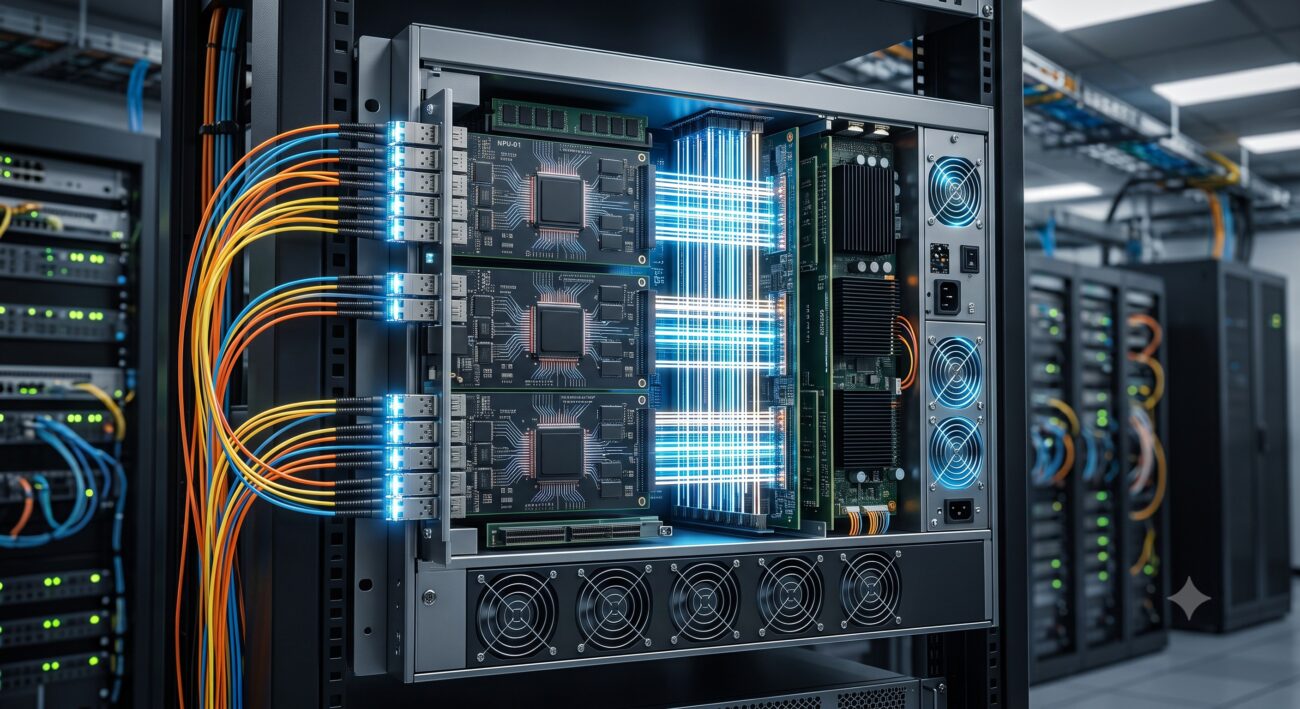
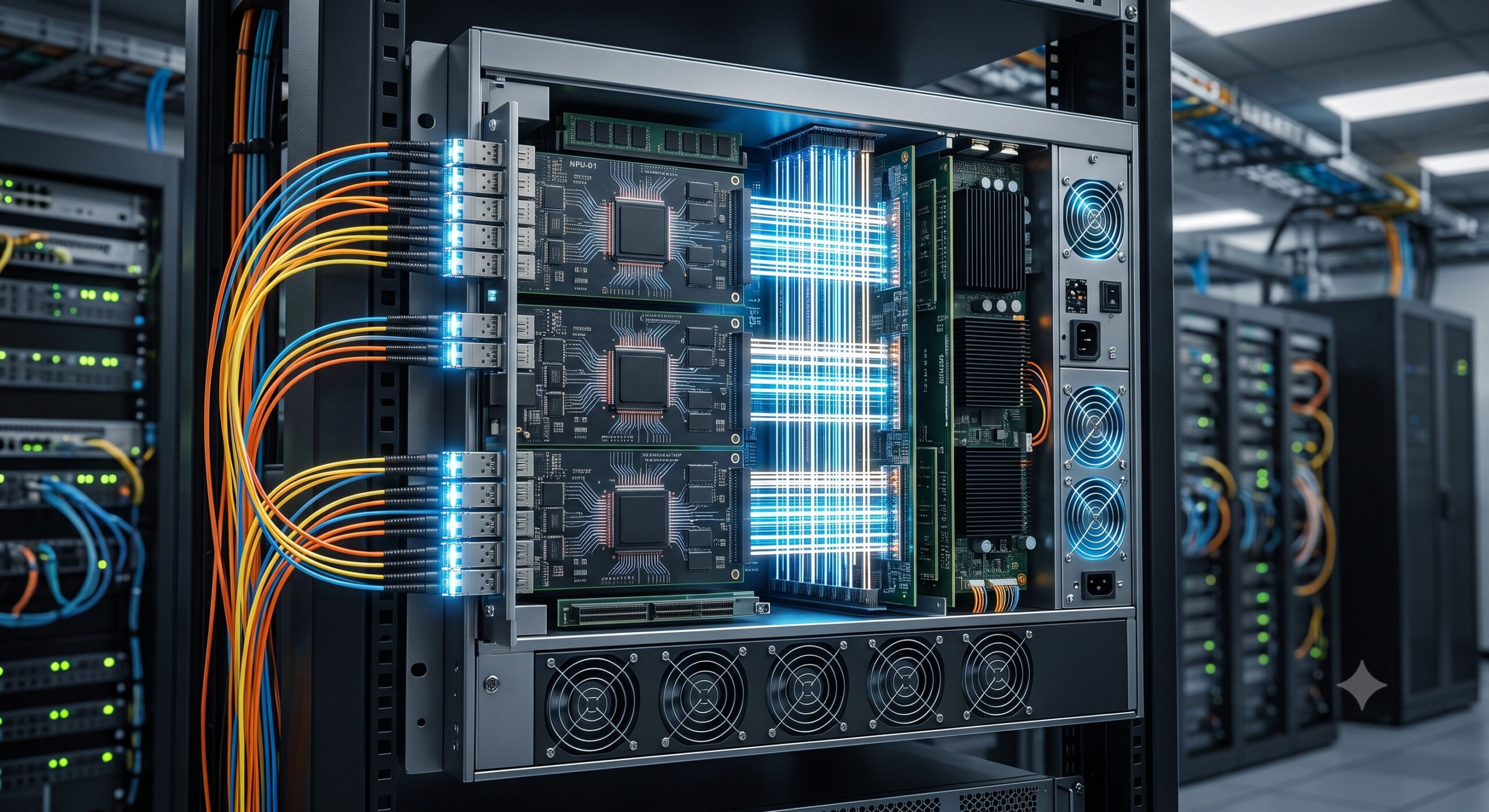
The performance supremacy of the Huawei NetEngine series is fundamentally rooted in its advanced hardware architecture, which diverges from legacy systems through its integration of programmable Network Processors (NPs) and a Control and Forwarding Plane separation philosophy . Unlike fixed-function ASICs, the NetEngine’s NP architecture provides the flexibility to support evolving protocols such as Segment Routing over IPv6 (SRv6) and FlexE without requiring hardware replacements. The flagship NetEngine 8000E X16 leverages a pioneering orthogonal backplane and cell-switching fabric, enabling a fully distributed forwarding model. This design eliminates centralized bottlenecks, allowing the system to scale to a staggering 3,318.69 Tbps switching capacity and a forwarding performance of 457,113.6 Mpps (million packets per second) .
Distributed Forwarding and Packet Pipeline
The packet forwarding pipeline within the NetEngine architecture is engineered for deterministic low latency. By utilizing a CIOQ (Combined Input and Output Queued) architecture, the system effectively manages head-of-line blocking, ensuring consistent throughput under heavy load . The platform’s distributed nature means that each line card houses its own forwarding engine, capable of processing packets locally with minimal inter-card latency. This is critical for ultra-low latency engineering, where the platform can support massive route tables—such as the 200万条 BGP routing table capacity seen in legacy high-end models—while maintaining line-rate forwarding across all interfaces .
High-Density Ports and Interface Flexibility
For network architects dealing with High-Density Datacenter Scaling, the NetEngine series offers unprecedented port density. The NetEngine 8000 series supports 400GE/800GE ports, with the F8A model offering up to 16x 400GE or 64x 100GE interfaces in a compact 13U chassis . This high-density integration is achieved through advanced silicon photonics and high-speed backplane interconnects, enabling service providers to aggregate massive traffic flows in a reduced physical footprint.
| Key Performance Parameter | NetEngine 8000E X16 Specification | NetEngine 8000E F8A Specification |
|---|---|---|
| Switching Capacity | 3318.69 Tbps | 721.45 Tbps |
| Forwarding Performance | 457,113.6 Mpps | 180,000 Mpps |
| Maximum Board Capability | 4 Tbps | 800 Gbps |
| Typical Power Consumption | 24,015 W | 2,370 W |
| Redundancy Architecture | 1:1 (Main Control, SFU 7+1) | 1:1 (Main Control, SFU 1+1) |
Protocol Compliance and Forwarding Mechanics: IEEE & ITU-T Standards
Interoperability and standards compliance are non-negotiable in multi-vendor telecom environments. The NetEngine series is rigorously designed to comply with stringent IEEE and ITU-T standards, ensuring seamless integration into existing MPLS and IP backbones. It natively supports a comprehensive suite of protocols, including OSPFv3, IS-IS, BGP-4, and MPLS VPN . A key differentiator is its native support for SRv6, which reduces the complexity of network protocols from over 10 to just 2, simplifying operations and enhancing scalability . Furthermore, the platform’s support for BIERv6 (Bit Index Explicit Replication) showcases its capability to handle next-generation multicast traffic efficiently, a critical requirement for emerging broadcast and industrial IoT applications .
Carrier-Grade Reliability and Mission-Critical SLAs
For core network nodes, reliability is often more critical than raw speed. The NetEngine architecture is architected for Carrier-Grade Reliability, featuring 1:1 redundancy for main control boards, switch fabric units (SFUs), and power modules . The NetEngine 8000E series, for instance, supports N+1 power and fan redundancy, with hot-swappable components that ensure 99.999% system availability . In real-world deployments, such as in the China Telecom Yunnan province network, the NetEngine 5000E has demonstrated its robustness, leveraging built-in AI capabilities to detect fiber faults in milliseconds and dynamically reroute traffic, reducing network outage recovery times from hours to seconds .
Performance Analytics and Operational Efficiency
Beyond forwarding packets, the NetEngine series excels in operational intelligence. It integrates a sophisticated Performance Management (PM) system that collects statistics on interface traffic, CPU/memory utilization, and protocol-specific metrics . This data, often visualized through iMaster NCE, enables proactive O&M and predictive capacity planning. The platform’s ability to implement FlexE network slicing ensures deterministic SLA enforcement, providing hard isolation for critical applications such as financial trading or emergency services, where bandwidth and latency must be guaranteed.
Conclusion: Redefining Core Routing Performance
The Huawei NetEngine series represents a convergence of high-performance silicon, intelligent software, and robust reliability. Its ability to deliver multi-terabit switching capacities while maintaining microsecond-level latency sets a new standard for telecom hardware. For network architects, the choice of NetEngine is an investment in a future-proof architecture that supports the transition to IPv6+, AI-enabled networks, and sustainable energy consumption—with models like the NetEngine 5000E achieving an industry-leading energy efficiency ratio of 0.22W/G . By addressing the spectrum of challenges from high-density port scaling to protocol compliance, the NetEngine platform empowers enterprises to transform their network infrastructure into a strategic asset, capable of meeting the demands of the AI era and beyond.

Leave a comment