
Executive Summary: The Enterprise Edge Workhorse
In the evolving landscape of enterprise networking, the demand for high-density, cost-effective, and resilient switching solutions has never been more acute. The Huawei Quidway S5700 Series emerges as a pivotal player in this domain, offering a versatile portfolio of Gigabit Ethernet switches designed to bridge the gap between legacy infrastructure and next-generation, high-bandwidth applications. As a seasoned network architect, I can attest to the series’ significant role in addressing the core challenges of modern campus and data center networks, including bandwidth scalability, network convergence, and operational efficiency. This comprehensive guide delves into the architecture, technical specifications, and deployment strategies of the S5700 series, providing a data-driven analysis for enterprise engineers and IT decision-makers.
The S5700 series, built upon Huawei’s Versatile Routing Platform (VRP), is not merely a collection of switches but a cohesive ecosystem engineered for reliability and performance . It addresses multiple use cases, from top-of-rack (ToR) switching in data centers to enterprise campus aggregation and access layers. The following analysis provides a deep dive into its core attributes, substantiated by performance metrics and architectural insights.
Core Architecture & Hardware Topology
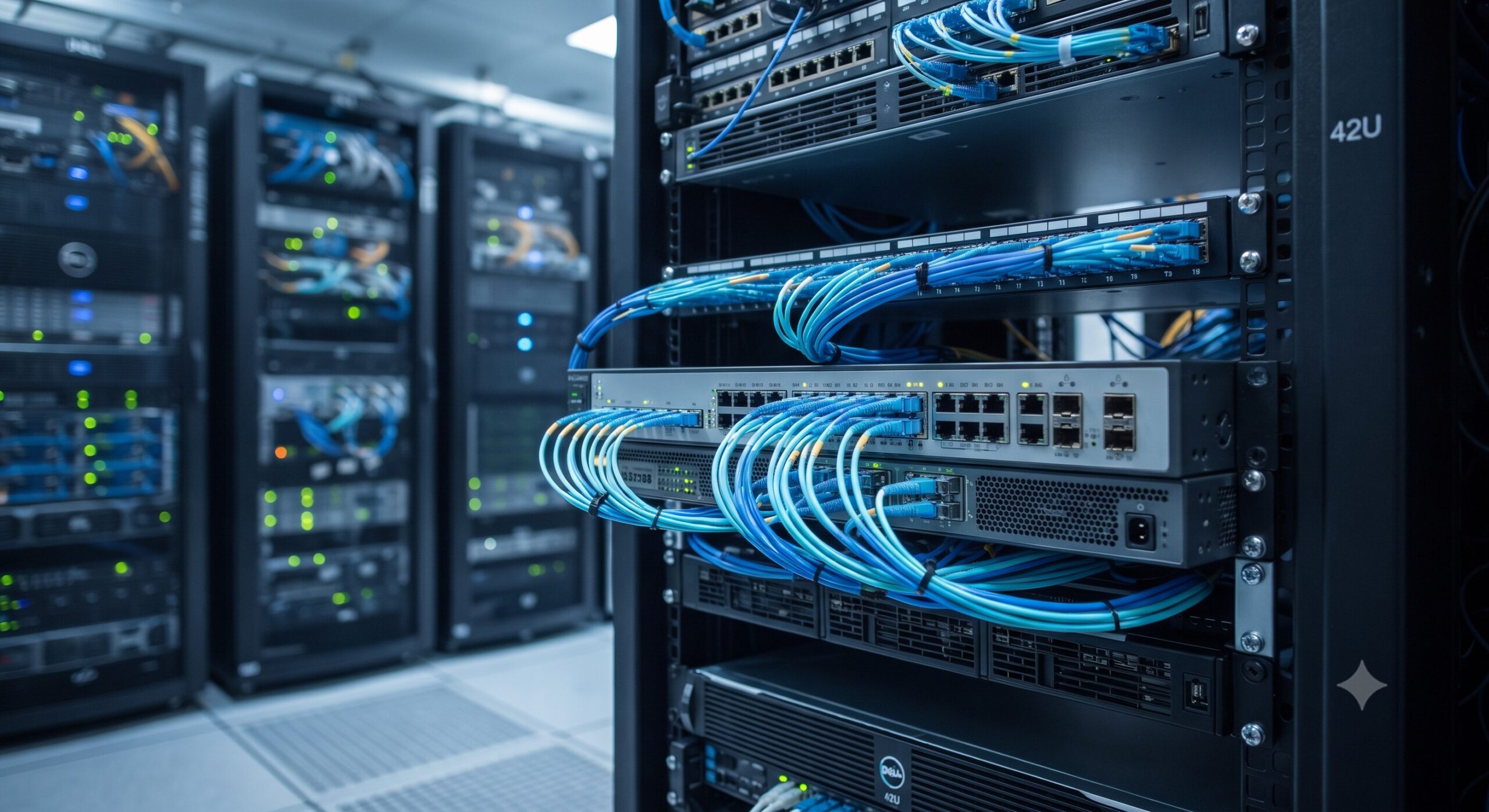
The foundational strength of the Quidway S5700 lies in its innovative hardware and software co-design. Housed in a compact 1U form factor, the series leverages a non-blocking switching architecture to ensure wire-speed forwarding across all ports . The internal architecture is driven by a purpose-built ASIC (Application-Specific Integrated Circuit) that handles the heavy lifting of packet forwarding, enabling consistent sub-microsecond latency for latency-sensitive applications like VoIP and high-frequency trading.
Intelligent Stacking (iStack) for High Availability
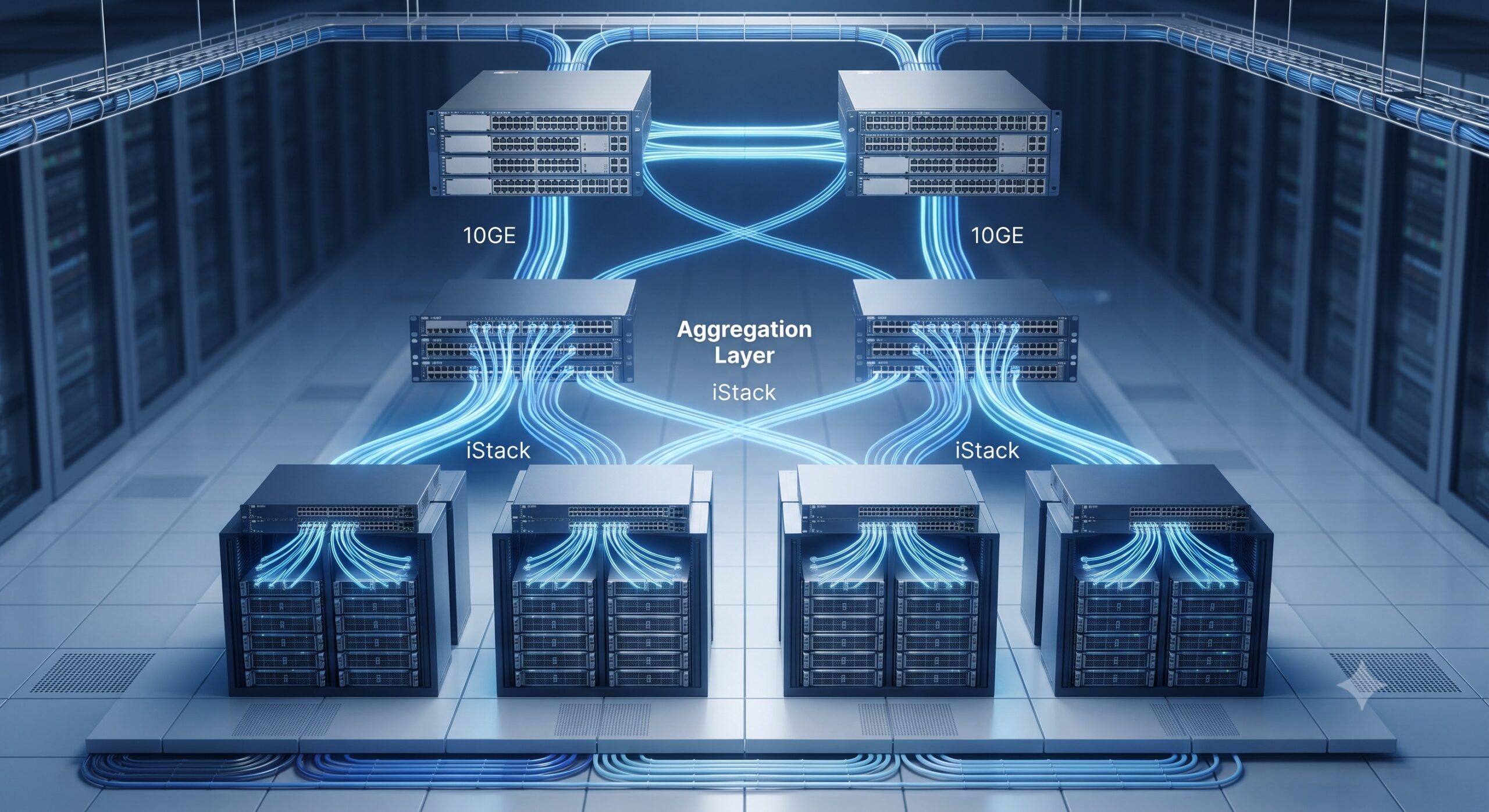
A standout architectural feature is the intelligent Stack (iStack) technology, which virtualizes multiple physical switches into a single logical unit . This framework simplifies management and dramatically enhances resilience. In practical terms, iStack allows for cross-device link aggregation (Eth-Trunk), enabling load balancing and providing sub-50 ms failover in the event of a member switch failure . This is crucial for maintaining service continuity in enterprise core or distribution networks.
Redundancy at the System Level
To meet carrier-grade reliability standards, the S5700 series, particularly the Enhanced Edition (EI) models, supports dual, hot-swappable power supplies and fans, effectively eliminating single points of failure . The platform integrates advanced redundancy protocols such as Smart Link and Monitor Link, which offer millisecond-level protection switching for uplink interfaces, ensuring that network downtime is minimized during maintenance or unexpected outages .
Protocol & Compliance Masterclass: IEEE & ITU-T Engineering
The S5700 series stands as a testament to interoperability, adhering rigorously to international networking standards. This compliance ensures seamless integration into multi-vendor environments, a critical requirement for modern networks.
Comprehensive Standards Support
- IEEE Compliance: Full support for IEEE 802.1D (STP), 802.1w (RSTP), 802.1s (MSTP), 802.1Q (VLAN), 802.3ad (Link Aggregation), and 802.3ah/802.1ag (Ethernet OAM) for robust link management and fault detection .
- Power over Ethernet (PoE+): The PWR models fully comply with IEEE 802.3at, delivering up to 30W per port to power high-demand devices such as pan-tilt-zoom cameras and advanced WLAN access points .
- ITU-T G.8032 (ERPS): The S5700 supports Ethernet Ring Protection Switching, providing sub-50 ms protection and recovery for ring topologies, a standard critical for carrier and large enterprise networks .
Robust Protocol Stack
The VRP platform enables a rich Layer 3 feature set, particularly in the EI models. This includes support for OSPFv2/v3, BGPv4, IS-IS, and multicast protocols (IGMP v1/v2/v3, PIM-DM/SM), empowering the S5700 to function effectively as a small-core or distribution layer device . Furthermore, it incorporates Network Quality Analysis (NQA), an embedded active measurement tool that provides real-time statistics on delay, jitter, and packet loss, enabling proactive network maintenance .
Technical Specifications & Performance Metrics (Data-Driven Evaluation)
A data-driven evaluation is paramount for understanding the capabilities of the Huawei Quidway S5700. Below is a distilled summary of the critical technical specifications across the series, which are essential for capacity planning and network design.
| Key Parameter | Technical Specification |
|---|---|
| Switching Capacity | 256 Gbps (Non-Blocking) |
| Forwarding Rate (PPS) | 36 Mpps to 132 Mpps (Model Dependent) |
| Port Density | 24/48 x 10/100/1000Base-T + 4 x Combo SFP (Standard), Up to 4 x 10GE SFP+ Uplinks (EI models) |
| MAC Address Table | 16K |
| Power over Ethernet (PoE) | IEEE 802.3at (PoE+), up to 30W per port (PWR Models) |
| Reliability Protocols | STP/RSTP/MSTP, SmartLink, RRPP, SEP, ERPS (ITU-T G.8032), VRRP, BFD |
| Operational Temperature | 0°C to 50°C |
| Compliance Standards | IEEE 802.3, 802.1Q, RoHS, ITU-T G.8032 |
Detailed Specifications by Series
- Switching Capacity: The S5700 boasts a switching capacity of up to 256 Gbps across all key models, ensuring that the backplane does not become a bottleneck for east-west traffic within the data center .
- Forwarding Performance: Packet forwarding rates vary by model. Entry-level Standard (SI) models, such as the S5700-24TP-SI, provide up to 36 Mpps, while high-density EI models, like the S5700-48TP-EI, scale up to 132 Mpps, supporting high-speed routing and switching . This ensures wire-speed, non-blocking performance at all packet sizes.
- MAC Address Table: A substantial MAC address table size of 16K entries accommodates large network segments and dense access environments, effectively preventing MAC flooding and facilitating efficient traffic filtering .
- Environmental & Physical: The 1U footprint (typically 442×420×43.6 mm) and operational temperature range of 0°C to 50°C make the S5700 suitable for standard enterprise data rooms, with an estimated Mean Time Between Failures (MTBF) exceeding 100,000 hours, demonstrating hardware maturity .
Carrier-Grade Reliability and Security Hardening
In enterprise environments, security and reliability are non-negotiable. The S5700 series integrates advanced security mechanisms directly into the hardware and operating system.
Multi-Layered Security Framework
- Hardware Security: The S5700 supports Hardware-Root-of-Trust for secure boot and integrity verification. It also provides comprehensive DoS attack defense, protecting against SYN Flood, Land, Smurf, and ICMP Flood attacks .
- Access Control: Features like DHCP Snooping, IP Source Guard, and strict ARP learning create a dynamic binding table to prevent IP/MAC address spoofing and man-in-the-middle attacks .
- User Authentication: Supports comprehensive 802.1X authentication, MAC-based authentication, and NAC integration, allowing for granular access control and dynamic policy enforcement based on user identity .
Operational Resilience
Beyond hardware redundancy, the S5700 incorporates software-level resilience. Features like VRRP (Virtual Router Redundancy Protocol) and BFD (Bidirectional Forwarding Detection) provide sub-second convergence and link detection, ensuring that core services remain unaffected by link or node failures . This resilience extends to the EasyDeploy feature set, which simplifies zero-touch provisioning and batch software upgrades, reducing the administrative burden and operational costs .
Deployment Scenarios & Total Cost of Ownership (TCO)
The versatility of the S5700 series makes it an optimal choice for various network architectures. In Top-of-Rack (ToR) applications, its high port density and high-speed 10GE uplinks provide excellent server connectivity. In campus networks, its robust multi-service access and Quality of Service (QoS) capabilities ensure seamless support for voice, video, and data convergence .
Financial Perspective: TCO Value Proposition
From a financial standpoint, the Huawei Quidway S5700 presents a compelling TCO. Analysis comparing the S5700 to equivalent Cisco Catalyst 2960S series highlights its cost-effectiveness . The switch’s support for advanced features without recurring software licensing fees, combined with its energy-efficient design, contributes to lower operational costs . The limited lifetime warranty for hardware replacement further secures the investment, making it a prudent financial decision for large-scale campus rollouts .
Conclusion: The Strategic Choice for Enterprise Networks
The Huawei Quidway S5700 Series is more than just a Gigabit switch; it represents a strategic asset for enterprises aiming to build robust, secure, and future-ready networks. Its blend of advanced ASIC architecture, comprehensive protocol support, and aggressive cost structure provides a significant advantage in the competitive telecom hardware market. By meticulously analyzing the specifications and deploying the framework outlined in this guide, systems integrators and network engineers can leverage the S5700 to overcome network bottlenecks and maximize operational gains. For those looking to upgrade their existing infrastructure or deploy high-density edge solutions, the Quidway S5700 series remains a benchmark of performance and reliability in the networking industry.

Leave a comment