
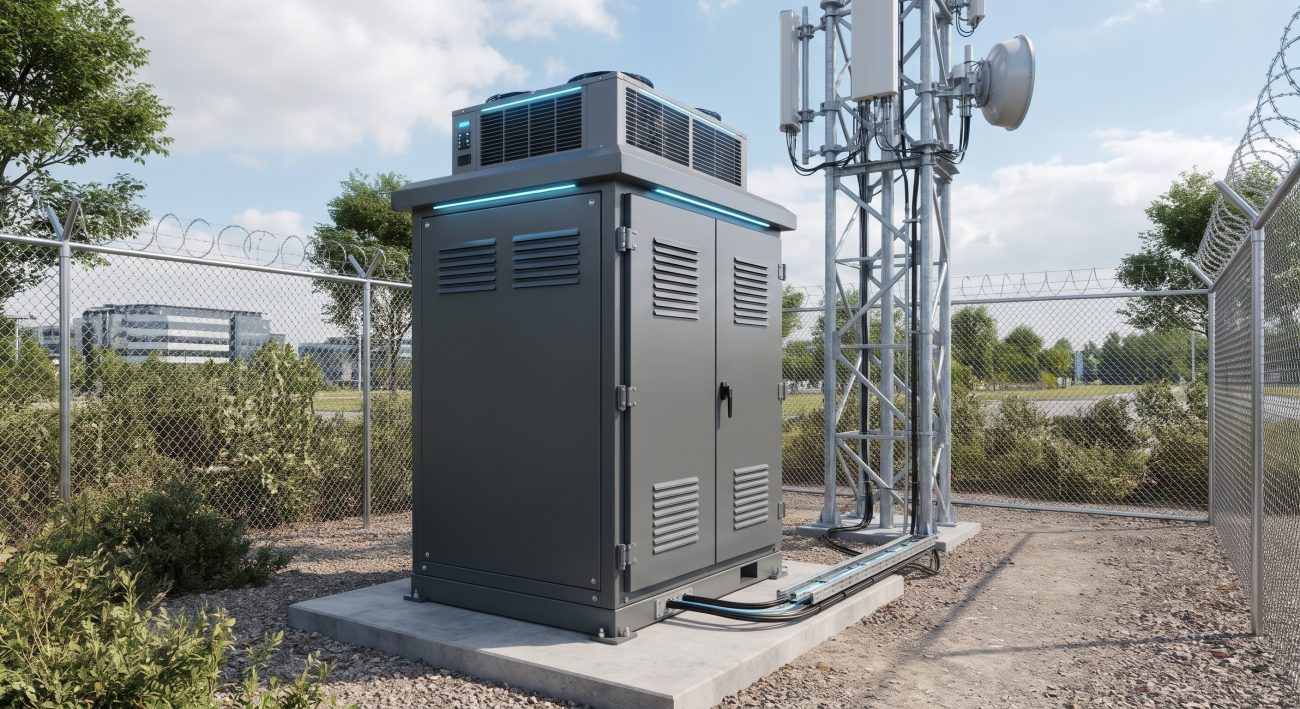
RUGGEDIZED DESIGN PHILOSOPHY
The Telecom Outdoor Cabinet IP55 Ingress Protection and HVAC Integration platform embodies a field-proven design philosophy engineered for the most demanding carrier and enterprise outside-plant environments. Unlike conventional indoor enclosures that rely on controlled ambient conditions, this cabinet family is purpose-built to operate continuously in coastal salt-fog zones, desert thermal extremes, urban pollution corridors, and high-humidity tropical deployments. The IP55 rating (per IEC 60529) guarantees complete protection against dust ingress and resistance to low-pressure water jets from all directions, while the integrated HVAC subsystem actively manages internal thermal envelopes to maintain carrier-grade equipment within its rated operating window. Every structural element — from the dual-wall insulated panels to the gasketed cable entry ports — is selected for a 20-year service life with minimal preventative maintenance. The design philosophy prioritizes three pillars: environmental isolation, thermal autonomy, and field serviceability, ensuring that sensitive optical transport, routing, and radio access equipment remains operational regardless of external climatic volatility.
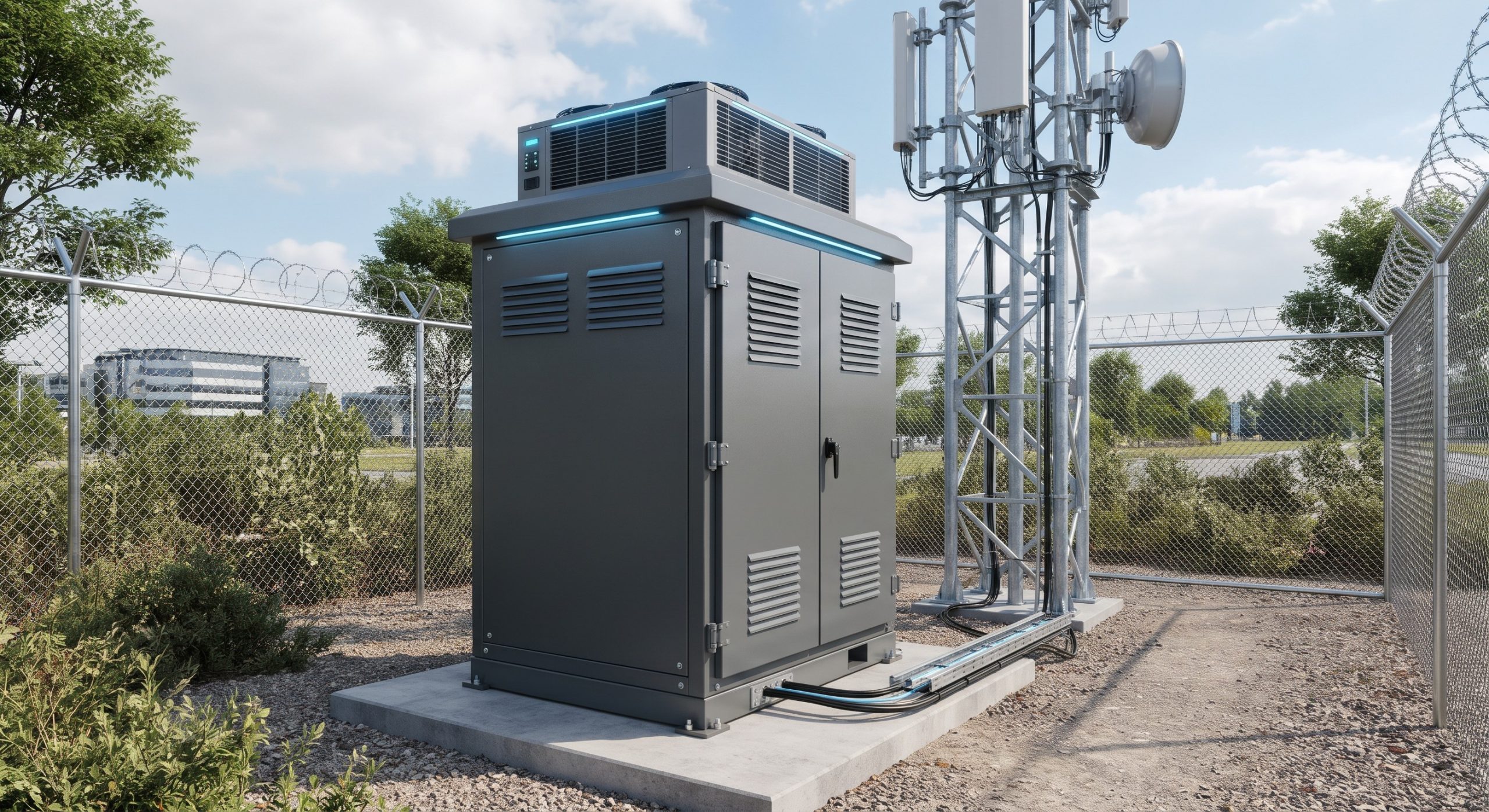
THERMAL & ELECTRICAL TOLERANCE
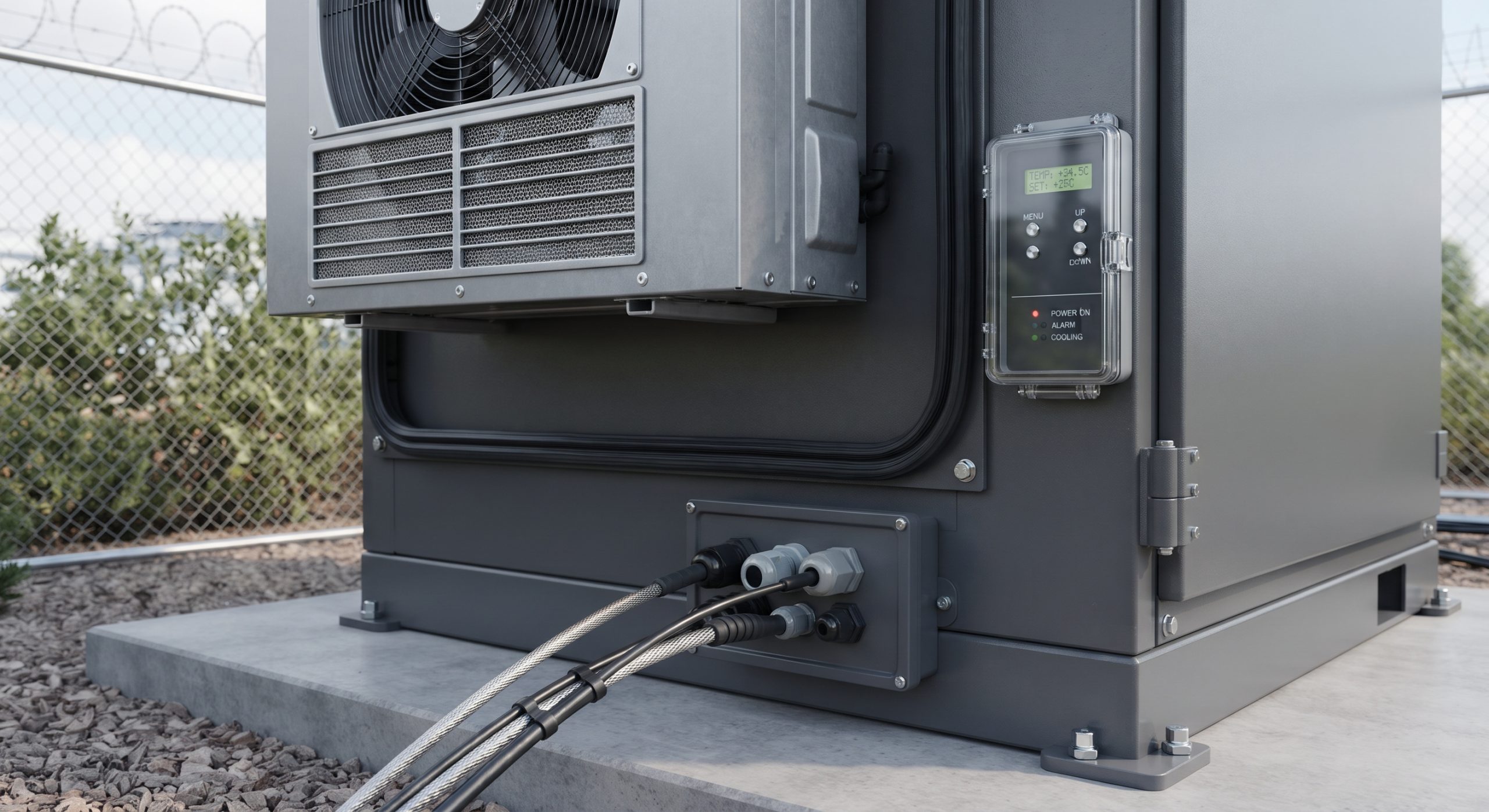
Thermal management is the defining engineering challenge of outdoor cabinet deployments, and this platform addresses it through a hybrid HVAC architecture that combines active closed-loop air conditioning with intelligently controlled heat exchangers and filtered forced-air ventilation. The HVAC integration is governed by a programmable thermal controller that monitors internal and external temperature differentials, humidity levels, and door status, then selects the most energy-efficient cooling mode automatically. In moderate ambient conditions, the system leverages a high-efficiency heat exchanger to reject internal heat without exposing electronics to outside air. When ambient temperatures exceed internal setpoints, the closed-loop air conditioner engages to maintain a stable internal environment, typically within ±2°C of the configured setpoint. For cold-climate deployments, thermostatically controlled heaters prevent condensation and maintain minimum operating temperatures. Electrical tolerance is equally robust: the cabinet supports dual-feed AC input with automatic transfer switching, wide-range DC power options (48V nominal with extended tolerance), and surge protection devices rated for 20kA per phase. A comprehensive alarm interface via dry contacts and SNMP traps reports HVAC faults, door intrusions, power anomalies, and filter-status conditions to the network operations center.
OPERATIONAL ADVANTAGES
The integrated IP55 and HVAC design delivers quantifiable operational advantages that directly reduce total cost of ownership and improve network availability. First, the sealed enclosure eliminates particulate contamination of optical transceivers and line cards, dramatically reducing the failure rates associated with dust-induced connector degradation. Second, the intelligent thermal controller minimizes HVAC duty cycles, lowering energy consumption by up to 40% compared to continuously running air conditioners. Third, the modular HVAC cassette design enables field replacement of the cooling unit without opening the sealed equipment compartment, preserving the IP55 integrity during maintenance. Fourth, the cabinet’s thermal buffer capacity — achieved through insulated panels and thermal mass management — extends ride-through time during brief power interruptions, protecting equipment from thermal shock. Fifth, the standardized mounting rails, cable management systems, and front-access service philosophy reduce mean time to repair (MTTR) by enabling rapid equipment swaps without specialized tools. These advantages translate into higher network uptime, lower energy OpEx, and predictable maintenance schedules for field operations teams.
CERTIFICATIONS MATRIX
The platform is engineered and tested to a comprehensive set of international and regional standards. Ingress protection is certified to IEC 60529 IP55, with optional IP56 or IP66 configurations available for extreme splash or washdown environments. Mechanical robustness is validated to IEC 62262 IK10 for impact resistance on external surfaces. Thermal performance is tested in accordance with IEC 60068-2-1 (cold), IEC 60068-2-2 (dry heat), and IEC 60068-2-78 (damp heat, steady state). Corrosion resistance for coastal deployments is verified to ISO 9227 neutral salt spray testing with extended duration ratings. Electrical safety compliance includes IEC 60950-1 / IEC 62368-1 for information technology equipment, with surge protection tested to IEC 61643-11. EMC emissions and immunity are assessed against CISPR 32 and IEC 61000-4 series standards. Additionally, the HVAC subsystem carries CE marking, RoHS compliance, and where applicable, UL 484 listing for air-conditioning equipment. The cabinet structure meets wind-load and seismic requirements per applicable national building codes, with optional anchorage kits for high-wind zones.
EXACT SPECS
The following specification registry provides the authoritative technical parameters for procurement, engineering integration, and deployment planning. All values represent nominal operating conditions unless otherwise noted, and tolerances conform to the certification matrix above.
| Parameter | Specification |
|---|---|
| Ingress Protection | IP55 per IEC 60529 (IP56/IP66 optional) |
| Impact Resistance | IK10 per IEC 62262 |
| External Dimensions (H x W x D) | 1800 mm x 800 mm x 600 mm (typical single-bay) |
| Internal Usable Space | 42 RU equivalent with 19-inch mounting rails |
| Material | Dual-wall galvanized steel with outdoor-grade powder coating |
| Insulation | Polyurethane foam, 40 mm thickness, CFC-free |
| HVAC Cooling Capacity | 1.5 kW / 2.5 kW / 3.5 kW (selectable models) |
| Heat Exchanger Capacity | 80 W/K to 150 W/K depending on model |
| Operating Temperature Range | -40°C to +55°C (with HVAC active) |
| Internal Temperature Stability | ±2°C of configured setpoint |
| Humidity Range | 5% to 95% non-condensing (internal) |
| AC Power Input | 220-240 VAC, 50/60 Hz, single-phase (dual-feed optional) |
| DC Power Input | 48 VDC nominal (36-72 VDC range), dual-feed |
| Surge Protection | 20 kA per phase, 8/20 µs waveform |
| Alarm Interface | Dry contacts + SNMP v2c/v3 traps |
| Cable Entry | Bottom-entry gland plates with IP55-rated blanking glands |
| Corrosion Resistance | ISO 9227 neutral salt spray, 720 h minimum |
| Wind Load Rating | Up to 60 m/s with anchorage kit |
| Seismic Rating | Zone 4 compliant with optional bracing kit |
| MTBF (HVAC Subsystem) | ≥ 50,000 hours |
| Service Life | 20 years with scheduled maintenance |
| Compliance | IEC 60529, IEC 62262, IEC 60068 series, IEC 62368-1, CISPR 32, RoHS, CE |
FIELD DEPLOYMENT SCHEMATIC
Field deployment of the Telecom Outdoor Cabinet IP55 Ingress Protection and HVAC Integration platform follows a structured site-preparation and commissioning workflow. The cabinet is supplied as a pre-assembled, factory-tested unit with HVAC, power distribution, and cable entry provisions pre-installed. Site preparation requires a level concrete pad or pole-mount bracket rated for the cabinet’s loaded weight, with conduit or cable trench access aligned to the cabinet’s bottom-entry gland plates. During commissioning, field technicians verify AC/DC feed polarity and grounding resistance before energizing the HVAC controller. The thermal controller is then configured with site-specific setpoints and alarm thresholds via the local service interface or remote management session. Environmental seals are inspected, and all unused cable ports are fitted with blanking glands to preserve the IP55 rating. Post-commissioning, the cabinet reports health status to the NOC through its alarm interface, enabling proactive monitoring of thermal performance, filter condition, and door events. The schematic below illustrates a representative deployment topology including power feeds, grounding, cable entry, and remote monitoring connectivity.
📥 Download Technical Specification
Click the button below to view or download the full official PDF datasheet.

Leave a comment