
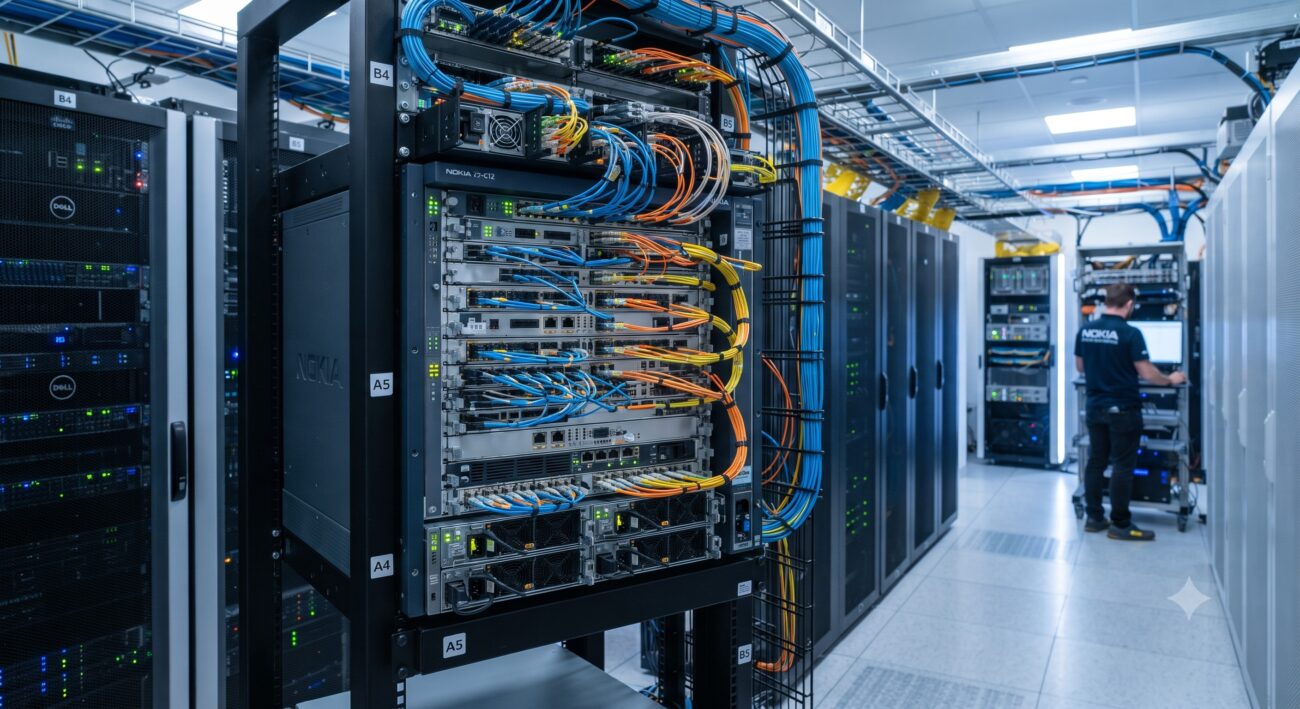
Introduction: The Imperative of Carrier-Grade Reliability in an Always-On World
In the current landscape of AI-driven workloads, cloud-native 5G, and mission-critical enterprise connectivity, network downtime is not an option. The Service Level Agreements (SLAs) demanded by modern digital services require routing infrastructure that guarantees five-nines (99.999%) availability. The Nokia 7750 Service Router (SR) family is engineered from the ground up to meet these rigorous demands. This article provides a deep, data-driven technical evaluation of the carrier-grade reliability features—from the physical hardware redundancy to the deterministic performance of the FP routing silicon—that make the 7750 SR the definitive choice for core and edge networks .
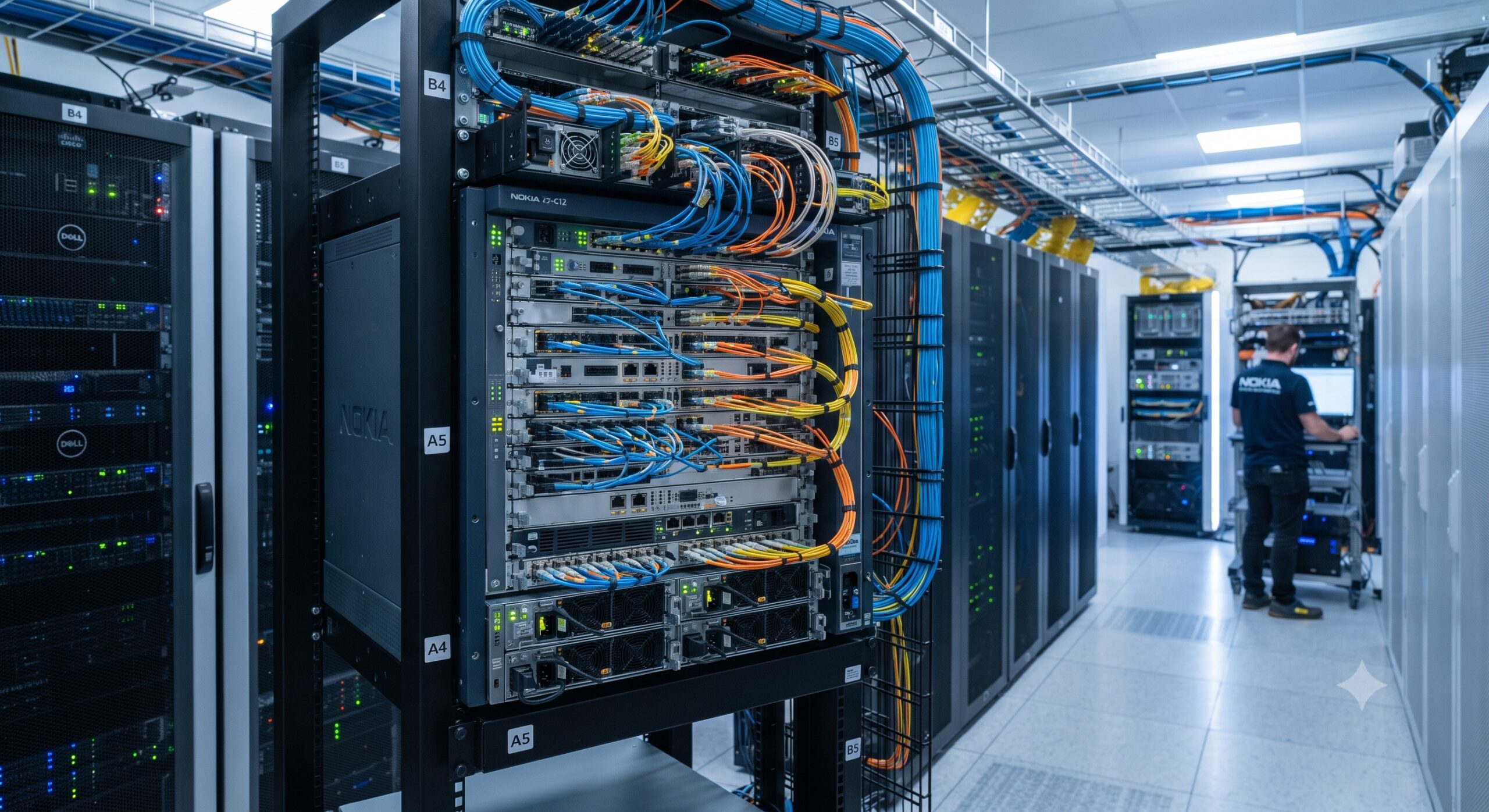
Architectural Foundations of High Availability
The 7750 SR is not a single router; it is a comprehensive portfolio, including the FP5-based SR-s series, FP4-based SR series, and FP3-based SR-e and SR-a models, designed to scale from 100 Gb/s to a massive 230 Tb/s full duplex (FD) with Intelligent Aggregation (IA) . Regardless of scale, the architectural philosophy revolves around eliminating single points of failure and ensuring deterministic performance.
Control Plane Redundancy: The Dual-Engine Model
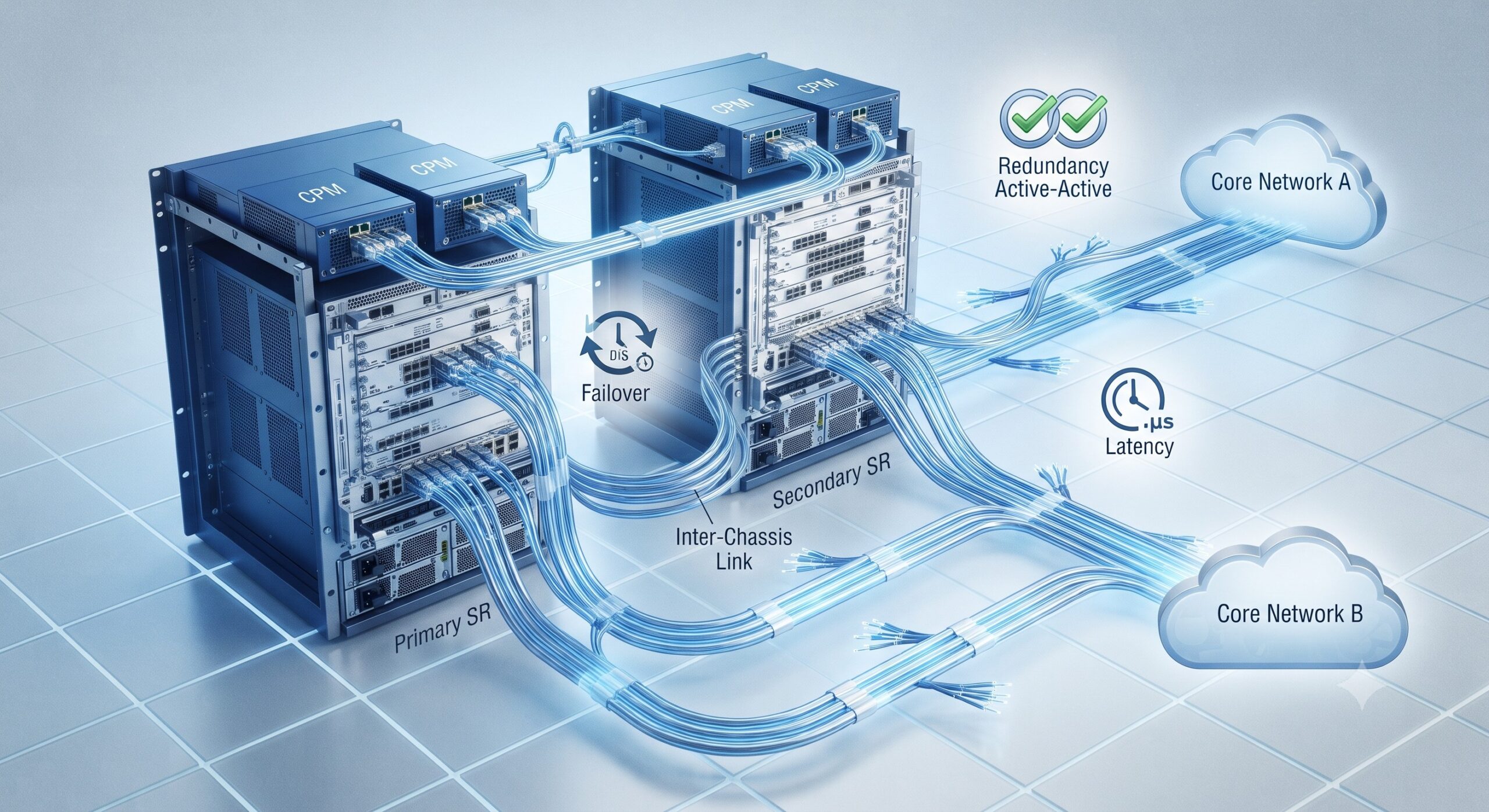
At the heart of the platform’s reliability is its modular chassis design, featuring redundant Control Processing Modules (CPMs). In the event of a primary CPM failure, the secondary CPM assumes control instantaneously. The system leverages Non-Stop Routing (NSR) and Non-Stop Services (NSS) within the Service Router Operating System (SR OS), ensuring that protocol adjacencies (OSPF, BGP, IS-IS) and forwarding tables are preserved without impacting data plane traffic . This capability is supported by the robust hardware foundation, with CPMs ranging from dual-core Marvell OCTEON III processors to high-performance 48-core variants, ensuring processing continuity .
Data Plane Determinism: FP Silicon and Buffer Architecture
Unlike merchant silicon architectures that experience performance degradation under full load, the disaggregated, fully buffered chipset architecture of the Nokia FP processors guarantees deterministic packet forwarding. This means that even when complex operations like extensive ACLs, H-QoS, and MACsec encryption are enabled concurrently, line-rate performance does not degrade . The IOMs (Input/Output Modules) distribute processing on a per-slot basis, meaning system capacity scales linearly as modules are added.
| Parameter | Specification | Reliability Benefit |
|---|---|---|
| System Capacity (FD, Max) | 230 Tb/s (with IA) | Massive scale-out for data-intensive applications |
| Silicon Architecture | Nokia FP3/FP4/FP5 | Deterministic performance, no degradation under load |
| Control Plane CPU | Up to 48-core Marvell OCTEON III | High-speed stateful failover (NSR/NSS) |
| Line Rate Encryption | IEEE 802.1AE MACsec (ANYsec) | Quantum-safe data security with no performance loss |
| Thermal Operating Range | -5°C to +55°C (SR-a) | Extended environmental tolerance for edge deployments |
MTBF, Redundancy, and Operational Metrics
The physical layer of the 7750 SR is designed for resilience. The platform features N+1 power supply redundancy, N+1 fan tray redundancy, and hot-swappable components including IOMs, MDAs, and CPMs, allowing for in-service hardware maintenance .
Quantifying Redundancy Metrics
Nokia’s thermal design is optimized for sustainability and reliability. The SR-e series features NEBS-compliant front-to-back cooling, while the compact SR-a series supports side-to-side airflow, ensuring operation in temperature ranges from -5°C to +55°C . This robust design is validated in the field. For example, Vodafone Idea (VIL) selected the 7750 SR to enhance its IP backhaul network to reduce operational costs and ensure seamless scalability for future technologies . Similarly, Orange Jordan upgraded its Broadband Network Gateway (BNG) across 76 sites to meet growing subscriber demands while optimizing energy consumption .
Security and Resilience: MACsec and DDoS Mitigation
Carrier-grade reliability extends beyond hardware failure to security threats. The Nokia 7750 SR integrates line-rate IEEE 802.1AE MACsec (ANYsec) encryption directly into the FP silicon. This ensures that data-in-motion is secure without compromising performance, offering quantum-safe cryptography capabilities . Furthermore, the platform provides powerful DDoS mitigation tools and hardware-root-of-trust features, protecting the control and management planes from sophisticated attacks . The platform’s MACsec implementation has received Common Criteria (NIAP) certification, validating its security efficacy .
Conclusion: The Verdict on Carrier-Grade Networking
The Nokia 7750 Service Router represents the pinnacle of carrier-grade routing. Its combination of a highly programmable FP silicon architecture, a resilient and feature-rich SR OS, and a physically redundant hardware design delivers on the promise of deterministic performance and ultra-high availability. Whether deployed as a core router handling 800GE traffic or a compact edge router in a space-constrained cabinet, the 7750 SR provides the rock-solid foundation required for next-generation networks. It is a proven solution, trusted by global operators to transform their networks and deliver exceptional customer experiences with minimal risk .

Leave a comment