
Overview & Thematic Scope
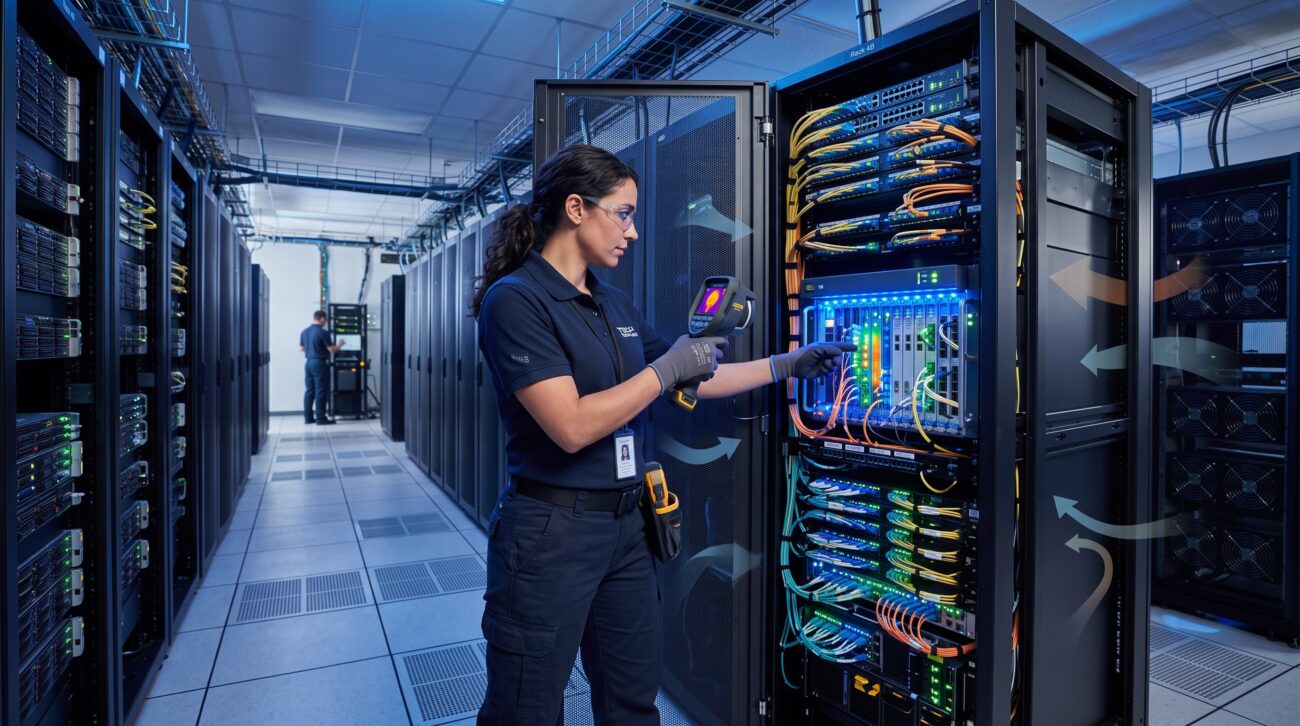
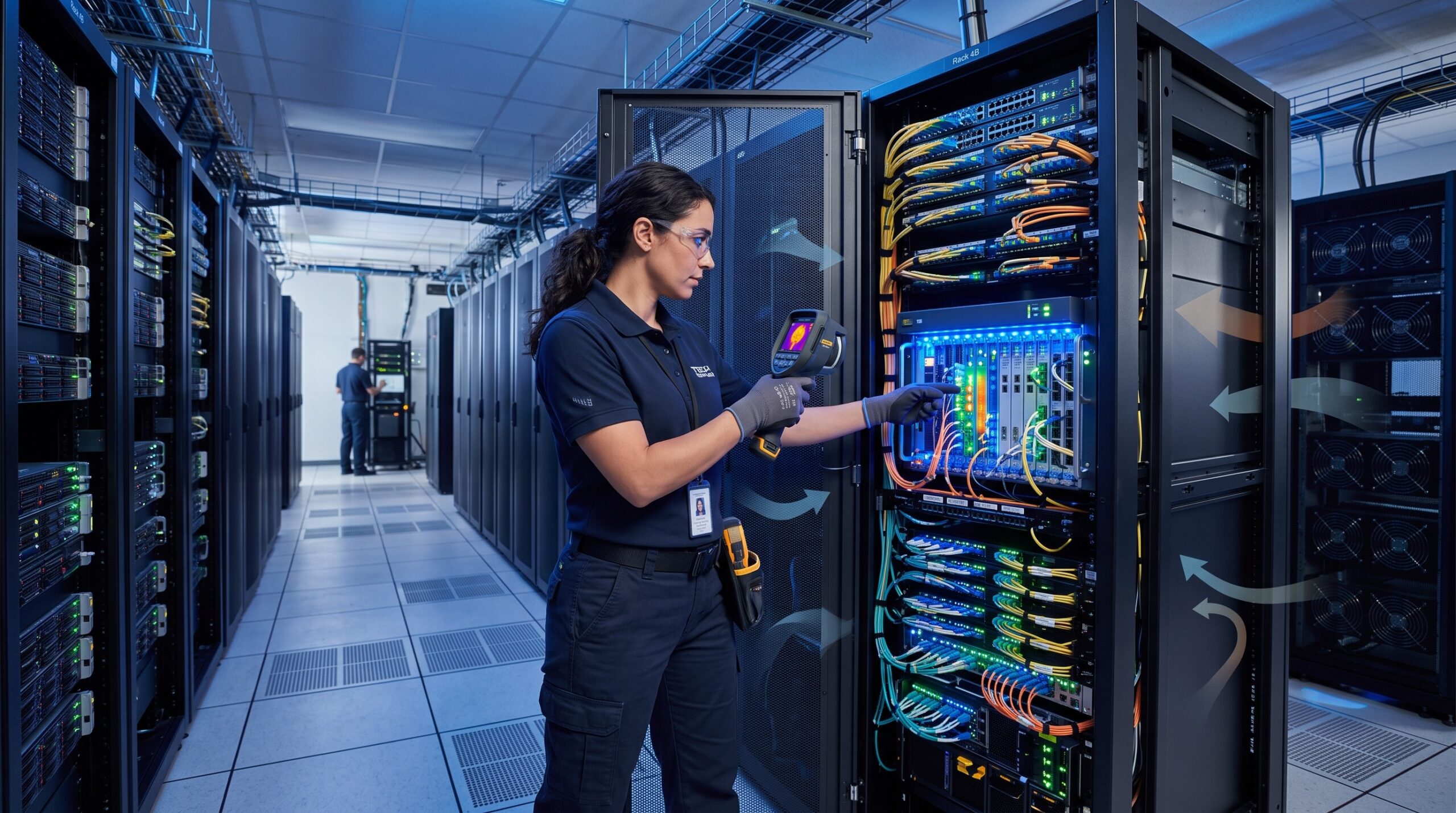
This FAQ addresses the critical challenge of HVAC heat load calculation for densely packed OLT (Optical Line Terminal) cabinets in telecom environments. As PON networks scale to support higher split ratios and XGS-PON/25G-PON line cards, the thermal density within a single cabinet can exceed 2,000-3,000 watts. Underestimating cooling requirements leads to premature hardware failures, optical transceiver degradation, and costly network downtime. This guide covers pre-sales capacity planning, post-sales troubleshooting, and operational best practices for maintaining optimal thermal performance in high-density OLT deployments.
Frequently Asked Questions
- Q1: What is the standard formula for calculating the total HVAC heat load of an OLT cabinet?
- The total HVAC heat load (in BTU/h) is precisely calculated by summing the maximum power consumption of all active OLT components and multiplying by 3.412. Specifically, the formula is: Total Heat Load (BTU/h) = (Chassis Power Draw + Line Card Draw + Optical Module Draw + Fan Tray Draw) × 3.412.
- Q2: What is the maximum thermal power density a standard 19-inch OLT cabinet can support without active cooling?
- A standard 19-inch OLT cabinet with passive convection cooling can support a maximum thermal density of approximately 500-800 watts. This limit is based on the cabinet’s surface area and natural airflow characteristics; exceeding this threshold necessitates forced-air cooling or liquid-cooled rear-door heat exchangers.
- Q3: How do I factor in solar radiation and ambient room temperature for an outdoor OLT cabinet?
- For outdoor OLT cabinets, add a safety margin of 15-20% to the calculated heat load to compensate for solar radiation gain, and use the worst-case annual maximum ambient temperature for your geographic location. The formula is: Adjusted Load = Base Load + (Solar Gain Factor) + (Wall Gain Factor).
- Q4: What are the typical pre-sales questions to ask when sizing an HVAC unit for a new OLT deployment?
- The four critical pre-sales questions are: (1) What is the maximum power consumption of the fully-populated OLT chassis? (2) What is the planned redundancy level (N, N+1, or 2N) for the cooling units? (3) What is the maximum ambient temperature of the equipment room or shelter? (4) What are the clearance requirements (front and rear) for adequate airflow as per the manufacturer’s specifications?
- Q5: How does altitude affect the cooling capacity of an HVAC unit for OLT cabinets?
- Altitude significantly reduces the cooling capacity of standard air-cooled HVAC units. For every 1,000 feet above sea level, derate the HVAC unit’s capacity by approximately 1-2%. At 6,000 feet altitude, for example, a 10,000 BTU/h unit will only deliver roughly 8,800-9,000 BTU/h of effective cooling.
- Q6: What are the most common post-sales HVAC symptoms indicating an undersized cooling unit?
- The most common symptoms of undersized cooling are: (1) Persistent high-temperature alarms on OLT line cards, (2) A cabinet internal temperature differential exceeding 15°F (8°C) between the top and bottom of the rack, (3) Frequent cycling of the HVAC compressor (short-cycling), and (4) Optical transceiver performance degradation, indicated by rising TX/RX power fluctuations and CRC errors.
- Q7: What is the recommended redundancy configuration for HVAC in a critical telecom POP?
- For a critical telecom Point of Presence (POP), the recommended redundancy is an N+1 configuration, meaning at least one additional HVAC unit is installed beyond the calculated requirement. In hyperscale or carrier-grade environments, 2N redundancy is often mandated to allow for concurrent maintainability (CM) without any thermal impact during a unit failure or filter change.
- Q8: How often should HVAC air filters be changed in a high-density OLT cabinet environment?
- In high-density OLT environments, HVAC air filters should be inspected monthly and replaced every 45-90 days, depending on the particulate load of the equipment room. Clogged filters increase static pressure, reducing airflow by up to 30% and drastically increasing the cabinet’s internal operating temperature, directly shortening the lifespan of sensitive optics and ASICs.

Leave a comment