
SYSTEM OVERVIEW
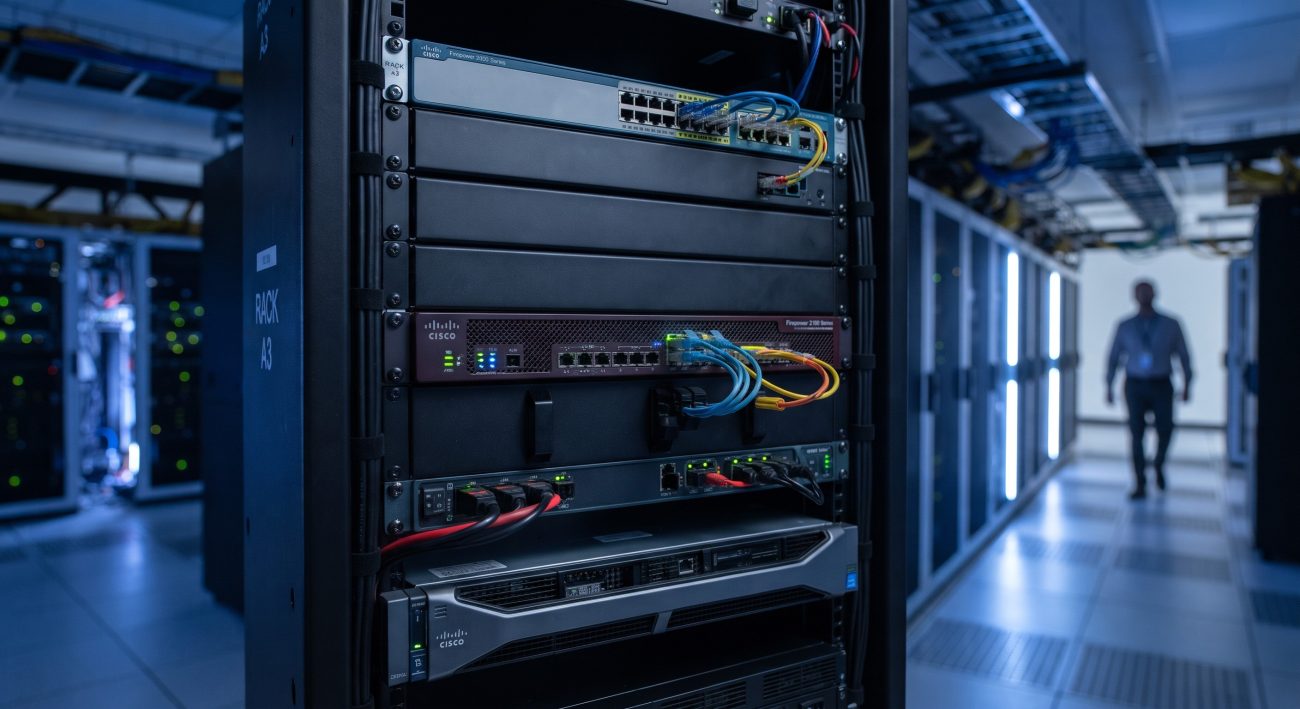
The Cisco Firepower 2100 Series represents a family of four threat-focused Next-Generation Firewall platforms engineered to deliver business resiliency through superior threat defense. Unlike competitive offerings that suffer significant performance degradation when advanced security functions are enabled, the 2100 Series employs an innovative dual multi-core CPU architecture. This design uniquely optimizes firewall, cryptographic, and threat inspection functions simultaneously, ensuring that throughput remains stable even when features such as IPS, Application Visibility and Control, and malware defense are activated . The series spans use cases from the Internet edge to the data center, with firewall throughput ranging from 2.6 Gbps to 10.4 Gbps under Threat Defense software .
INTERNAL ASIC & BACKPLANE
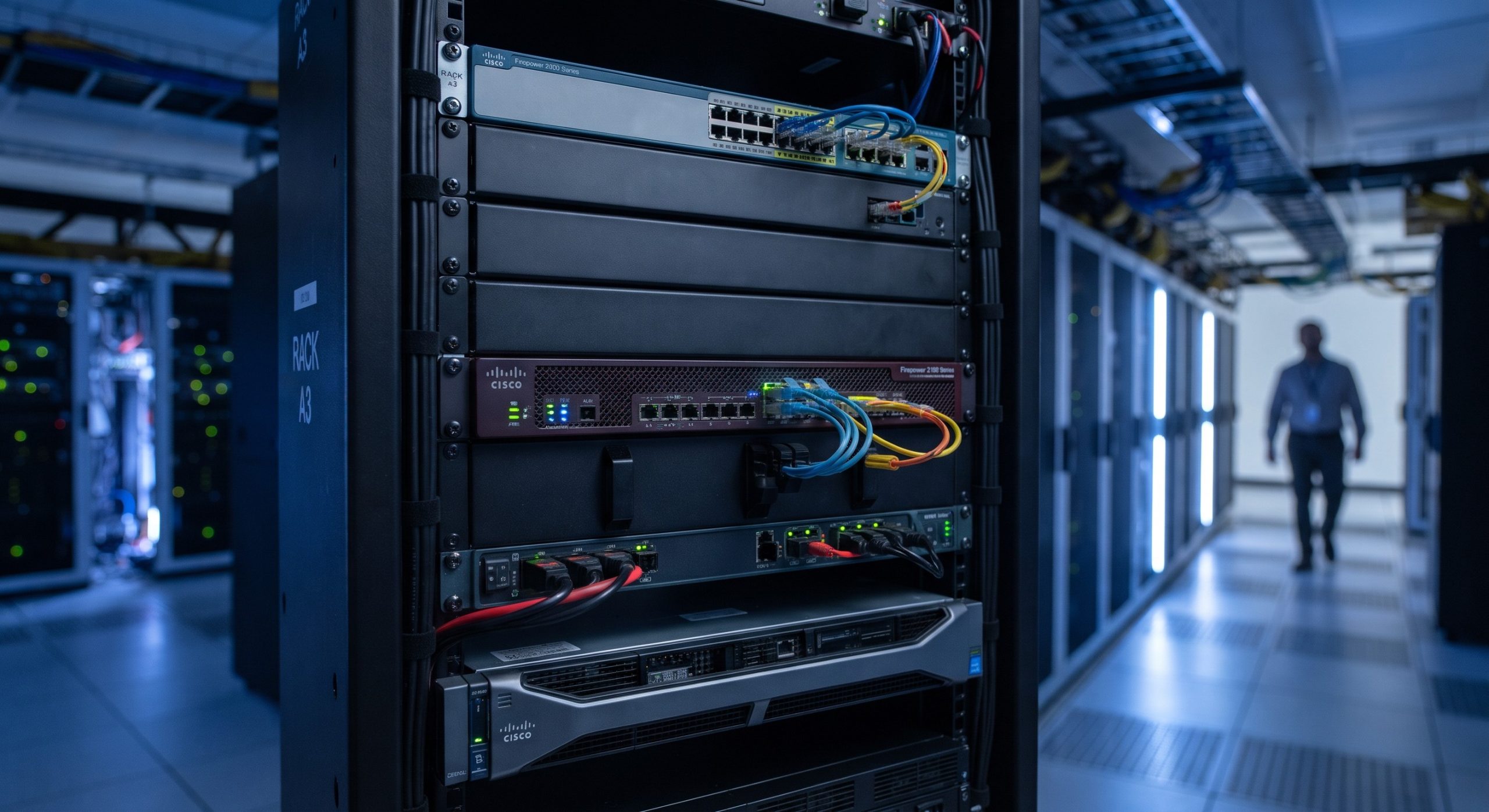
The hardware acceleration capabilities of the Firepower 2100 Series are rooted in a specialized offload architecture. The platform integrates a Cavium Network Processing Unit alongside the main multi-core x86 CPU complex. This heterogeneous design allows the system to offload specific packet processing and cryptographic tasks to the dedicated network processor, preserving main CPU cycles for deep packet inspection and threat analysis . The 2110 and 2120 models are equipped with 8 GB of Cavium NPU RAM, while the higher-end 2130 and 2140 models double this to 16 GB, facilitating higher concurrent session handling and throughput for inspection-intensive workloads . This architecture enables the series to sustain firewall and IPS throughput levels that are nearly identical when measured with or without threat defense features enabled, a critical differentiator for organizations requiring robust security without compromising network performance .
POWER & THERMAL MECHANISMS
The thermal design of the 2100 Series is tailored to the varying power profiles of the four models. The 2110 and 2120 utilize a single fixed AC power supply rated at 250W with two fixed internal fans, suitable for typical wiring closet deployments . In contrast, the 2130 and 2140 models introduce higher availability features with dual hot-swappable power supply slots (400W AC modules) and a hot-swappable fan tray containing four fans operating in a 3+1 redundancy scheme . Airflow is strictly front-to-rear, aligning with standard cold-aisle to hot-aisle data center practices . The 2130 platform is specifically designed for NEBS Level 3 compliance, making it suitable for central office deployments with extended operating temperature tolerances .
PHYSICAL LIMITS
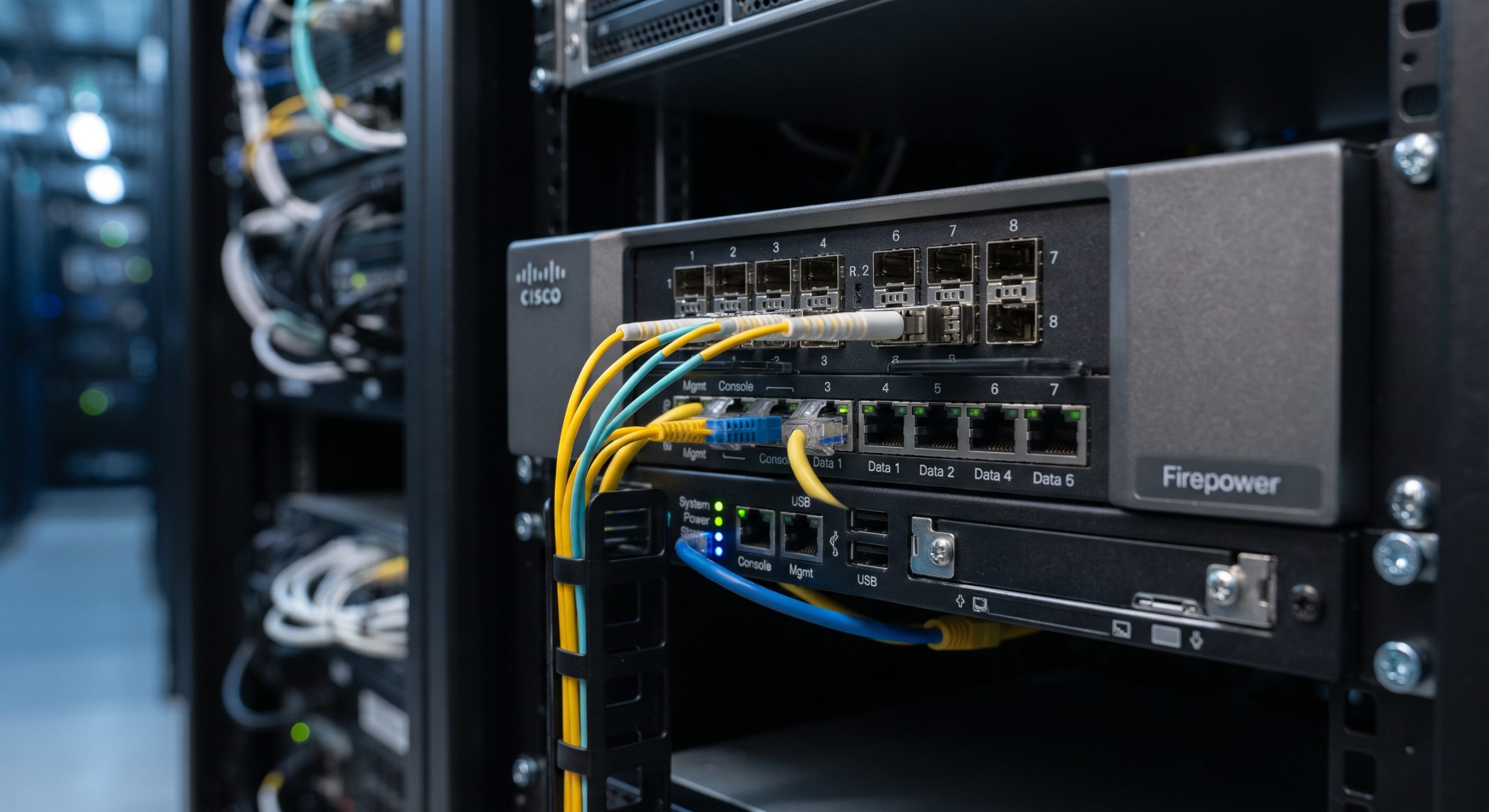
All models in the series share a compact 1RU form factor, measuring 1.73 x 16.90 x 19.76 inches, which maximizes rack density in space-constrained environments . The physical interface configuration varies by model to match throughput scaling. The 2110 and 2120 provide 12 fixed RJ-45 copper ports and 4 fixed 1-Gbps SFP ports, with no network module expansion capability . The 2130 and 2140 introduce a single network module slot that is not hot-swappable, accepting options such as 8-port 1-Gbps SFP, 8-port 10-Gbps SFP+, or 6-port fiber modules with hardware bypass for fail-to-wire deployments . The maximum interface count scales from 16 ports on the 2110/2120 to 24 ports on the 2130/2140 when a network module is installed .
PARAMETER REGISTRY
The following table delineates the verified hardware acceleration and performance limits for the Cisco Firepower 2100 Series under Threat Defense software. It is critical to note that these figures represent the maximum sustained limits under ideal test conditions with 1024-byte packets; actual performance may vary based on protocol mix, packet size, and activated features .
| Parameter | FPR-2110 | FPR-2120 | FPR-2130 | FPR-2140 |
|---|---|---|---|---|
| Firewall Throughput (NGFW) | 2.6 Gbps | 3.4 Gbps | 5.4 Gbps | 10.4 Gbps |
| IPS Throughput | 2.6 Gbps | 3.5 Gbps | 5.4 Gbps | 10.5 Gbps |
| IPSec VPN Throughput | 0.95 Gbps | 1.2 Gbps | 1.9 Gbps | 3.6 Gbps |
| TLS Decryption Throughput | 365 Mbps | 475 Mbps | 760 Mbps | 1.4 Gbps |
| Maximum Concurrent Sessions (AVC) | 1,000,000 | 1,500,000 | 2,000,000 | 3,000,000 |
| Max New Connections per Second (AVC) | 14,000 | 18,000 | 30,000 | 57,000 |
| Maximum VPN Peers | 1,500 | 3,500 | 7,500 | 10,000 |
| Cavium NPU RAM | 8 GB | 8 GB | 16 GB | 16 GB |
| Form Factor | 1 RU | 1 RU | 1 RU | 1 RU |
| Power Supply | Fixed 250W AC | Fixed 250W AC | Dual 400W AC/DC (Hot-swap) | Dual 400W AC/DC (Hot-swap) |
| Network Module Slots | 0 | 0 | 1 | 1 |
| NEBS Compliance | No | No | Designed for NEBS | No |
GLOBAL SUPPORT INFRASTRUCTURE
Cisco provides comprehensive lifecycle support for the Firepower 2100 Series through the Cisco Talos threat intelligence group, which delivers automated signature and threat feed updates. The platforms include Trust Anchor Technologies for supply chain and software image assurance, ensuring hardware integrity from manufacturing through deployment . Centralized management is facilitated through Cisco Firepower Management Center or Cisco Defense Orchestrator for cloud-based visibility, while local management is available via Firepower Device Manager for smaller-scale deployments . The 2130 model carries NEBS compliance for carrier-grade environments, and the entire series adheres to rigorous safety and EMC standards including UL 60950-1, EN 60950-1, and FCC Part 15 Class A emissions requirements .
📥 Download Technical Specification
Click the button below to view or download the full official PDF datasheet.
Leave a comment