
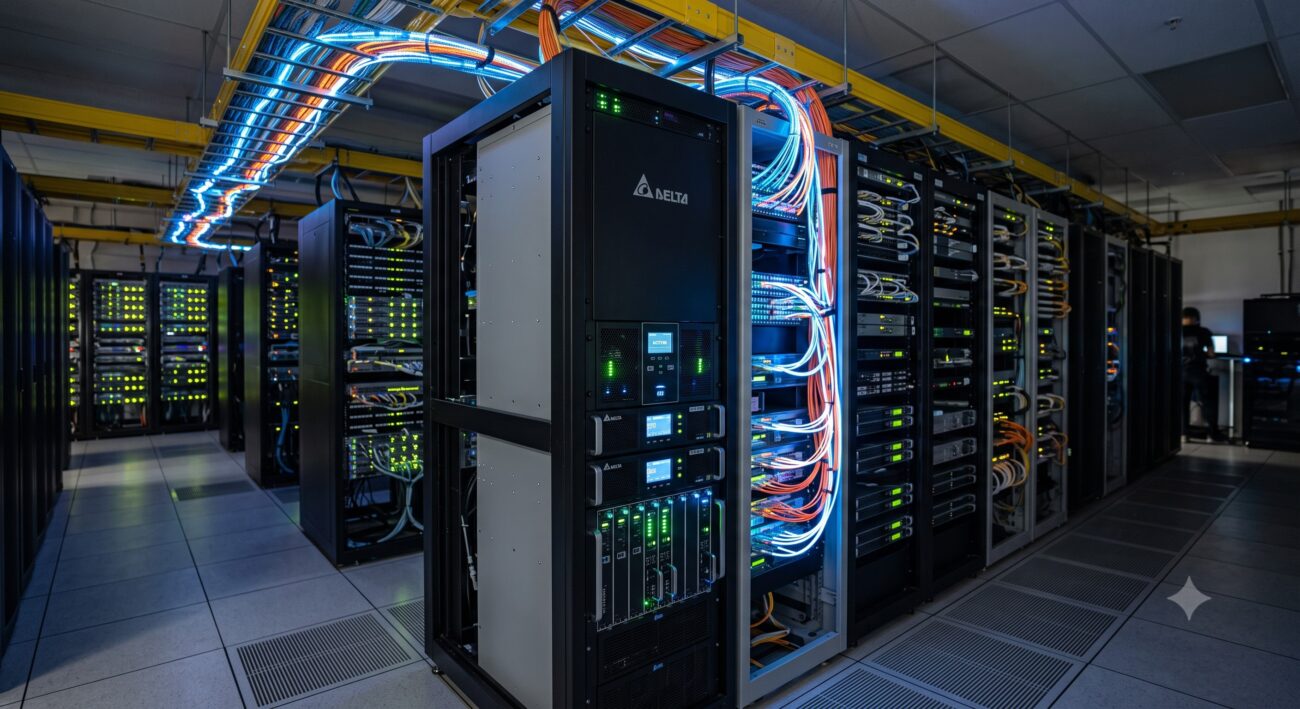
Introduction: The Unseen Backbone of Global Connectivity
In an era where network uptime is synonymous with business continuity, the reliability of telecom infrastructure hinges on a critical, yet often overlooked component: the power system. Delta Telecom Power Systems represent the gold standard in ensuring uninterrupted service for wireless broadband access, fixed-line networks, internet backbones, and hyperscale data centers . This guide offers a comprehensive, data-driven exploration of Delta’s power solutions, dissecting their internal architecture, technical specifications, and deployment strategies to empower network architects and systems integrators in making informed infrastructure decisions.
Core Architecture and Hardware Topology
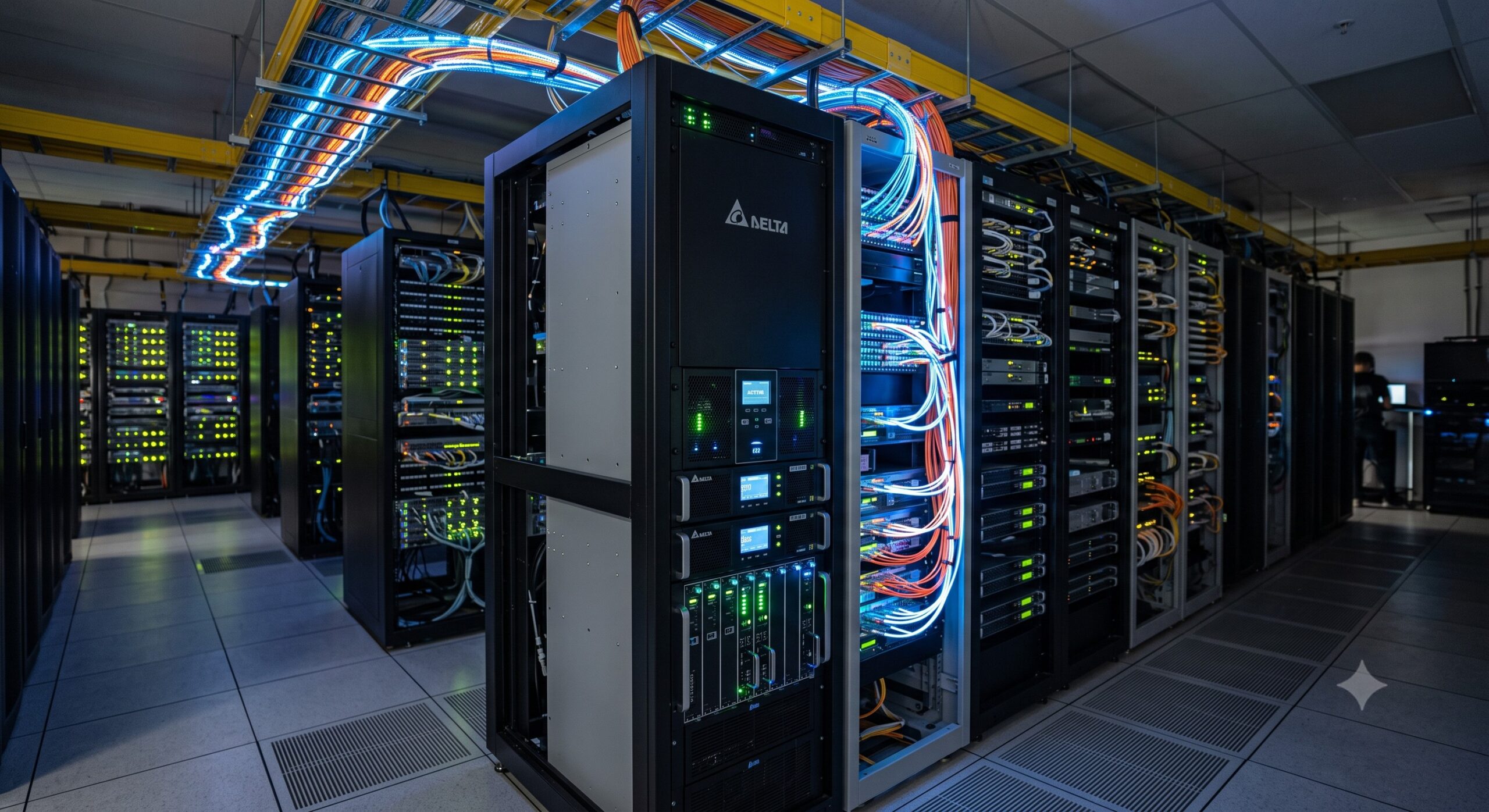
At the heart of every Delta telecom power system lies a modular, scalable architecture designed for maximum flexibility and resilience. The essential components include high-efficiency rectifiers, advanced power system controllers, and battery storage units . This modularity allows for tailored configurations, from compact indoor units to ruggedized outdoor enclosures designed to withstand demanding environmental conditions.
Modular Design Philosophy: InD, OutD, and HelpD
Delta’s product portfolio is strategically structured around distinct application needs. The InD (Indoor) series is optimized for controlled environments like central offices, while the OutD (Outdoor) series is engineered for remote radio heads and base stations in harsh climates . The HelpD global service concept ensures consistent support and lifecycle management across all deployments. This modular approach not only simplifies initial deployment but also significantly eases future scalability and maintenance.
Deep Dive into Core Components
Understanding the individual components is crucial for optimizing system performance and total cost of ownership.
Rectifiers: The Power Conversion Engine
Delta’s rectifiers are renowned for their industry-leading energy efficiency, achieving up to 98% conversion efficiency in some series . This high efficiency directly translates to reduced operational expenditures (OPEX) and a lower carbon footprint. The rectifiers convert alternating current (AC) from the grid into the direct current (DC) required by telecom equipment, typically a nominal -48V DC. They are designed with a wide AC input voltage range (e.g., 90Vac to 264Vac) to accommodate unstable mains conditions globally .
| Key Parameter | Technical Specification (Example: DPS 3000 Series) |
|---|---|
| AC-to-DC Efficiency | Up to 98.0% |
| Nominal DC Output | -48V DC |
| Form Factor | 19-inch, 4U Shelf |
| Max System Current | 200A |
| Compliance Standards | IEEE, ITU-T, RoHS, Telcordia SR-332 |
Controllers: The Intelligent Management Core
Delta power controllers serve as the intelligent brain of the system, providing advanced monitoring, control, and battery management . These controllers are crucial for maximizing battery life, enabling energy savings, and informing operators of maintenance needs. They support comprehensive battery management across various battery technologies, including advanced Lithium-ion (Li-ion) batteries, and feature proactive fault prevention mechanisms. Remote monitoring and management solutions (RMMS) extend visibility through integrated web interfaces, enabling centralized alarm handling and predictive maintenance across distributed sites .
Technical Specifications and Performance Metrics
Quantifiable data is the bedrock of engineering credibility. Delta Telecom Power Systems are engineered to meet rigorous industry standards, offering performance metrics that justify their carrier-grade reputation.
Efficiency and Power Density
As highlighted, efficiency is a primary design goal. The DPS 3000 and DPS 2900 series deliver up to 98.0% and 96.4% efficiency respectively, significantly reducing energy waste and cooling requirements in high-density deployments . Their compact form factors (e.g., 4U or 7U shelves) ensure a high power density, optimizing valuable rack space in data centers and telecom huts.
Reliability and Mean Time Between Failures (MTBF)
Reliability is non-negotiable in telecom. Delta power supplies consistently demonstrate high MTBF figures. For instance, the PMT series boasts an MTBF of > 700,000 hours per Telcordia SR-332 standards . This level of reliability, validated through rigorous parts-stress reliability projections, ensures long-term operational stability and minimizes costly downtime. Compliance with standards like IEEE and ITU-T frameworks (e.g., the upcoming IEEE 3115-2025 for 5G power terminals) is a testament to their industry-grade design .
Deployment Strategies and Systems Integration
Integrating Delta power systems into existing network infrastructure requires a strategic approach to ensure seamless operation and optimal performance.

Prerequisite Guide for Integrators
Before deployment, systems integrators must assess physical space, thermal dissipation capabilities, and existing AC mains stability. Delta’s modular shelves, such as the 19-inch and 23-inch enclosures, are designed for standard rack integration, supporting modular expansion . The ability to integrate renewable energy sources and additional AC line conditioning elements makes these systems adaptable to diverse geographic and grid conditions .
Case Study: Migration to New-Generation Rectifiers
A documented case study involving a major mobile operator showcases the decision-making process for implementing Delta’s new-generation rectifiers combined with Saft Li-ion batteries . This migration addressed technical challenges such as constant-power loads, which can cause traditional constant-current rectifiers to latch after an AC interruption. Delta’s advanced rectifiers and intelligent controllers prevent such issues, ensuring seamless power delivery and battery longevity .
Conclusion: The Verdict on Delta Telecom Power Systems
Delta Telecom Power Systems offer a compelling combination of high efficiency, robust reliability, and intelligent manageability. With rectifier efficiencies surpassing 98%, MTBF figures exceeding 700,000 hours, and flexible modular architectures, they provide a resilient and cost-effective foundation for modern telecom networks. For network architects and systems integrators, Delta’s solutions represent not just a power supply, but a strategic investment in network longevity, operational efficiency, and sustainability.

Leave a comment