
EXECUTIVE SUMMARY
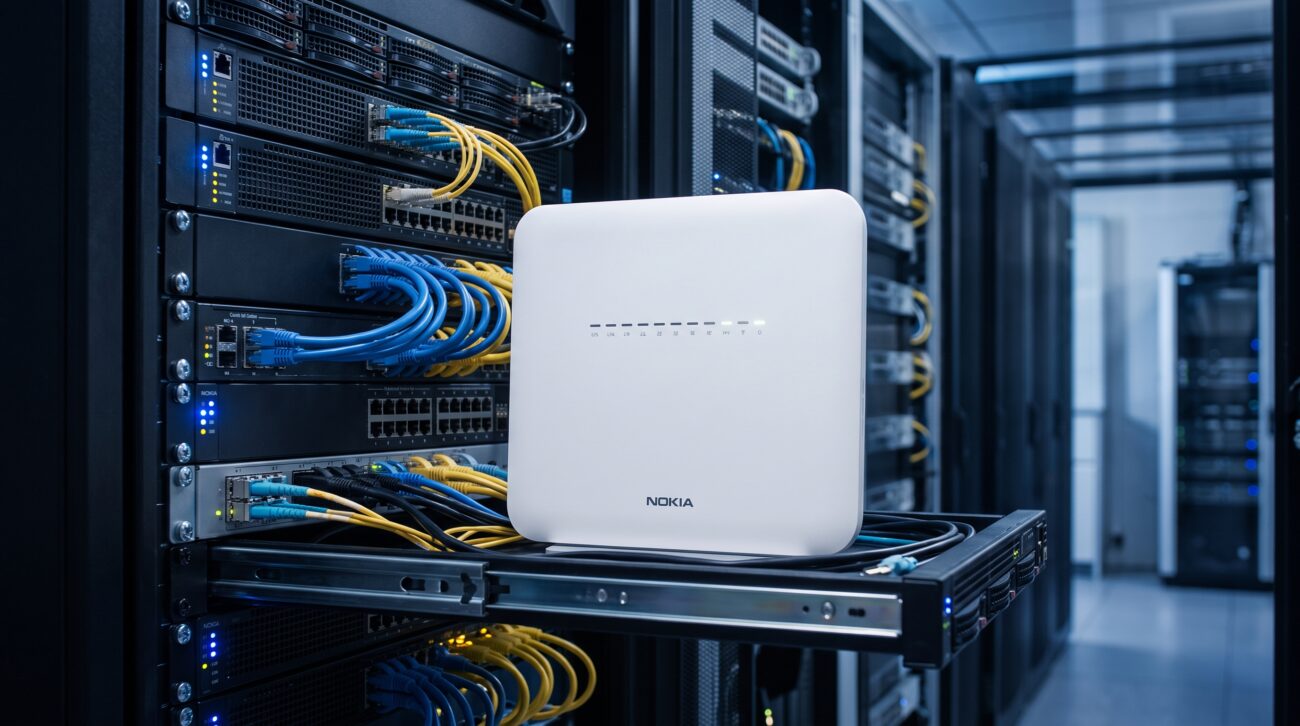
The Nokia G-2426G-A is a carrier-grade GPON Optical Network Terminal designed for residential and small business fiber-to-the-home deployments requiring high-performance Wi-Fi 6 connectivity. This document provides authoritative radio frequency (RF) output power specifications, regulatory compliance parameters, and hardware performance data for network engineers, RF planners, and procurement specialists evaluating the G-2426G-A platform for mass FTTH deployment.
The G-2426G-A integrates dual-band concurrent Wi-Fi 6 (802.11ax) radios operating in the 2.4 GHz and 5 GHz spectrum bands, delivering deterministic RF output power levels that meet global regulatory frameworks including FCC (United States), ETSI (Europe), and regional spectrum authority requirements. The platform supports 2×2 MIMO configurations on both radio bands with conductive power specifications that enable predictable coverage planning and interference management in high-density subscriber environments .
Key RF power characteristics include 500 mW conductive output on both 2.4 GHz and 5 GHz bands, with maximum EIRP values subject to country-specific regulatory limits . These specifications position the G-2426G-A as a compliant, high-efficiency Wi-Fi 6 access point integrated within a GPON ONT form factor, eliminating the need for separate residential gateway and access point hardware.
ARCHITECTURE & CHASSIS DESIGN
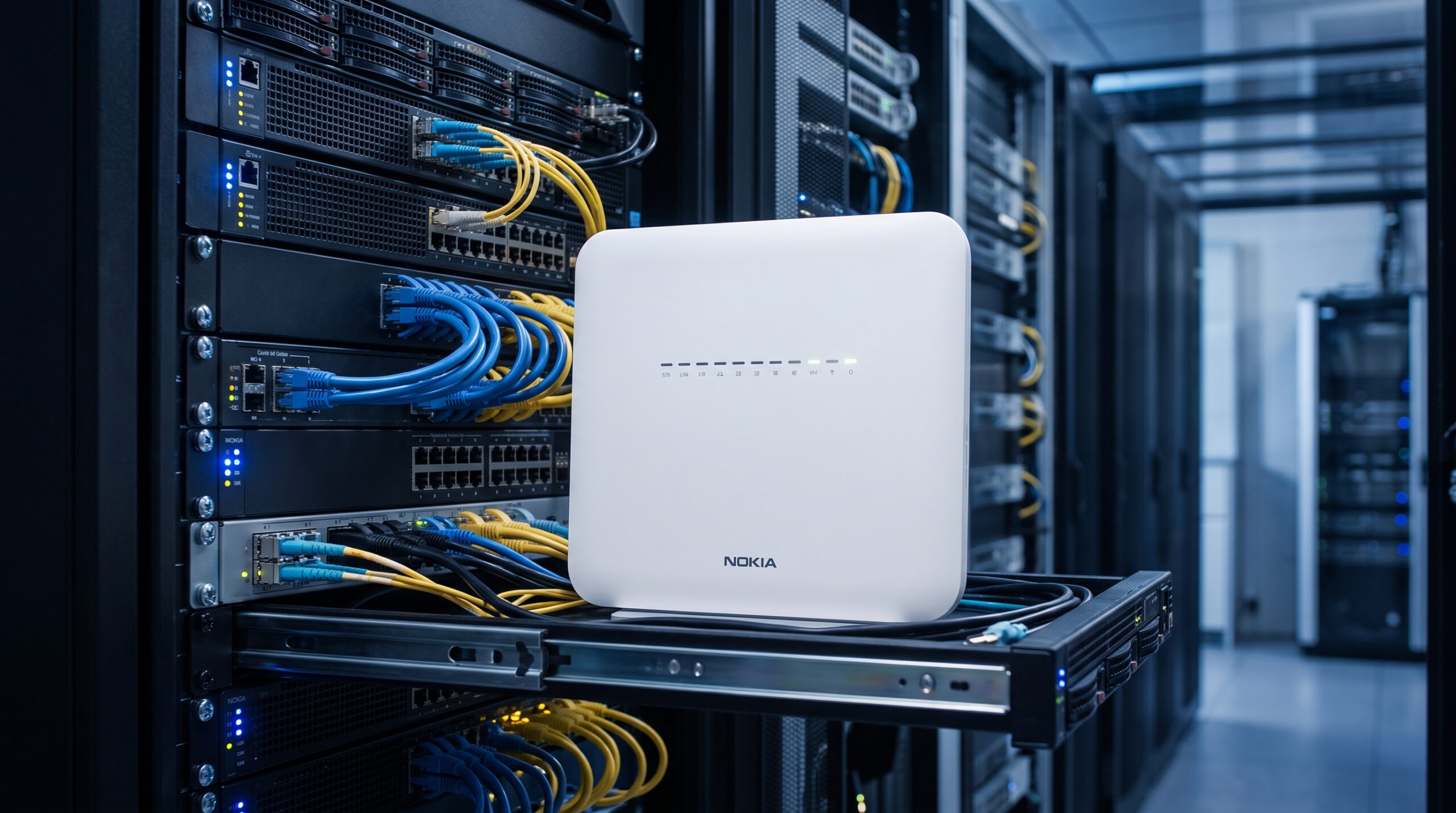
The G-2426G-A is architected as an integrated GPON ONT and Wi-Fi 6 residential gateway, consolidating optical network termination, Layer 2 switching, VoIP telephony, and dual-band wireless access into a single customer premises equipment (CPE) enclosure. This integrated design reduces installation complexity, power consumption, and physical space requirements compared to disaggregated ONT-plus-router deployments.
The chassis houses internal PCB antennas for both 2.4 GHz and 5 GHz radios, eliminating external antenna protrusions while maintaining specified RF performance characteristics. The antenna configuration supports 2×2 MIMO operation on each band, enabling spatial multiplexing and beamforming capabilities inherent to the Wi-Fi 6 standard .
The physical form factor supports desktop or wall-mounted installation, with integrated mounting points and a compact footprint suitable for residential utility closets, living spaces, or small business telecom cabinets. Thermal management is passive, with the enclosure design providing sufficient heat dissipation for continuous operation within specified environmental limits.
HARDWARE FEATURES
The G-2426G-A implements a comprehensive subscriber interface set designed to support triple-play service delivery:
Wi-Fi 6 Radio Subsystem: Dual-band concurrent operation with 2×2 MIMO on both 2.4 GHz (802.11b/g/n/ax) and 5 GHz (802.11a/n/ac/ax) bands. The radio architecture supports channel bandwidths of 20/40 MHz on 2.4 GHz and 20/40/80 MHz on 5 GHz, with automatic channel selection capability .
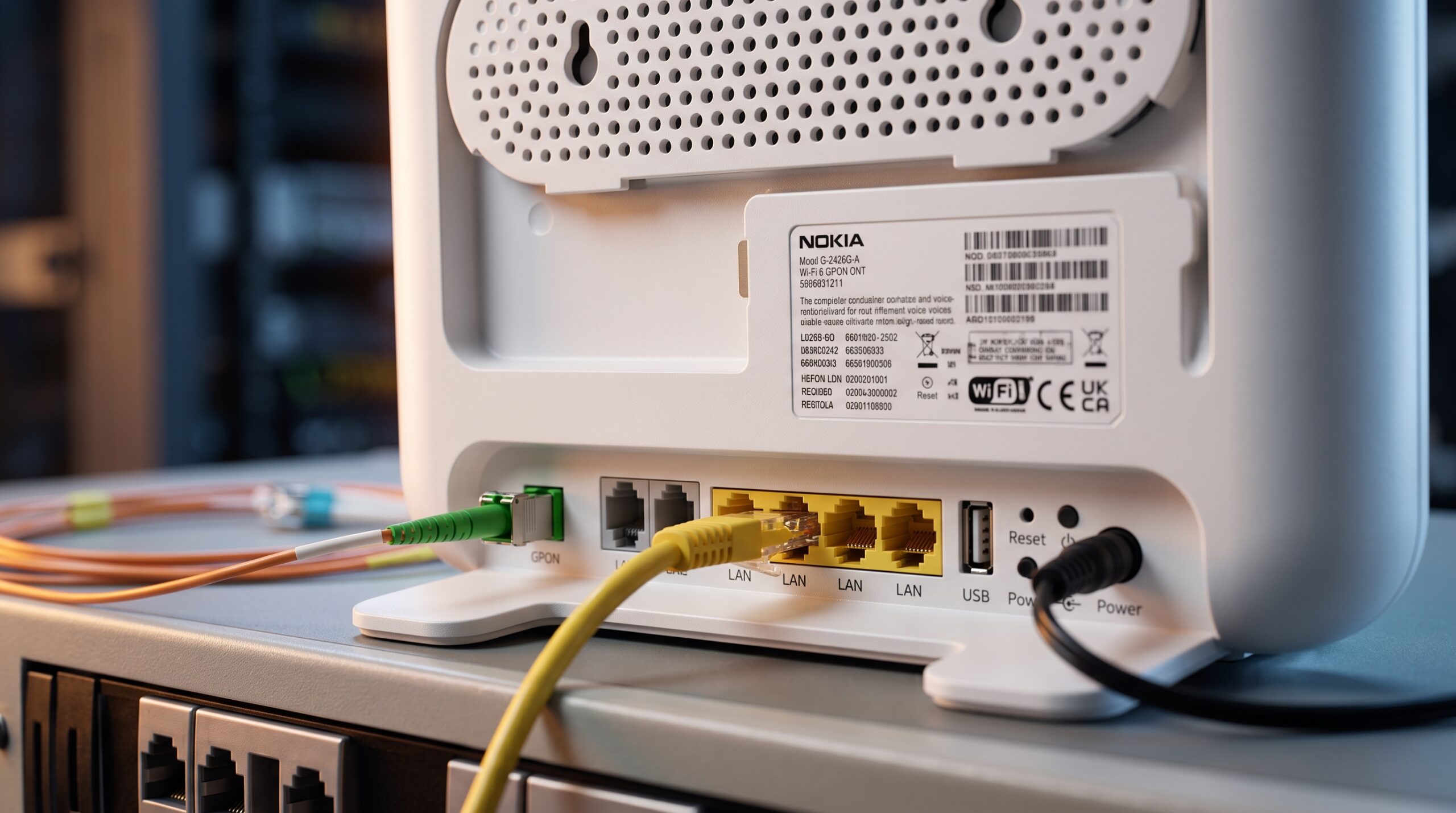
GPON Uplink Interface: ITU-T G.984 compliant GPON interface with SC/APC optical connector, supporting downstream wavelengths of 1490 nm and upstream 1310 nm. The optical subsystem includes received signal strength indication (RSSI) for fiber plant diagnostics and supports class B+ optical power budgets .
Ethernet Interfaces: Four Gigabit Ethernet (10/100/1000 Mbps) RJ-45 ports with auto-negotiation and MDI/MDIX auto-sensing for flexible LAN connectivity .
Voice Interfaces: Two POTS ports with RJ-11 connectors supporting SIP-based VoIP services with G.711, G.722, G.723, G.726, and G.729 codecs .
COMPLIANCE & STANDARDS
The G-2426G-A is certified to the following standards and regulatory frameworks governing RF emissions and wireless operation:
• CE marking for European health, safety, and environmental standards
• EN 300-328 v1.9.1 wide band data transmission for 2.4 GHz bands
• IEEE 802.11a/b/g/n/ac/ax for Wi-Fi operation
• ITU-T G.984.x series for GPON interface compliance
• FCC Part 15 Subpart C (2.4 GHz) and Subpart E (5 GHz) for United States deployments
• ITU-T G.988 OMCI for ONT management and provisioning
The platform supports WPA/WPA2/WPA3 security protocols including WPA-PSK/TKIP, WPA2-PSK/AES, and WPA3-SAE for wireless encryption .
TECHNICAL SPECIFICATIONS
The following table presents the definitive radio frequency output power and associated RF parameters for the Nokia G-2426G-A. All values represent manufacturer specifications at nominal operating conditions.
| Parameter | Specification |
|---|---|
| Wi-Fi Standard | IEEE 802.11a/b/g/n/ac/ax (Wi-Fi 6) |
| 2.4 GHz MIMO Configuration | 2×2 |
| 5 GHz MIMO Configuration | 2×2 |
| 2.4 GHz Conductive Output Power | 500 mW (27 dBm) |
| 5 GHz Conductive Output Power | 500 mW (27 dBm) |
| 2.4 GHz Maximum EIRP | Subject to country-specific regulation |
| 5 GHz Maximum EIRP | Subject to country-specific regulation |
| Antenna Type | Internal PCB antennas |
| Channel Bandwidth (2.4 GHz) | 20, 40 MHz (auto) |
| Channel Bandwidth (5 GHz) | 20, 40, 80 MHz (auto) |
| Security Protocols | WPA, WPA2, WPA3, WEP 64/128 |
| GPON Interface | ITU-T G.984, SC/APC |
| Optical Wavelengths | 1490 nm downstream / 1310 nm upstream |
| Ethernet Interfaces | 4x 10/100/1000 Mbps RJ-45 |
| Power Consumption | Less than 24 W |
| Operating Temperature | -5°C to +45°C |
REGULATORY COMPLIANCE
RF output power compliance is critical for lawful operation and interference management in licensed and unlicensed spectrum. The G-2426G-A implements region-specific power limits enforced through software configuration, ensuring that deployed units conform to local spectrum regulations without hardware modification.
For FCC-regulated deployments (United States), the device operates within Part 15 limits, with maximum conducted output power and EIRP values that support typical residential coverage requirements while maintaining spectral coexistence with neighboring access points . For ETSI-regulated deployments (European Union and associated territories), power limits are automatically reduced to comply with EN 300-328 and related harmonized standards .
Regional variants are identified by ordering kit suffixes (AA for US plug, BA for EU plug, etc.), with firmware applying appropriate power tables during initialization. This architecture ensures that a single hardware platform can serve global markets through software-defined regulatory compliance .
📥 Download Technical Specification
Click the button below to view or download the full official PDF datasheet.

Leave a comment