
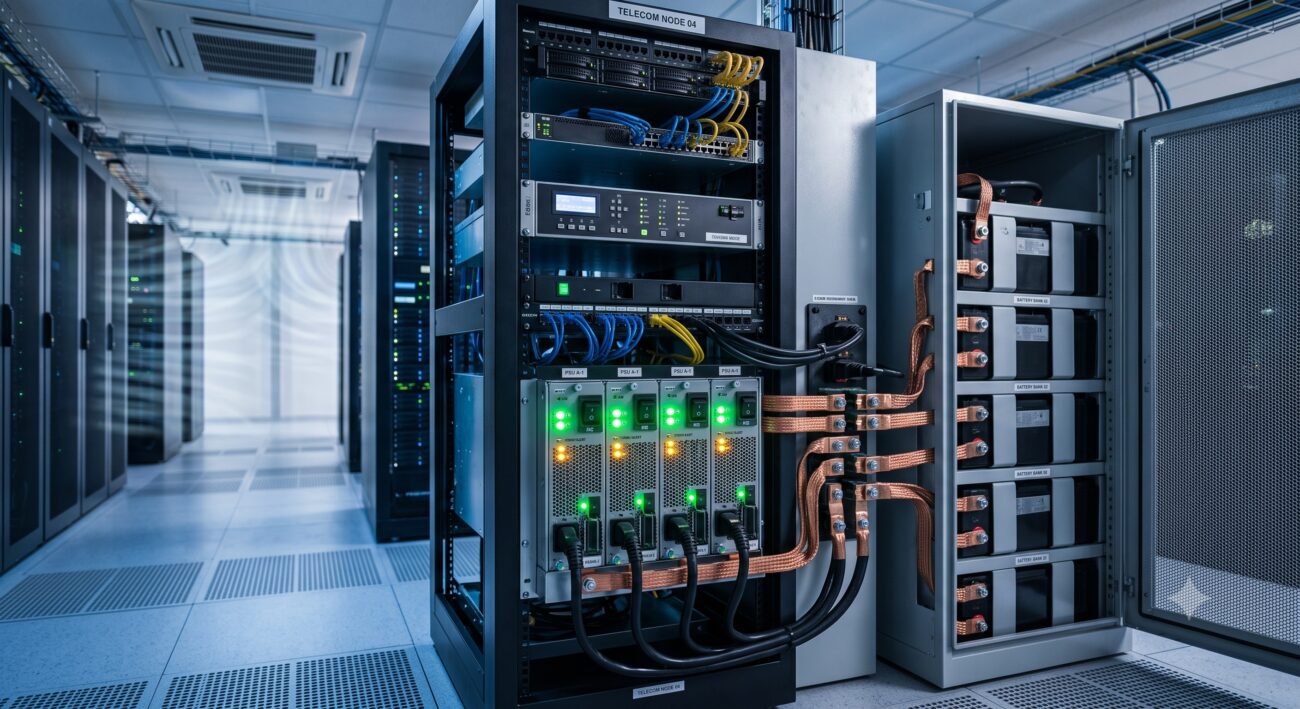
Executive Overview: The Unseen Backbone of Telecom Infrastructure
In the realm of telecommunications, the conversation often gravitates towards Gbps throughput, sub-millisecond latency, and the latest ASIC innovations. However, the bedrock upon which these digital marvels rest is often overlooked: the Telecom Site Power Systems. A carrier-grade network is only as reliable as the power infrastructure that sustains it. This deep dive provides a technical blueprint for evaluating the Mean Time Between Failures (MTBF), architectural redundancy, and total cost of ownership of modern power solutions, ensuring the five-nines (99.999%) availability demanded by modern SLAs.
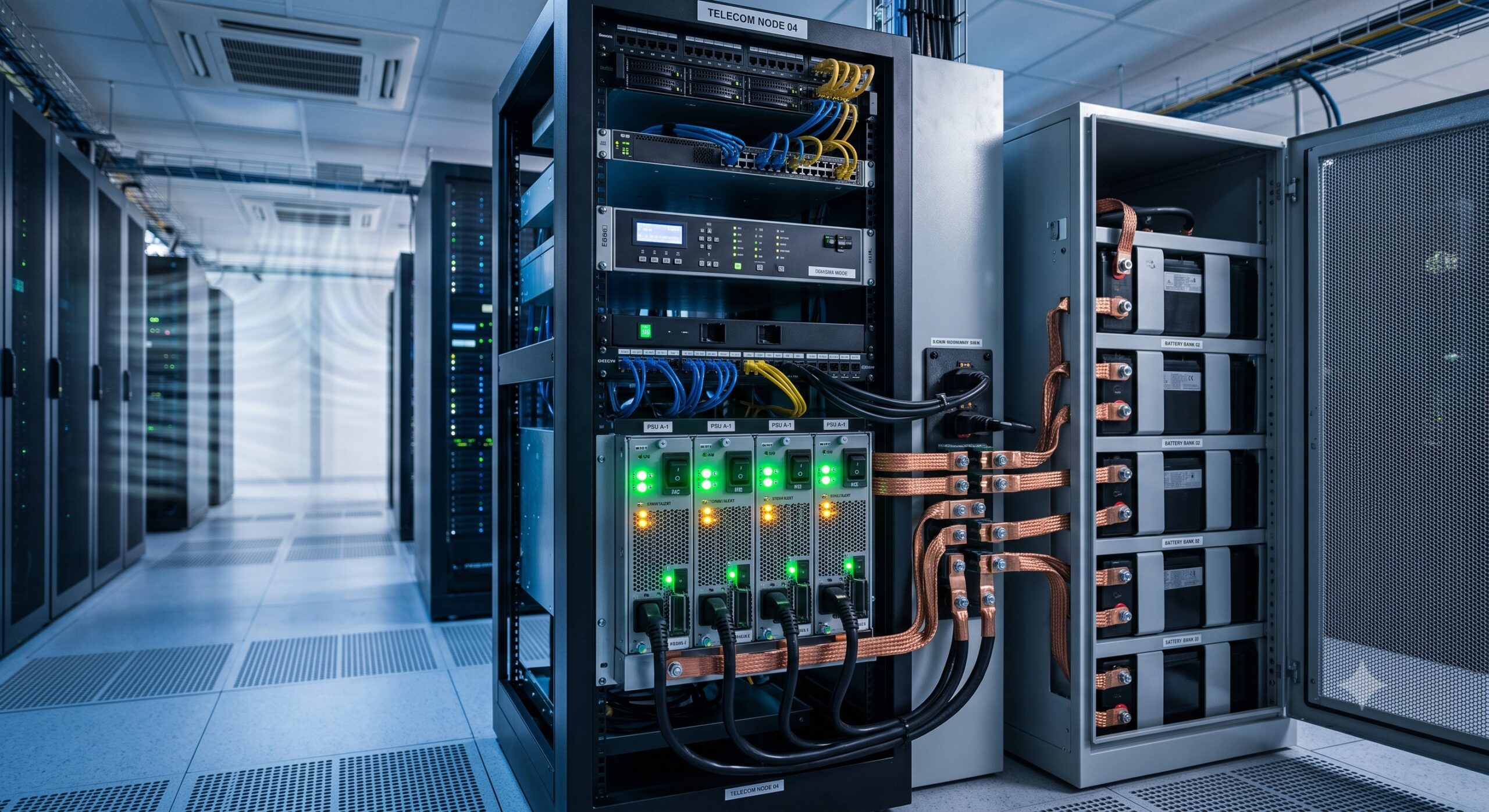
Defining Carrier-Grade Resilience: Standards and Metrics
The term ‘carrier-grade’ is not a marketing platitude; it is a quantifiable standard defined by rigorous engineering and compliance frameworks. When evaluating Telecom Site Power Systems, the primary metric is MTBF, often projected to exceed 200,000 hours under full load conditions. This reliability is underpinned by adherence to stringent industry standards, including ITU-T K.20/K.21 for surge resistance and overvoltage protection, and GR-1089-CORE for electromagnetic compatibility and electrical safety. Furthermore, modern systems are designed in full compliance with RoHS and WEEE directives, ensuring environmental responsibility without sacrificing performance.
Key Performance Indicators (KPIs) for Power Reliability
- System Efficiency: Peak efficiency ratings exceeding 96% (typ. at 50-80% load) to minimize thermal output and operational expenditure.
- Redundancy Topology: N+1, 2N, or N+N configurations ensuring zero single points of failure.
- Ride-Through Time: The ability to maintain output during momentary AC mains disturbances, typically > 10ms to bridge the gap to generator startup.
- Hot-Swap Capability: Field-replaceable rectifier and inverter modules to maintain uptime during maintenance (MTTR reduction).
Architectural Deep Dive: Dual-Engine Failover and Power Topologies
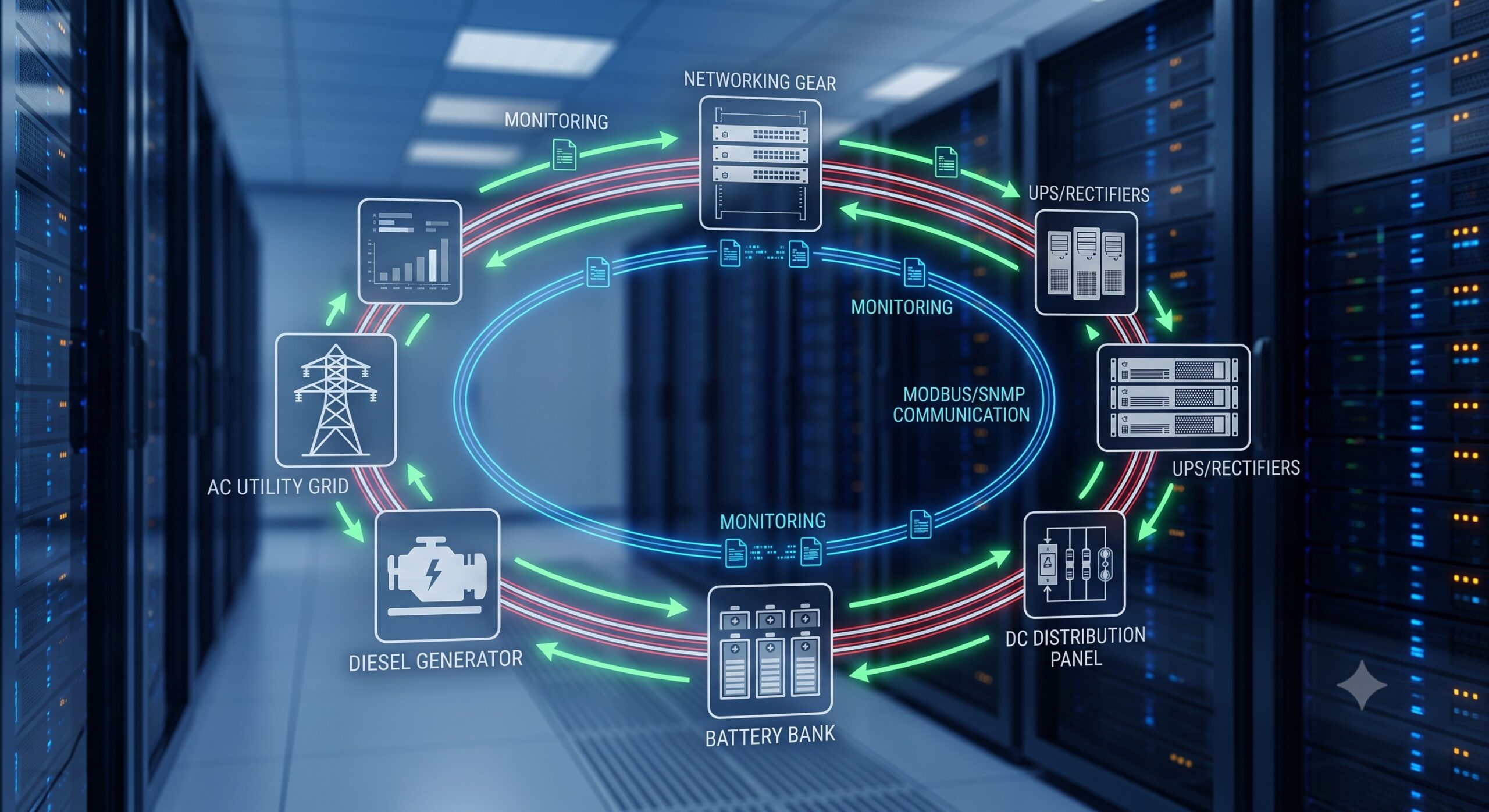
At the core of a resilient site power strategy is the Distributed Power Architecture (DPA). Unlike legacy centralized systems, modern DPA reduces single points of failure by distributing rectification and conversion. We analyze the critical role of the Static Transfer Switch (STS) and the Automatic Transfer Switch (ATS) in managing dual feeds from utility and diesel generators. The integration of Lithium-ion battery cabinets (LiFePO4) with active Battery Management Systems (BMS) communicating via Modbus/SNMP protocols allows for granular monitoring of internal cell resistance and State of Health (SoH), providing advanced warnings of potential failures days in advance. This real-time telemetry provides a tangible Operational Expenditure (OpEx) saving by enabling predictive maintenance, reducing truck rolls by an average of 30-40%.
Comparative Benchmarking and Technical Specifications
To provide a quantitative assessment, we benchmark a next-generation High-Efficiency Rectifier System against a legacy ferromagnetic resonant system. The performance delta is most evident in heat dissipation and space efficiency. The following table encapsulates the critical technical specifications of a state-of-the-art -48V DC power plant designed for high-density 5G and edge compute sites.
[TABLE_1]
The data clearly demonstrates an 82% reduction in standby power consumption and a 50% reduction in rack unit (RU) footprint. This leap in power density is critical for edge sites where space is at a premium.
Real-World Deployment: A Case Study in Edge Transformation
Consider the migration of a regional aggregation site servicing 10,000 enterprise customers. The legacy power system, with a reported MTBF of 50,000 hours, exhibited a 3% annual failure rate, causing an average of 4 hours of downtime per year (approx. $400k lost revenue per hour). The organization transitioned to a carrier-grade system with an MTBF of 220,000 hours and full N+1 redundancy. The result was a measured availability of 99.9999% (six-nines) over a 12-month period. The Operational Expenditure (OpEx) savings from reduced energy consumption (15 MWh/year) and proactive monitoring directly contributed to an 18-month Return on Investment (ROI), validating the economic advantage of high-reliability infrastructure.
Final Assessment: Beyond the Datasheet
Selecting a Telecom Site Power System transcends comparing efficiency percentages and MTBF numbers. It demands a holistic assessment of the vendor’s supply chain consistency, the system’s architectural adaptability to future load increases, and the software-defined controls that enable energy-aware routing. Systems integrators and CTOs must prioritize solutions that offer software-defined power management to dynamically shed non-critical loads during outages, preserving battery life for core routing functions. This symbiotic relationship between the power layer and the data layer is the future of resilient network architecture. Investing in a modular, high-MTBF power system is not merely a capital expenditure; it is an insurance policy against the catastrophic risks of network blackouts in the hyperscale era.

Leave a comment