
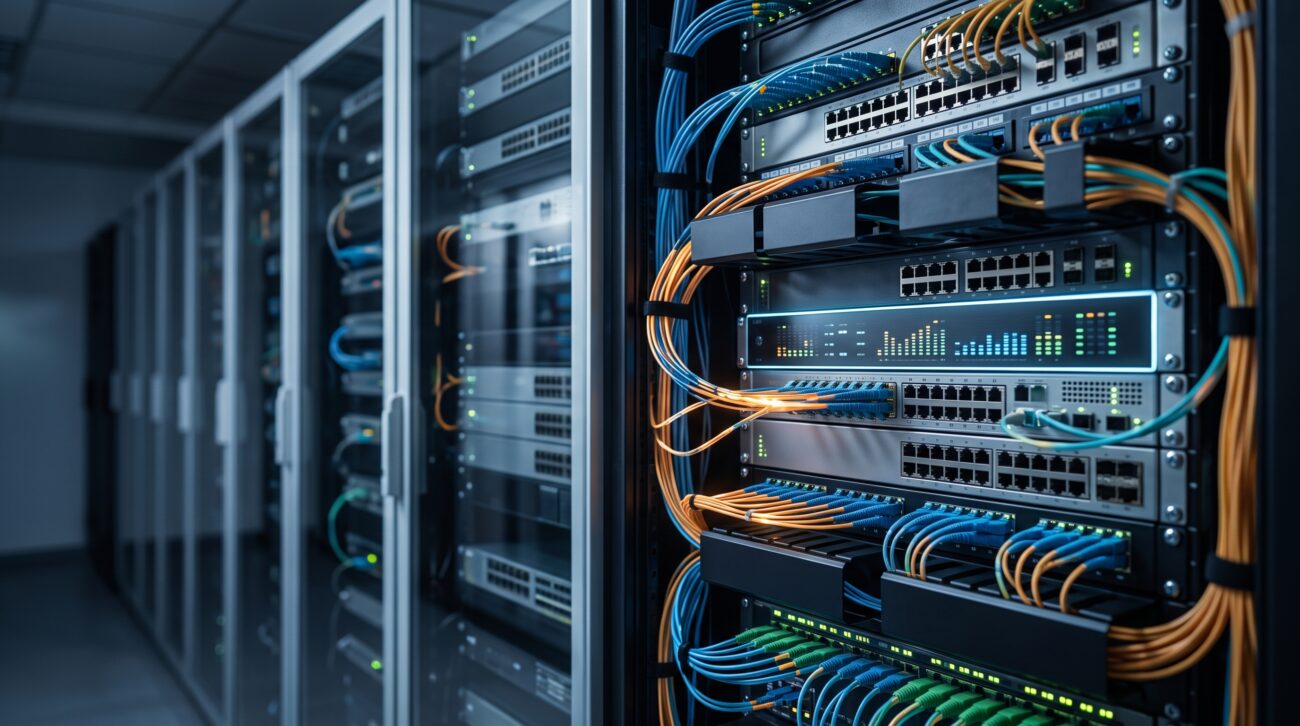
Identifying the Invisible Bottleneck: Why ECN Threshold Tuning Dictates Datacenter Throughput
In modern Carrier-Grade and High-Density Datacenter environments, the difference between a flawless 400Gbps spine-leaf fabric and a congested, packet-dropping nightmare often lies in microsecond-level buffer management. While network architects obsess over ASIC forwarding capacity and port density, the silent killer of application performance is the mishandling of Explicit Congestion Notification (ECN). As defined by RFC 3168, ECN allows routers to signal impending congestion before buffers overflow. However, incorrect ECN threshold tuning transforms this flow-control mechanism into a self-inflicted denial-of-service attack, introducing jitter, microbursts, and retransmission storms that decimate RoCEv2 and TCP throughput.
This manual moves beyond vendor marketing. It provides a rigorous, operational framework for tuning ECN parameters to achieve deterministic ultra-low latency and zero packet loss in mission-critical environments.
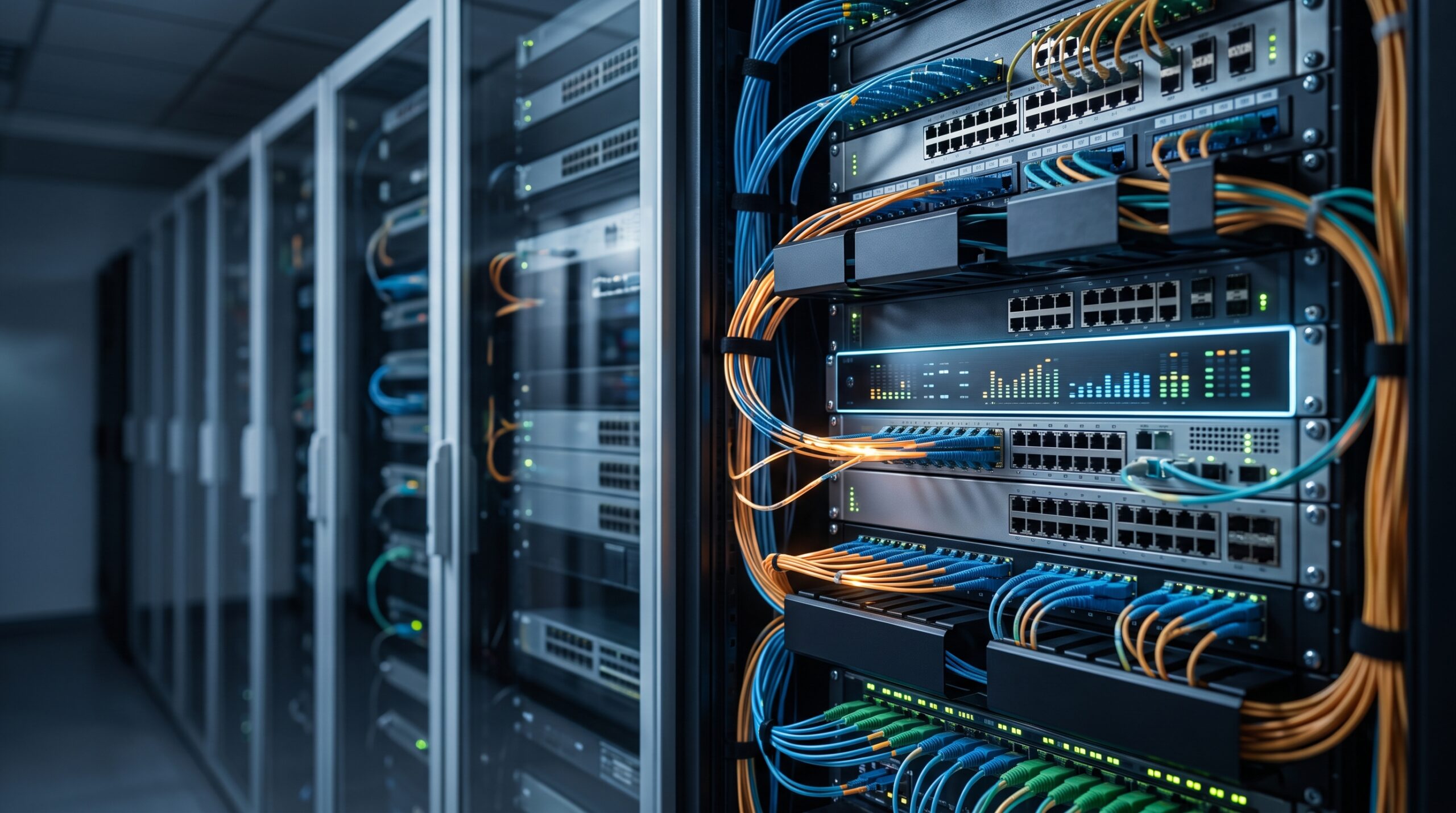
Solving Latency via Architecture: The Physics of Buffer Sizing and Marking
To tune ECN effectively, one must first understand the silicon reality. Modern switching ASICs (such as Broadcom Trident/Tomahawk or Cisco Silicon One) utilize a shared buffer architecture measured in megabytes, while line-rate traffic at 400Gbps can inject data in nanoseconds. The ECN threshold (often configured via WRED or DCQCN profiles) determines the buffer occupancy level at which packets are marked with the Congestion Experienced (CE) codepoint instead of being dropped.
Operational Parameter Limits: Minimum vs. Maximum Thresholds
Setting thresholds too low causes premature marking, throttling high-bandwidth flows unnecessarily. Setting them too high renders ECN useless, as buffers fill completely before any signal is sent. The optimal configuration requires calculating the Bandwidth-Delay Product (BDP) of the network path.
- Minimum Threshold (Kmin): Typically set to 10-20% of total buffer space. This defines the point where marking begins.
- Maximum Threshold (Kmax): Set to 80-90% of buffer space. Marking probability increases linearly from Kmin to Kmax.
- Marking Probability (Pmax): The maximum probability of marking a packet when the queue reaches Kmax. For RoCEv2 traffic, this is often tuned between 1% and 10% to avoid PFC (Priority Flow Control) storms.
| Key Parameter | Technical Specification |
|---|---|
| ECN Minimum Threshold (Kmin) | 20% of Shared Buffer (e.g., 2MB on 100G port) |
| ECN Maximum Threshold (Kmax) | 80% of Shared Buffer (e.g., 8MB on 100G port) |
| Marking Probability (Pmax) | 5% for RoCEv2, 10% for TCP |
| Supported Standards | RFC 3168, IEEE 802.1Qau, DCQCN |
| Latency Impact |
Configuration Best Practices for DCQCN and TCP Profiles
For RDMA over Converged Ethernet (RoCEv2), the Data Center Quantized Congestion Notification (DCQCN) algorithm is the standard. The tuning must synchronize the switch’s ECN marking with the Network Interface Controller (NIC) parameters:
- Alpha (α) Update Timer: The rate at which the NIC increases its congestion window. A value too high causes oscillation; too low causes underutilization.
- Rate Increase Timer: The interval for additive increase. In high-performance 25G/100G/400G fabrics, this must be strictly configured to match the switch’s marking granularity.
- Clamp Target Rate (Rtarget): Ensuring the NIC does not fall below a certain rate to maintain line-rate throughput during transient congestion.

Field Deployment Topologies and Validation
In a production Spine-Leaf topology, ECN tuning must be consistent across all leaf and spine switches. Inconsistent thresholds create a situation where one switch marks packets aggressively while the next switch drops them due to full buffers. For Systems Integrators, validation requires more than simple iPerf tests. It requires PFC Watchdog monitoring and Buffer Occupancy telemetry via INT (In-band Network Telemetry).
When deployed correctly, a tuned ECN fabric exhibits:
- Zero Packet Loss even at 99% link utilization.
- Microsecond-level Jitter (
- MTBF improvements for storage clusters by eliminating retransmission-induced wear on SSDs.
Summary: The Competitive Advantage of Precision Tuning
ECN threshold tuning is not a ‘set and forget’ task. It is a dynamic engineering discipline that separates Carrier-Grade networks from best-effort infrastructure. By adhering to IEEE 802.1Qau and ITU-T Y.1731 performance standards, operators can transform their network from a bottleneck into a competitive asset. The data is clear: precise ECN configuration yields higher ROI, lower OpEx, and the deterministic performance required for AI/ML backends and disaggregated storage.

Leave a comment