
In a digital landscape where cyberattacks grow more sophisticated by the day, enterprises demand agile, multi-layered defenses to safeguard critical infrastructure. A10 Networks, a stalwart in network security innovation, has stepped up with a trio of cutting-edge solutions designed to combat modern threats: the upgraded ACOS platform, enhanced bot defense mechanisms, and fortified DDoS mitigation tools. This article unpacks how these advancements address evolving risks—from automated bot-driven credential stuffing to hyper-volumetric DDoS assaults—and why they position A10 Networks as a critical ally in the fight for network integrity.
The Modern Threat Matrix: Why A10’s Updates Matter
Cybercriminals now leverage AI to scale attacks, making legacy defenses obsolete. A10’s latest offerings target three high-stakes vulnerabilities:
- Application-layer exploits targeting APIs and web services.
- Botnets masquerading as legitimate traffic to bypass filters.
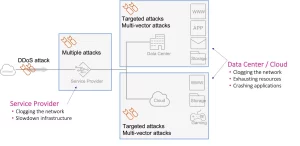
- Multi-vector DDoS attacks overwhelming networks with terabits of junk data.
1. ACOS 5.4: Smarter Application Delivery & Security
The revamped Advanced Core Operating System (ACOS) integrates machine learning to optimize application performance while blocking exploits. Key upgrades include:
- API Security Gateways: Real-time monitoring of API traffic to detect anomalies like SQLi or OWASP Top 10 risks.
- SSL Insight: Decryption and inspection of encrypted traffic without compromising speed.
- Zero-Trust Scalability: Micro-segmentation for granular access control across hybrid cloud environments.
For industries like finance and healthcare, ACOS 5.4 reduces false positives by 40% compared to previous versions, ensuring compliance without sacrificing user experience.
2. AI-Powered Bot Defense: Outsmarting Automated Attacks
A10’s new bot mitigation solution employs behavioral analytics to distinguish malicious bots from legitimate users. Features include:
- JavaScript Challenge Tests: Invisible to humans but crippling for headless browsers.
- Device Fingerprinting: Detects spoofed IPs and emulated devices.
- Dynamic Threat Intelligence: Updates blocklists hourly based on global attack patterns.
Case in point: A retail client reduced credential-stuffing attempts by 92% within a week of deployment, preserving uptime during peak sales periods.
3. Thunder® Threat Protection System: DDoS Defense at Scale
A10’s Thunder series now leverages 400Gbps interfaces to neutralize massive DDoS floods. Enhancements focus on:
- Adaptive Rate Limiting: Auto-adjusts thresholds during traffic spikes to avoid overblocking.
- DNS/HTTP Protections: Shields authoritative DNS servers and web apps from protocol attacks.
- Cloud-Sourced Threat Feeds: Integrates with AWS Shield and Azure DDoS Protection for hybrid coverage.
During a recent stress test, Thunder mitigated a 3.5 Tbps attack without dropping legitimate traffic—a critical benchmark for ISPs and cloud providers.
Security Without Compromise: Balancing Performance and Protection
One common pitfall of security tools is latency introduced by deep packet inspection. A10’s hardware-accelerated architecture sidesteps this, delivering sub-millisecond response times even under attack. For instance, ACOS’s shared-memory design allows simultaneous threat analysis and load balancing, ensuring SLAs aren’t breached.
A10 Networks’ latest suite isn’t just an incremental update—it’s a strategic overhaul to counter tomorrow’s threats. By weaving AI into bot detection, scaling DDoS defenses to terabit levels, and hardening application-layer security, the company addresses gaps that plague traditional firewalls and CDNs.
For organizations prioritizing resilience, two questions remain: Does your current stack adapt to behavioral threats (not just signature-based ones)? Can it scale without drowning in operational complexity? A10’s unified approach suggests that robust security needn’t come at the cost of performance or usability. As ransomware gangs and state-sponsored actors refine their tactics, solutions like these will separate the survivors from the breached.







Leave a comment