
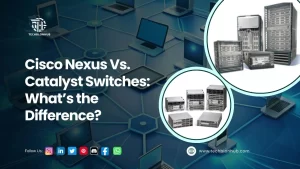
In the digital age, where seamless connectivity fuels innovation, enterprises face a critical challenge: designing networks that cater to the divergent needs of campus environments and hyperscale data centers. Cisco’s Catalyst and Nexus switch families address this dichotomy head-on, offering purpose-built solutions that balance user density, application performance, and operational resilience. While Catalyst switches excel in connecting people and IoT across sprawling campuses, Nexus switches power the cloud-scale agility demanded by modern data centers. Together, they form a symbiotic architecture that bridges the gap between edge and core—ensuring businesses thrive in an era of relentless digital transformation.
Campus Networks: Where the Catalyst Series Reigns Supreme
Campus networks serve as the connective tissue for users, devices, and applications. Here, the Cisco Catalyst series shines with features tailored for dynamic, human-centric environments:
1. User Density and Mobility
- Cisco StackWise-480: Stack up to eight Catalyst 9400 switches as a single logical unit, simplifying management for thousands of connected devices.
- Wireless Integration: Catalyst 9130 APs and Catalyst 9200 switches support Wi-Fi 6/6E, handling 4K video streams in lecture halls or stadiums.
- IoT Readiness: Built-in BLE 5.2 and Zigbee support for smart lighting, HVAC, and occupancy sensors.
A university in Texas reduced network provisioning time by 75% using Catalyst 9300 switches with Cisco DNA Center automation.
2. Security at Scale
- Cisco TrustSec: Encrypts traffic between switches using SGT (Scalable Group Tags), segmenting student and faculty devices.
- MACsec over StackWise: Ensures encryption even across stacked switches, critical for healthcare campuses handling PHI data.
3. Operational Simplicity
- Plug-and-Play Deployment: Zero-touch provisioning (ZTP) for remote branch setups.
- Energy Efficiency: EnergyWise reduces power consumption by 30% during off-peak hours.
Data Centers: The Nexus Series’ Domain of Speed and Scalability
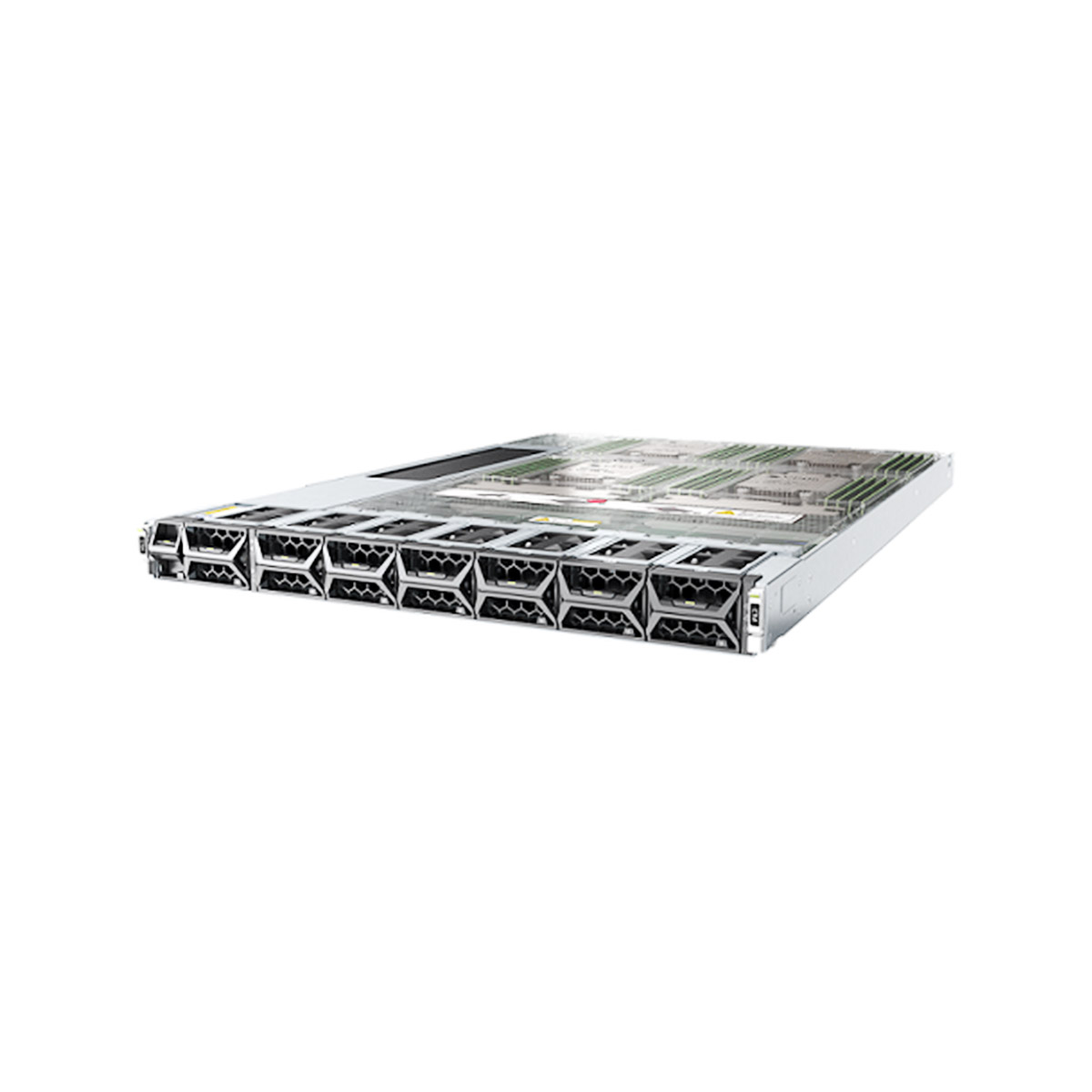
Hyperscale data centers demand switches that prioritize machine-to-machine communication, low latency, and massive east-west traffic. The Cisco Nexus series delivers with cloud-optimized architectures:
1. Cloud-Scale Performance
- Nexus 9000 with Cloud Scale ASICs: 12.8 Tbps per slot for AI/ML workloads like GPU cluster connectivity.
- VXLAN EVPN: Creates multi-tenant overlays, enabling seamless workload migration between on-prem and AWS/Azure.
- Telemetry at Speed: 1M data points per second streamed to tools like Splunk for real-time anomaly detection.
A financial firm achieved 50μs latency for algorithmic trading using Nexus 92300YC N9K switches with RDMA over Converged Ethernet (RoCE).
2. Resilience Under Pressure
- Hitless Upgrades: In-Service Software Upgrades (ISSU) eliminate downtime during patches.
- Crossbar Fabric: Non-blocking throughput ensures congestion-free traffic between web servers and storage arrays.
3. Multi-Cloud Agility
- Cisco ACI Integration: Automates network policies across Nexus switches and public cloud VPCs.
- Kubernetes Networking: Nexus 93180YC-EX supports Calico and NSX-T for containerized apps.
Catalyst + Nexus: Bridging the Edge-to-Cloud Continuum
While designed for distinct environments, Catalyst and Nexus switches interoperate to create cohesive architectures:
1. SD-Access to ACI Integration
- Catalyst 9500 as Border Nodes: Extend SD-Access fabric policies from campus to Nexus-powered data centers.
- End-to-End Segmentation: Maintain consistent SGT tags across Catalyst and Nexus switches for zero-trust enforcement.
2. Unified Management
- Cisco DNA Center + Nexus Dashboard: Monitor campus and data center networks via a single pane.
- Cross-Domain Automation: Trigger data center VM migrations from campus IoT sensor alerts (e.g., temperature spikes).
A retail chain automated inventory restocking by linking Catalyst-connected IoT shelf sensors to Nexus-hosted supply chain apps.
3. Security Synergy
- Encrypted Traffic Analytics (ETA): Nexus switches detect threats in encrypted flows, while Catalyst blocks compromised IoT devices.
- Cisco Secure Firewall Integration: Enforce policies across both platforms via Cisco SecureX.
Choosing the Right Tool: Catalyst vs. Nexus Comparison
| Criteria | Catalyst 9400 | Nexus 9336C-FX2 |
|---|---|---|
| Primary Use Case | Campus Core/Access | Data Center Spine/Leaf |
| Max Port Speed | 100G (QSA-Adjusted) | 400G (Breakout to 4x100G) |
| Key Protocol | L2/L3 (OSPF, EIGRP) | VXLAN EVPN, BGP |
| Power per Port | 30W PoE+ | 10W (Non-PoE) |
| Typical Deployment | 5K–10K Connected Devices | 100K+ Concurrent Flows |
Future-Proofing Networks: What Lies Ahead
- Catalyst 9600 with Wi-Fi 7: Ready for 16K VR/AR campus applications by 2025.
- Nexus 9000 with Silicon Photonics: Co-packaged optics for 800G AI cluster backplanes.
- Quantum-Safe VPNs: Both series to support NIST’s post-quantum encryption standards by 2026.






Leave a comment