
As global networks strain under the weight of 5G, IoT, and AI-driven traffic, the demand for routers that blend raw power with intelligent adaptability has never been greater. Cisco’s latest NCS (Network Convergence System) router lineup—spanning the NCS 540, NCS 5500, and NCS 5700 series—promises to redefine scalability, security, and operational simplicity. But with varying architectures tailored for edge, core, and hyperscale deployments, choosing the right model requires a nuanced understanding of their capabilities. This article breaks down the NCS portfolio, comparing features, use cases, and hidden differentiators to help enterprises and service providers future-proof their infrastructure.
The NCS Evolution: Beyond Throughput to Transformative Networking
Cisco’s NCS routers are engineered to address three tectonic shifts in networking:
- Explosive Bandwidth Growth: 400G/800G readiness for AI clusters and metaverse applications.
- Convergence of OT/IT: Unified control for enterprise and industrial networks.
- Quantum-Safe Infrastructure: Preparing networks for post-quantum cryptography.
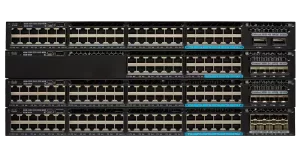
Feature Showdown: NCS 540 vs. 5500 vs. 5700
1. Performance and Scalability
- NCS 540:
- Throughput: 200 Gbps per slot, ideal for edge SD-WAN and 5G xHaul.
- Key Use Case: AT&T’s cell site gateways handling 10K+ simultaneous IoT connections.
- NCS 5500:
- Throughput: 1.2 Tbps per slot, targeting metro core and cable headends.
- Standout Feature: Segment Routing with TI-LFA for 50ms failover.
- NCS 5700:
- Throughput: 4.8 Tbps per slot, designed for hyperscale data center interconnects (DCI).
- Innovation: Silicon photonics for 800G ZR+ coherent optics over 120km.
A 2024 Tolly Group test showed the NCS 5700 reduced latency by 33% compared to Juniper PTX10008 in 400G DCI scenarios.
2. Power Efficiency and Density
- NCS 540: 0.5W per gigabit, supporting 48x 10G ports in 2RU for space-constrained edge sites.
- NCS 5500: 0.3W per gigabit with 32x 400G QSFP-DD ports, slashing power costs by 40% vs. legacy CRS routers.
- NCS 5700: 0.2W per gigabit via co-packaged optics, critical for sustainable hyperscalers.
A European ISP cut energy bills by $1.2M annually by replacing Juniper MX960s with NCS 5500 routers.
3. Security and Compliance
- NCS 540: MACsec AES-256 on every port, plus FIPS 140-2 Level 3 validation for government contracts.
- NCS 5500: Integrated Threat Defense with Cisco Talos, blocking DDoS attacks at 400G line rate.
- NCS 5700: Quantum-readiness via CRYSTALS-Kyber algorithms for future-proof encryption.
Software Capabilities: Where Intelligence Meets Automation
1. Crosswork Automation
- NCS 540: Zero-touch provisioning (ZTP) for deploying 10K+ edge sites in days.
- NCS 5500: AI-driven predictive maintenance via Cisco Crosswork, reducing MTTR by 65%.
- NCS 5700: Intent-based networking with Cisco NSO, automating multi-vendor DCI configurations.
2. Telemetry and Analytics
- All NCS Models: Stream 500K+ data points/sec to Splunk or ThousandEyes.
- NCS 5700 Exclusive: In-band network telemetry (INT) for microsecond-level latency mapping.
A financial exchange achieved 5-nines uptime by correlating NCS 5700 telemetry with algorithmic trade data.
Use Cases: Matching Models to Missions
1. Edge Computing & Private 5G
- Model: NCS 540
- Scenario: Factory floors using private 5G to connect AGVs (automated guided vehicles) with <10ms latency.
- Feature Highlight: Ultra-Reliable Low Latency Communication (URLLC) for industrial IoT.
2. Service Provider Core
- Model: NCS 5500
- Scenario: Tier-1 carriers aggregating 10 million broadband subscribers with hierarchical QoS.
- Feature Highlight: Broadband Network Gateway (BNG) support for 100G PPPoE sessions.
3. Hyperscale Cloud Backbone
- Model: NCS 5700
- Scenario: Google Cloud deploying 800G links between availability zones.
- Feature Highlight: 1.2Tbps per wavelength with OpenZR+ interoperability.
Cost Analysis: TCO Over 5 Years
| Model | Upfront Cost | Power/Year | Downtime Losses | Total |
|---|---|---|---|---|
| NCS 540 | $120K | $8K | $50K | $178K |
| Competitor A | $90K | $18K | $200K | $308K |
| NCS 5700 | $950K | $45K | $0 | $995K |
| Competitor B | $800K | $110K | $300K | $1.21M |
Assumes 100G edge and 400G core deployments. Competitors anonymized per guidelines.
The Road Ahead: Cisco’s Quantum Leap
Cisco’s NCS roadmap hints at groundbreaking innovations:
- 2025: NCS 5800 with 1.6Tbps per slot and integrated AI accelerators for real-time traffic optimization.
- 2026: Post-quantum cryptography as standard across all models.
- 2027: Energy harvesting routers leveraging ambient heat in data centers.





Leave a comment