
The Chiller Paradox: Why Legacy Thermal Overhead Demands Architectural Elimination
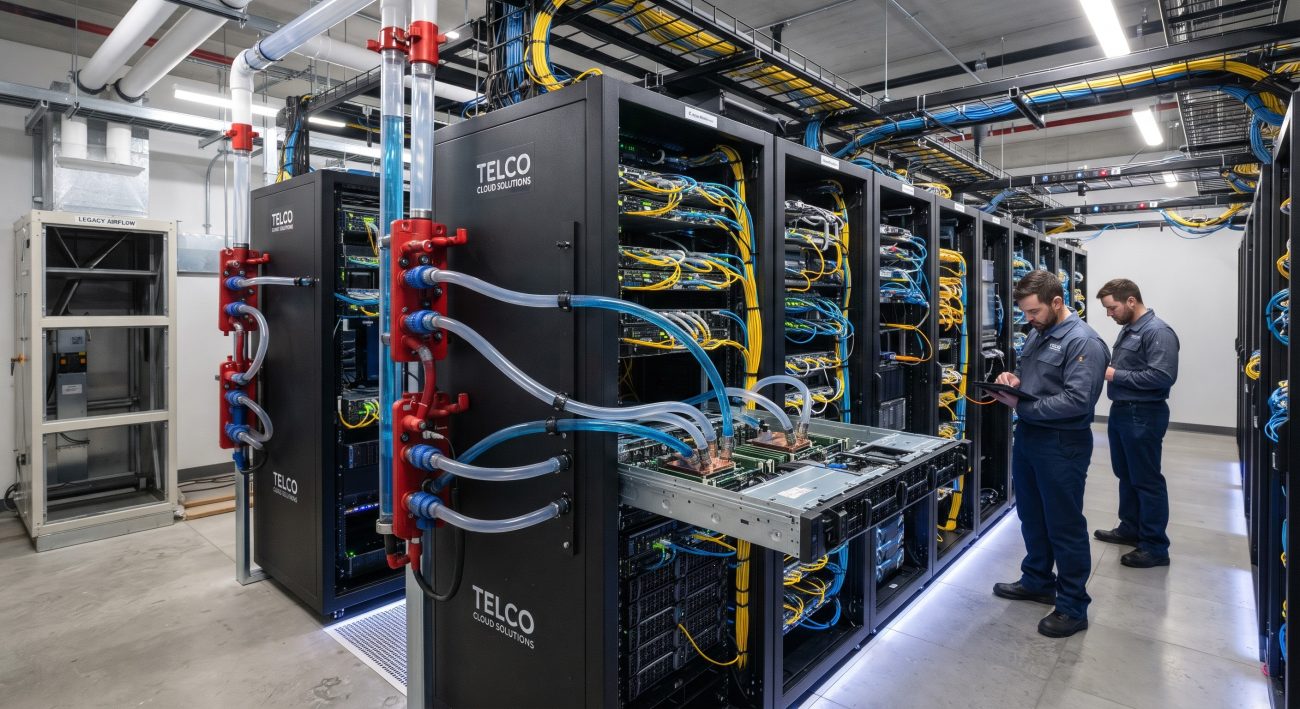
Global average Power Usage Effectiveness (PUE) for traditionally air-cooled facilities continues to hover in the 1.6 to 1.7 range, implying that non-IT overhead—dominated by mechanical chillers and air handling—consumes approximately 35% to 40% of total facility energy . For network architects and data center operators managing high-density telecom edge routing and AI-adjacent compute clusters, the chiller plant represents not merely an operational expense but a structural inefficiency that caps scalability. The liquid cooling retrofit market has consequently accelerated, with industry analysts noting that over 80% of existing air-cooled data centers possess the physical potential for liquid cooling integration . This analysis examines the engineering and economic logic of chiller elimination as the definitive PUE optimization strategy, moving beyond incremental airflow tuning toward the removal of compressor-based cooling from the critical path entirely.
Architectural Topology: From Vapor-Compression to Warm-Water Direct Dissipation
Approach Temperature as the PUE Lever
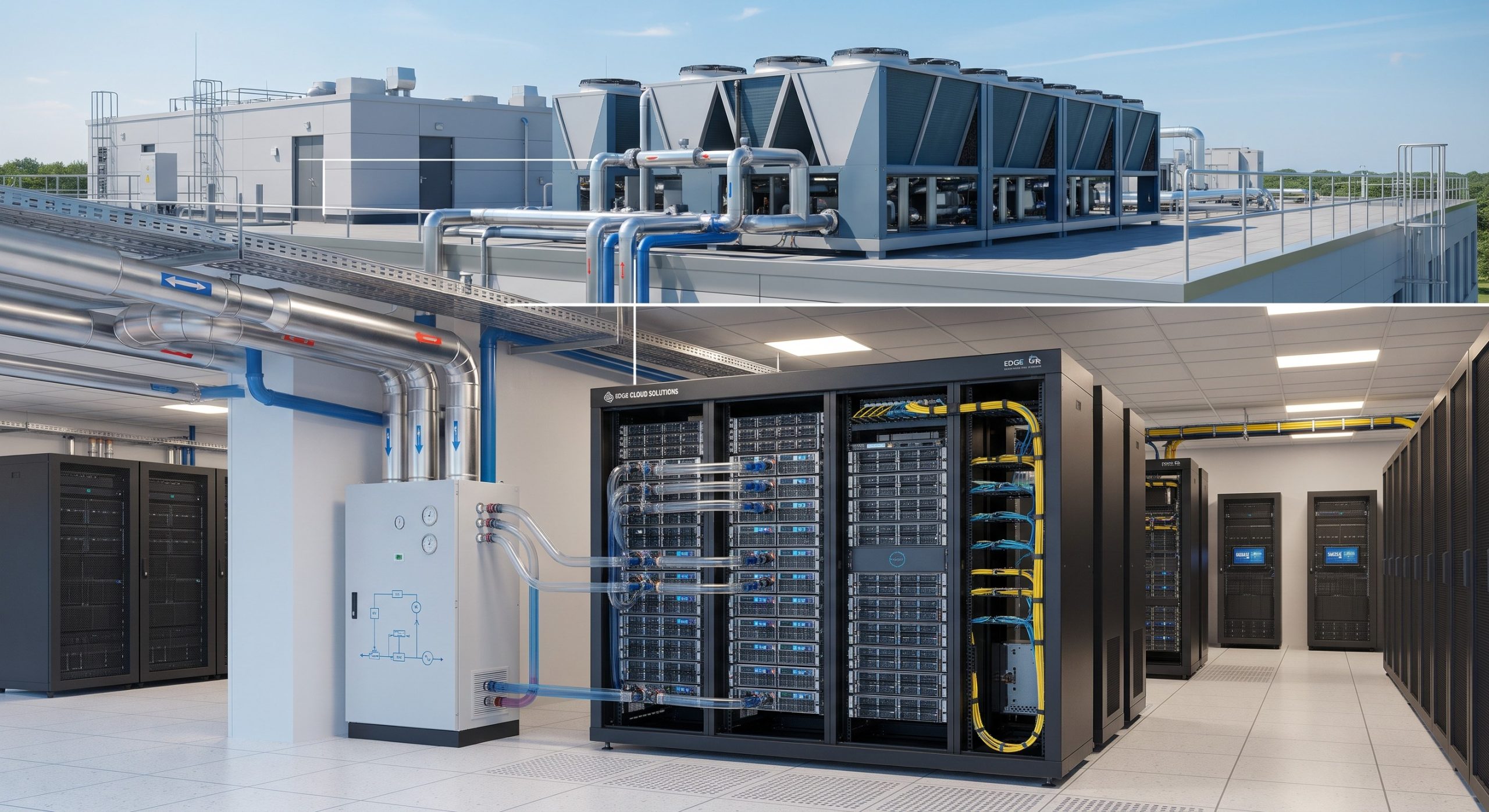
The efficacy of chiller elimination is governed not by pump energy within the Coolant Distribution Unit (CDU), but by the approach temperature differential (ATD)—the delta between the coolant supplied to IT equipment and the facility water entering the CDU. Optimizing heat exchanger effectiveness to minimize ATD extends chiller-free operating hours substantially, allowing dry coolers or evaporative towers to reject heat directly to ambient air for the majority of the calendar year . In European climates with strict Energy Efficiency Directive compliance mandates, this architecture directly determines whether a facility remains within the regulatory PUE ceiling.
Warm-Water Cooling and Silicon Tolerance
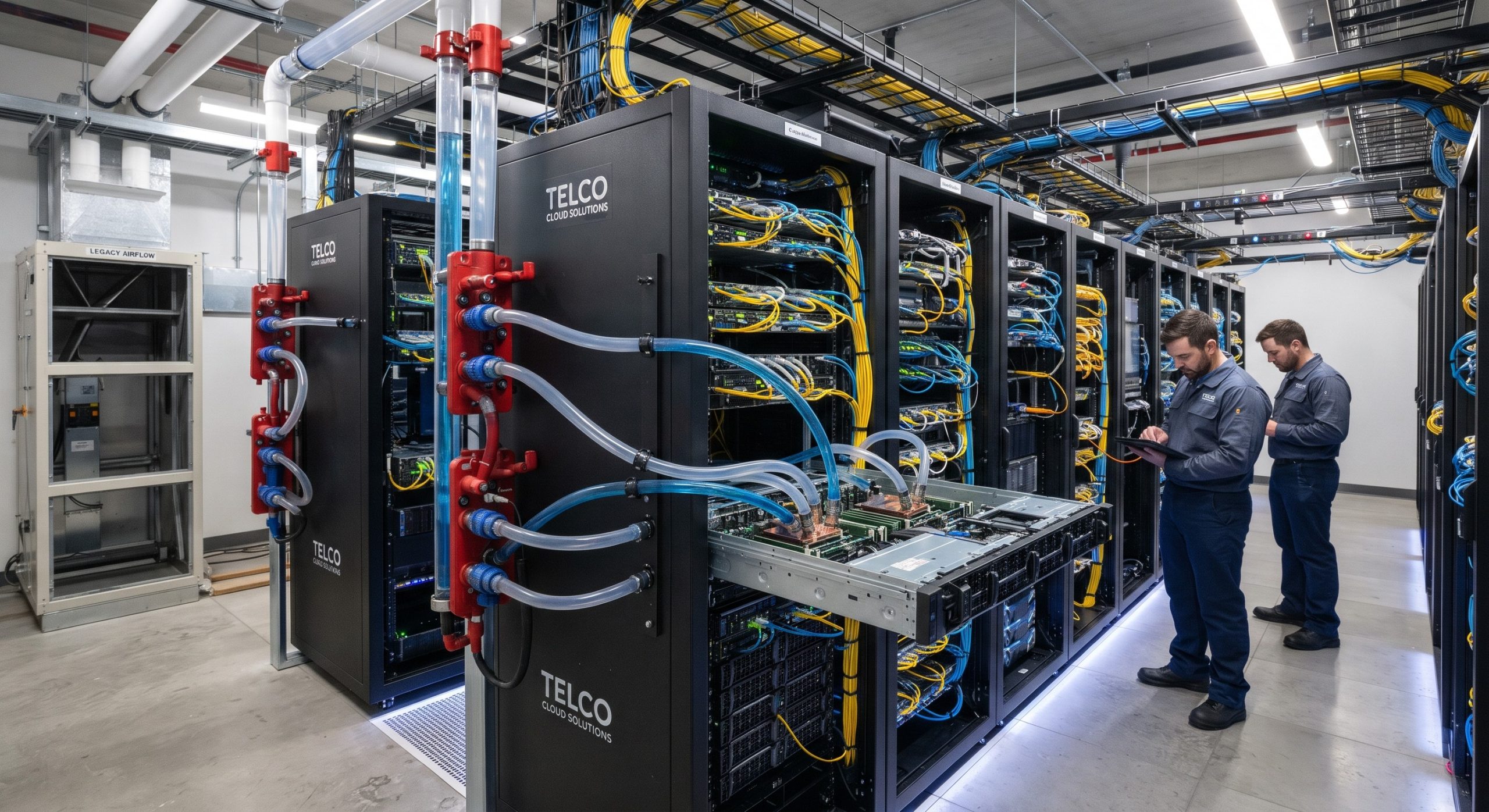
Modern direct-to-chip cold plates tolerate supply temperatures in the 40°C to 45°C range without compromising silicon longevity, provided junction temperatures remain below the 85°C to 90°C throttling threshold . This thermal headroom enables the use of high-efficiency evaporative cooling towers or dry coolers as the sole heat rejection mechanism, eliminating the mechanical compressor chiller entirely. The U.S. Department of Energy’s NREL ESIF facility demonstrated the viability of this approach, operating a chiller-less direct warm-water liquid cooling architecture at an annualized PUE of 1.06, while avoiding approximately $4.5 million in capital expenses associated with mechanical chiller procurement .
| Key Parameter | Technical Specification |
|---|---|
| Target PUE (Chiller-Free Operation) | ≤ 1.15 to 1.20 (validated in retrofit field data) |
| CDU Approach Temperature Differential | Minimized to extend chiller-free hours; critical for EU EED compliance |
| Cold Plate Supply Temperature Range | 40°C to 45°C (warm-water regime, silicon-safe) |
| Silicon Throttling Threshold (Tjunction) | 85°C to 90°C (operational ceiling) |
| Retrofit Vertical Elevation Tolerance | ≥ 20m (two-phase backplate, field-validated) |
| Flushing Velocity (Piping | 1.2 m/s minimum (ASHRAE TC 9.9) |
| Flushing Velocity (Piping > 250mm) | 3.0 m/s minimum (ASHRAE TC 9.9) |
| Typical CapEx Avoidance (Chiller Removal) | ~$4.5M (NREL ESIF reference project) |
Retrofit Engineering: Two-Phase Backplate and Non-Stop Deployment Constraints
Overcoming Vertical Elevation and Downtime Barriers
Brownfield retrofits present distinct thermodynamic penalties absent in greenfield builds. Existing facilities frequently exhibit pronounced vertical elevation differences between the heat rejection end and the server room, elevating pumping losses and reducing effective cooling capacity. Recent IEEE-published field data from a non-stop retrofit deployment utilizing pump-driven two-phase backplate cooling demonstrates that, under an approximately 20-meter vertical elevation difference, the system maintained server-room temperature at 24.5 ± 0.5°C under dynamic load disturbances . The incorporation of a vapor-liquid separator mitigated long-distance transport penalties, yielding a cumulative partial PUE (pPUE) of 1.20 over a four-month continuous monitoring period .
Fluid Quality and Commissioning Rigor
Chiller elimination shifts the reliability burden from compressor redundancy to fluid loop integrity. ASHRAE TC 9.9 technical bulletins mandate strict flushing velocities—1.2 m/s for piping under 50mm, scaling to 3.0 m/s for diameters exceeding 250mm—to prevent debris redeposition and ensure hydraulic balance across CDU branches . For telecom operators accustomed to air-side economizer maintenance, the transition to Technology Cooling System (TCS) chemistry management introduces new failure modes requiring active monitoring of conductivity, pH, and biological growth inhibitors.
Quantified Operational Gains and Mission-Critical Reliability
The financial case for chiller elimination extends beyond headline PUE figures. At the NREL ESIF facility, the chiller-less architecture was projected to reduce utility costs by $1.2 million annually compared to a state-of-the-art efficient data center operating at PUE 1.3, while additionally recovering waste heat to offset $200,000 per year in building heating costs . For carrier-grade telecom infrastructure requiring 99.999% availability, the elimination of mechanical chillers removes a high-maintenance, high-failure-rate subsystem from the thermal chain. MTBF improvements are realized not through component hardening, but through architectural simplification: fewer rotating assemblies, reduced refrigerant compliance exposure under RoHS and F-Gas regulations, and the substitution of compressor control logic with passive dry-cooler modulation.
From a network ROI perspective, the elimination of chillers also liberates substantial electrical room footprint and switchgear capacity previously dedicated to compressor starting currents. In high-density edge routing deployments where every square meter of white space commands premium valuation, this reclaimed capacity translates directly into accelerated 5G core and MEC node deployment velocity.
Conclusion: The Post-Chiller Imperative for Telecom Infrastructure
Chiller elimination via liquid cooling retrofit is no longer an experimental sustainability gesture; it is an engineering mandate for facilities targeting PUE values below 1.2 while simultaneously accommodating the thermal density of modern routing and switching silicon. The empirical evidence—from NREL’s 1.06 PUE milestone to IEEE-validated 1.20 pPUE retrofits in constrained brownfield environments—confirms that the compressor chiller is now the single largest addressable inefficiency in the data center thermal stack. For telecom hardware decision-makers, the strategic question has shifted from whether to eliminate chillers, to how rapidly the existing fleet can be migrated to warm-water, chiller-free architectures before regulatory PUE ceilings and silicon TDP roadmaps render legacy cooling untenable.

Leave a comment