
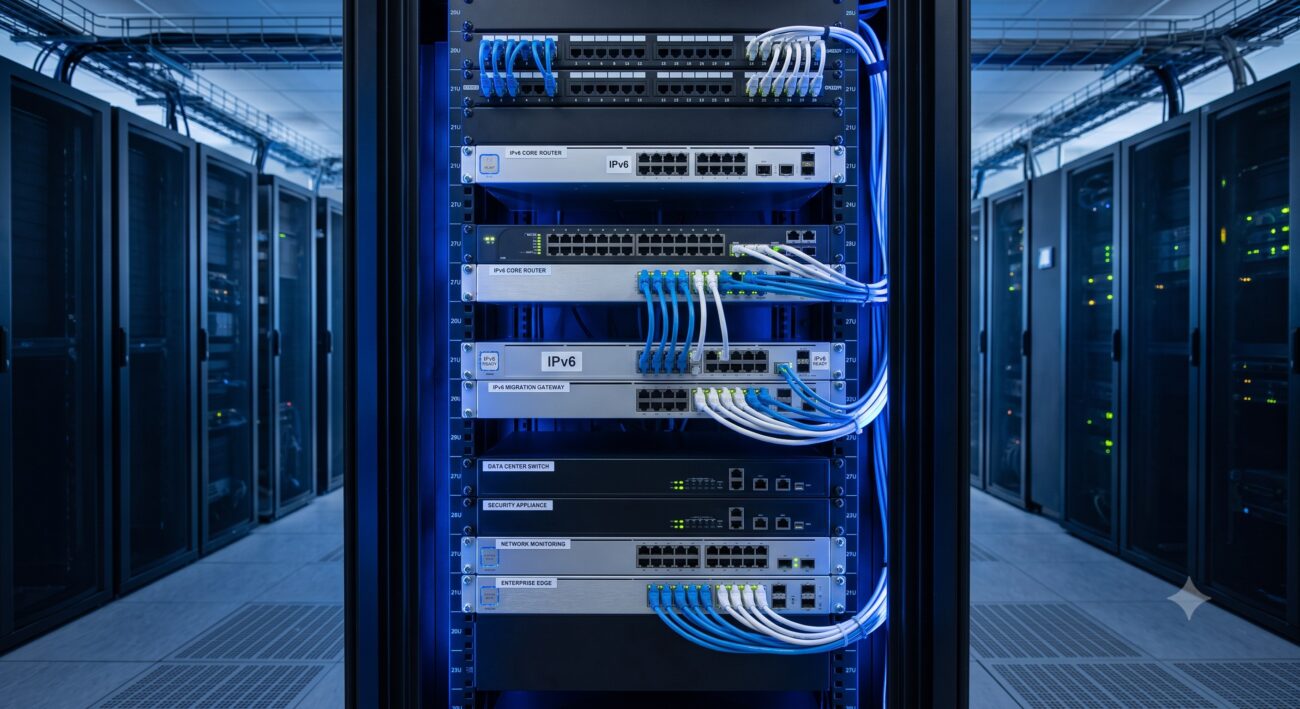
ENTERPRISE EDGE ROUTING REFERENCE DESIGN GUIDE FOR IPV6 MIGRATION STRATEGY FOR ENTERPRISE NETWORKS
1. EXECUTIVE SUMMARY
The exhaustion of IPv4 address space and the exponential growth of connected devices necessitate a strategic, non-disruptive transition to IPv6. This document serves as the definitive reference design guide for deploying our carrier-grade hardware platform, engineered to facilitate a seamless IPv6 migration strategy for enterprise networks. The solution is architected to support dual-stack, translation, and tunneling mechanisms, ensuring business continuity while future-proofing the network infrastructure. Our platform delivers the forwarding performance, security, and programmability required to handle the complexities of modern hybrid networks, enabling a smooth evolution from legacy IPv4 to a robust, scalable IPv6 foundation.
2. SYSTEM HARDWARE TOPOLOGY
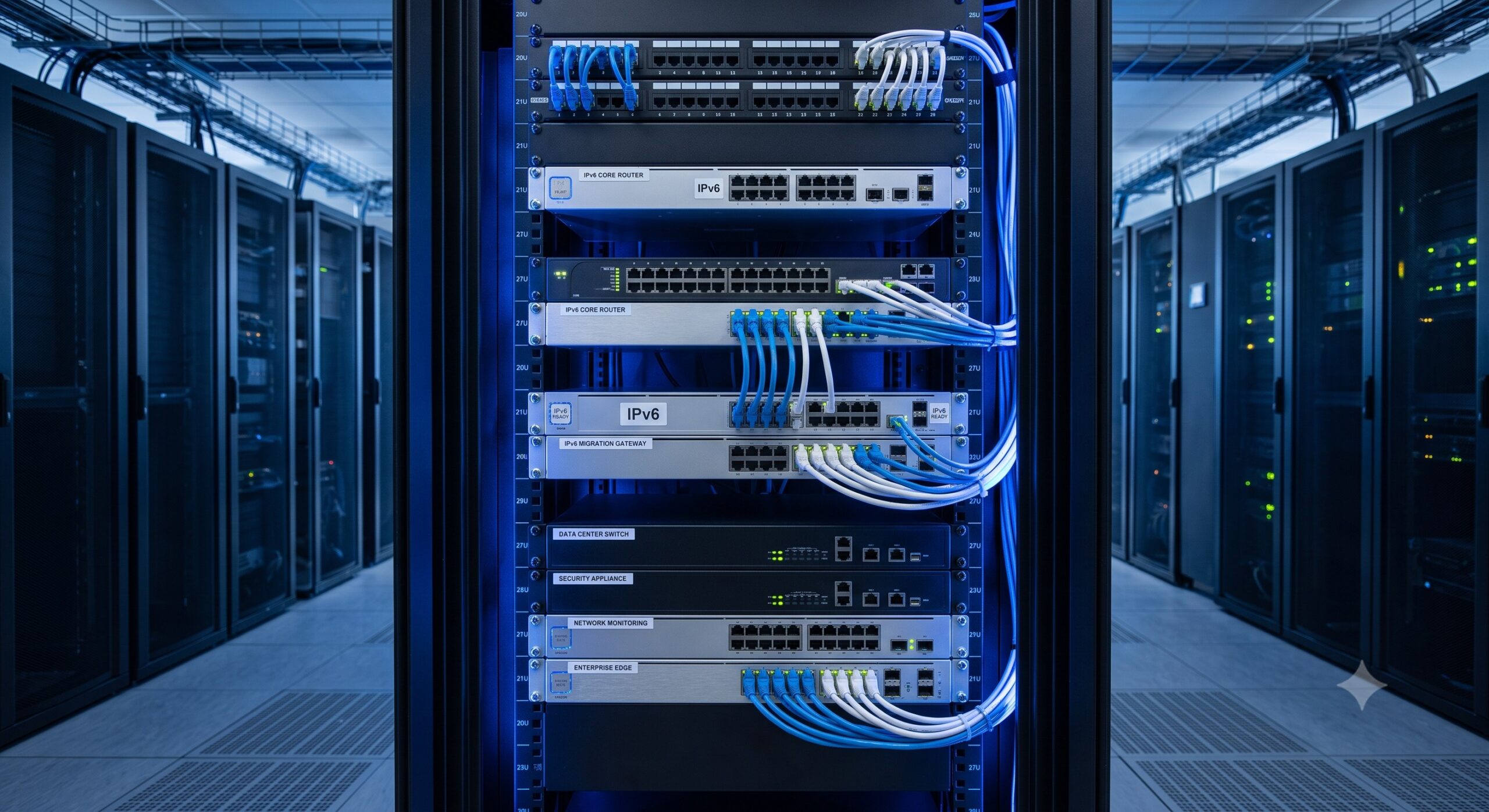
The hardware platform is the cornerstone of a successful IPv6 migration, designed as a high-density, modular edge routing system that provides the flexibility to adapt to diverse enterprise environments. The chassis architecture supports a non-blocking, high-speed backplane that facilitates wire-speed forwarding for both IPv4 and IPv6 traffic, eliminating bottlenecks during the transition phase. The system is comprised of a central supervisor engine, integrated packet forwarding engines, and a range of interface modules that support a variety of optical and electrical media. This topology is designed for high availability, featuring redundant, hot-swappable power supplies and cooling fans, ensuring maximum uptime during critical migration windows. The architecture seamlessly integrates with existing network ecosystems, supporting a myriad of tunneling protocols such as 6in4, GRE, and ISATAP, alongside stateful and stateless translation technologies like NAT64 and DNS64.
3. DATA & CONTROL PLANE CAPABILITIES
The separation of the control and data planes is a fundamental design principle that ensures resilience and high performance. The control plane, powered by a multi-core CPU, is dedicated to routing protocol processing, network management, and security services, running advanced IPv6 routing protocols such as OSPFv3, BGP-4+, and EIGRP for IPv6. This ensures that complex routing decisions and policy implementations do not impact the forwarding performance of the data plane. Conversely, the data plane leverages a high-performance, programmable ASIC (Application-Specific Integrated Circuit) architecture designed for ultra-low latency and high throughput. This ASIC is pivotal for line-rate packet processing, performing IPv6 header parsing, forwarding lookups, and quality-of-service (QoS) queuing at wire speed. This hardware-based acceleration ensures that the introduction of IPv6 services, including larger header sizes and security extensions (IPsec), does not degrade network performance.
4. COMPONENT BREAKDOWN
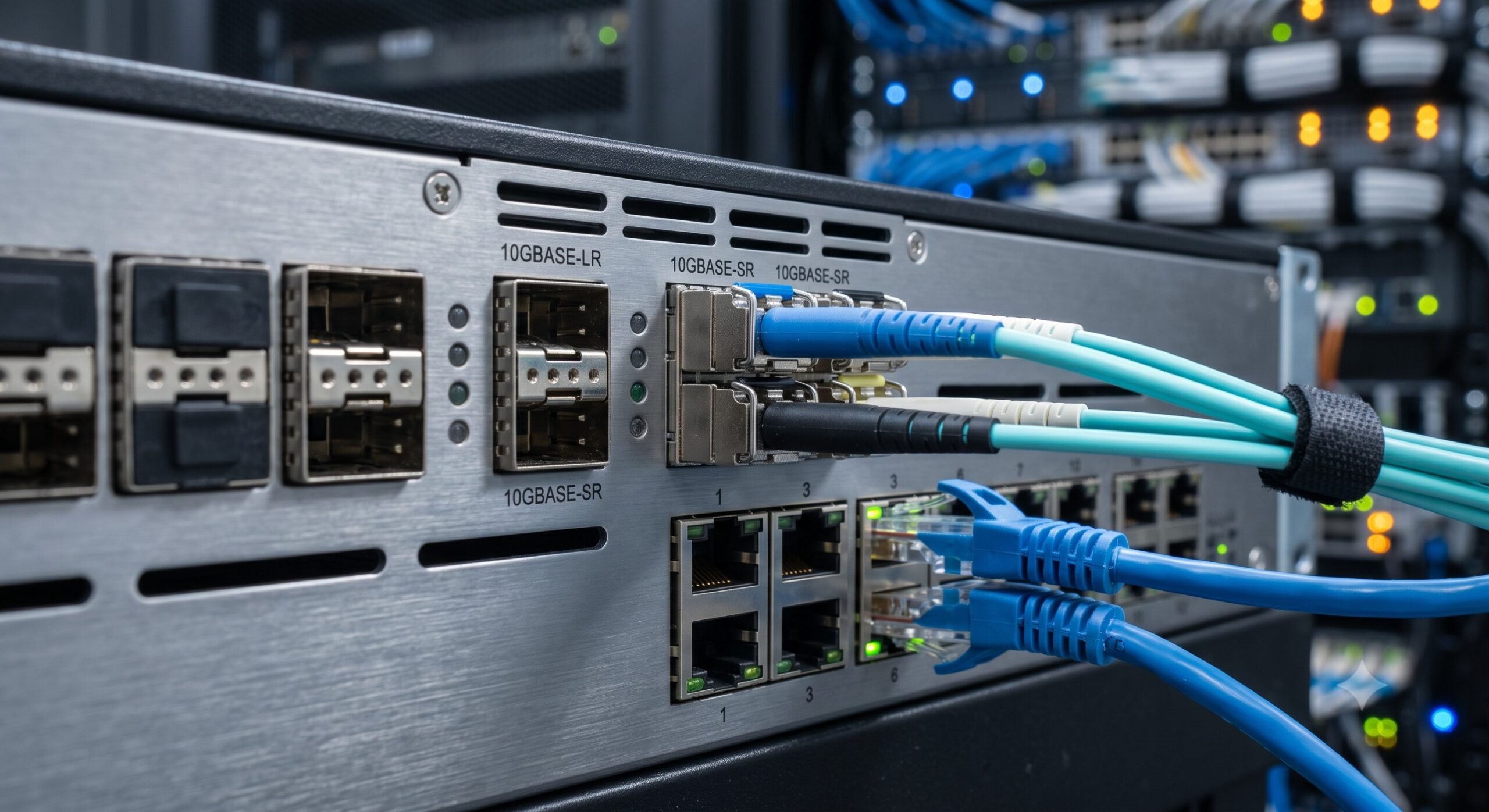
Our IPv6 migration solution comprises a fully integrated set of hardware components designed for operational efficiency and scalability. The chassis itself is the primary structural element, available in 2RU and 4RU form factors to support a range of port densities. The core of the system is the Supervisor Module, which hosts the control plane and provides central management functions, including console and management port access. For packet forwarding, the system utilizes a series of Line Cards that can be populated with a variety of port options, including 1G/10G/25G/40G/100G Ethernet interfaces. Each line card is equipped with its own dedicated forwarding ASIC, delivering distributed forwarding performance. The system also integrates modular power supply units, available in both AC and DC variants, with a 1+1 or N+N redundancy configuration. A comprehensive front-to-back or back-to-front airflow cooling system is standard, ensuring operational stability in diverse datacenter environments.
5. OPERATIONAL SPECS MATRIX
| Parameter | Specification |
|---|---|
| Form Factor | 2RU / 4RU Modular Chassis |
| Switching Capacity | Up to 6.4 Tbps (Full-Duplex) |
| Power Supply | Dual Redundant, Hot-Swappable: AC 100-240V, DC -48V |
| IPv6 Routing Protocols | OSPFv3, BGP-4+, IS-IS, RIPng |
| IPv6 Transition Tech | Dual-Stack, NAT64, DNS64, 6in4, 6RD |
| Interface Options | 1/10/25/40/100 Gigabit Ethernet (SFP/SFP+/QSFP) |
6. REGULATORY COMPLIANCE
The platform is designed and tested to meet the most stringent global industry standards, ensuring interoperability and compliance for enterprise deployment. The hardware complies with all relevant safety standards, including UL, CSA, and IEC 60950-1, alongside the latest IEC 62368-1 for audio/video, information, and communication technology equipment. For electromagnetic compatibility (EMC), the system meets FCC Part 15 (Class A), CE marking (EN 55032 Class A, EN 55024), and VCCI (Class A) standards. The system is also fully compliant with the RoHS (Restriction of Hazardous Substances) directive, underscoring our commitment to environmental sustainability. Furthermore, for network equipment, the platform adheres to NEBS (Network Equipment Building System) Level 3 standards (GR-63-CORE and GR-1089-CORE), certifying its suitability for deployment in telecommunications service provider environments.
📥 Download Technical Specification
Click the button below to view or download the full official PDF datasheet.

Leave a comment