
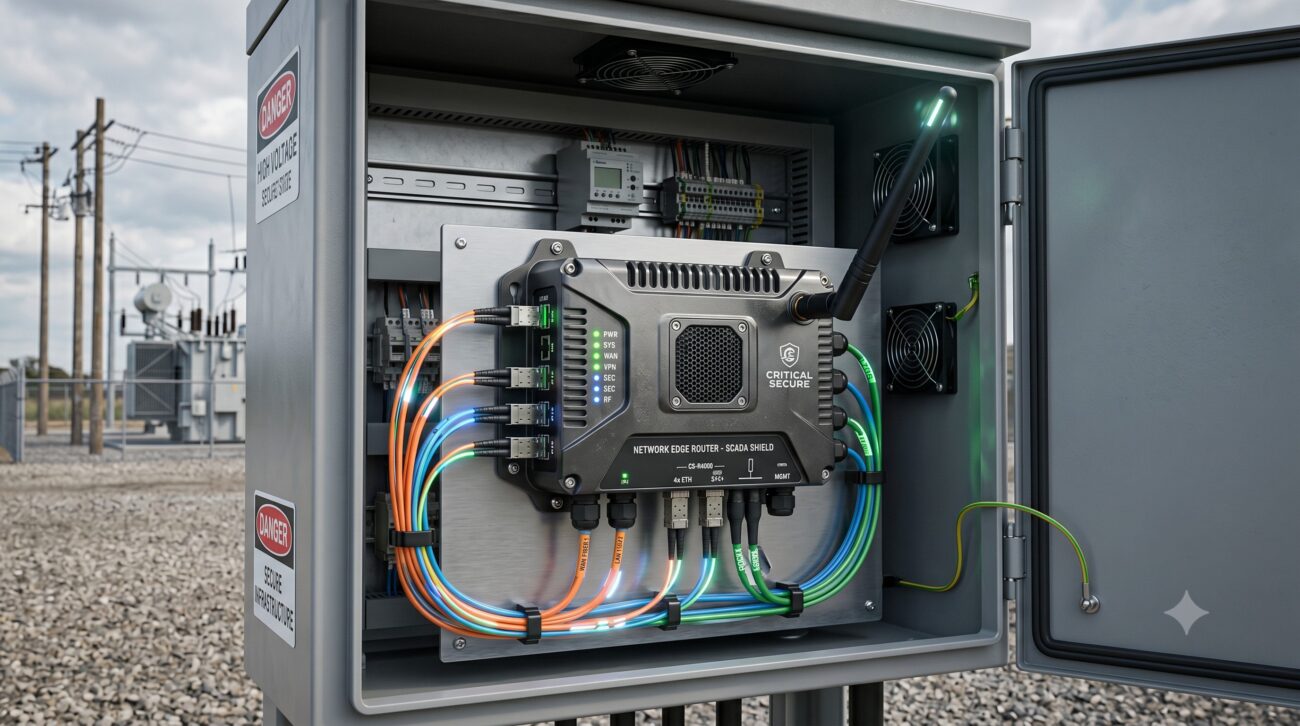
Introduction: The Imperative for Hardware-Level Security in Critical Infrastructure
The digital transformation of critical infrastructure—spanning power grids, water treatment facilities, and intelligent transportation systems—has escalated the attack surface from centralized IT environments to the far-reaching operational technology (OT) edge. While traditional network security focuses on perimeter defense, the modern threat landscape, as highlighted by recent advisories on state-sponsored actors exploiting edge routers, demands a paradigm shift toward embedded hardware security . For telecom and systems architects, the reliance on critical infrastructure protection cyber secure routers is no longer a matter of compliance, but of operational survival. This deep-dive technical review analyzes the architectural underpinnings of these routers, focusing on the critical MAC layer, hardware-root-of-trust, and the integrated Next-Generation Firewall (NGFW) capabilities that define a truly cyber-resilient infrastructure.
Core Architecture: Beyond Simple Packet Forwarding
The Silicon Foundation and Physical Layer Resilience
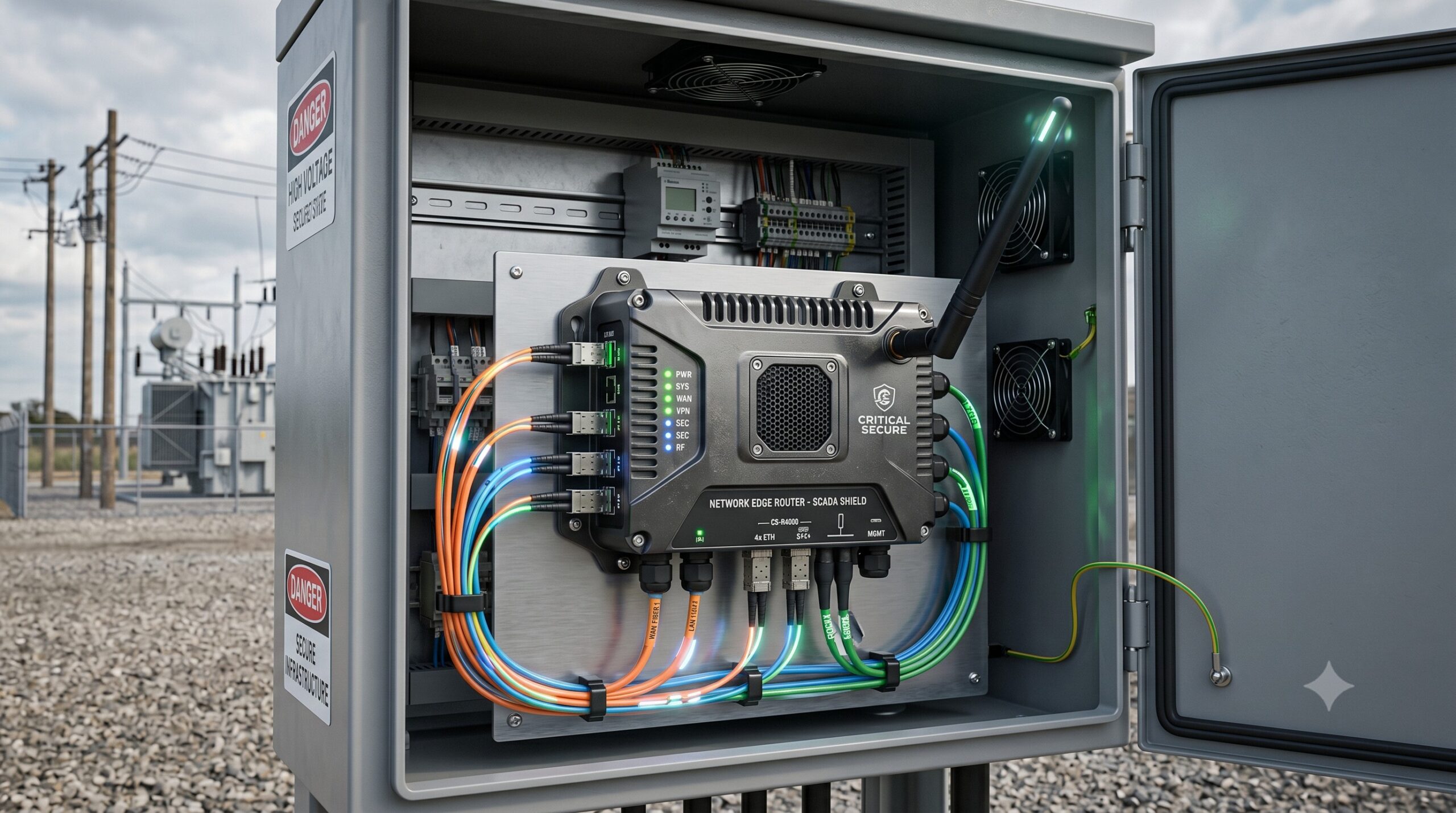
Modern cyber secure routers are purpose-built with ruggedized ASICs and multi-core processors to handle both line-rate data forwarding and computationally intensive security operations. Unlike legacy hardware that treats security as an overlay, these platforms integrate security directly into the data plane. For instance, devices utilizing the Cisco IOS XE architecture combine stateful packet inspection with application awareness within the same silicon, enabling Gigabit-speed threat prevention without compromising throughput . Furthermore, hardware specifications often include an extended operational temperature range of -40°C to +75°C and certifications like MIL-STD-810H and C1D2, ensuring reliability in harsh industrial environments .
Hardware Root of Trust and Secure Boot
Securing the boot process is the foundational element of a cyber-resilient system. Critical infrastructure routers implement a Hardware Root of Trust (HRoT) that cryptographically verifies the bootloader and operating system image before execution. This mechanism, often validated by SHA-256 hash verification against vendor-signed certificates, prevents the injection of persistent malware at the firmware level . This is crucial for defending against attacks that target configuration files and exfiltrate sensitive credentials, as noted in recent government advisories .
| Security Feature | Architectural Implementation | Compliance Standard Reference |
|---|---|---|
| Hardware Root of Trust | Secure Boot with SHA-256 image validation | NIST SP 800-82 |
| Access Control (MAC Layer) | 802.1X & MAC Authentication Bypass (MAB) | IEC 62443-4-2 |
| Network Segmentation | Virtual Routing and Forwarding (VRF) instances | NERC-CIP |
| Intrusion Prevention (IPS) | ASIC-accelerated Snort engine with OT protocol pre-processors | ISA/IEC 62443 |
| Encryption Performance | Line-rate AES-256 & TLS v1.3 throughput (up to 1 Gbps) | FIPS 140-2 |
MAC Layer Security and Micro-Segmentation
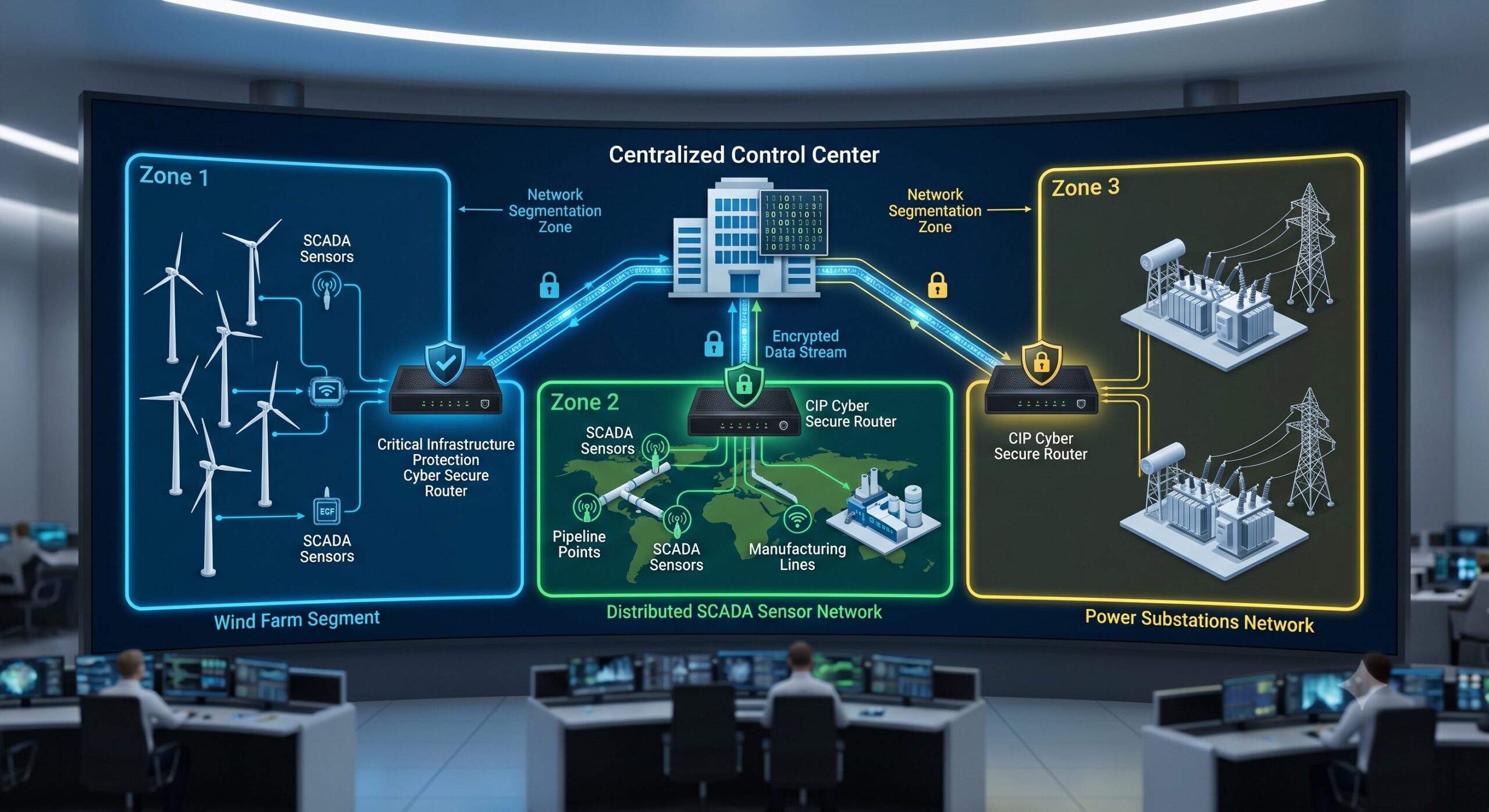
To mitigate lateral movement and limit the blast radius of a compromise, cyber secure routers deploy advanced network segmentation mechanisms at the MAC and IP layers. Virtual Routing and Forwarding (VRF) allows a single physical router to operate multiple independent routing tables, creating complete logical separation for different classes of assets . This means non-critical HVAC systems can share the same physical fiber as SCADA controls but remain utterly isolated, preventing unauthorized data flows.
802.1X and MAC Authentication Bypass (MAB)
Moving to a “default closed” posture is critical for defending OT networks. Cyber secure routers enforce port security using IEEE 802.1X authentication. However, because many OT devices lack interactive interfaces, these routers also support MAC Authentication Bypass (MAB). The router locks down an Ethernet port, examines the source MAC address, and authenticates it against a central Identity Services Engine (ISE) before allowing any traffic to pass . This eliminates the physical risk of unauthorized devices tapping into accessible field cabinets and gaining network service .
Deep Packet Inspection and Integrated NGFW Capabilities
Protecting critical infrastructure requires more than just stateful inspection; it demands application-layer visibility. Integrated Next-Generation Firewall (NGFW) engines, such as Snort, provide Intrusion Detection and Prevention (IDS/IPS) by deep-packet inspecting traffic flows. They utilize pre-processors tailored to OT protocols like Modbus, DNP3, and CIP to block malicious application-layer attacks . By leveraging industry-leading threat intelligence feeds, these routers can detect and block threats based on file reputation, using SHA-256 signatures to prevent malware from entering the network in the first place .
Centralized Management and Compliance (NIS2, NERC-CIP)
The distributed nature of critical infrastructure makes centralized management a prerequisite for security. Platforms like Cisco Catalyst SD-WAN Manager (formerly vManage) provide a unified interface to deploy security policies across thousands of remote sites, ensuring compliance with frameworks like NERC-CIP and NIS2 . Features such as zero-touch provisioning (ZTP) ensure that devices are deployed with a hardened configuration out-of-the-box, while centralized monitoring enables rapid threat hunting, aligning with NSA-recommended mitigation strategies for edge devices . Furthermore, data encryption standards are rigorously applied, utilizing AES-256 and TLS v1.3 to secure management plane communications .
Conclusion: The Carrier-Grade Security Verdict
The evolution from simple connectivity to cyber-resilient networking is driving the adoption of specialized critical infrastructure protection cyber secure routers. By embedding hardware-root-of-trust, enforcing MAC-layer access control, integrating high-performance NGFW engines with OT-aware deep packet inspection, and centralizing management, these routers provide the defense-in-depth required to protect national infrastructure. The measurable gains—such as reduced Mean Time to Repair (MTTR) via centralized automation and lowered risk of data exfiltration—quantify the ROI of deploying security at the edge. As threat actors continue to target network edge devices, the integration of these security features directly into the routing silicon is no longer optional; it is the new gold standard for telecom hardware engineering .

Leave a comment