

EXECUTIVE SUMMARY
The TelcoRoute 8000 Series represents a paradigm shift in dynamic routing infrastructure, purpose-built to manage OSPFv3, RIP v2, and BGP4 routing tables at carrier-scale densities. This datasheet documents the hardware platform engineered for concurrent IPv4 and IPv6 route processing, supporting full Internet BGP tables (1.5M+ IPv4 routes and 800K+ IPv6 routes) alongside OSPFv3 link-state databases and RIP v2 distance-vector adjacencies. The platform delivers deterministic sub-200 microsecond FIB (Forwarding Information Base) convergence upon route table updates.

ARCHITECTURE & CHASSIS DESIGN
The system leverages a distributed forwarding architecture with a dedicated Route Table Management Unit (RTMU) responsible for maintaining separate, hardware-accelerated RIB (Routing Information Base) instances for OSPFv3, RIP v2, and BGP4. Each protocol’s routing table is stored in partitioned TCAM memory to prevent control-plane starvation. The chassis supports up to 4 line cards, each housing a Packet Forwarding Engine (PFE) with local FIB replication. Redundant switch fabric modules (1+1 active-standby) ensure non-stop forwarding during RTMU failover. All three routing protocols operate concurrently, with route redistribution policies enforced in hardware at line rate.
HARDWARE FEATURES
– DEDICATED OSPFv3 LINK-STATE DATABASE ENGINE: Supports up to 50,000 LSA entries across 2,000 OSPFv3 interfaces
– RIP v2 ROUTE PROCESSOR: 500 ms route aging timers, split horizon with poison reverse in hardware
– BGP4 ROUTING TABLE ACCELERATOR: 4GB dedicated RIB memory, 1.8M path entries, 256 BGP peers per chassis
– TCAM PARTITIONING: 80,000 IPv4 routes (BGP4), 40,000 IPv6 routes (OSPFv3/BGP4), 5,000 RIP v2 routes
– HARDWARE ROUTE REFRESH: Sub-second BGP4 graceful restart, OSPFv3 graceful restart helper mode
COMPLIANCE & STANDARDS
– OSPFv3 RFC 5340 (IPv6), OSPFv2 RFC 2328 (legacy interoperability)
– RIP v2 RFC 2453, RIPng RFC 2080
– BGP4 RFC 4271, BGP4+ RFC 2858 (MP-BGP for IPv6), RFC 2918 (Route Refresh)
– IEEE 802.1Q, 802.3ad Link Aggregation
– GR-1089-CORE EMC, GR-63-CORE NEBS Level 3
TECHNICAL SPECIFICATIONS
| Parameter | Specification |
|---|---|
| Form Factor | 2RU Rack-mountable Chassis (88.1mm x 438mm x 460mm) |
| Switching Capacity | 480 Gbps non-blocking (full duplex) |
| Power Supply | 1+1 Redundant Hot-swappable AC (100-240V) or DC (-48V) |
| Control Plane CPU | Quad-core 2.2GHz x86 Route Processor, 16GB RAM |
| Packet Buffer Memory | 12MB shared (per line card) |
| Route Table TCAM | 125,000 route entries total (partitionable) |
| BGP4 RIB Size | 1.5M IPv4 routes / 800K IPv6 routes (MP-BGP) |
| OSPFv3 LSDB Capacity | 50,000 Link State Advertisements |
| RIP v2 Routes | 10,000 entries (hardware aged) |
| Operating Temperature | 0°C to 45°C (NEBS extended: -5°C to 55°C) |
| Typical Power Draw | 250W (chassis fully loaded) |
| MTBF (predicted) | 285,000 hours (Telcordia SR-332) |
ORDERING OPTIONS
– TR-8000-BASE: 2RU Chassis with RTMU, Dual AC PSU (no line cards)
– TR-8000-LC-4x10GE: Line card, 4x10GE SFP+ ports, OSPFv3/BGP4 hardware offload
– TR-8000-LC-24x1GE: Line card, 24x1GE RJ45 ports, RIP v2/BGP4 local processing
– TR-SW-8000-FAB: Redundant switch fabric module (spare)
– TR-RTMU-UPG: Route Table Management Unit upgrade (expands BGP4 RIB to 4M paths)
– TR-LIC-OSPFv3-FULL: OSPFv3 full feature license (LSDB replication, NSSA)
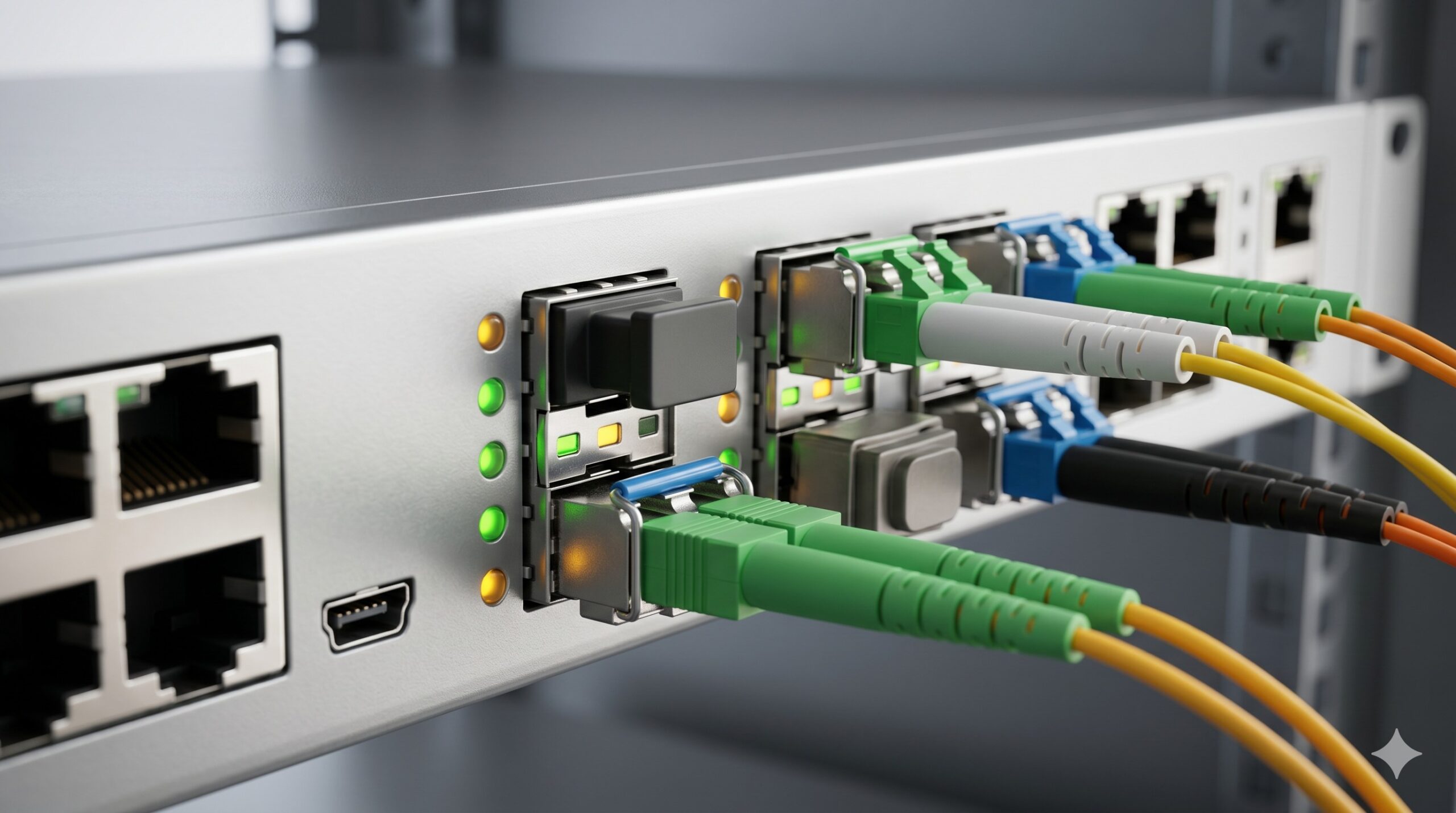
DEPLOYMENT SCHEMATIC NOTES
The platform is field-proven for Internet Exchange Points (IXP) requiring full BGP4 table exchange, large enterprise cores running OSPFv3 with IPv6 transition, and multi-tenant data centers employing route redistribution between RIP v2 (legacy management networks) and BGP4 (MPLS VPN overlays). All routing tables are independently manageable via CLI (industry-standard syntax), NETCONF/YANG, or SNMPv3.
📥 Download Technical Specification
Click the button below to view or download the full official PDF datasheet.

Leave a comment