
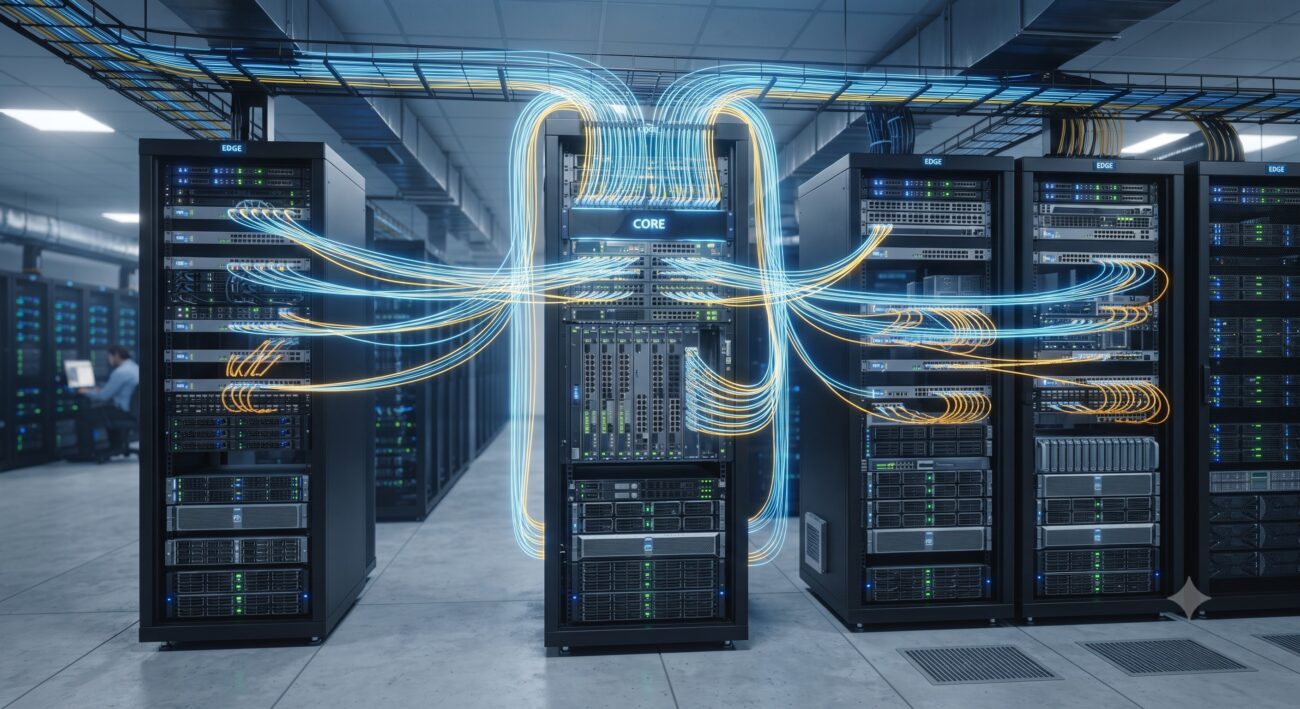
Introduction: The Two Pillars of Network Infrastructure
In the architecture of modern enterprise and telecom networks, the distinction between core switches and edge switches is fundamental. These two classes of devices represent the strategic separation of duties in a layered network design, ensuring both performance and manageability. Understanding their distinct roles, hardware capabilities, and deployment scenarios is essential for any network engineer or IT decision-maker. This guide provides a comprehensive, data-driven analysis of core vs edge switches, covering their architecture, technical specifications, and optimal use cases.
Core Architecture & Hardware Topology
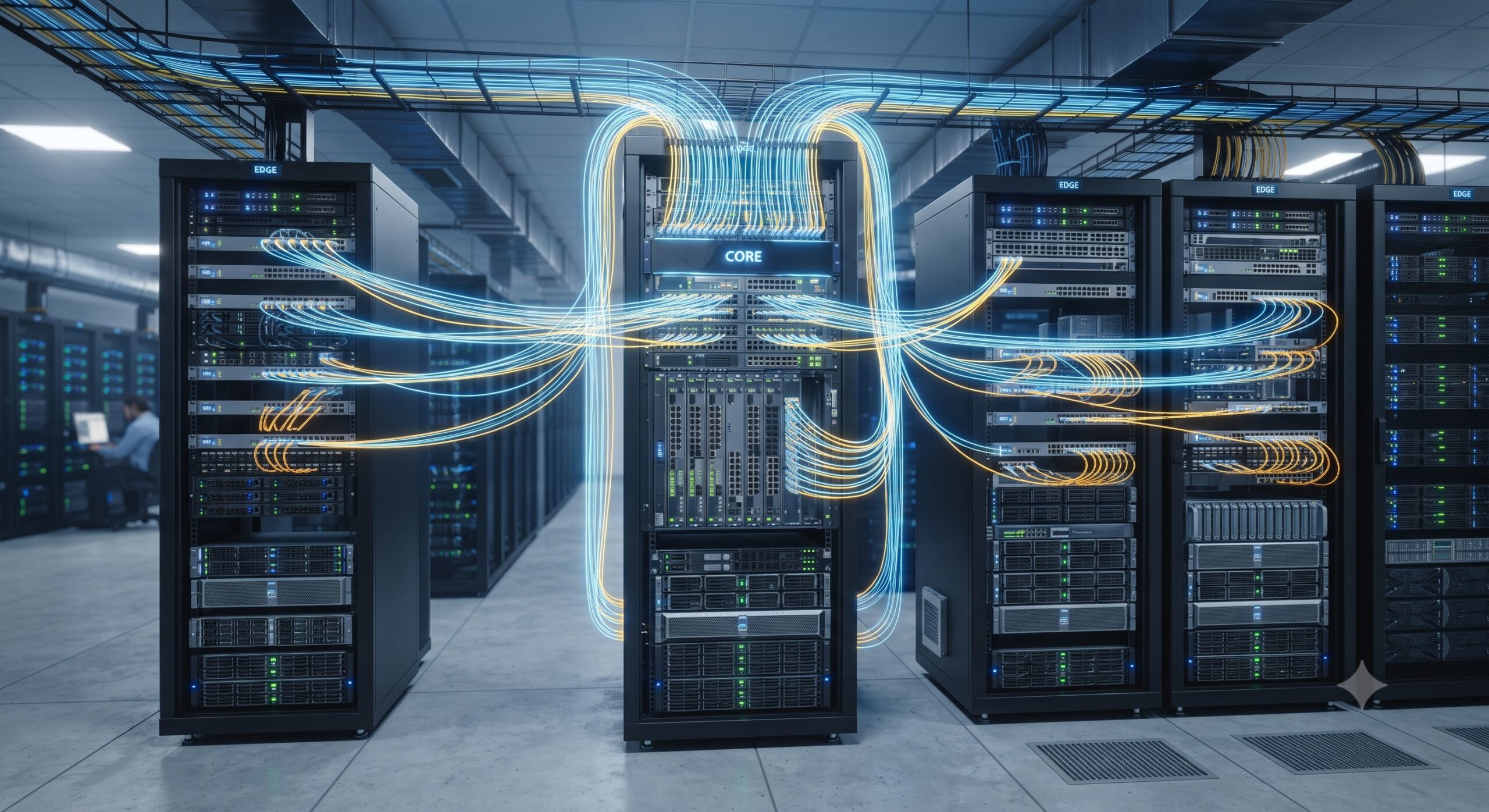
The network core is the high-speed backbone of the infrastructure, responsible for aggregating traffic from multiple distribution or aggregation switches and providing fast, reliable transport between different parts of the network. The core switch is designed to handle substantial data traffic, ensuring low-latency and high-bandwidth communication. It is typically found in data centers, enterprise campuses, and service provider backbones . Core switches are engineered for high capacity, with built-in redundancy and advanced management capabilities. They connect to equipment that cannot experience downtime, such as servers, routers, and firewalls . The primary function of the core layer is to create an optimal and dependable backbone transmission structure via high-speed communication forwarding .
On the other hand, the edge switch, also known as an access switch, is located at the network’s periphery. Its primary role is to provide local network connectivity to end-user devices like computers, printers, IP phones, and wireless access points . Edge switches are designed with a focus on ease of use, scalability, and cost-effectiveness, offering features like Power over Ethernet (PoE) to power connected devices and VLAN capabilities for traffic segmentation and security . The differentiation in architecture is driven by the distinct traffic patterns: the edge handles bursty, latency-sensitive traffic, while the core manages aggregated, bandwidth-intensive flows .
Functional Layers and OSI Model
Understanding the OSI layer at which these switches operate provides further clarity. An edge switch primarily operates at the data link layer (Layer 2) using MAC addresses to forward traffic within a local area network (LAN). Many also support basic IP routing functions at the network layer (Layer 3) . A core switch, in contrast, is primarily optimized for ultra-fast Layer 2 forwarding, often leaving complex Layer 3 routing to dedicated core routers in larger networks . However, modern core switches frequently incorporate advanced Layer 3 capabilities, including support for routing protocols like OSPF and BGP, especially in high-density enterprise environments .
Key Technical Specifications
The performance disparity between core and edge switches is quantifiable and significant. Core switches are defined by their non-blocking architecture, allowing simultaneous data transmission across all ports without congestion . They boast high port density, with models offering 10 Gigabit (GbE), 40 GbE, or 100 GbE uplinks and advanced features like link aggregation and deep packet buffers . Edge switches, while also capable, are generally less powerful but provide high port density for end-device connectivity, often with support for Power over Ethernet (PoE+) and simplified management interfaces .
| Parameter | Core Switch | Edge Switch |
|---|---|---|
| Primary Function | High-speed backbone, traffic aggregation | Local end-device connectivity |
| Network Position | Center/Core of the network (Data Center, MDF) | Edge/Access layer (IDF, wiring closet) |
| Key Features | Non-blocking architecture, high port density, link aggregation, deep buffers, high redundancy | PoE support, VLAN capabilities, ease of management, cost-effectiveness |
| Performance | Very high throughput (e.g., Tbps switching capacity), ultra-low latency (microseconds) | Good throughput (typically Gbps), moderate latency |
| Typical Uplinks | 40/100 GbE, high-density 10/25 GbE | 1/10 GbE, often with SFP+ for uplinks |
| Redundancy | High (modular chassis, redundant power supplies, fans, management engines) | Limited to moderate (often fixed-form factor, may have dual power on higher-end models) |
| Traffic Pattern | Aggregated, bandwidth-intensive, sustained throughput | Bursty, latency-sensitive, many small packets |
Deployment Scenarios and Strategic Integration
The decision to deploy a layered architecture with distinct core and edge switches is crucial for network scalability and performance. In small networks, a robust distribution switch might suffice, but in large enterprise or campus environments, dedicated core switches are essential to prevent bottlenecks as traffic aggregates from numerous edge switches . A well-designed network follows a hierarchical model: edge switches connect end-devices, aggregation switches consolidate edge traffic, and core switches provide the high-speed backbone . This architecture is particularly beneficial for high-density environments like educational campuses, hospitality venues, and large corporate offices .
The integration of core and edge switches is not a one-size-fits-all solution. The choice of hardware must be driven by a detailed analysis of network requirements, including traffic volume, application performance needs, and budget constraints. In some hybrid networks, combining high-performance core switches from a premium vendor with cost-effective edge switches from another can achieve significant CapEx savings while maintaining a ‘Five Nines’ uptime, as long as interoperability is verified .
Security, Reliability, and Future-Proofing
The security paradigm is shifting, with a growing emphasis on leveraging the core to protect the edge. Modern core switch ASICs, such as Broadcom’s Trident 4C, are being equipped with advanced security features like ultra-high-performance packet inspection engines capable of processing billions of packets per second . This allows the core to monitor and detect distributed threats, such as port scans or DDoS attacks, that would be impossible to identify from the edge alone. This approach is more cost-effective and efficient than trying to deploy deep inspection capabilities across thousands of edge devices . Furthermore, core switches often feature redundancy with hot-swappable power supplies and modular designs to maximize reliability and fault tolerance .
The concept of a unified, open network architecture is gaining traction to address the fragmentation often seen between edge and core deployments. By using open network switches that support operating systems like SONiC, organizations can achieve consistent configurations, policies, and management from the edge to the core, breaking down silos and improving operational efficiency .

Conclusion: Strategic Choice Defines Network Success
The choice between a core and an edge switch is not about which is ‘better’ but about selecting the right tool for the right role in the network hierarchy. Core switches are the high-speed, highly reliable backbone designed for throughput, aggregation, and now, increasingly, advanced security and analytics. Edge switches are the versatile, cost-effective, and user-friendly gateways for end-user devices and local network segments. A robust, scalable, and performant network relies on the effective interplay between both. For network architects and systems integrators, understanding the distinct technical specifications, architectural roles, and deployment strategies of core vs edge switches is paramount to building a resilient and future-ready infrastructure.

Leave a comment