
Overview & Thematic Scope
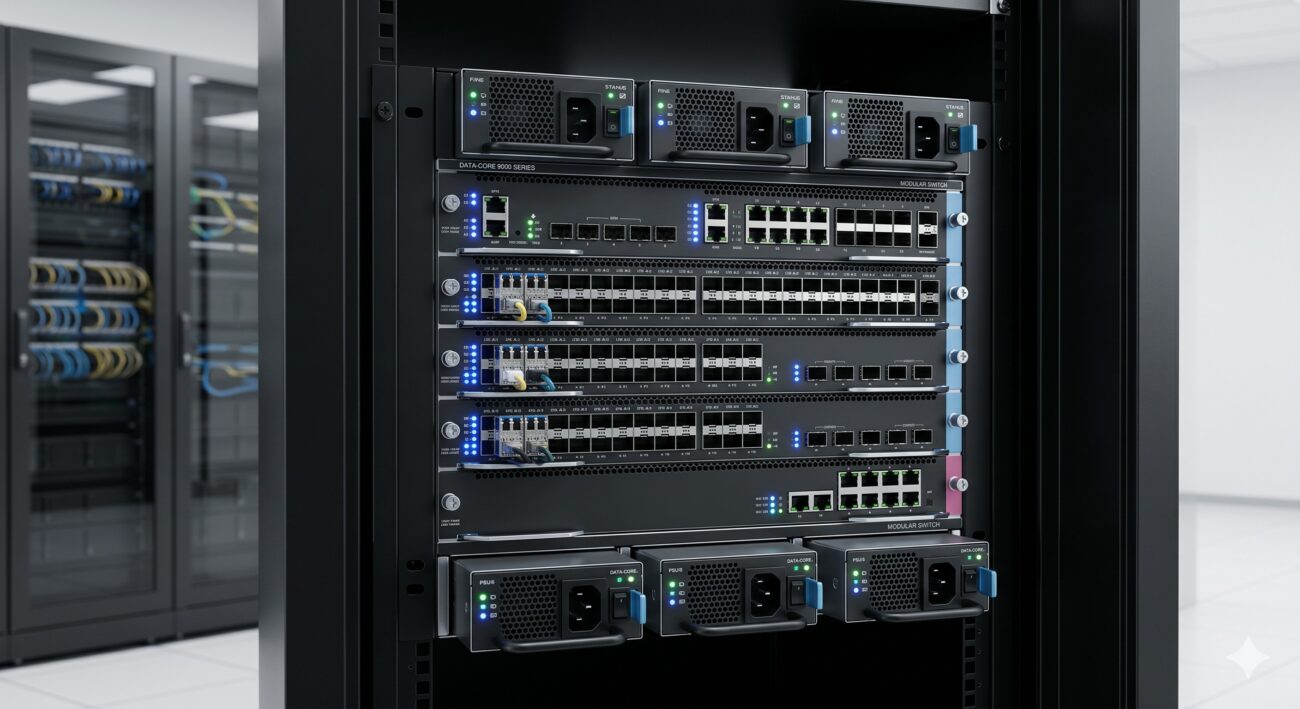
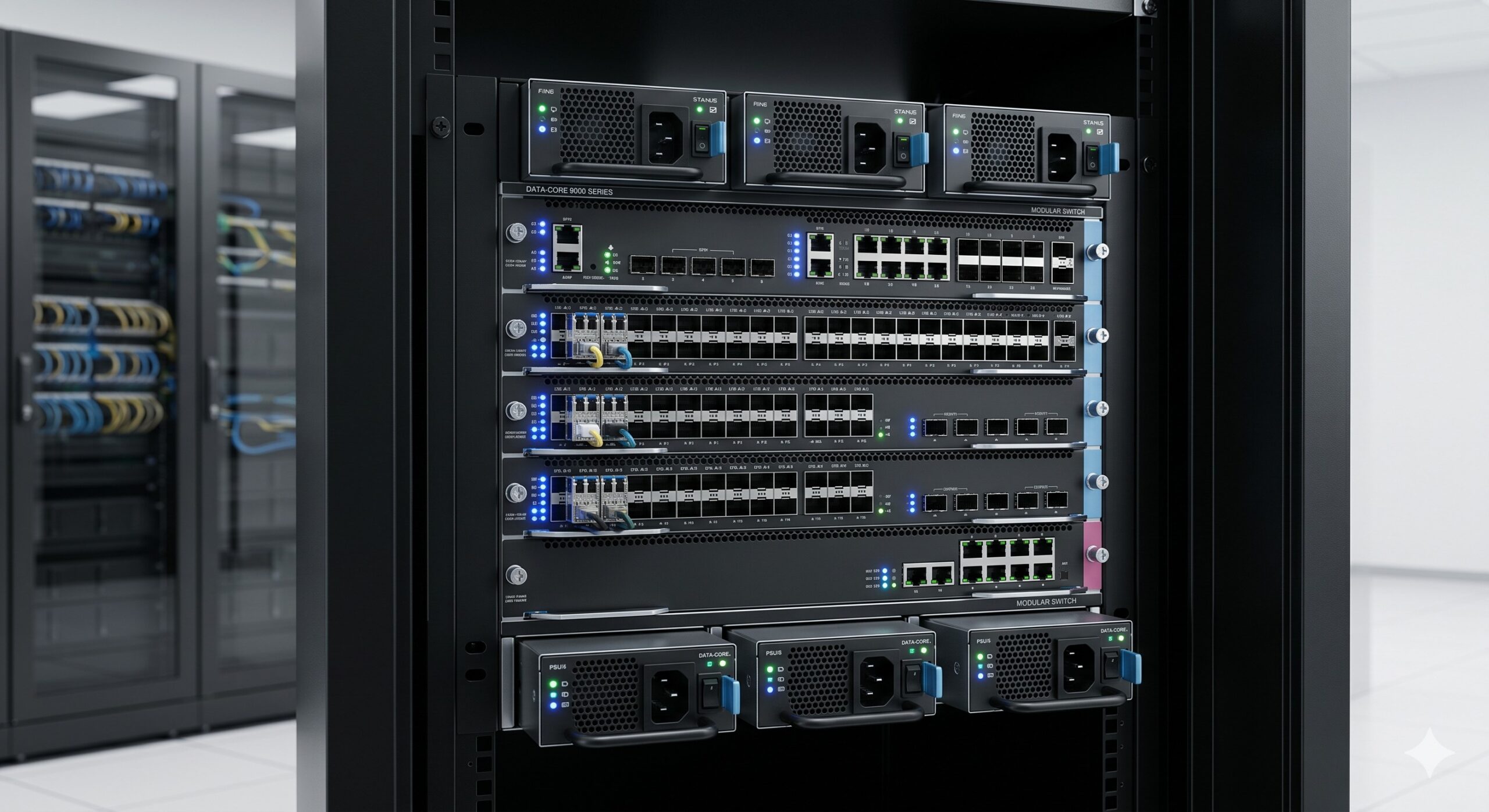
Chassis-based switches deliver unmatched port density, redundancy, and lifespan, but their total cost of ownership (TCO) extends far beyond the initial purchase price. This FAQ addresses procurement, operational, and lifecycle cost drivers—from line card compatibility and power budgeting to support contracts and EOL transitions—helping network architects and finance teams model true TCO for data center and campus core deployments.
Frequently Asked Questions
- Q1: What is the typical total cost of ownership (TCO) range for a chassis-based network switch over 7 years?
- Typical TCO for a chassis-based switch over 7 years is 3 to 5 times the initial chassis price. This includes the base chassis, redundant supervisor engines, power supplies, line cards, transceivers, and cumulative support contracts (hardware replacement + NBD or 4-hour response). For a fully loaded 10-slot chassis, expect $80,000–$250,000 TCO depending on port speed (1/10/25/100GbE) and vendor.
- Q2: Why does a bare chassis cost less than a fixed-configuration switch but end up more expensive?
- A bare chassis minimizes upfront cost but maximizes modular spend. You must buy at least one supervisor engine, fabric modules, power supplies (often N+1 or N+N), and line cards separately. For a 48-port 10GbE deployment, a $6,000 chassis plus required components often totals $30,000–$50,000—higher than a fixed 48-port 10GbE switch ($12,000–$18,000) but offers in-service upgradeability and higher longevity.
- Q3: Which hidden costs most commonly blow chassis switch budgets?
- Top four hidden costs:
- Transceiver and cable compatibility (vendor-locked optics add 40–80% premium)
- Power infrastructure upgrades (higher inrush current may need new PDU/circuits)
- Support contract tiers (smartnet-style: 8×5 vs 24x7x4 doubles annual fee)
- Rack space and cooling (deep chassis often exceed standard 800mm racks, requiring custom enclosures)
- Q4: How does support contract pricing scale for chassis switches after year 3?
- Support contract pricing typically increases 8–15% annually and can exceed 30% of original chassis price per year by year 5. For a $50,000 chassis, year-1 support might be $4,000; year-5 can reach $15,000–$18,000. Third-party maintenance (TPM) providers often reduce this to 40–60% of vendor rates, but check hardware sparing policies.
- Q5: Are used or refurbished chassis switches a cost-effective alternative?
- Yes, used chassis switches offer 70–85% off list price, but with three critical caveats: (1) software licensing may be non-transferable, (2) advanced replacement support from third-party vendors is limited to like-for-like hardware (no software bug fixes), and (3) power efficiency is worse on units older than 5 years. Best for lab/non-production or brownfield expansions matching existing EOL gear.
- Q6: What is the real-world lifespan and depreciation curve of a chassis switch?
- Chassis switches have a service life of 8–12 years in secondary roles, with primary deployment life of 5–7 years. Depreciation is steepest in years 0–2 (40–50% loss), then flattens. After year 7, residual value is 5–15% of original list, mainly from spare power supplies and fan trays. Vendor end-of-life (EOL) announcements typically trigger 50% value drop within 3 months.
- Q7: How do power and cooling costs compare between chassis and fixed switches?
- Per 10GbE port, chassis switches consume 2.5–4 watts vs 1–2 watts for fixed switches. For a 240-port deployment, chassis power draw (600–960W) plus cooling overhead (1.2–1.8x PUE factor) adds $2,000–$4,500 annually in electricity at $0.12/kWh. High-voltage DC power supplies and variable-speed fan trays reduce this by 15–25%.
- Q8: Do I pay extra for software features like VXLAN, EVPN, or advanced telemetry?
- Almost always. Base software includes Layer 2 and basic OSPF/BGP. Advanced features require add-on licenses: VXLAN/EVPN ($3,000–$12,000 per chassis), telemetry/streaming ($2,000–$8,000), and MACsec ($1,500–$5,000). These are often perpetual but tied to specific line card or supervisor engines. Always verify if the license follows the chassis or the hardware serial number.

Leave a comment