

EXECUTIVE SUMMARY
This document provides a comprehensive technical overview of the Quality of Service (QoS) architecture and hardware specifications for the next-generation enterprise switching platform. Designed to address the stringent requirements of converged networks, this switch delivers intelligent traffic prioritization, congestion management, and latency control, ensuring optimal performance for voice, video, and mission-critical data applications. The platform integrates advanced hardware-based QoS capabilities, leveraging a purpose-built ASIC to enforce service policies at line rate, thereby guaranteeing predictable network behavior even under full load conditions.

ARCHITECTURE & CHASSIS DESIGN
The system architecture is centered around a high-performance, non-blocking switching fabric capable of wire-speed forwarding across all ports. The chassis design incorporates a modular, field-replaceable unit (FRU) architecture, with front-accessible power supplies and fan trays to simplify maintenance. Central to the QoS engine is a dedicated classification and policing ASIC that operates in parallel with the forwarding pipeline. This design allows for the simultaneous processing of layer 2 through layer 4 packet headers, enabling granular traffic differentiation based on VLAN tags, Differentiated Services Code Point (DSCP), IP precedence, and access control lists (ACLs). The internal backplane supports a high-speed data bus that ensures low inter-ASIC latency, which is critical for maintaining jitter-sensitive traffic flows.
HARDWARE FEATURES
The platform is equipped with robust hardware features designed to support comprehensive QoS policies. Key hardware components include:
– **Application-Specific Integrated Circuit (ASIC):** A custom, low-latency forwarding engine with integrated QoS logic supporting up to 8 hardware queues per port for egress traffic shaping and scheduling.
– **Packet Buffer:** A substantial shared packet buffer pool, dynamically allocated to prevent packet loss during micro-bursts, coupled with configurable threshold management.
– **Memory Subsystem:** High-speed DDR4 memory for storing complex traffic policies, flow tables, and statistics, enabling deep packet inspection (DPI) at Gigabit speeds.
– **Management Plane:** A dedicated out-of-band management port and processor for system configuration, monitoring, and control without impacting data-plane forwarding performance.
COMPLIANCE & STANDARDS
The switch adheres to a wide array of industry standards, ensuring seamless interoperability in heterogeneous enterprise environments. Compliance certifications include:
– IEEE 802.1p (CoS), IEEE 802.1Q (VLAN), and IEEE 802.3 (Ethernet).
– IETF standards: RFC 2474 (DSCP), RFC 2475 (DiffServ Architecture), RFC 2597 (AF PHB), and RFC 3246 (EF PHB).
– MEF (Metro Ethernet Forum) service definitions for Carrier Ethernet.
– RoHS and WEEE environmental compliance directives.
– NEBS Level 3 certification for deployment in central office environments.
TECHNICAL SPECIFICATIONS
| Parameter | Specification |
|---|---|
| Form Factor | 1RU / 2RU Rack-mountable Chassis |
| Switching Capacity | Up to 1.44 Tbps (Non-blocking) |
| Power Supply | Dual, Hot-swappable 1+1 Redundant AC (100-240V, 50/60Hz) or DC (-48V) |
| Forwarding Rate | Up to 1,000 Mpps (Million packets per second) |
| QoS Queues | 8 hardware queues per egress port |
| Packet Buffer | 12 MB shared, dynamically allocated |
| Jumbo Frame Support | Up to 9,216 bytes |
| Operating Temperature | 0°C to 45°C (32°F to 113°F) |
| Cooling | Front-to-back or back-to-front airflow, redundant fans |
ORDERING OPTIONS
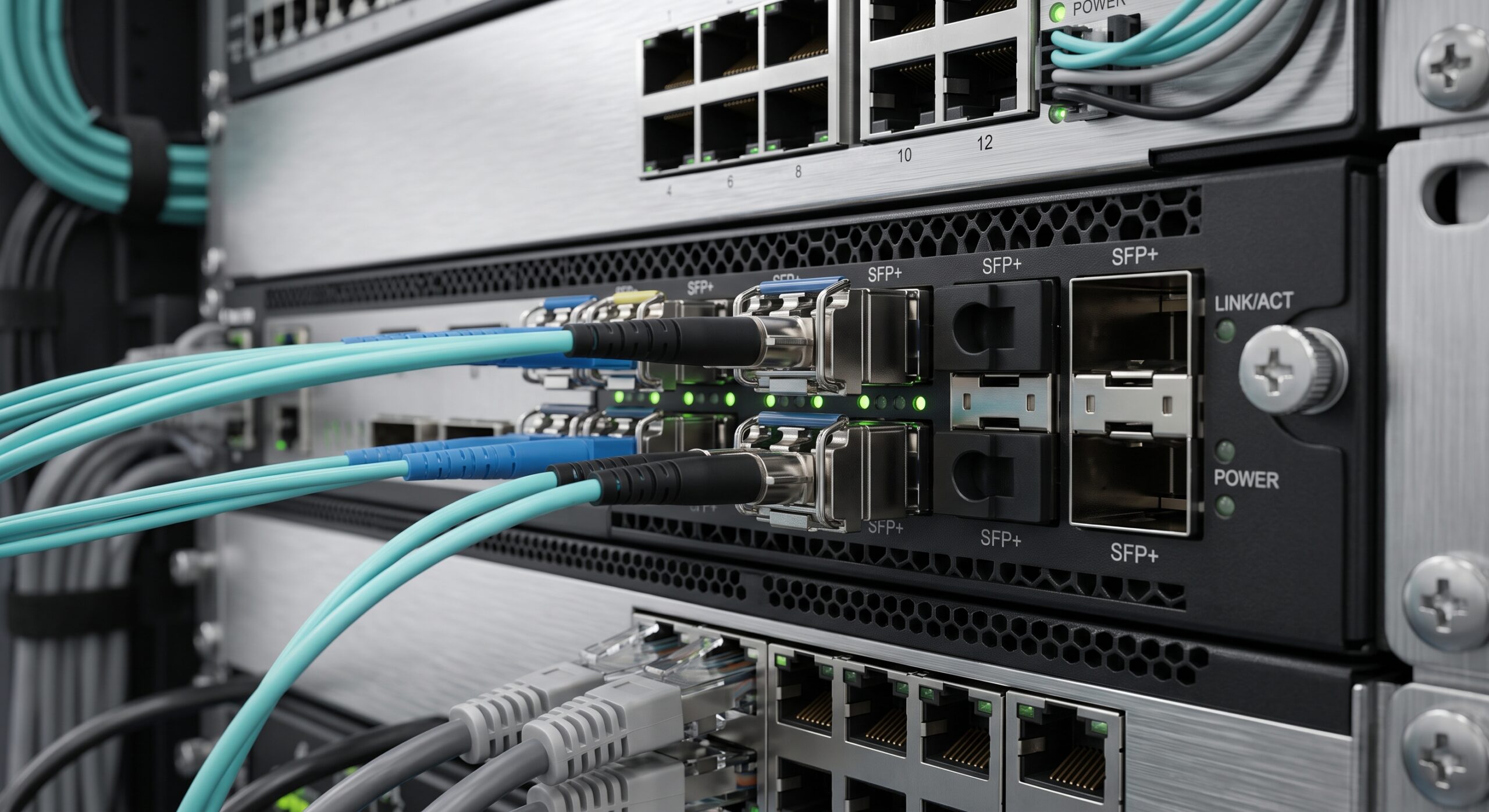
The platform is offered in a variety of configurations to meet diverse deployment needs. Base models include options for 24, 48, or 52 Gigabit Ethernet ports, with support for SFP/SFP+ uplinks. Field-installable expansion modules are available for additional 10GbE and 40GbE interfaces. For network resilience, customers can select dual, hot-swappable power supplies (AC or DC) and a redundant fan tray assembly. Software licensing tiers are available, enabling advanced QoS features such as priority flow control (PFC) and enhanced traffic engineering (ETE).
📥 Download Technical Specification
Click the button below to view or download the full official PDF datasheet.

Leave a comment