
Imagine your finance department calls about a frozen accounting system. Simultaneously, warehouse staff report scanning terminals timing out. Your network team traces the problem: critical traffic crawling across congested links between VLANs, bottlenecked by overloaded firewalls doing core routing duties. This operational logjam exposes the outdated model of using simple access switches or firewalls for complex inter-departmental routing. The Huawei S3300 series, a robust Layer 3 managed switch, isn’t just another box in the rack. It’s designed precisely to solve these strategic network limitations. Acting as a powerful aggregation or core switch, its ability to perform high-speed IP routing internally transforms how traffic flows across your network segments. Neglecting its potential relegates you to sluggish, inefficient networks where application performance suffers, troubleshooting becomes a nightmare, and scaling means constant hardware forklifts. The critical question emerges: Can integrating the strategic Switch Huawei S3300 role, especially its Layer 3 capabilities, fundamentally reshape your operational agility and responsiveness?
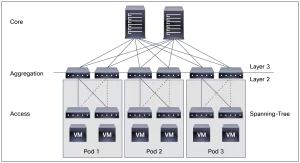
Absolutely, yes. Deploying the Huawei S3300 as a Layer 3 routing engine unlocks significant agility precisely because it transforms your network’s foundational logic. Moving routing intelligence into the switch fabric itself eliminates persistent bottlenecks and streamlines operations in concrete ways:
- Collapsing Networks & Supercharging Internal Communication: The traditional approach forces VLAN traffic through slow uplinks to a central firewall or router for inter-VLAN routing. This chokepoint kills performance. The S3300 fixes this at the source. Enabling its Layer 3 switching capabilities allows it to route packets directly between VLANs at wire speed using dedicated hardware ASICs. This means blistering-fast communication:
- HR payroll software accesses the finance server across VLANs with minimal latency.
- Warehouse scanners instantly update inventory in the central ERP database.
- VoIP calls between departments are crystal clear without traversing unnecessary bottlenecks.
Configuring VLAN interfaces (SVI) on the S3300 establishes this routing capability. Assigning IP addresses to these interfaces creates the essential gateways. Implementing optimized static routes (cleaner and less resource-intensive for smaller networks) or OSPF routing protocol (for dynamic updates in larger environments) directs this traffic efficiently within the core or aggregation layer. The result? Routed traffic never leaves the switch stack until absolutely necessary, freeing up expensive firewall/router resources and slashing internal latency. Operations simply move faster.
- Smarter Traffic Steering & Policy Enforcement: Agility means critical applications get priority, especially during congestion. The S3300’s Layer 3 capabilities extend into granular traffic control. Implementing advanced ACLs (Access Control Lists) based on source/destination IP addresses and protocol types (like prioritizing VoIP – SIP/RTP traffic) is key here. Unlike simple MAC-based ACLs on Layer 2 switches, these IP-aware ACLs allow precise filtering and redirection between network segments. Combined with robust QoS policies, this lets you tag critical traffic (e.g., setting IP Precedence or DSCP values) right at the aggregation/core point. Configuring bandwidth guarantees ensures your sales CRM or video conferencing system gets the throughput it needs, even during backup windows or file transfers. This prevents unpredictable slowdowns impacting core operations. The S3300 becomes an active traffic director, not just a passive connector.
- Building Resilient, Scalable Foundations: Static, brittle networks hinder growth. True agility requires built-in redundancy and easy expansion. The Huawei S3300 excels here when configured for Layer 3 resilience. Setting up VRRP (Virtual Router Redundancy Protocol) allows multiple S3300s to share a common virtual gateway IP address. If the active switch fails, a backup instantly takes over core routing duties with zero user disruption – crucial for seamless application access. For dynamic routing environments, enabling OSPF between S3300s in the core/aggregation layer provides automatic path recalculation if a link fails. Deploying S3300 stacking technology (iStack) via dedicated high-bandwidth stacking cables links multiple units into a single logical entity. This simplifies management exponentially (one IP address!), boosts backplane capacity, and allows hot-swapping without network downtime. Need more ports? Simply add another S3300 to the stack. This modular growth eliminates disruptive network redesigns, supporting business scaling effortlessly. Monitoring becomes proactive: Leveraging NetStream or enhanced SNMPv3 provides deep traffic visibility, analyzing Layer 3/IP flows to pinpoint unusual patterns or capacity issues before they become crises.
Ultimately, relegating the Huawei S3300 to a simple access or dumb aggregation switch is a missed strategic opportunity. Its real power lies in embracing its robust Layer 3 capabilities. Transforming this switch into a distributed routing engine fundamentally alters your network’s DNA – eliminating inefficient choke points at the core. Routing traffic locally on the switch fabric achieves unprecedented internal speeds and slashes latency, making crucial inter-departmental applications perform reliably. Its ability to enforce intelligent policies via granular IP-aware ACLs and sophisticated QoS ensures operational priorities are upheld consistently, regardless of network load. Critically, features like VRRP, OSPF, and scalable stacking provide the inherent resilience and effortless growth potential modern operations demand. Configuring the Switch Huawei S3300 role strategically as an L3 core/aggregation node builds a foundation that adapts dynamically. It moves network intelligence closer to where applications and users reside, replacing congestion and rigidity with speed, predictability, and control. This shift isn’t just about faster packet forwarding; it’s about enabling your business processes to run without digital friction, empowering faster decision-making, and providing a resilient infrastructure that scales effortlessly. Isn’t redefining your operational agility through smarter network architecture a strategic imperative? The Huawei S3300, leveraged correctly, provides the core horsepower to make this transformation real.

Leave a comment