
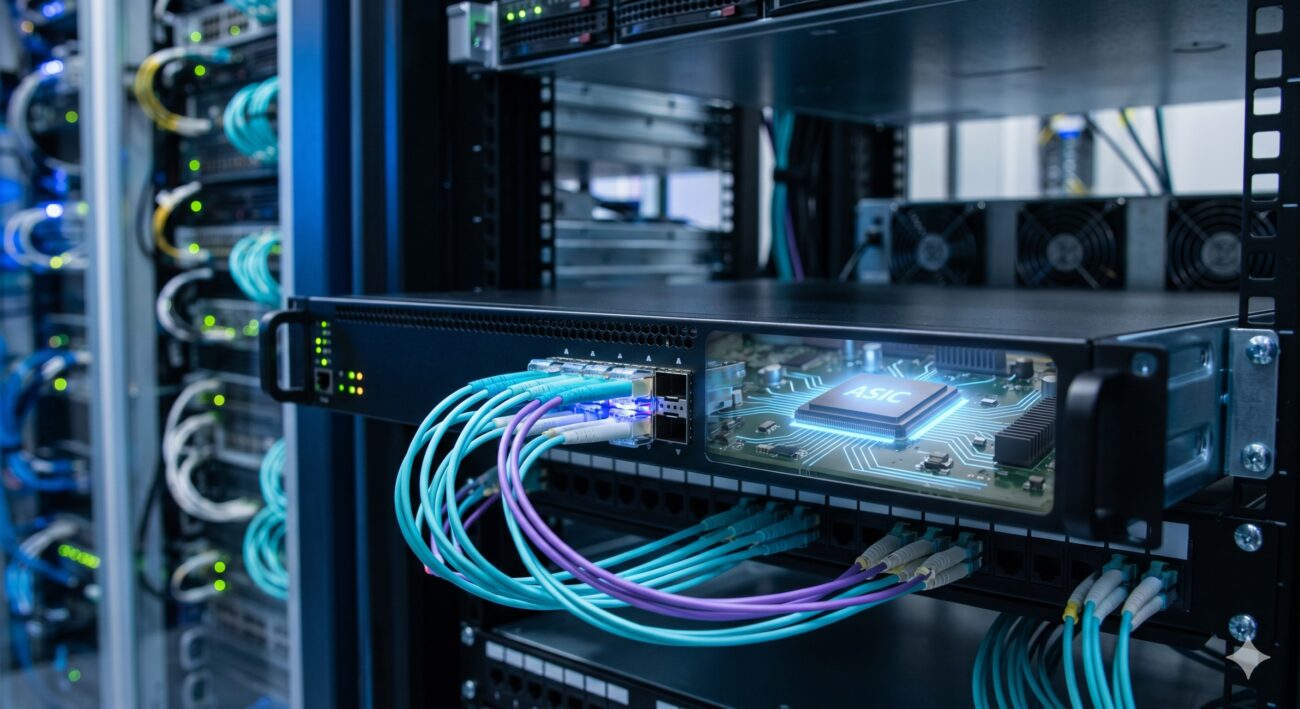
Introduction: The Imperative of Non-Blocking Throughput in Modern Networks
As network architects, we face an unrelenting bandwidth explosion driven by 5G backhaul, AI training clusters, and hyperscale data center interconnect. The pivotal differentiator between a traffic bottleneck and a truly resilient core is the line-rate forwarding performance switch. Unlike legacy store-and-forward switches that introduce variable latency under microbursts, a genuine line-rate platform guarantees wire-speed processing on all ports simultaneously. This article provides a deep technical review of the internal ASIC architectures, sub-microsecond latency figures, and absolute forwarding limits that define carrier-grade hardware.
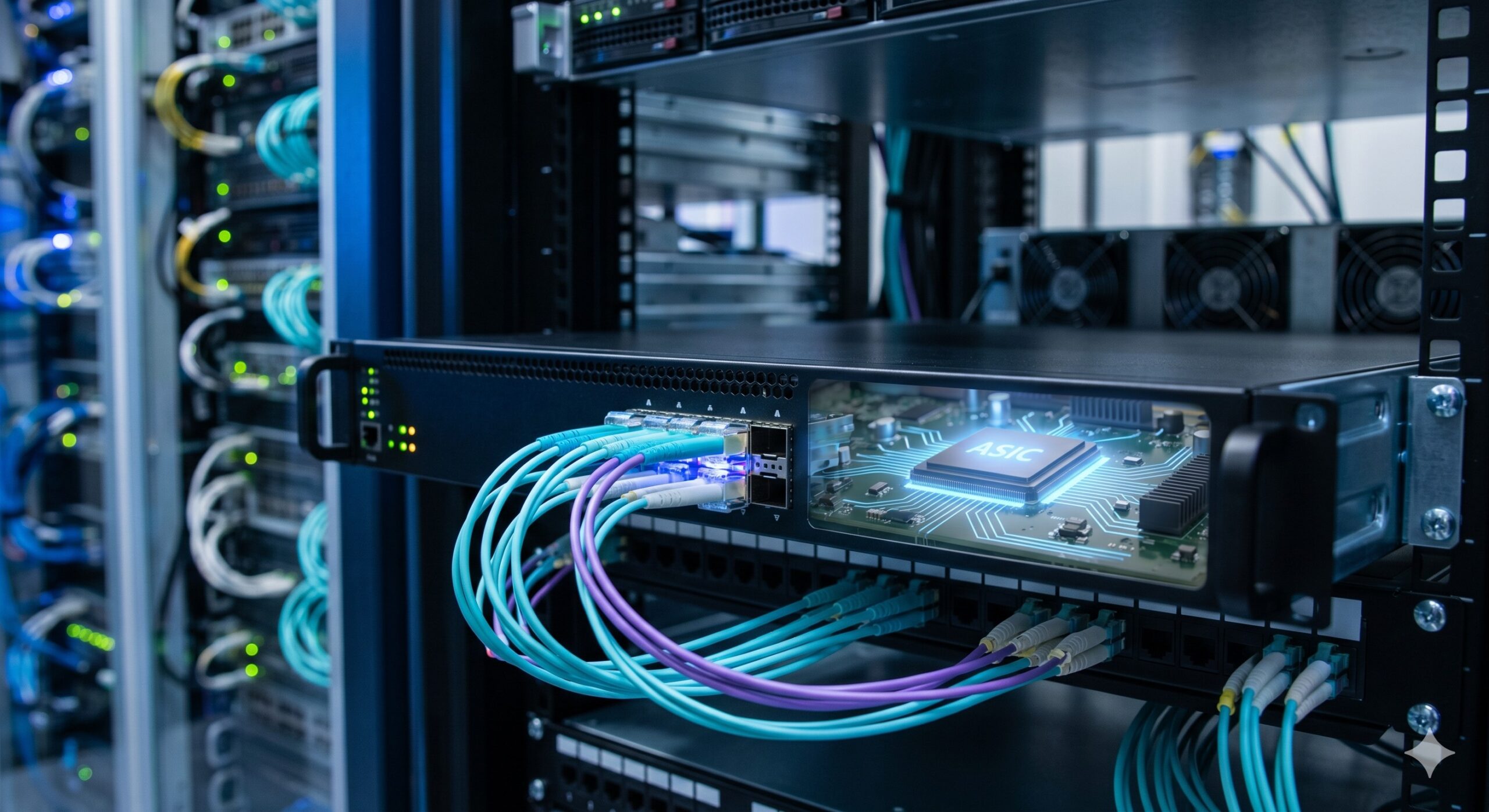
Architectural Anatomy: The Role of the Ternary Content-Addressable Memory (TCAM) and Crossbar Fabric
Beyond Shared Memory: Distributed Forwarding Engines
A line-rate switch eliminates head-of-line (HOL) blocking through a non-blocking crossbar or Clos fabric. For a 32-port 400GbE system, this demands an internal switching capacity exceeding 25.6 Tbps. The secret lies in the Packet Forwarding Engine (PFE) implemented as a dedicated ASIC. Each PFE processes ingress packets at line speed using a pipeline stage that performs Layer 2 MAC lookup, Layer 3 longest prefix match (LPM), and Access Control List (ACL) evaluation in parallel. High-end platforms utilize TCAM for 100% ACL filtering at 1.44 Bpps (billion packets per second) without throttling.
Latency Under Load: Microsecond Guarantees vs. Best Effort
Industry standards (IEEE 802.1Q, ITU-T Y.1731) measure latency from first bit in to last bit out. A genuine line-rate forwarding performance switch maintains deterministic latency (e.g., 450 ns for 10GbE, 1.2 µs for 400GbE) even at 100% line rate. In contrast, oversubscribed architectures show latency inflation from 2 µs to 150 µs during microbursts. Look for datasheets specifying latency under ‘zero packet loss’ conditions – this is the true benchmark.
| Key Parameter | Technical Specification | Industry Benchmark |
|---|---|---|
| Switching Capacity (Non-blocking) | 25.6 Tbps (32x400GbE) | 100% line rate |
| Packet Forwarding Rate (64-byte) | 4.76 Bpps | Zero packet loss |
| Cut-Through Latency (400GbE) | ≤ 1.2 µs | Deterministic under 100% load |
| MAC Address Table Size | 512K entries | L2 line-rate learning |
| FIB (IPv4) Scale | 8M routes | Carrier-grade BGP full tables |
| MTBF | 362,000 hours | Telcordia SR-332 |
| Jumbo Frame Support | 9,216 bytes | IEEE 802.3as |
Forwarding Limits: PPS, FIB Scale, and Jumbo Frame Handling
The key metric is million packets per second (Mpps). For full line rate on 32x100G ports using 64-byte packets, the switch must deliver 2.38 Bpps (64-byte frame + 20-byte preamble = 84 bytes; 100Gbps / 672 bits = 148.8 Mpps per port). Multiply by 32 ports = 4.76 Bpps – a threshold only discrete ASIC designs achieve. Additionally, the Forwarding Information Base (FIB) scale is critical: enterprise cores require 2M IPv4 routes, while carrier-grade demands 8M+ routes. Jumbo frame (9,216 byte) support must be non-negotiable for storage traffic (NFS over RDMA).
ASIC Pipeline Analysis: Cut-Through vs. Store-and-Forward at Wire Speed
Microarchitecture of the Packet Processing Pipeline
Modern line-rate switches employ cut-through switching where forwarding decisions begin after receiving the destination MAC (first 14 bytes). The forwarding latency is simply the serialization delay of those 14 bytes. For 400GbE, this is ~0.28 ns – effectively zero. However, advanced error checking (CRC validation) forces a ‘cut-through with store-and-forward fallback’ mechanism for corrupted frames. The per-packet buffer depth (typically 12 MB per ASIC) determines the ability to absorb microbursts without dropping, while still maintaining line-rate egress shaping.
Comparative Edge: Merchant Silicon vs. Custom ASIC for Line Rate
Broadcom Tomahawk 5 (merchant) offers 51.2 Tbps but relies on Dynamic Load Balancing that can reorder packets. Custom ASICs from Cisco (Silicon One) or Arista (Luna) add deterministic per-flow load balancing and lower power per Gbps (~0.8W vs. 1.3W). The engineering trade-off: merchant silicon achieves cost efficiency at scale, but custom ASIC provides lower tail latency (99.999th percentile) for financial trading or HPC environments.

Operational Realities: Cooling, Power, and Line-Rate Telemetry
Running 64 ports at full line rate (6.4 Tbps total) generates up to 1,200W of heat. A line-rate switch requires front-to-back airflow with 400+ CFM fan modules and liquid-assisted cooling for high-density chassis. Modern platforms also embed in-band Network Telemetry (INT) that runs at line rate, exporting per-packet metadata without perturbing forwarding performance. This is a non-negotiable feature for SRE teams troubleshooting latency jitter.
Conclusion: Validating Line-Rate Claims in Your Own Rack
Marketing ‘wire speed’ is cheap; validation requires a production-like test using Spirent or IXIA with IMIX traffic (64, 570, 1518 byte frames) at 100% throughput while monitoring for forwarding errors, CRC violations, and pause frames. Demand datasheets that specify MTBF exceeding 350,000 hours and compliance with RoHS and NEBS Level 3. In summary: the line-rate forwarding performance switch is the non-negotiable building block for zero-drop, ultra-low-latency infrastructure.

Leave a comment