
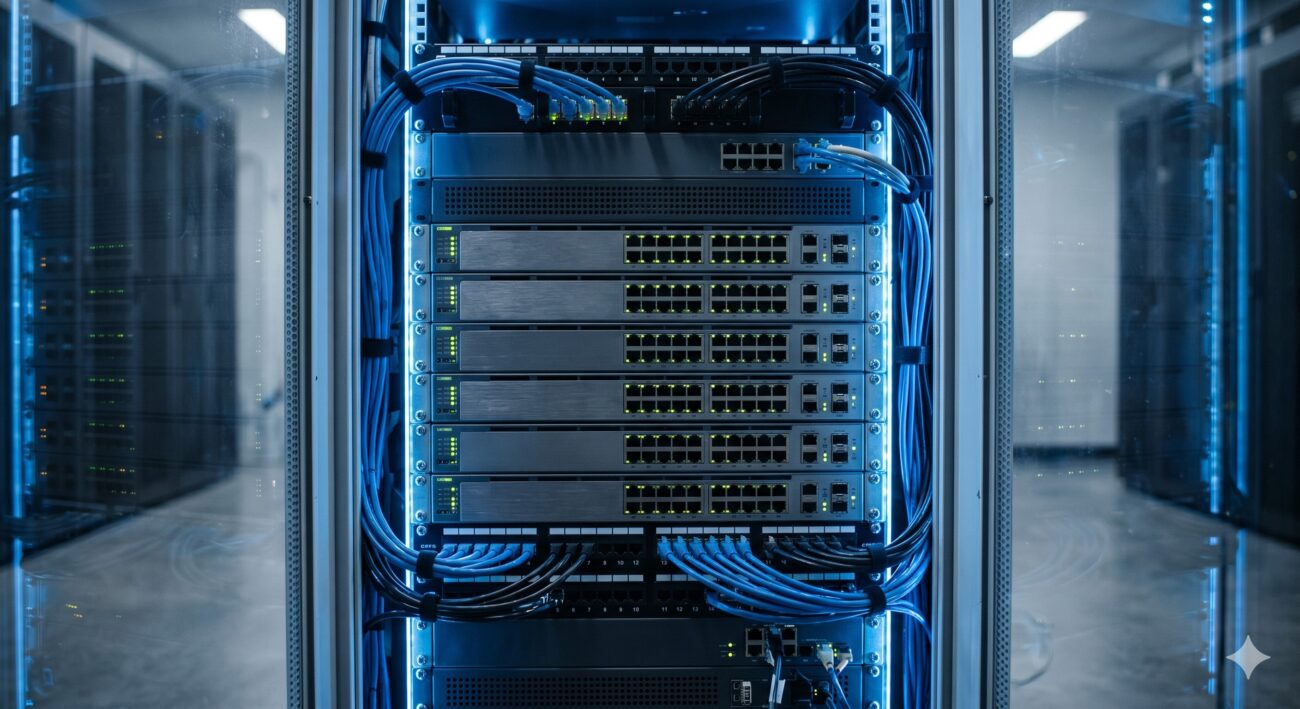
ENTERPRISE EDGE ROUTING REFERENCE DESIGN GUIDE: WHEN TO CHOOSE MANAGED VS UNMANAGED SWITCH
EXECUTIVE SUMMARY
This document provides a definitive technical decision framework for infrastructure architects and procurement engineers evaluating the selection between Managed and Unmanaged Ethernet switching platforms. The choice fundamentally impacts network visibility, traffic segmentation, security posture, fault isolation, and total cost of ownership (TCO). Unmanaged switches provide fixed-function, plug-and-play Layer 2 connectivity for isolated, low-density endpoint aggregation. Managed switches deliver remote monitoring (SNMP), VLAN segmentation, Spanning Tree Protocol (STP), Quality of Service (QoS), link aggregation (LACP), and enhanced security (802.1X, DHCP snooping, ACLs). This reference design guide aligns platform selection with network tier, operational scale, and uptime requirements.
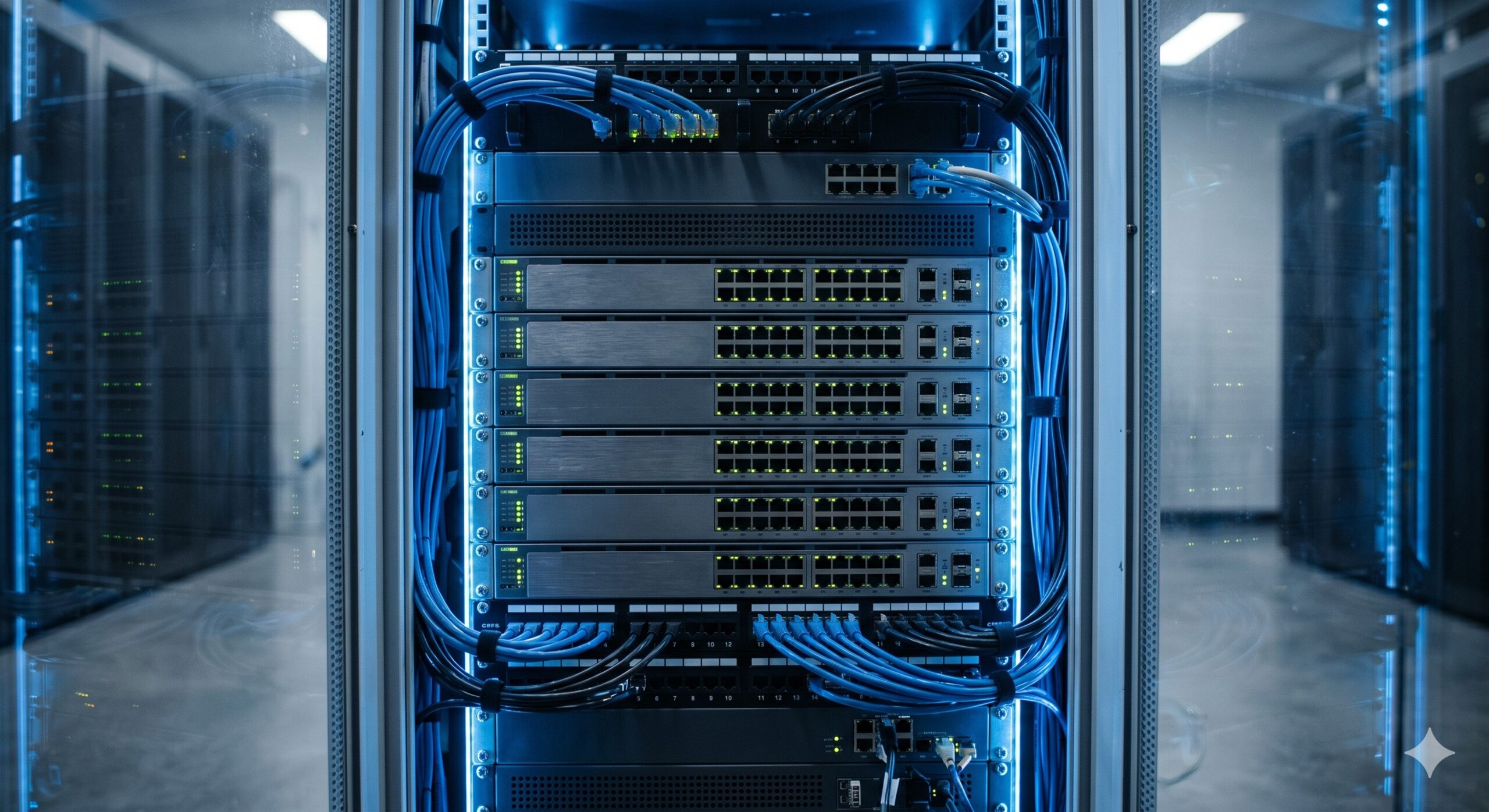
SYSTEM HARDWARE TOPOLOGY
Managed switching platforms integrate a dedicated CPU subsystem for control plane processing, an ASIC or FPGA-based forwarding engine, and a separate management Ethernet port. This architecture enables in-band and out-of-band management, remote logging (syslog), and configuration persistence across power cycles. Unmanaged switches contain a single store-and-forward or cut-through switching ASIC with no CPU, no management IP, no console port, and no user-configurable NVRAM. The absence of a control plane eliminates remote attack surfaces but also removes diagnostic capabilities. For edge deployments with up to eight endpoints and zero remote configuration requirements, unmanaged switches reduce CAPEX by approximately 60-80 percent relative to equivalent port-count managed models.
DATA & CONTROL PLANE CAPABILITIES
Managed switches decouple the data plane (hardware-forwarded frames) from the control plane (CPU-processed protocols). This supports STP, Rapid PVST+, Multiple STP (MSTP), Link Layer Discovery Protocol (LLDP), and Internet Group Management Protocol (IGMP) snooping. QoS prioritizes voice over IP (VoIP), video conferencing, or industrial real-time traffic using 802.1p and DiffServ code points (DSCP). Port mirroring enables passive monitoring appliances. Unmanaged switches offer no control plane services; they forward all frames transparently with best-effort delivery. Broadcast storms can propagate across all ports, and loop detection requires external mechanisms. For ring topologies or redundant links, an unmanaged switch will cause broadcast radiation and network collapse.
COMPONENT BREAKDOWN
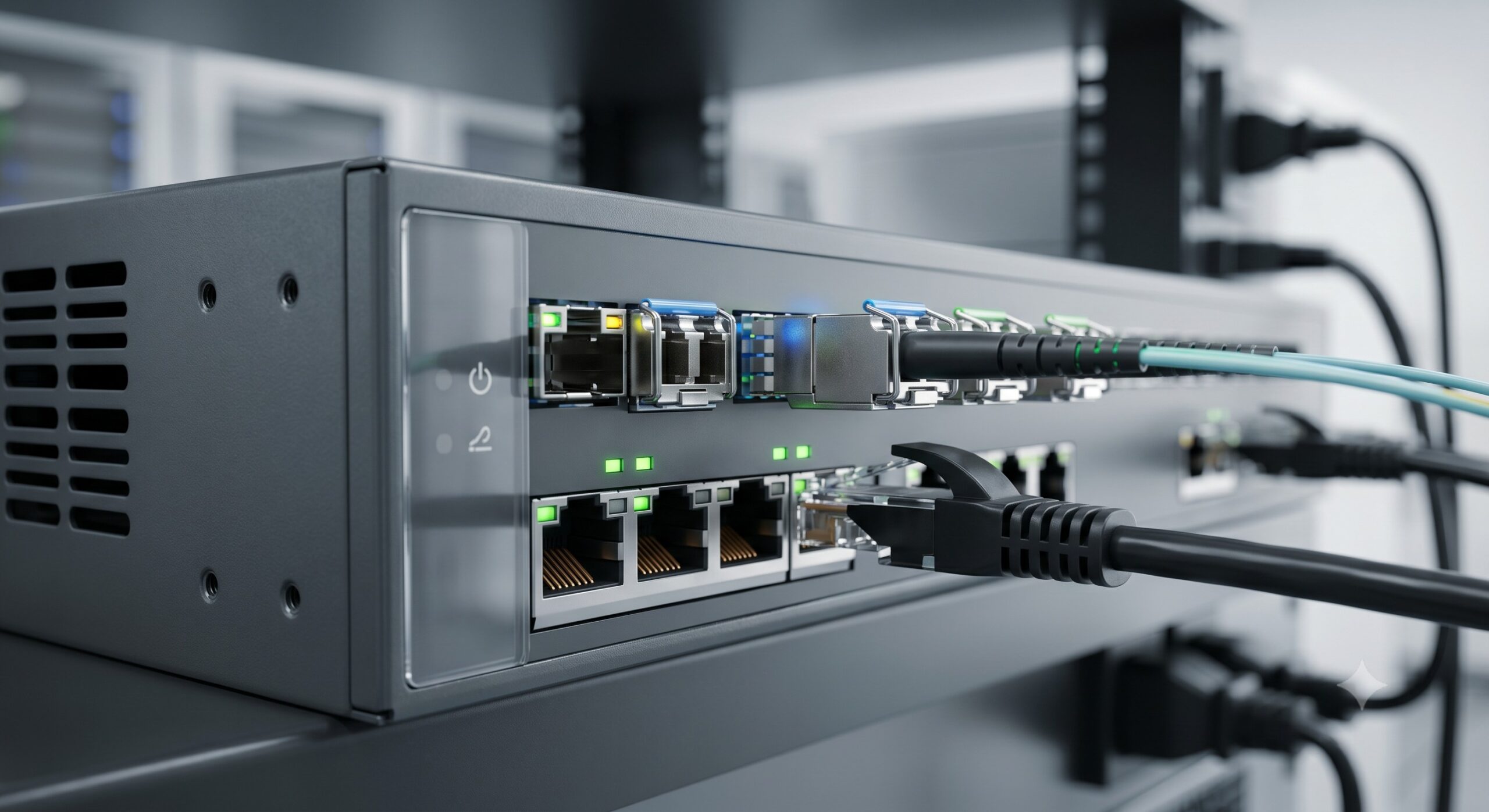
All switching platforms in this comparison incorporate SFP/SFP+ cages for fiber uplinks (1000BASE-X, 10GBASE-SR/LR), RJ-45 copper ports (10/100/1000BASE-T), and auto-negotiation. Managed units include temperature sensors, fan speed monitoring, dual firmware images, and event logs. Enterprise-grade managed switches support dual redundant, hot-swappable power supplies (AC 100-240V or DC -48V) and field-replaceable fan trays. Unmanaged switches typically use fixed internal power adapters, passive cooling up to 8-12 ports, and no serviceable components. Industrial unmanaged variants extend operating temperature ranges (-40°C to +75°C) but retain zero configuration capabilities.
OPERATIONAL SPECS MATRIX
Select Managed Switching when any of the following criteria are true: (1) remote site without daily on-site staff; (2) multiple VLANs requiring isolation of guest, IoT, and corporate traffic; (3) redundant fiber rings or uplinks requiring STP or Link Aggregation; (4) compliance mandates for port security, MAC limiting, or 802.1X; (5) network monitoring via SNMP, sFlow, or NetFlow; (6) power over Ethernet (PoE) budgeting and per-port power prioritization; (7) log retention for forensic analysis. Select Unmanaged Switching only when all of the following are simultaneously true: (1) fewer than 10 endpoints per switch; (2) single broadcast domain acceptable; (3) no remote management or alerts required; (4) physical access is secured and monitored; (5) zero configuration change expected over deployment lifetime; (6) budget constraints dominate all other factors.
| Parameter | Managed Switch | Unmanaged Switch |
|---|---|---|
| CPU / Control Plane | Dedicated CPU, management IP, console port | None, ASIC only |
| VLAN Support | 802.1Q, up to 4K VLANs | None (single broadcast domain) |
| Spanning Tree Protocol | STP, RSTP, MSTP | None (loop sensitive) |
| Remote Management | SNMPv3, CLI, Web, RESTCONF | None (plug-and-play only) |
| Security Features | 802.1X, DHCP snooping, ACLs, port security | No authentication or filtering |
| Redundant Power | Dual hot-swappable (AC/DC) | Fixed internal (non-redundant) |
| Relative Price per Port | 1.0x (baseline) | 0.2x – 0.4x |
| Typical Deployment Use Case | Campus access, industrial edge, data center ToR | SOHO, temporary labs, single IoT spur |
LIFECYCLE ASSURANCE (MTBF)
Managed enterprise switches carry Mean Time Between Failures (MTBF) ratings of 300,000 to 1,000,000 hours at 25°C ambient, derived from Telcordia SR-332 or IEC 61709. Field-replaceable power supplies and fans enable 10+ year service life. Unmanaged switches have MTBF between 100,000 and 500,000 hours, with non-replaceable power supplies and passive cooling limiting useful life to 3-5 years before electrolytic capacitor degradation. For carrier-grade or industrial edge nodes requiring 99.999% availability, managed platforms with redundant power and environmental monitoring are mandatory.
TARGET NETWORK TOPOLOGIES
Managed switches serve as distribution and access switches in campus networks, industrial control zones, data center top-of-rack (ToR), and edge aggregation for remote offices. Unmanaged switches remain suitable for temporary test labs, small office home office (SOHO) desktop connectivity, single-camera security spurs, or conference room daisy-chaining. Never deploy an unmanaged switch between two managed switches where VLAN trunks, STP, or LACP operate, as the unmanaged unit will drop BPDUs and break loop detection. For any network segment requiring deterministic latency, jitter control, or security policy enforcement, a managed switch is the sole viable option.
📥 Download Technical Specification
Click the button below to view or download the full official PDF datasheet.

Leave a comment