
Executive Pain Points: The Economic Imperative for Storage Virtualization
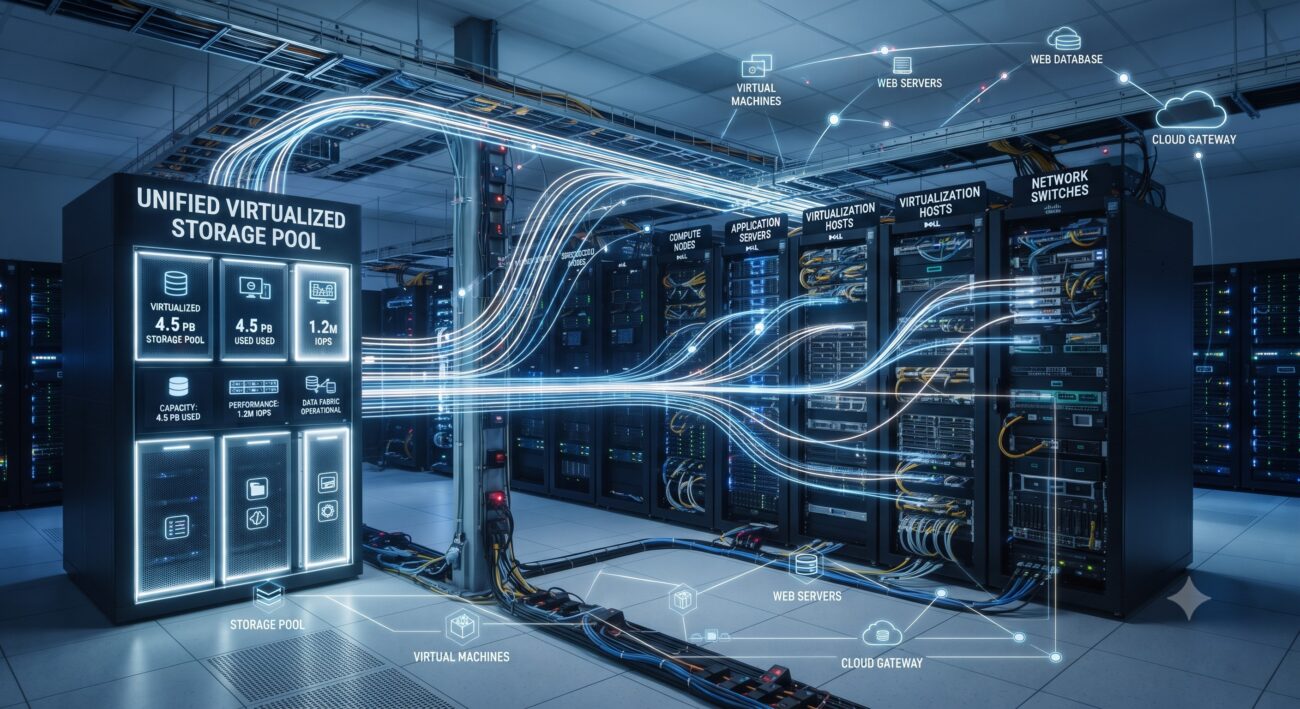
For nearly two decades, enterprise storage architectures have been shackled by the high CapEx and spiraling OpEx of siloed, dedicated hardware arrays. Traditional storage area networks (SANs) and network-attached storage (NAS) systems, while reliable, often operate at a fraction of their potential capacity, leading to stranded resources and an average utilization rate of merely 40-50%. This inefficiency directly impacts the bottom line. Storage virtualization offers a paradigm shift, abstracting logical storage from physical hardware to create a unified, agile, and highly efficient pool of resources. This TCO & ROI Blueprint dissects the financial and operational gains of adopting storage virtualization, moving beyond hype to deliver a data-driven analysis for the discerning network architect and C-suite executive.
CapEx vs OpEx Analysis: The Financial Architecture of Virtualization
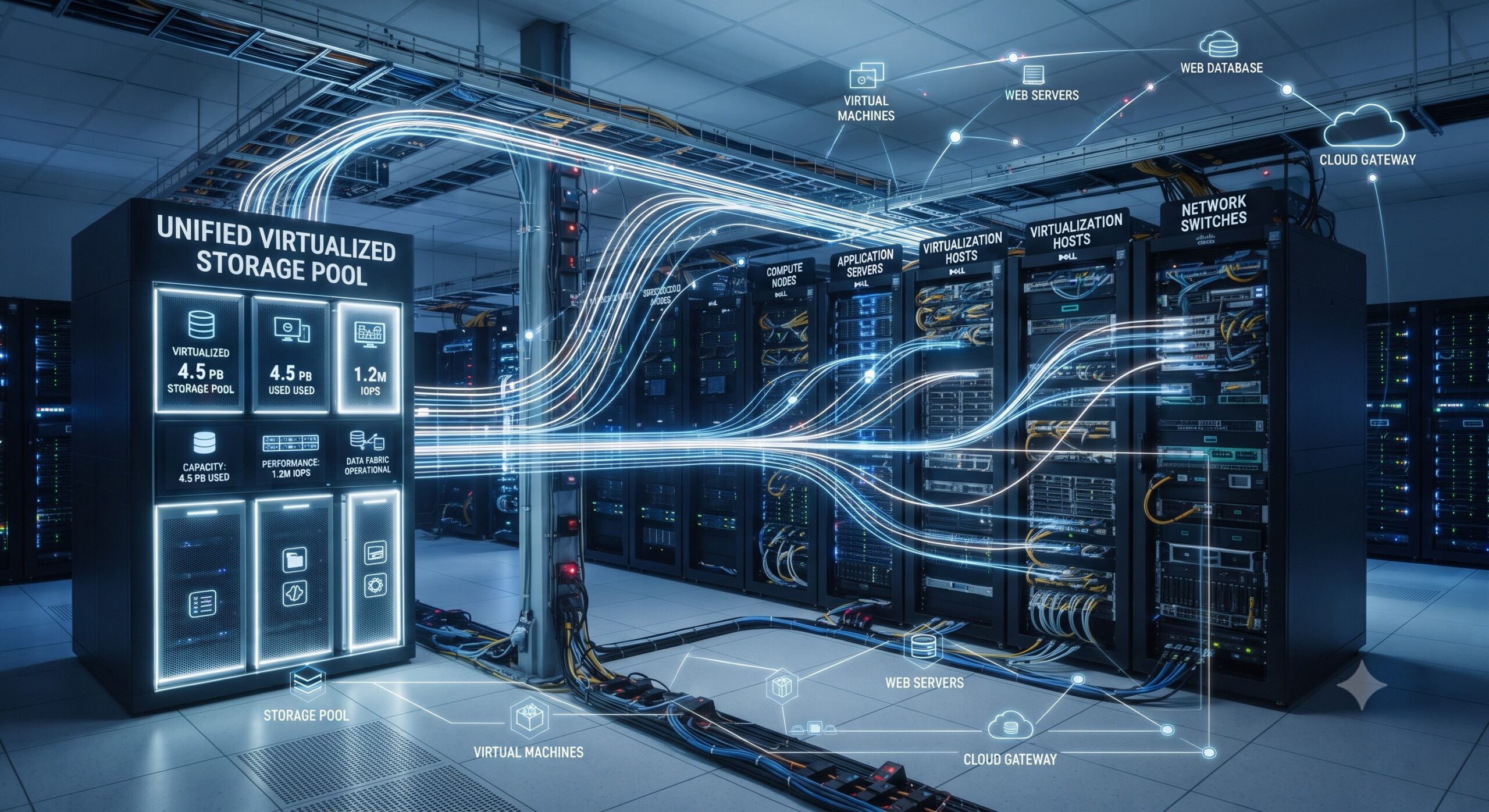
The financial benefits of storage virtualization are realized across both capital and operational expenditure streams. The initial CapEx may see a moderate increase due to the procurement of a robust virtualization controller or fabric, but this is rapidly offset by profound savings.
Capital Expenditure (CapEx) Reduction
- Hardware Heterogeneity: Virtualization enables the pooling of disparate storage arrays—from high-performance all-flash arrays to cost-effective high-capacity HDDs—regardless of vendor. This eliminates the ‘vendor lock-in’ premium and allows organizations to leverage existing hardware investments while integrating more cost-effective commodity hardware for specific tiers. For example, a tiered architecture can use high-cost NVMe for critical databases and lower-cost SATA SSDs for archival data, all managed as a single logical pool.
- Reduced Over-Provisioning: A key driver of high CapEx in legacy environments is the practice of over-provisioning capacity to accommodate peak demands. By virtualizing storage, capacity can be allocated on-demand from a shared, elastic pool. This can reduce physical raw capacity requirements by up to 30-40%. The ability to non-disruptively expand capacity in small increments further refines procurement planning, matching spend directly with actual business growth.
Operational Expenditure (OpEx) Optimization
The OpEx savings from storage virtualization are often more significant and long-lasting. According to industry analyses, OpEx can be reduced by 20-40% over the lifespan of the infrastructure.
- Power & Cooling: By consolidating storage onto fewer, more efficiently utilized physical devices, a data center can dramatically reduce its power footprint. A single high-density virtualization-capable storage node can replace multiple underutilized legacy arrays. If we assume a legacy array consumes approximately 3.5 kW, replacing eight such arrays with a single 5.2 kW virtualized cluster can yield annual power savings of over 2,300 kWh, significantly reducing both the energy bill and carbon footprint.
- Management & Administration: Storage virtualization simplifies the management plane, allowing a single administrator to manage petabytes of data across multiple sites from a single console. This centralization of storage provisioning, snapshots, and replication reduces administrative overhead by up to 60% compared to managing dozens of individual storage arrays.
- Data Mobility and Downtime Reduction: Features like live data migration allow for storage and hardware maintenance with zero application downtime. This eliminates the costly ‘planned downtime’ window required for traditional storage upgrades, which can cost an enterprise upwards of $100,000 per hour in lost productivity.
Hardware Efficiency and Performance Specs: The Core Engine
While the financial argument is compelling, the technical efficiency is what enables it. Modern storage virtualization controllers are powerful network appliances that manage the I/O path. Key hardware specifications that drive efficiency and ROI are critical to evaluate.
| Key Parameter | Technical Specification |
|---|---|
| Controller Architecture | Active-Active Clustered, Multi-core x86/ARM-based ASIC |
| Storage Protocol Support | Fibre Channel (16/32 Gbps), iSCSI (1/10/25 GbE), NVMe-oF (RoCE) |
| Maximum Raw Capacity Managed | Up to 4 Exabytes (via scale-out clustering) |
| Typical Read/Write Latency | Sub-100 µs (with all-flash back-end) |
| Inline Data Optimization | Deduplication and Compression (2:1 to 5:1 efficiency rate) |
| Redundancy Features | N+1 Controller Failover, Path redundancy (MPIO), Dual power supplies |
| Energy Efficiency Compliance | RoHS, 80 PLUS Titanium (96% efficiency) |
The table above highlights the critical hardware components of a next-generation virtualization controller. The low microsecond-level latency (often sub-100µs for all-flash configurations) is a key performance metric, ensuring that the virtualization layer does not become a bottleneck. Furthermore, controllers are being built with energy efficiency in mind, compliant with standards like RoHS (Restriction of Hazardous Substances) and often featuring 80 PLUS Titanium-rated power supplies to minimize energy loss.
Datacenter Integration: A Unified Architecture
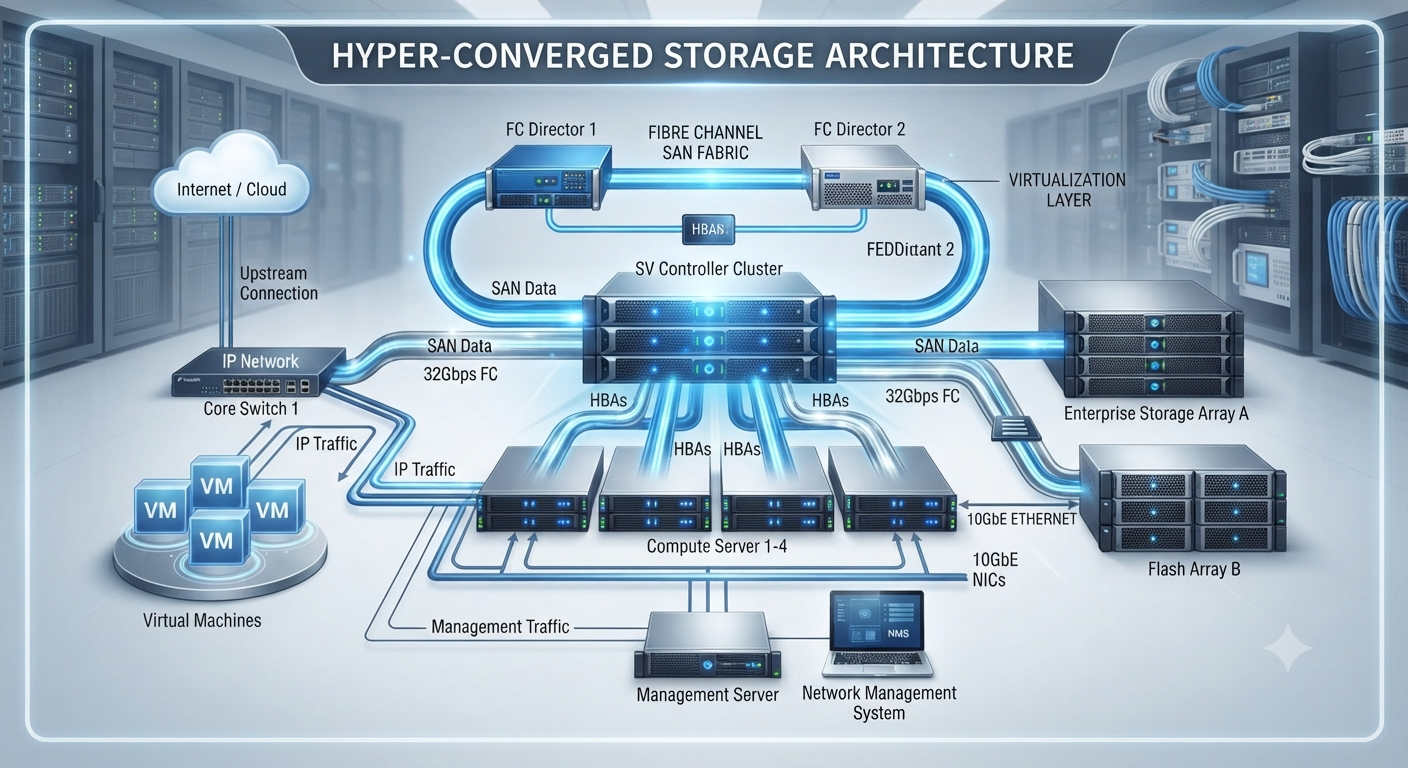
The deployment of storage virtualization is not a rip-and-replace exercise. It is designed to seamlessly integrate into existing data center fabrics. It typically sits as a layer between the application servers (hosts) and the backend storage arrays. This integration is achieved through standard networking protocols like Fibre Channel (FC) and iSCSI, ensuring backward compatibility with legacy SANs.
A typical high-availability virtualization deployment consists of a cluster of two or more redundant controller appliances. These controllers communicate with each other over a dedicated network to maintain a consistent view of the storage pool and metadata. The controllers provide a virtualized LUN (Logical Unit Number) to the hosts, which is then mapped to the physical storage on the backend. This abstraction layer is where all advanced features are implemented.
Key to efficient integration is the support for high-bandwidth connections. The controller’s connectivity options are paramount. The port density supports standard Ethernet (1/10/25/40/100 Gbps) and Fibre Channel (16/32 Gbps) interfaces, ensuring it can be seamlessly integrated into high-speed SANs and IP networks without becoming a bottleneck. The aggregate throughput of these controllers often exceeds 40 Gbps and can scale into the Terabits per second range by clustering multiple appliances, ensuring that the virtualization layer can handle the most demanding database and high-performance computing (HPC) workloads.
Lifecycle Verdict: The Strategic Advantage
Viewing the adoption of storage virtualization through a TCO and ROI lens reveals an undeniable strategic advantage. It is far more than a technology upgrade; it is a fundamental shift in how storage is procured, managed, and consumed.
- Technology Refresh Cycles: Traditional storage refresh cycles are tied to hardware end-of-life (typically 3-5 years). With virtualization, technology refreshes become ‘data-driven.’ As new, more efficient storage hardware emerges, it can be added to the virtualized pool and older hardware can be gracefully retired without any data migration downtime, completely decoupling the data lifecycle from the hardware lifecycle.
- Cloud Bursting and Hybrid IT: Modern virtualization platforms provide a single pane of glass that extends to public cloud services. This is a game-changer for CIOs. For example, storage can be tiered to a low-cost cloud object store like Amazon S3 for cold data or long-term retention, reducing the need for expensive on-premise archival storage. This hybrid model offers unparalleled agility and cost-efficiency, allowing IT to treat internal and external storage as a single, cohesive resource pool.
- Disaster Recovery (DR) as a Service: The same virtualization and replication technologies enable automated disaster recovery. A site can be recovered to a remote location in minutes, rather than days, with Recovery Point Objectives (RPOs) measured in seconds. This level of resilience, once the exclusive domain of the largest enterprises, is now a tangible asset for any organization, fundamentally enhancing its risk posture and business continuity.
In conclusion, the TCO and ROI analysis of storage virtualization is overwhelmingly positive. It provides a clear financial roadmap to reduce CapEx through better hardware utilization, drastically lower OpEx through simplified management and reduced energy consumption, and unlocks operational agility that is critical in today’s competitive landscape. For any senior network architect or IT executive looking to future-proof their data center and deliver tangible business value, storage virtualization is not just an option—it is a strategic imperative.

Leave a comment