
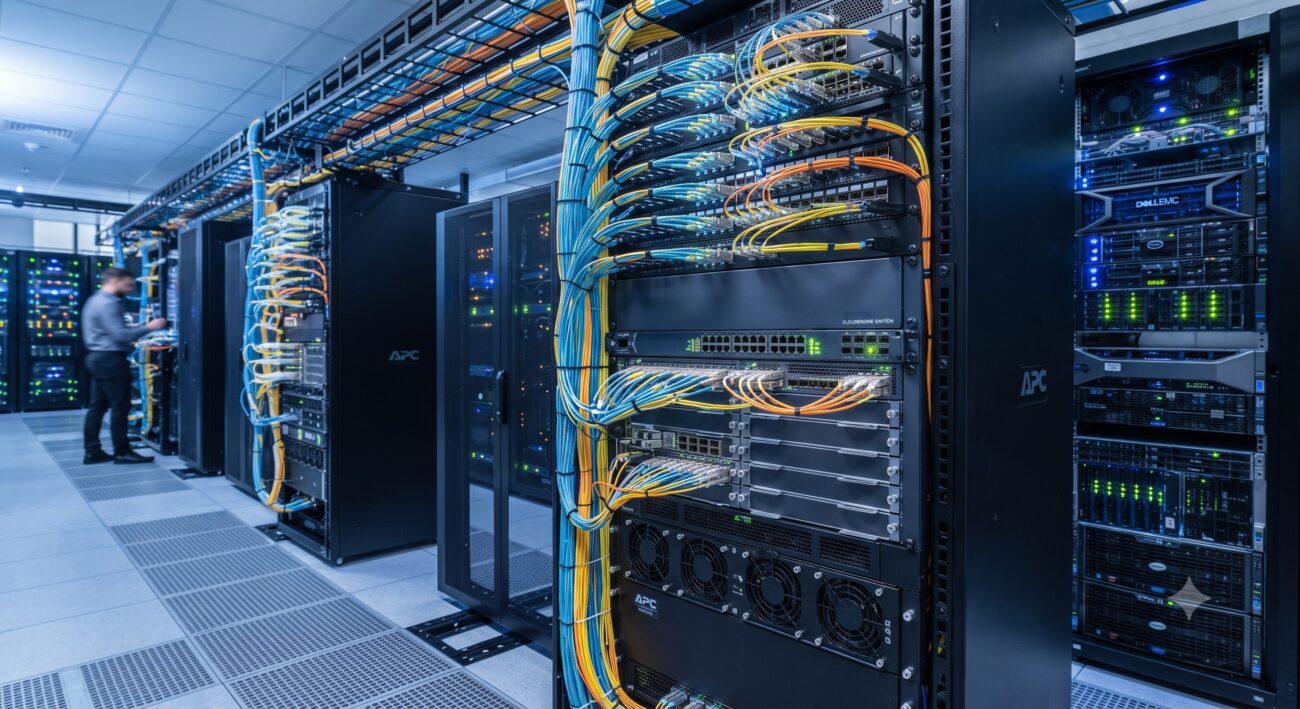
Executive Summary: Redefining Network Infrastructure for the Computing Era
In the landscape of modern enterprise networking and telecom infrastructure, the Huawei CloudEngine Switch portfolio represents a paradigm shift from traditional Ethernet switching to an intelligent, high-performance, and scalable fabric designed for the demands of AI, cloud, and 5G backhaul. As a Senior Network Architect, evaluating this family requires moving beyond basic port counts to analyze the underlying ASIC architecture, the robustness of the control plane, and the integration of advanced telemetry for proactive operations. This guide delivers a comprehensive deep-dive into the CloudEngine ecosystem, from the ultra-low-latency fixed-form-factor switches to the carrier-grade modular chassis, providing the data and architectural insights required for mission-critical deployment.
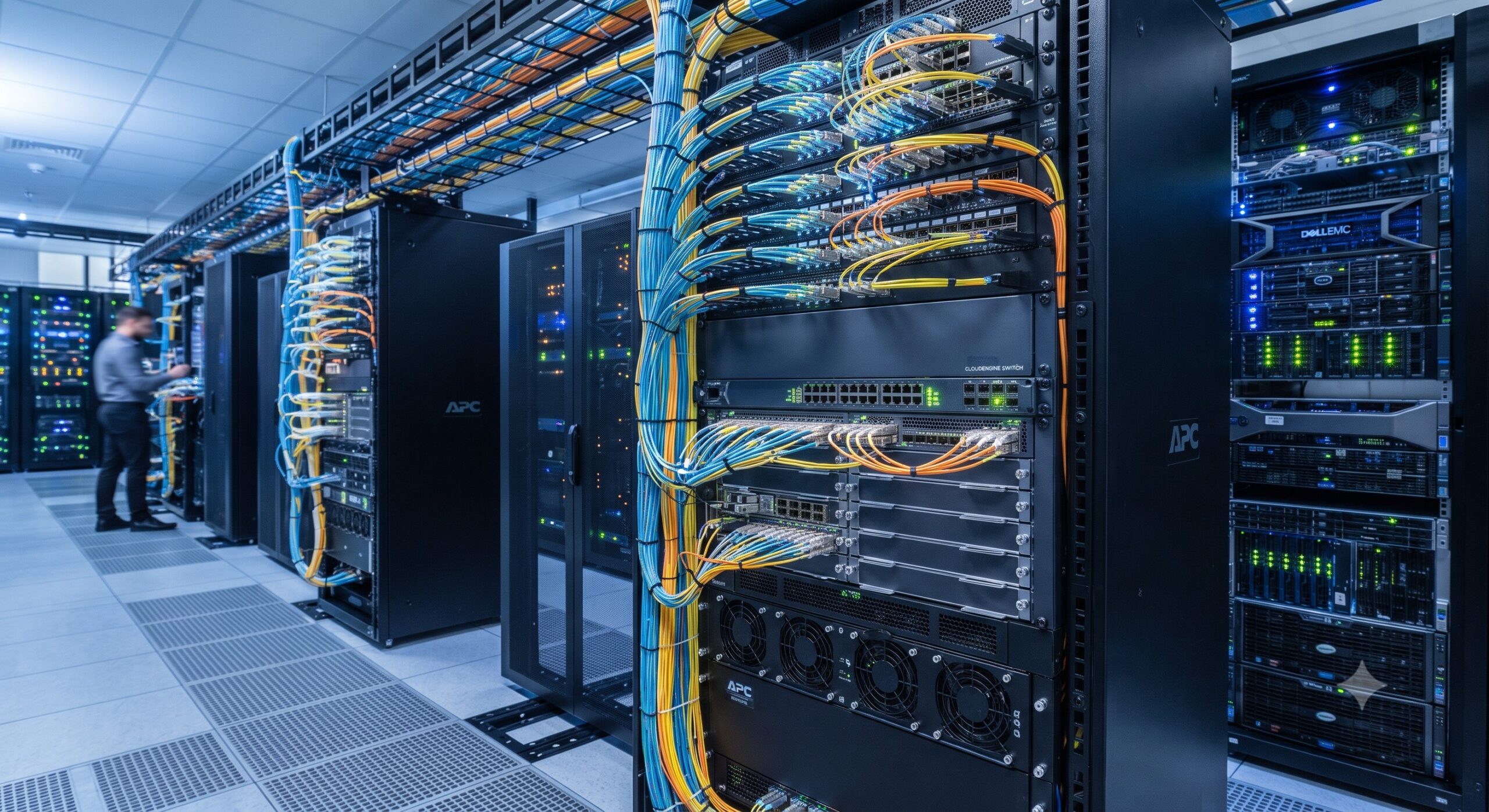
Core Architecture & Hardware Topology: From Campus to Core
The Huawei CloudEngine portfolio is not a monolithic product line but a strategically segmented series addressing distinct operational domains: Data Center (CE 9800, 8800, 6800) and Campus Networks (CE S5700, S6750, S12700E). At the heart of this ecosystem lies the Huawei VRP8 (Versatile Routing Platform) software, a unified operating system that ensures feature parity and consistency across the entire spectrum.
Modular Core: The CloudEngine 16800 and XH16800
For hyperscale data centers and AI clusters, the CloudEngine 16800 and the new XH16800 series are the crown jewels. They utilize an innovative backplane-free Clos architecture with fabric modules, enabling a switching capacity of up to 178 Tbps (CE16816) and scaling to 5718 Tbps for the XH16800 . This architecture isolates the control plane (supervisory engine) from the data plane (switch fabric and line cards), ensuring deterministic latency and high availability.
Fixed-Form-Factor Innovation: The CE 8800 and 6800
For access and aggregation layers, the CloudEngine 8800 series offers high-density 100GE and 400GE port options in a compact 2U chassis, supporting up to 64 ports of 100GE . Meanwhile, the CE 6800 series handles the heavy lifting of 25GE/50GE server access with deep packet buffers (up to 8GB) to manage microburst traffic in storage environments .
Campus DNA: The CE S-Series
The S-Series (e.g., S6750-S, S12700E) caters to the enterprise campus, integrating VXLAN, SRv6, and MACsec encryption for end-to-end security, effectively blurring the lines between traditional LAN and WAN architectures .
Technical Specifications & Performance Matrix
| Series | Target Use Case | Key Metrics (Capacity/Buffer) | Primary Interface |
|---|---|---|---|
| CloudEngine XH16800 | AI/ML Core/Spine | Switching Capacity: 5718 Tbps; Forwarding: 921,600 Mpps | 400GE QSFP-DD |
| CloudEngine 16800 | Hyperscale Data Center Core | Switching Capacity: 178 Tbps; Clos Architecture; VoQ | 10GE/25GE/100GE/400GE |
| CloudEngine 8800 Series | Data Center Spine/Aggregation | Switching Capacity: 12.8 Tbps; Buffer: Up to 72MB; 16M Tenants | 100GE/400GE |
| CloudEngine 6800 Series | Data Center Leaf/ToR Access | Switching Capacity: 8 Tbps; Buffer: Up to 8GB; 25GE/50GE Access | 10GE/25GE/50GE |
| CloudEngine S12700E | Campus Core | Switching Capacity: 86.4 Tbps; Forwarding: 43,200 Mpps | 100GE Uplinks |
Strategic Deployment Scenarios and Use Cases
The selection of a specific CloudEngine model is driven by the specific traffic profile and availability requirements.
AI/ML Cluster Backend
The CloudEngine XH16800 and CE9865-4C are specifically engineered for AI training clusters. These switches integrate features like NSLB (Network Side Load Balancing) and AI ECN (Explicit Congestion Notification) to manage the incast traffic typical of distributed machine learning. The support for RoCEv2 (RDMA over Converged Ethernet) coupled with iLossless algorithms ensures zero packet loss, effectively maximizing GPU utilization and reducing job completion times (JCT).
ISP Edge Routing and Peering
For ISPs, the CE9866-128DQ offers a dense 128 x 400GE port capacity in a highly efficient power envelope (1699W). This enables high-speed interconnectivity between backbone routers and data center gateways, supporting advanced routing protocols and BFD (Bidirectional Forwarding Detection) for sub-50ms link failure detection.
Hybrid Cloud Data Center
For enterprise data centers, the CE8850-64CQ-EI serves as an ideal spine switch in a leaf-spine fabric, supporting up to 16 million VXLAN tenants. Its compatibility with iMaster NCE-Fabric ensures automated provisioning and intent-based networking, significantly reducing operational overhead.
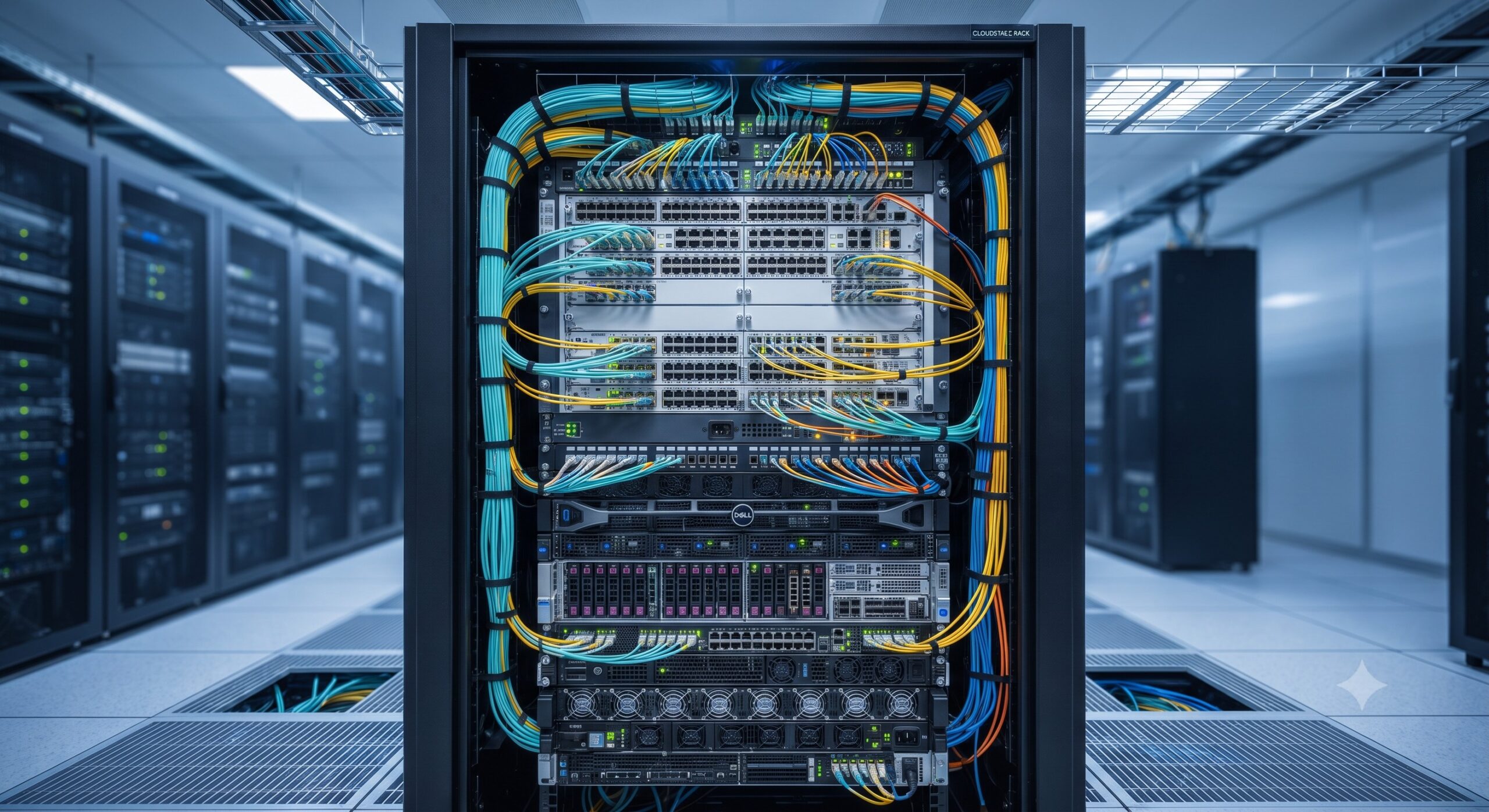
Operational Excellence: Telemetry and Intelligent O&M
Modern networking is defined by observability. The CloudEngine series leverages Telemetry with gRPC (Google Remote Procedure Call) to stream real-time data to centralized analyzers . Features like IFIT (In-situ Flow Information Telemetry) provide per-hop latency and packet loss visualization, enabling proactive fault detection rather than reactive troubleshooting.
Reliability and MTBF Analysis
Carrier-grade reliability is non-negotiable. The platform supports M-LAG (Multi-Chassis Link Aggregation) for active-active redundancy across multiple chassis, eliminating the need for complex spanning-tree protocols . Furthermore, the DPFR (Dynamic Path Fault Recovery) and MoFRR (Multicast Fast Re-route) features ensure high availability for both unicast and multicast streams.
Conclusion: The Verdict for the Modern Network Architect
The Huawei CloudEngine Switch family offers a compelling proposition for network architects looking to build robust, scalable, and highly automated networks. Whether its the AI-optimized XH16800 with its massive 5718 Tbps capacity or the campus-centric CE S12700E managing 10,000 APs, the architecture integrates hardware innovation (Clos fabrics, high-density silicon) with software intelligence (Telemetry, AI ECN). The complete portfolio provides a clear migration path from 1GE access to 800GE core, ensuring long-term investment protection.

Leave a comment