
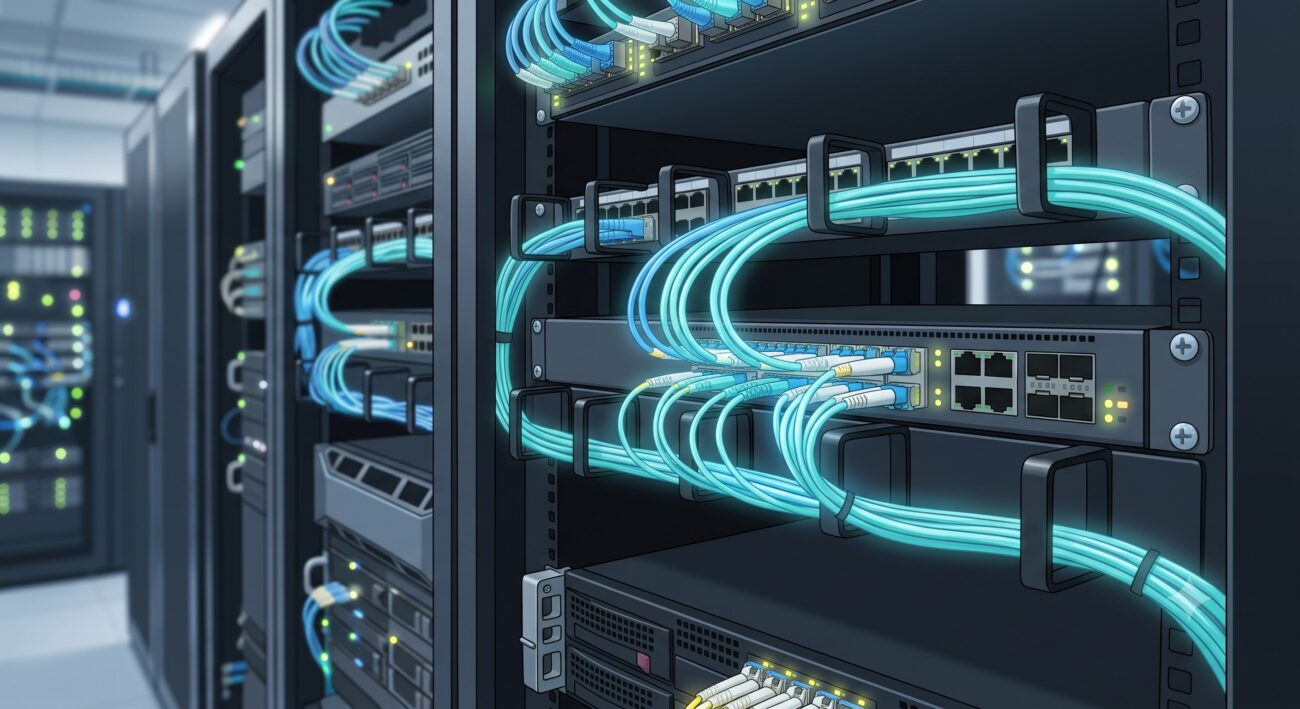
Executive Summary: The Architectural Shift
The modern data center is no longer a static entity; it is a dynamic, application-driven ecosystem. At the heart of this transformation lies the SDN (Software-Defined Networking) Switch. Unlike legacy fixed-function hardware, the SDN switch decouples the control plane from the data plane, enabling unprecedented programmability and centralized intelligence . This deep-dive technical review analyzes the internal architecture, forwarding limits, and latency metrics that define the next generation of telecom hardware.
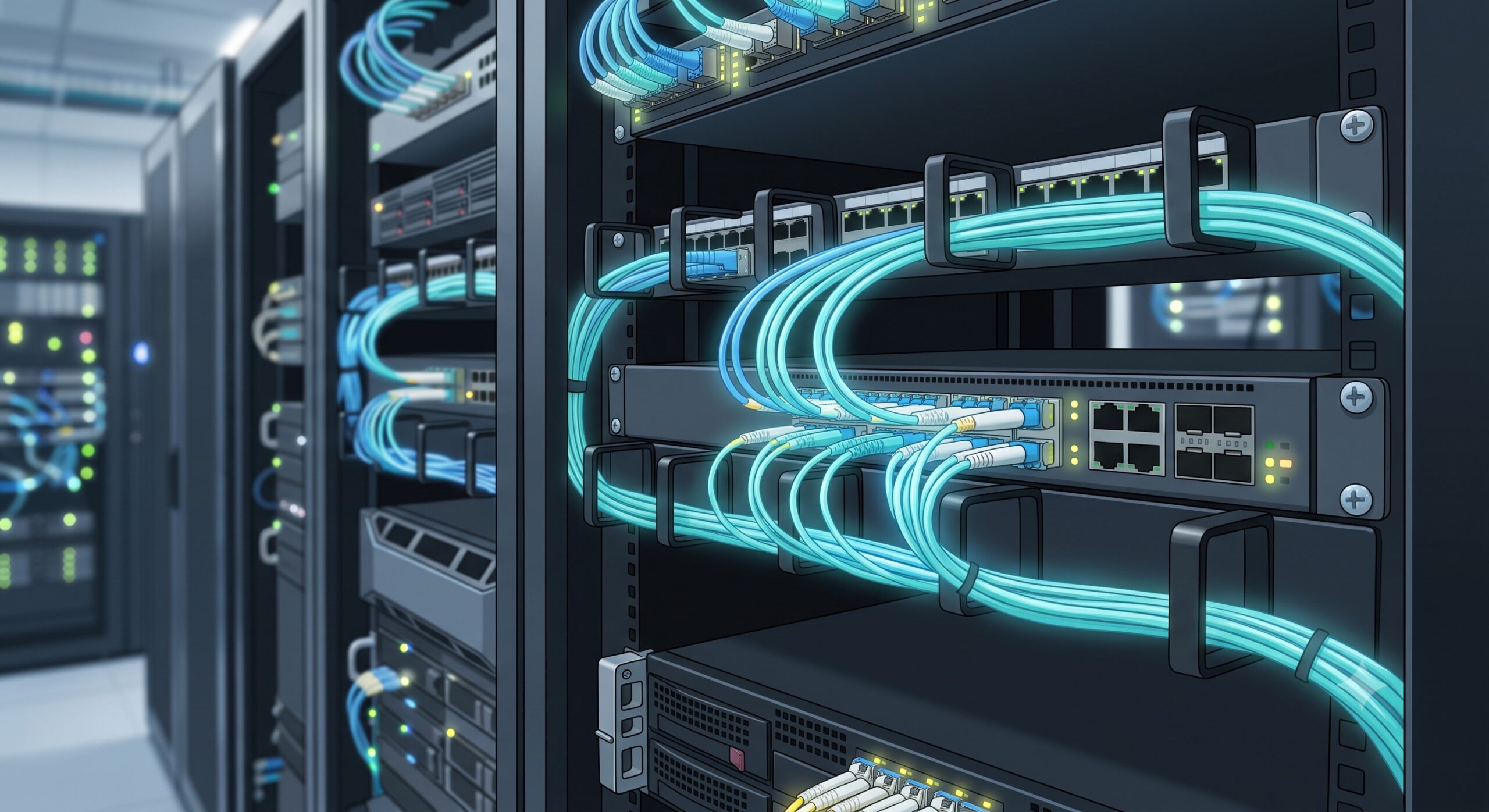
Core Architecture: The ASIC, CPU, and OpenFlow Pipeline
The architecture of a modern SDN switch is a testament to hardware-software co-design. The primary switching capacity is driven by a specialized ASIC (Application-Specific Integrated Circuit). While the CPU handles control plane tasks and management, the ASIC is responsible for the high-speed forwarding plane. The key innovation lies in the integration of OpenFlow or other southbound APIs like NETCONF with the ASIC pipeline .
In a traditional switch, forwarding decisions are hardcoded. In an SDN switch, the ASIC is programmed via a controller. For example, a patent from Beijing Baizhuo Networks describes an application module converting virtual port mappings and OpenFlow flow tables into hardware access control lists (ACLs) and internal forwarding actions . This mechanism allows for line-rate processing of complex rules.
Hardware Topology and Port Density
Designers are pushing the boundaries of silicon integration to achieve high-density, low-latency switching. The NVIDIA Spectrum-4 and Broadcom Jericho3-AI series represent the state-of-the-art, focusing on workload-optimized silicon rather than just port count .
To understand the physical and logical capabilities, consider the following specifications typical of a carrier-grade, high-performance SDN switch.
| Key Parameter | Technical Specification |
|---|---|
| Switching Capacity (Example: Plexxi Switch 2) | 2.56 Tbit/s / 480 Gbit/s LightRail ports |
| Port Density (Example: Inspur CN9420) | 32 x 40G/100G QSFP28 |
| Forwarding Latency (Example: Inspur CN9420) | Sub-790 nanoseconds |
| Power Consumption (Max) | 350W (High-Density 100G config) |
Latency and Forwarding Limits Analysis
A critical metric for any network architect is the packet forwarding latency. In high-performance computing (HPC) and AI clusters, every microsecond counts. The Inspur CN9420, for instance, boasts a sub-790 nanosecond forwarding delay, enabled by its support for RDMA (RoCE v2) and advanced flow control (PFC/ECN) to build an end-to-end lossless network . This ultra-low latency is essential for GPU-to-GPU communication, as high tail latency can drastically reduce AI training efficiency.
Furthermore, SDN switches are evolving to handle the surge in East-West traffic, which now accounts for approximately 80% of intra-data-center packets . Fixed-function switches often struggle with this dynamic load, leading to congestion. SDN-enabled hardware with telemetry-driven congestion control allows operators to reassign thousands of 400 GbE links in seconds, sustaining GPU utilization above 90% . Open-source Network Operating Systems (NOS) like SONiC, when integrated with Vector Packet Processing, have demonstrated the ability to process 100 million packets per second at sub-10 microsecond jitter, proving that SDN can deliver carrier-grade performance without proprietary ASICs .

Data-Driven Performance and TCO
The quantifiable gains of moving to an SDN architecture are significant. The adoption of white-box switches paired with open-source NOS has been shown to cut the total cost of ownership (TCO) by as much as 30% compared to branded, monolithic alternatives . This saving comes not just from hardware commoditization but also from operational efficiency. Centralized management reduces the need for manual CLI configurations, allowing for zero-touch provisioning (ZTP) and intent-based networking.
Conclusion: The Next-Generation Fabric
The SDN switch represents a fundamental shift from hardware-defined to software-defined networking. The focus has moved from simply moving packets faster to moving them smarter. Innovations in ASIC design, such as P4-programmable pipelines and RDMA support, are enabling new use cases in AI, machine learning, and high-performance computing . As the market continues to grow at a projected 12.31% CAGR, the SDN switch will remain the cornerstone of modern, agile, and efficient network infrastructure . The future lies in leveraging software freedom, not just port density, to differentiate network performance .

Leave a comment