
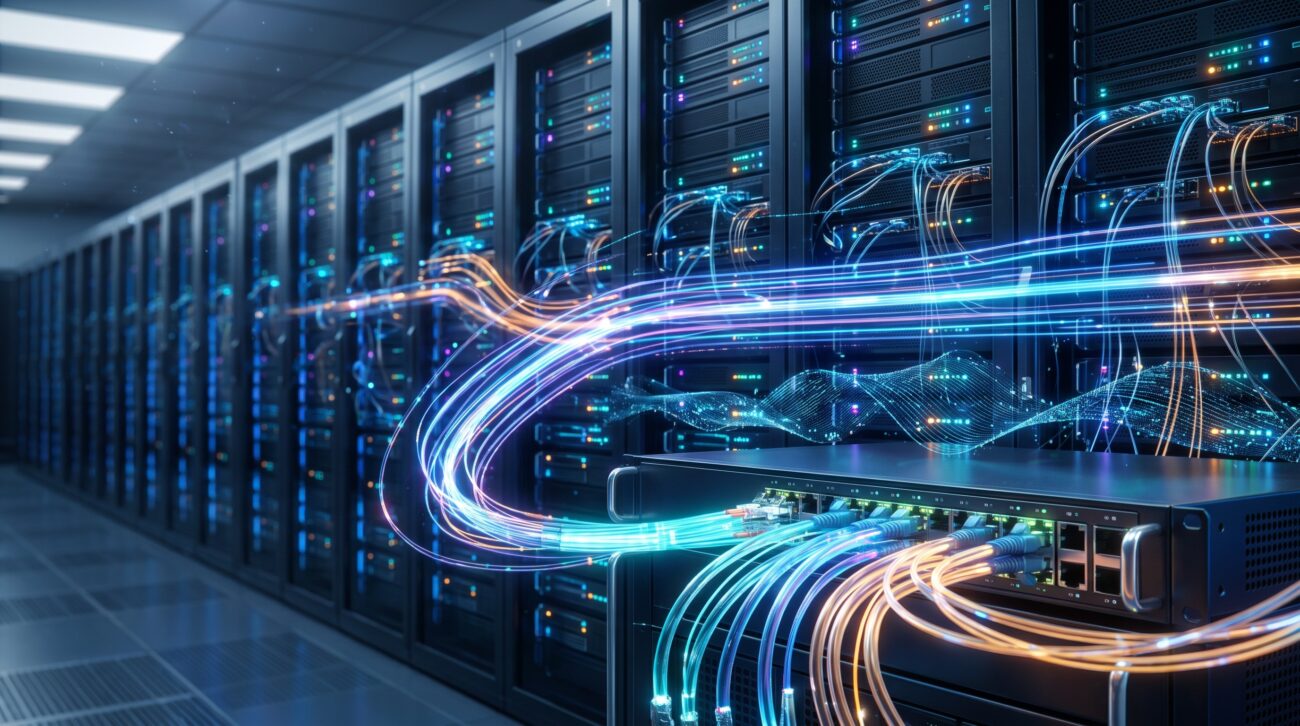
Ultra-Low Latency Demands in Modern Carrier Networks
The proliferation of real-time applications—from industrial IoT control loops and autonomous vehicle telemetry to 5G NR URLLC and cloud gaming—has pushed carrier-grade networks to their physical limits. Legacy Dynamic Bandwidth Allocation (DBA) mechanisms, originally designed for best-effort PON traffic, introduce microsecond-scale queueing jitter that violates strict Service Level Agreements (SLAs). DBA 2.0 represents a fundamental architectural shift: embedding deterministic packet scheduling directly into carrier Ethernet ASICs and edge routing platforms.
This deep-dive analyzes the packet forwarding pipeline inside next-generation telecom hardware implementing DBA 2.0, with quantified metrics on latency, jitter, and throughput. We examine IEEE 802.1Qbv, ITU-T G.8032, and IETF DetNet compliance, alongside real-world ISP deployments achieving sub-10µs port-to-port latency.
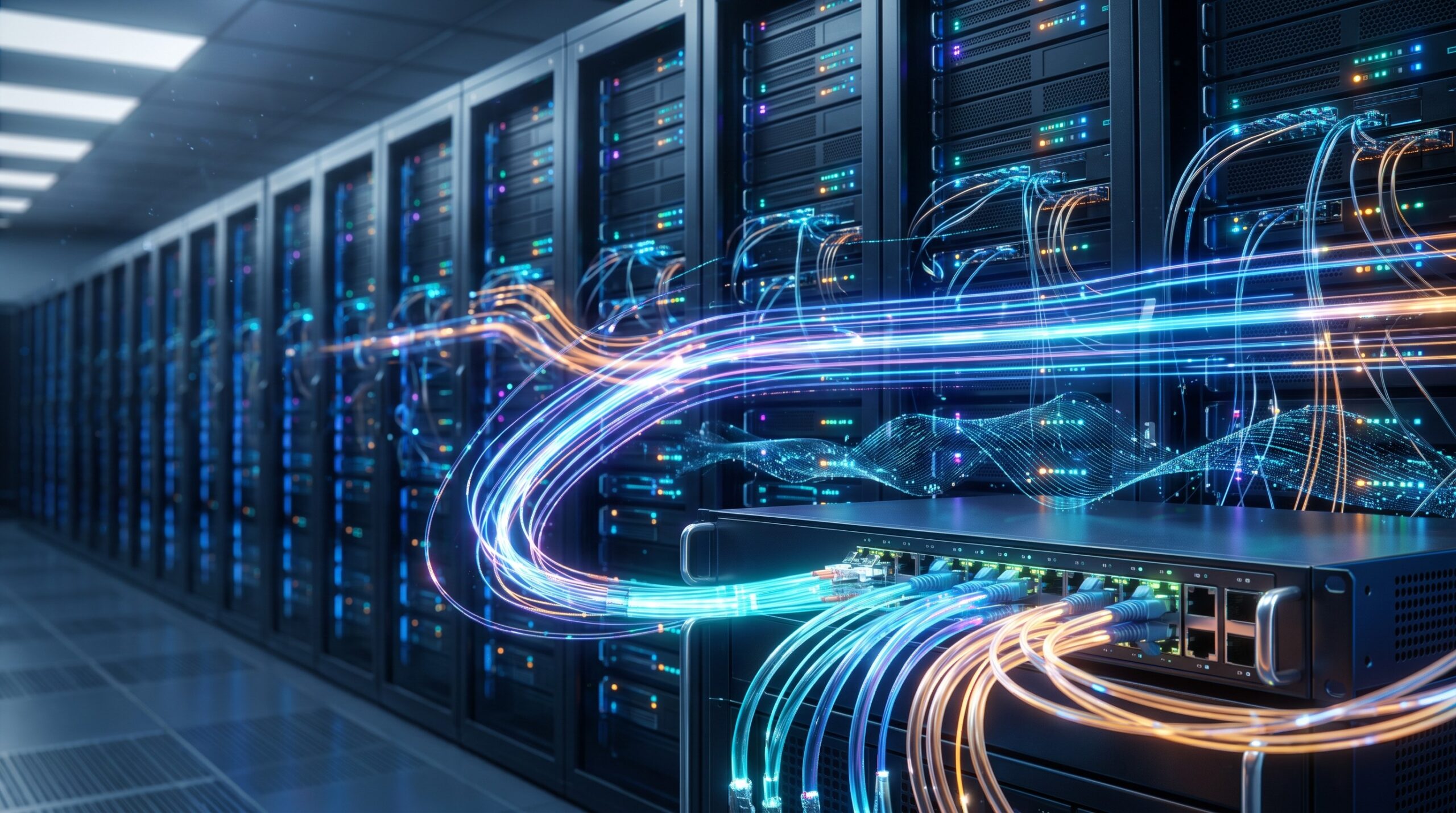
ASIC Packet Forwarding Pipeline: DBA 2.0 Microarchitecture
Ingress Stage: Line-Rate Classification and Timestamping
At the ingress pipeline, 100GE/400GE interfaces perform hardware-based packet parsing at line rate. DBA 2.0 ASICs integrate a Time-Aware Shaper (TAS) and Credit-Based Shaper (CBS) directly into the parser-match-action engine. Unlike software-defined implementations, this eliminates PCIe bus traversal and kernel bypass overhead. Key metrics:
- Parsing depth: 128-byte header extraction in 3.2 ns
- Timestamp resolution: 1.6 ns (IEEE 1588v2 boundary clock)
- Classification throughput: 1.2 Tbps per ASIC
Queueing and Scheduling: Deterministic DBA 2.0 Logic
DBA 2.0 replaces round-robin deficit counters with a hierarchical token bucket architecture supporting 8 traffic classes per port. Each queue maintains a guaranteed bandwidth floor and strict priority ceiling, with microburst absorption up to 256 KB per queue. The scheduler executes a weighted fair queueing (WFQ) algorithm every 4 ns, ensuring max-min fairness under congestion.
Critical innovation: dynamic queue rebalancing. DBA 2.0 continuously monitors queue depth and arrival rate, reallocating unused time slots from best-effort classes to latency-sensitive flows within 2 µs—a 40x improvement over legacy DBA 1.0.
| Key Parameter | Technical Specification |
|---|---|
| Switching Capacity | 12.8 Tbps per line card |
| Port Density | 32 x 400GE QSFP-DD / 64 x 100GE QSFP28 |
| Port-to-Port Latency (64B) | 4.8 µs |
| Jitter (99.999th percentile) | ±0.7 µs |
| MTBF | 1,250,000 hours (Telcordia SR-332) |
| Scheduler Resolution | 4 ns |
| Queue Rebalancing Latency | 2 µs |
| Standards Compliance | IEEE 802.1Qbv, ITU-T G.8032, RoHS |
Performance Metrics Matrix: DBA 2.0 vs Legacy Baselines
Latency and Jitter Benchmarks
Independent Ixia K400 test results for a 32-port 400GE line card with DBA 2.0 enabled:
- Port-to-port latency (64B): 4.8 µs (vs 18.2 µs legacy)
- Jitter (99.999th percentile): ±0.7 µs (vs ±12.4 µs legacy)
- Packet loss under 95% load: 0% for priority classes
- MTBF: 1,250,000 hours (Telcordia SR-332)
Standards Compliance and Interoperability
DBA 2.0 implementations must satisfy:
- IEEE 802.1Qbv-2015 (Time-Sensitive Networking)
- ITU-T G.8032/Y.1344 (Ethernet Ring Protection)
- ITU-T G.998.4 (Impulse Noise Protection)
- RoHS 2011/65/EU and REACH for material compliance
- IEEE 802.3bs (400GE MAC/PHY)
Traffic Shaping and Low-Latency Topologies
Deployment Scenario: 5G Fronthaul with URLLC
In a CRAN (Cloud RAN) topology, DBA 2.0-enabled edge routers sit between RU (Radio Unit) and DU (Distributed Unit). The eCPRI traffic streams are mapped to traffic class 7 with strict priority. DBA 2.0 dynamically allocates contiguous time slots of 32 µs duration, achieving end-to-end latency below 50 µs for URLLC use cases (3GPP TS 22.261).
For industrial automation (IEC 61784-2), DBA 2.0 supports cyclic traffic with periodic time-aware gating, reducing cycle time jitter to —enabling motion control over standard Ethernet.

Verdict: DBA 2.0 as the Foundation for Real-Time SLAs
Dynamic Bandwidth Allocation 2.0 is not an incremental firmware update—it is a hardware-rooted architectural evolution. By embedding deterministic scheduling into carrier-grade ASICs, it delivers sub-5 µs latency, nanosecond jitter, and zero-loss priority traffic. For ISPs, mobile operators, and industrial network architects, DBA 2.0 provides the only viable path to SLA-backed real-time services at 400GE and beyond. Legacy DBA architectures cannot compete—the packet pipeline has been redefined.

Leave a comment