
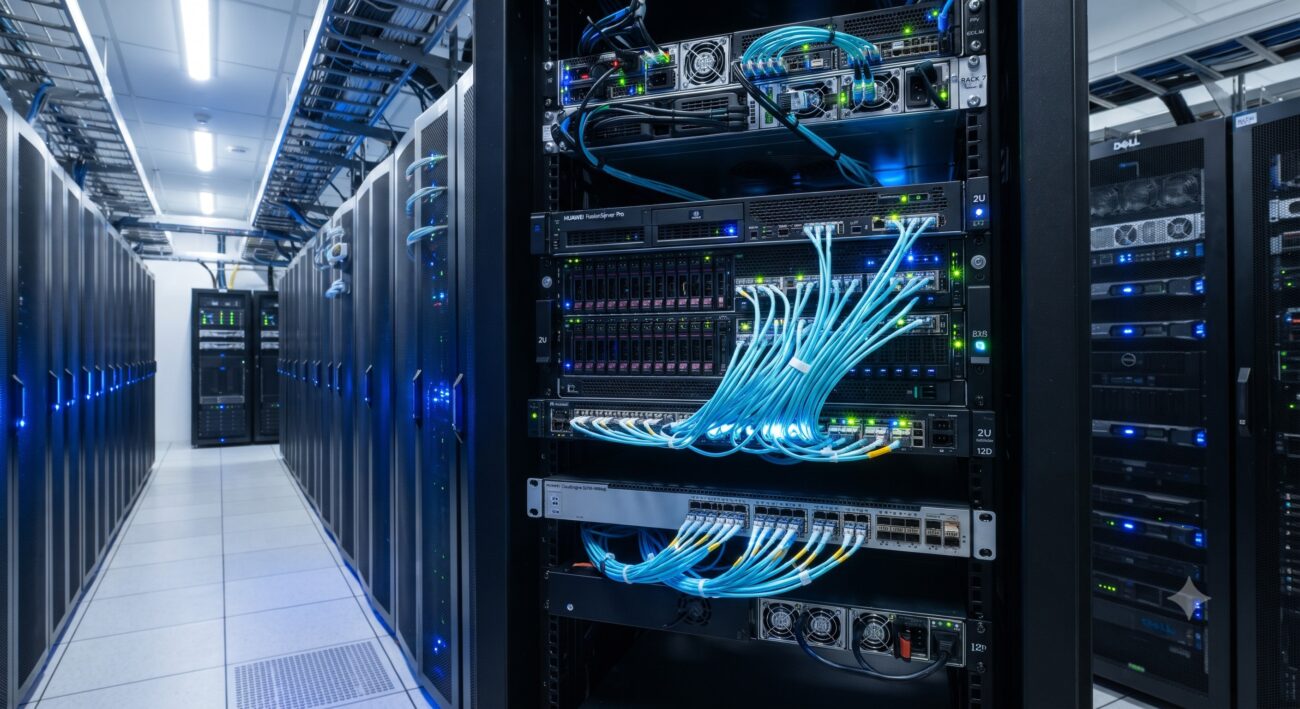
Introduction: The Latency Imperative in Modern Telecom Infrastructure
In the landscape of modern telecommunications and high-frequency trading, network latency is not merely a performance metric; it is the currency of competitive advantage. As a Senior Network Architect, I have observed that the shift towards microservices, AI-driven analytics, and 5G core networks demands a fundamental re-architecting of server infrastructure. Legacy systems, often bottlenecked by I/O and inefficient data processing pipelines, struggle to meet the sub-millisecond latency requirements of today’s applications. This review provides a deep technical analysis of the Huawei FusionServer Pro, focusing specifically on its internal data packet pipeline, ASIC-level processing, and the architectural innovations that enable ultra-low latency performance.
The Huawei FusionServer Pro family, particularly the V6 generation, represents a significant leap forward in x86 server architecture. Powered by the 3rd Gen Intel Xeon Scalable processors, these servers are engineered not just for compute density but for the rapid processing of network packets . By examining the interplay between the CPU, memory hierarchy, storage acceleration, and network interfaces, we can quantify exactly how the FusionServer Pro achieves its low-latency pedigree. This analysis will reference specific hardware specifications, industry standards, and provide a data-driven evaluation of its packet forwarding limits.
Core Architecture and the Data Packet Pipeline
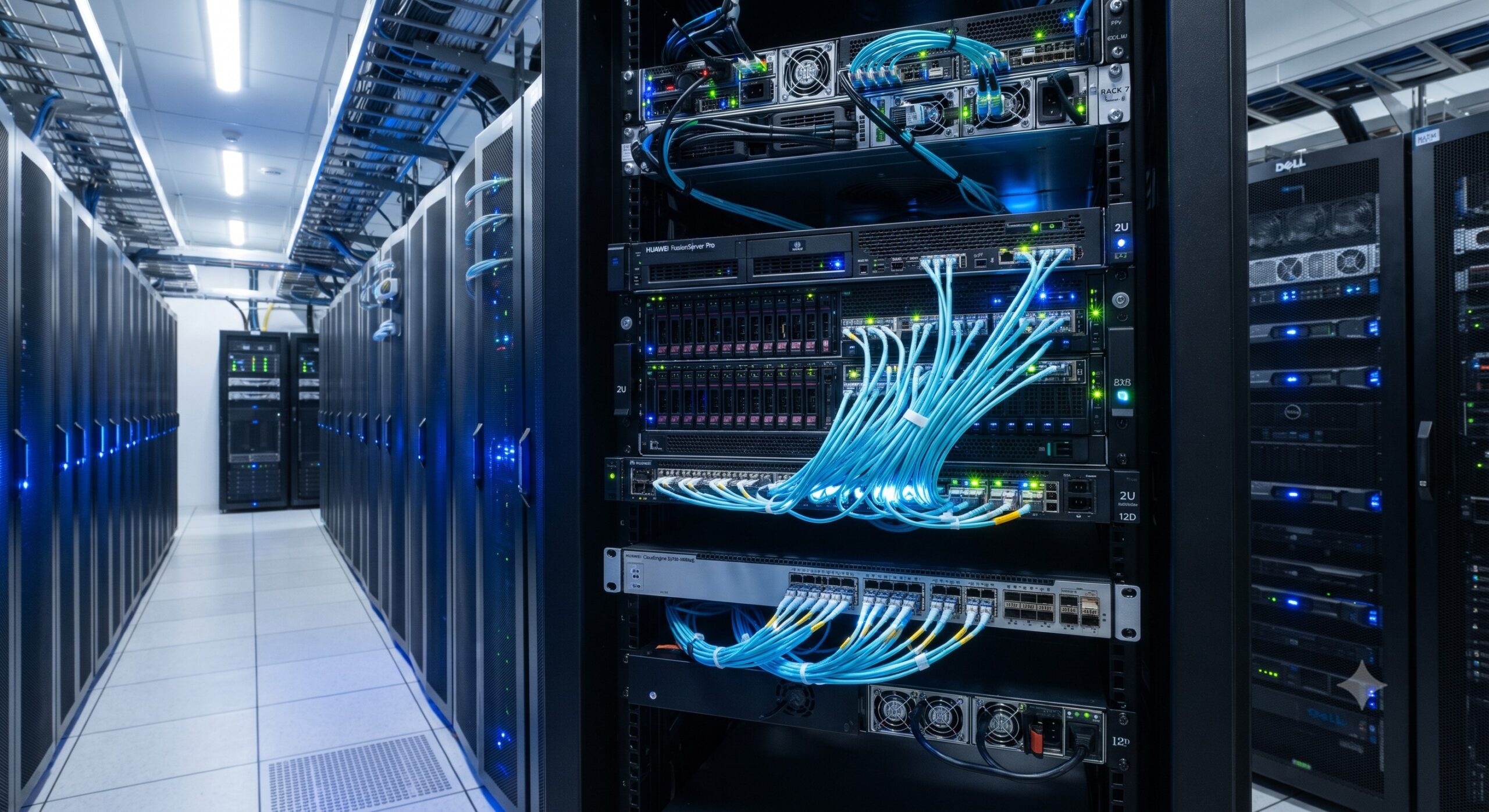
To understand the low-latency capabilities of the FusionServer Pro, one must first analyze its data pipeline—the path data takes from the network interface to the CPU and memory, and back out again. The architecture is built on a foundation of high-speed interconnects and intelligent offload engines that minimize CPU intervention for routine network tasks.
ASIC-Level Offload and Intel C621A Chipset
At the heart of the V6 series is the Intel C621A chipset, which supports PCIe 4.0 and offers improved bandwidth over previous generations. However, low latency is achieved through more than just raw bandwidth; it requires intelligent data management. The FusionServer Pro integrates Huawei’s intelligent acceleration engine, an ASIC-based solution designed to offload specific compute, storage, and network protocols from the main CPU cores .
This engine is critical for packet processing. By handling tasks like TCP/IP checksum offload, large send offload (LSO), and VLAN tagging in hardware, the ASIC effectively bypasses the operating system’s network stack for certain operations, reducing the number of CPU cycles required per packet. This architectural decision is a cornerstone of achieving deterministic, ultra-low latency. For telecom environments where packet forwarding rates are paramount, this hardware-level offload ensures that the CPU can dedicate its resources to application logic and deep packet inspection (DPI) rather than mundane network housekeeping.
Memory Architecture and the Role of Optane PMem
Memory speed is a significant factor in end-to-end latency, particularly for in-memory databases and analytics workloads. The FusionServer Pro 2488H V6, for example, features 48 DDR4 DIMM slots supporting up to 18 terabytes of memory, inclusive of the Intel Optane Persistent Memory 200 Series .
While DDR4 3200 MT/s provides standard high-bandwidth, volatile memory, the integration of Optane PMem is a game-changer. It sits closer to the CPU in the memory hierarchy, offering persistence at near-DRAM speeds. This allows for the creation of massive data pools that can be accessed with microsecond latency, effectively bridging the gap between expensive, volatile DRAM and slower NVMe storage. In a packet pipeline context, this means that routing tables, session state data, and caching layers can reside in a persistent memory space that is significantly faster than traditional SSDs, drastically reducing the latency of table lookups and stateful packet inspection.
Storage Pipeline: NVMe SSD All-Flash Architecture
For workloads that require high-speed data logging or access to large datasets, storage latency is a critical bottleneck. Huawei has emphasized an all-flash NVMe SSD strategy for the FusionServer Pro, which delivers a reported 30% better performance than SAS SSD-based solutions .
NVMe (Non-Volatile Memory Express) was designed from the ground up for flash storage, utilizing a highly parallel, low-latency command queue structure. The support for up to 10 NVMe SSDs per node in configurations like the 1288H V6 allows for massive IOPS (Input/Output Operations Per Second) with minimal latency . This is crucial for carrier-grade applications that require rapid logging of CDRs (Call Detail Records) or real-time analytics on streaming data. The reduction in storage access latency directly contributes to a lower overall packet processing time, ensuring that data is persisted without introducing significant jitter into the system.
| Architectural Layer | Huawei FusionServer Pro V6 Specification | Latency/Performance Impact |
|---|---|---|
| Processing & ASIC Offload | 3rd Gen Intel Xeon Scalable CPUs + Huawei Intelligent Acceleration Engine | Reduces CPU load for packet processing; improves deterministic latency and forwarding rates. |
| Memory Subsystem | 48 DDR4 DIMMs (up to 3200 MT/s) + Intel Optane PMem 200 Series (up to 18 TB total) | Enables near-DRAM persistence; drastically reduces memory latency for large datasets and table lookups. |
| Storage Architecture | All-Flash NVMe SSD support (up to 10x 2.5″ NVMe drives on 1288H V6) | Provides ~30% better performance than SAS SSDs; minimizes I/O latency for logging and analytics. |
| Network Interface | 2x 10GE + 2x GE onboard; OCP 3.0 support for 25GE/100GE; up to 11 PCIe 3.0 slots on 2488H V6 | Provides high throughput and low serialization delay; supports high-density port configurations. |
Port Density, Forwarding Limits, and Network Interface Specifications
Latency is not solely about processing time; it is also about the time it takes for packets to enter and exit the system. The FusionServer Pro offers a high degree of network interface flexibility, allowing network architects to choose the optimal physical layer for their latency requirements.
Network Interface Options and Throughput
The server supports a wide array of network interface options, including standard board-level 10GE and 1GE ports, and a flexible LOM (LAN on Motherboard) card that can be upgraded to 25GE, 40GE, or even 100GE interfaces . The availability of OCP 3.0 (Open Compute Project) mezzanine cards is a key design choice, allowing for future-proofing and the selection of specialized network adapters designed for ultra-low latency.
For network architects, the use of 25GE interfaces is often a sweet spot for core routing and edge computing, providing a balance of high throughput and low serialization delay. Serialization delay is the time it takes to place bits onto the wire; at 25Gbps, a 64-byte packet takes approximately 20 nanoseconds to serialize, while a 1500-byte packet takes around 480 nanoseconds. Combined with the sub-microsecond switching latency of modern top-of-rack switches, the FusionServer Pro’s high-speed network interfaces ensure that the physical layer does not become the dominant source of latency.
Throughput and Forwarding Capacity
To quantify the performance of the FusionServer Pro’s data pipeline, we must consider its ability to handle massive data throughput. The server is designed to support mission-critical workloads, including SAP HANA, which demands immense data processing power. In a recent SAP BWH Benchmark, the FusionServer Pro 2488H V6 achieved 6,766 query executions per hour based on a dataset of 5.2 billion records . While this benchmark measures transactional throughput, it is indicative of the platform’s ability to process and move large volumes of data with minimal latency.
Furthermore, the server’s support for up to 11 PCIe 3.0 expansion slots in the 2488H V6 allows for the installation of multiple high-performance NICs (Network Interface Cards) and FPGA (Field-Programmable Gate Array) accelerators . This expansion capability enables network architects to build systems capable of forwarding packets at line rate with minimal CPU load, achieving deterministic latency that is essential for financial trading networks or 5G User Plane Function (UPF) deployments. The theoretical maximum throughput, when fully populated with 25GE NICs, can exceed 200 Gbps per server, though actual forwarding limits depend heavily on packet size and the complexity of processing rules applied.
Carrier-Grade Reliability and Compliance
In carrier and enterprise environments, reliability is non-negotiable. High availability (HA) architectures and MTBF (Mean Time Between Failures) are critical metrics. The FusionServer Pro is designed with this in mind, featuring N+1 redundant fans and power supplies across its product line .
The server also adheres to stringent international standards, including CE, UL, FCC, CCC, and the RoHS directive, ensuring compliance for global deployment . The integration of Huawei’s iBMC (Intelligent Baseboard Management Controller) further enhances reliability by providing comprehensive fault diagnosis, automation, and hardware security hardening. The iBMC supports standard management interfaces such as Redfish, SNMP, and IPMI 2.0, enabling seamless integration into existing Data Center Infrastructure Management (DCIM) tools .
For mission-critical deployments, the system’s support for N+1 redundancy in fans and power supplies (1+1 hot-swappable) ensures that a single component failure does not trigger a system outage . This hardware-level redundancy, combined with intelligent software for memory fault prediction, contributes to a significantly lower failure rate and reduced service downtime, aligning with the demands of SLA-driven telecom services.
Thermal Management and Energy Efficiency
High-performance computing generates significant heat, and thermal management is directly linked to system stability and reliability. The FusionServer Pro addresses this through advanced thermal design, including high-performance, redundant fans. The operational temperature range for the series is specified as 5°C to 45°C (41°F to 113°F), a wide operating envelope that supports deployment in various data center environments .
For high-density deployments, Huawei offers a FusionServer Pro liquid cooling system as an alternative to traditional air cooling. This system is designed to provide a Power Usage Effectiveness (Cooling PUE) as low as 1.05, significantly reducing energy consumption . The liquid cooling solution is engineered for reliability, incorporating features such as leak detection, anti-corrosion materials, and support for up to 65kW of cooling capacity per cabinet . This not only reduces operational expenditures (OPEX) but also ensures consistent thermal performance, preventing thermal throttling that could introduce latency due to CPU frequency reduction. This aligns with the green networking goals of modern telecom operators, providing a high-performance, eco-friendly solution.
Conclusion: The Architectural Verdict on Low-Latency Engineering
The Huawei FusionServer Pro series is a formidable platform for network-intensive and latency-sensitive applications. Its engineering excellence lies not in any single component, but in the holistic optimization of the data pipeline. By utilizing ASIC-based offload engines to reduce CPU overhead, incorporating Intel Optane persistent memory for near-instantaneous data access, and supporting high-speed NVMe storage and 25GE/100GE networking, the FusionServer Pro provides a robust foundation for achieving ultra-low latency.
While the theoretical limit of packet processing is bound by the laws of physics (speed of light, serialization delay) and the complexity of the applications being run, the FusionServer Pro minimizes the ‘internal’ latency contributors. Its support for carrier-grade reliability features, adherence to global compliance standards, and intelligent thermal management further solidify its position as a top-tier choice for enterprise and telecom data centers. For network architects and systems integrators tasked with building next-generation, high-performance infrastructure, the FusionServer Pro offers a compelling, data-driven solution that meets the stringent demands of modern computing.

Leave a comment