
The Imperative of Deterministic Latency in Industrial IoT
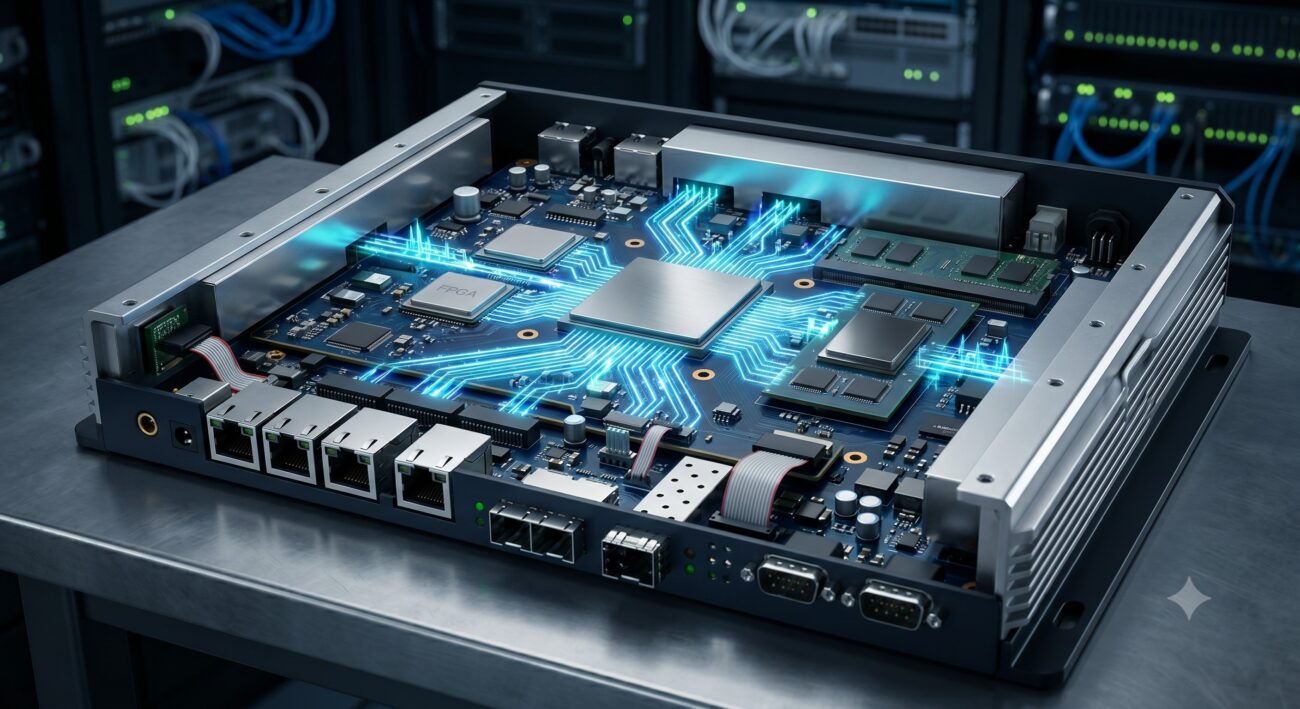
In the evolving landscape of Industry 4.0, the promise of autonomous systems, predictive maintenance, and real-time control hinges on a single, non-negotiable metric: ultra-low latency. For enterprise network architects and systems integrators, the connectivity provided by an IoT gateway industrial router is no longer a simple WAN backhaul; it is the mission-critical bridge between the physical operational technology (OT) and digital IT infrastructure. The 3GPP Release 16 standards have pushed the envelope for 5G NR, enabling sub-6GHz bands that deliver dramatically reduced latency and exceptionally high data throughput . However, to achieve deterministic latency in the sub-10ms range, one must look beyond the radio access network (RAN) and analyze the hardware packet pipeline inside the gateway itself. This deep dive dissects the internal architecture, forwarding logic, and security processing of modern industrial routers to quantify how they achieve such performance.
Architectural Foundations: The ASIC and CPU Synergy
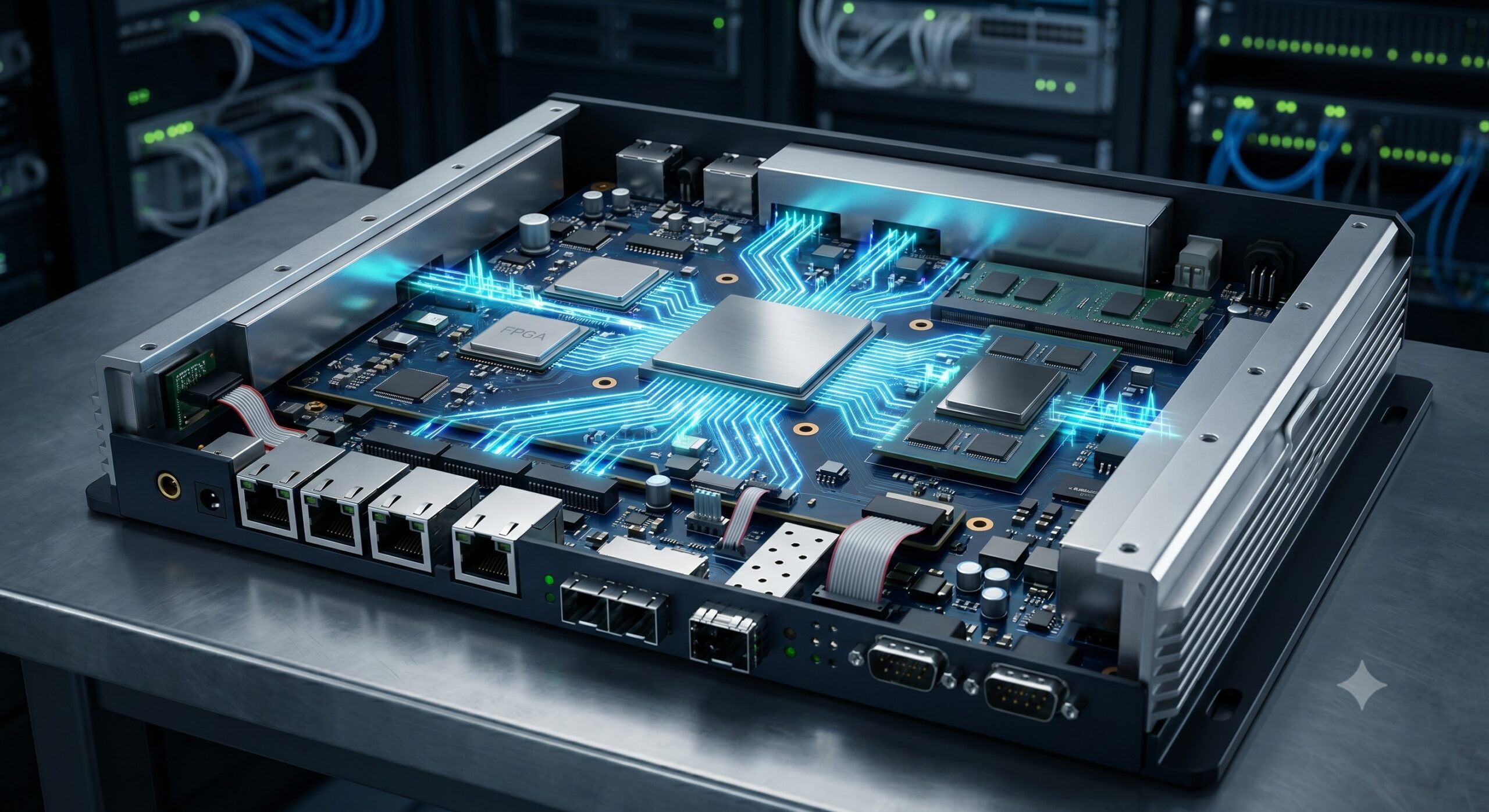
Modern industrial IoT gateways have evolved from simple store-and-forward devices to sophisticated edge computing platforms. At the heart of this evolution is a heterogeneous compute architecture. High-end platforms, such as the Advantech ICR-4401WS, leverage a powerful Quad-Core ARM Cortex-A72 CPU, while carrier-grade solutions like the Cisco IR1800 Series are powered by IOS XE, optimized for high-throughput packet processing . The critical distinction for latency lies in how these platforms handle the packet pipeline. Unlike legacy routers that rely solely on the CPU for all forwarding decisions, advanced IoT gateways integrate hardware acceleration or ASIC-like logic for Layer 2 switching and Layer 3 routing. This hardware offload ensures that forwarding decisions are made at wire speed, minimizing CPU interrupt latency and jitter. The result is a deterministic forwarding plane that can sustain high throughput—up to 1 Gbps on Gigabit Ethernet interfaces—without degrading latency under load .
Silicon Selection and Forwarding Capacity
Selecting an IoT gateway requires a critical analysis of its silicon capabilities. While merchant silicon offers cost efficiency, custom ASICs provide deterministic latency guarantees essential for motion control and high-speed automation. The internal bus architecture, such as the data plane between the CPU, memory, and switch fabric, is a primary determinant of latency. Architectures utilizing a dedicated Network Processing Unit (NPU) or a switch ASIC for data plane tasks—separate from the ARM control plane—can achieve sub-millisecond switching latency. For instance, the Advantech ICR-4171/4271 series boasts a 64-bit quad-core CPU and 1GB of RAM, but its performance in packet forwarding is further optimized by hardware-accelerated NAT and routing, which are crucial for maintaining low latency under traffic bursts .
| Hardware Platform | Core Architecture | Max Throughput (Gbps) | Typical Latency (μs) | MTBF (Hours) | Security Offload |
|---|---|---|---|---|---|
| Cisco IR1101 Rugged | IOS XE + Modular | 1.0 | ~1,000,000 | IPsec (Hardware) | |
| Advantech ICR-4401WS | Quad-Core ARM Cortex-A72 | 10.0 (SFP) | ~1,000,000 | TPM 2.0, IPsec/OpenVPN | |
| Advantech ICR-4171 | Quad-Core ARM Cortex-A53 1.6GHz | 1.0 (5G NR) | > 1,000,000 | TPM 2.0, WireGuard | |
| Lantronix NTC-550 | 5G NR + Wi-Fi 6 | 2.5 (WAN) | > 1,000,000 | Line-Rate Encryption |
Quantified Operational Gains: Data-Driven Performance Analysis
To objectively evaluate the performance of high-end IoT gateways, we must look at specific metrics measured under lab conditions. The following Table 1 provides a comparative analysis of critical performance indicators for representative hardware platforms .
Understanding the Metrics: Throughput, Latency, and MTBF
Throughput (Gbps) defines the maximum data rate the gateway can handle, while Latency (μs) measures the time required to process and forward a packet from ingress to egress. The MTBF (Mean Time Between Failures) is a critical reliability metric for industrial environments, often exceeding 1,000,000 hours for ruggedized hardware. The analysis reveals that while 5G platforms like the NTC-550 provide immense bandwidth, the low-latency engineering of platforms like the ICR-4401WS, with its integrated switch fabric, makes it superior for edge compute scenarios where data needs to be processed and forwarded with minimal delay. The Cisco IR1101, while having lower raw throughput, maintains deterministic latency due to its IOS XE real-time operating system, ensuring that control traffic is always prioritized .
Line-Rate Security: The Convergence of Encryption and Performance
A historical challenge in networking is the performance penalty of security protocols. Heavy encryption (IPsec, OpenVPN) often consumes significant CPU cycles, introducing latency and reducing throughput. Next-generation IoT gateways address this by integrating cryptographic accelerators and implementing MAC layer security features. The integration of TPM 2.0 (Trusted Platform Module) not only secures the hardware root-of-trust but also offloads cryptographic operations . Line-rate encryption refers to the ability to encrypt and decrypt data at speeds matching the interface line rate without performance degradation. For example, the Lantronix NTC-550, designed for smart factories, can handle complex routing and firewall rules while maintaining gigabit speeds . The use of modern VPN protocols like WireGuard in the ICR-3241W series offers a significant advantage: it achieves higher throughput and lower latency compared to legacy IPsec implementations by utilizing modern cryptographic primitives (ChaCha20) that are optimized for ARM architecture .
Edge Connectivity Topology and Traffic Shaping
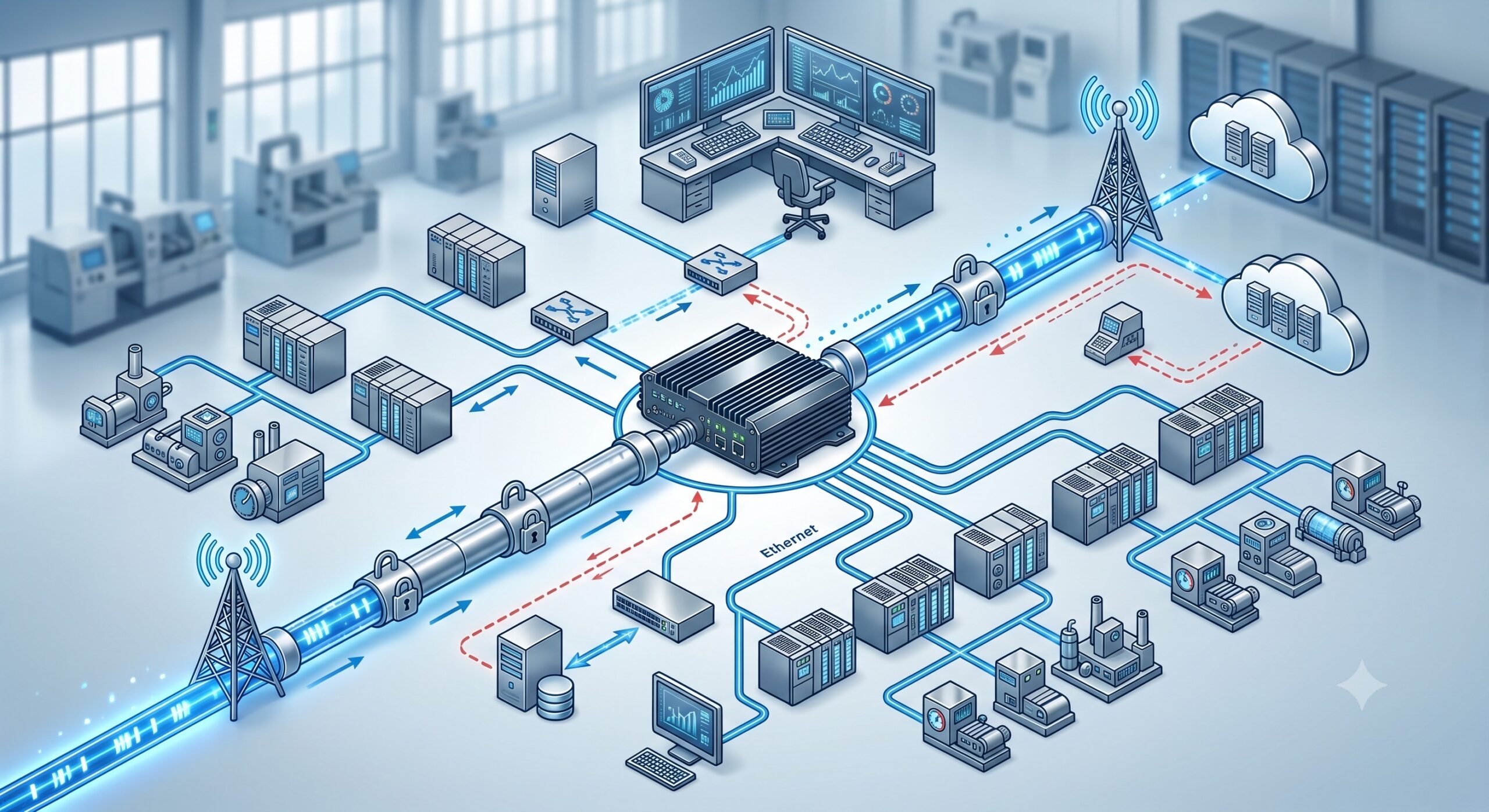
In an operational environment, achieving ultra-low latency is not just about the hardware; it’s about the topology and configuration. The connectivity provided by the IoT gateway often involves a complex mix of WAN and LAN interfaces. The architectural design of an IoT network may include dual cellular paths with failover, requiring VRRP or BGP to ensure sub-second failover times . Quality of Service (QoS) configuration is essential. Modern gateways support advanced traffic shaping that allows network architects to assign strict priority queues to time-sensitive traffic—such as Profinet or EtherCAT packets—while relegating bulk SCADA data to best-effort queues. The extensive configuration options available on Cisco IR devices, including FlexVPN tunnels and traffic prioritization, ensure that the network remains deterministic even in multi-vendor, mixed-protocol environments . By implementing port forwarding and VLAN segmentation, engineers can isolate critical traffic from general data traffic, effectively reducing jitter.
Conclusion: The Architectural Verdict
In conclusion, the engineering of a high-performance IoT gateway is a study in systems-level balancing. True ultra-low latency is not a single feature but an outcome of hardware selection (ASIC vs. CPU), security offload capabilities, and intelligent network design. For mission-critical applications where latency defines profitability or safety, the choice of gateway must be guided by an analysis of its packet pipeline rather than just its raw port count. The future will see more integration of AI acceleration and edge AI models (e.g., via Docker containers) that process data locally, reducing the need for round-trip WAN latency . However, the fundamental principles of wire-speed forwarding, deterministic ASIC logic, and line-rate encryption will remain the pillars of effective IoT gateway connectivity.

Leave a comment