
Introduction: The Non-Negotiable Mandate of Site Power Resilience
In the hyper-connected digital ecosystem, a telecom site is only as reliable as its power infrastructure. For network architects and systems integrators, the operational expenditure (OPEX) and service-level agreement (SLA) penalties associated with site downtime are prohibitive. Huawei’s Site Power Solutions, particularly the latest Single SitePower architecture, have been engineered to address these challenges head-on, embedding carrier-grade reliability into the very fabric of the network edge. This analysis delves into the architectural innovations that drive industry-leading Mean Time Between Failures (MTBF) metrics and redundancy mechanisms, ensuring continuous service availability even under the most adverse grid conditions.
Architectural Resilience: The Three-Level Synergy Mechanism
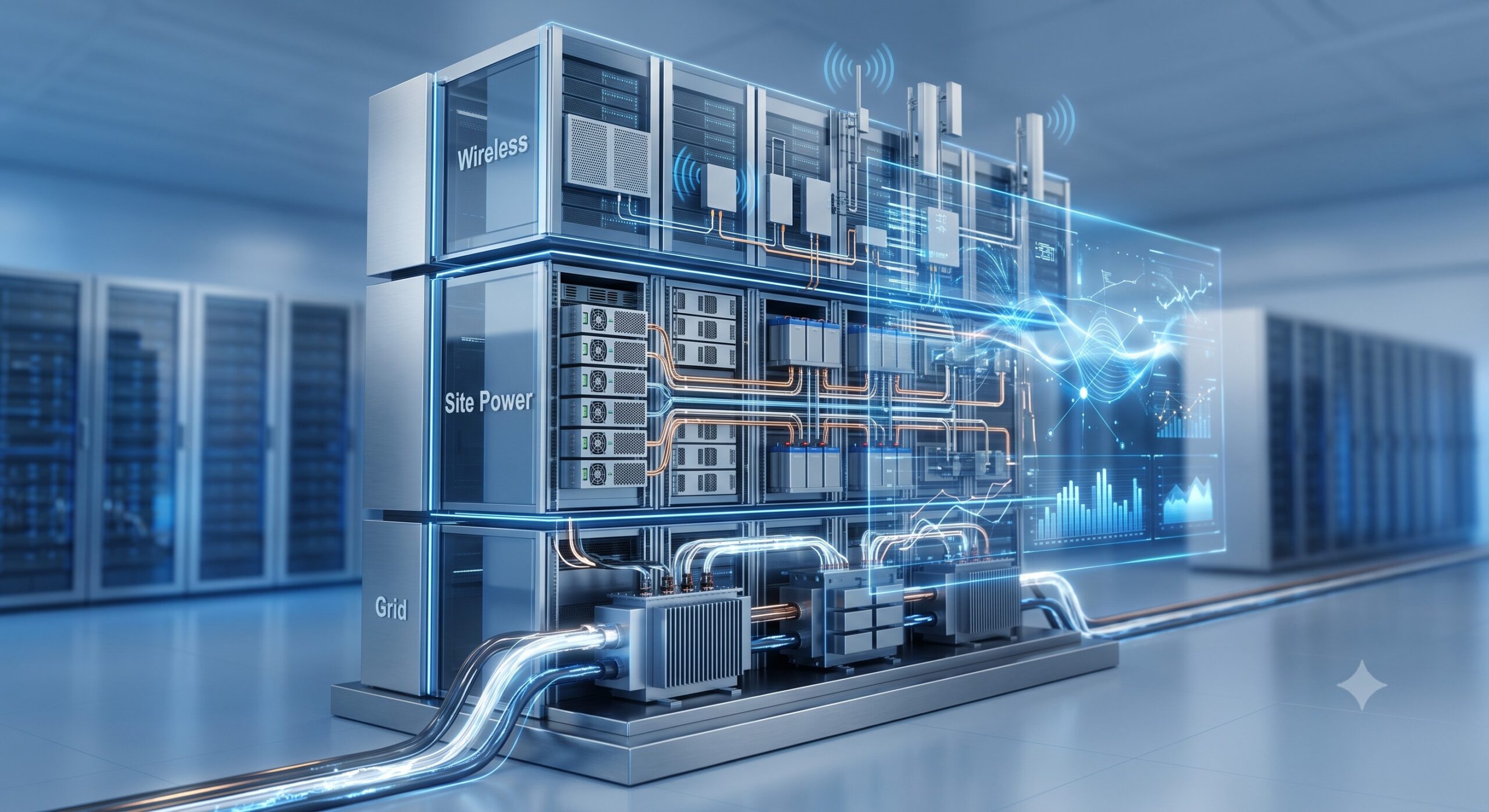
At the heart of Huawei’s next-generation site power strategy is the Single SitePower architecture, which moves beyond traditional backup systems to create an intelligent, bidirectional power ecosystem. Unlike legacy solutions that treat power as a simple input, this architecture employs a unique three-level synergy mechanism that encompasses site power facilities, wireless networks (RAN), and the power grid . This framework facilitates an end-to-end power and information flow interaction, transforming sites from passive consumers into active energy prosumers. The architecture is built on the principle of full-link sensing, visualization, and management, which are critical for proactive reliability management. A primary design objective is the improvement of the Power Availability (PAV) metric and the reduction of the Network Carbon Intensity Energy (NCIe) index, ensuring that reliability is not achieved at the expense of operational efficiency .
Analyzing the Redundancy Architecture: MTBF and Failover
Carrier-grade reliability demands rigorous redundancy. Huawei’s approach integrates grid-source synergy, source-storage synergy, and storage-load synergy to build a resilient infrastructure throughout the entire power chain . This multi-layered redundancy ensures that a failure at any single point—from the primary AC input to the DC distribution—does not compromise service delivery. A pivotal component in this architecture is the transition from traditional lead-acid batteries to intelligent, safety-focused lithium batteries (CloudLi) . These smart energy storage systems contribute to a higher MTBF by enabling predictive analytics and remote health monitoring, reducing the risk of unexpected failure.
Case Study: Grid Vulnerability Mitigation in Africa
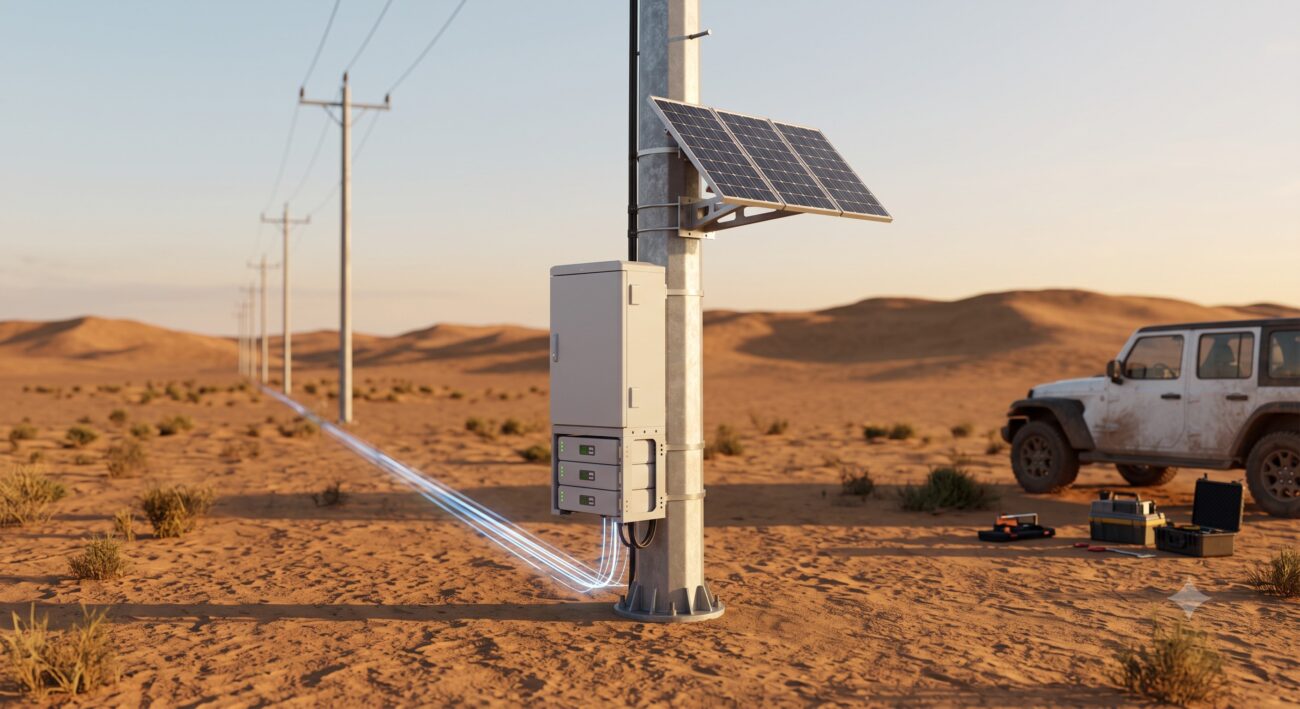
Data from real-world deployments substantiates these reliability claims. In regions across Africa characterized by frequent power outages and weak grids, Huawei’s iGrid grid adaptation technology has proven transformative. By implementing intelligent grid adaptation, operators have successfully improved site Power Availability (PAV) from a precarious 60% to an industry-leading 99.9% . This stark improvement demonstrates the architectural capability to maintain operational continuity in environments previously deemed too volatile for stable telecom operations.
Intelligent O&M and Predictive Diagnostics
Reliability in modern networks is increasingly a function of intelligence, not just hardware redundancy. Huawei’s solutions are integrated with advanced Operations and Maintenance (O&M) management systems that utilize AI-driven diagnostics. This system facilitates proactive analysis, risk prediction, and precise fault localization . The transition from passive failure response to active risk prevention significantly reduces the Mean Time To Repair (MTTR). For instance, by enabling remote root cause analysis, operators can reduce fault recovery times dramatically—in some Asian deployments, this metric was slashed from 1.8 hours to 0.9 hours . This AI-powered intelligence also contributes to a 50% reduction in site OPEX, highlighting the direct link between architectural intelligence, operational reliability, and financial performance .
| Key Parameter | Technical Specification |
|---|---|
| Site Energy Efficiency (SEE) | Up to 97% (with Blade Power Systems) |
| Power Availability (PAV) Improvement | From 60% to 99.9% (in weak grid areas) |
| Power Backup Time Extension | Extended from 2.5 hours to >7 hours (via Power-RAN Synergy) |
| Power Subrack Max Capacity (ETP48400-C3B1) | 24 kW (DC -48V/-57V) |
| Reduction in O&M OPEX | Up to 50% |
Deployment Specifications and Compliance
The reliability of Huawei’s Site Power Solutions is underpinned by rigorous engineering specifications. The power systems, such as the ETP48400-C3B1 embedded power subrack, are designed to convert AC power to a constant voltage (e.g., –48 V DC) with a maximum capacity of 24 kW, ensuring stable power delivery to critical telecommunications equipment . The systems operate on a 220/380 V AC three-phase four-wire input, providing the flexibility required for diverse global grid standards . This robust power conversion architecture, combined with the system’s ability to support multi-power inputs (solar, mains, batteries, diesel gensets) and outputs (12V/24V/36V/48V/57V DC and AC variants), makes it a versatile and reliable platform for any site scenario .

Leave a comment