
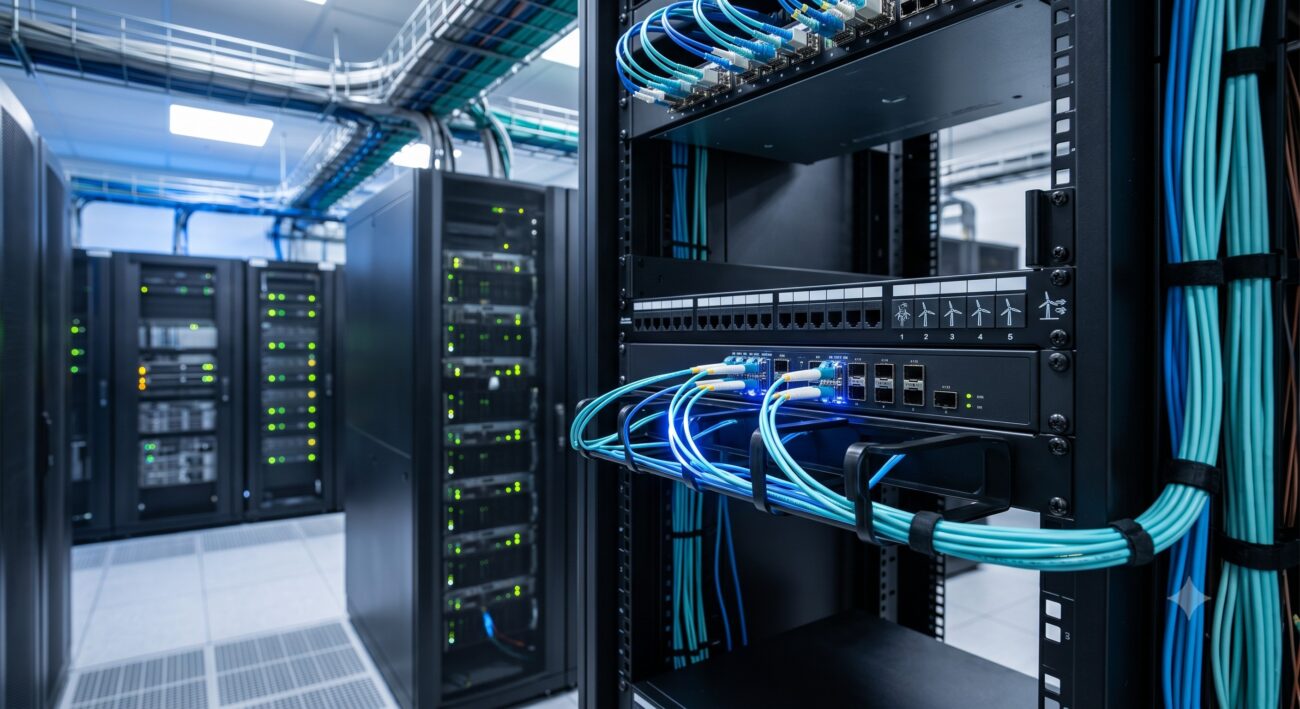
The Unforgiving Network Demands of Modern Wind Farms
Offshore and onshore wind farms present a uniquely hostile environment for telecom hardware. Turbines are often spread across hundreds of square kilometers, exposed to extreme temperatures, humidity, electromagnetic interference (EMI) from high-voltage generators, and constant vibration. A renewable energy wind farm fiber optic switch is not a standard enterprise switch; it is a hardened, carrier-grade device engineered for Mean Time Between Failures (MTBF) exceeding 500,000 hours and sub-50ms link failover. Network downtime directly correlates to lost energy production and safety system degradation, demanding zero-compromise reliability.

Dual-Engine Failover Architecture: The Core of Uninterrupted Operations
Hardware Redundancy Beyond 1+1
Carrier-grade switches for wind farms deploy a dual-engine failover architecture. This includes redundant power supplies (AC/DC dual-input), redundant management modules, and a hot-standby fabric. The switch must support ITU-T G.8032 Ethernet Ring Protection Switching (ERPS) to achieve sub-50ms recovery for ring topologies – a critical requirement for connecting a string of 20+ turbines. Unlike Rapid Spanning Tree Protocol (RSTP), G.8032 eliminates the topology recalculation delay, ensuring SCADA (Supervisory Control and Data Acquisition) data and turbine control signals experience zero packet loss during a fiber cut.
MTBF Metrics for Extreme Conditions
Standard commercial switches offer an MTBF of 50,000–100,000 hours. A purpose-built renewable energy wind farm fiber optic switch must report an MTBF of >500,000 hours (Telcordia SR-332) at 40°C ambient temperature. Key contributors to this reliability include conformal-coated PCBs to resist salt mist (offshore), fanless thermal design rated for -40°C to +75°C operation, and optical transceivers hardened to Class 1M laser safety with enhanced EMI shielding. The use of IEEE 802.3cg 10BASE-T1L for long-reach Ethernet over single-pair copper also reduces field termination errors.
| Key Parameter | Technical Specification | Wind Farm Requirement |
|---|---|---|
| Switching Capacity | > 56 Gbps (non-blocking) | Handle 30+ turbines at 1G each + 2x10G uplinks |
| Port Density | 8 x 100/1000 SFP + 4 x 10G SFP+ | Dual-homing ring + local turbine I/O |
| MTBF (Telcordia SR-332) | > 500,000 hours at 40°C | 10-year service life minimal replacements |
| Operating Temperature | -40°C to +75°C (fanless) | Turbine nacelle and external cabinet extremes |
| ERPS/Failover | Zero-loss SCADA ring protection | |
| PTP Accuracy | IEEE 1588v2 TC, ±100ns | Grid-compliant turbine synchronization |
| Security | MACsec (IEEE 802.1AE), 256-bit AES | Data integrity across untrusted fiber |
| Certifications | IEC 61850-3, IEEE 1613, RoHS | Substation and wind farm compliance |
Mission-Critical Deployments: From SCADA to Condition Monitoring
Segmenting Operational Traffic with Zero Packet Loss
Within a wind farm, network traffic falls into three latency-sensitive categories. First, real-time turbine control (IEC 61400-25) requires deterministic delivery with jitter under 1ms. Second, condition monitoring systems (CMS) stream vibration and thermal data at 100 Mbps per turbine. Third, security and CCTV traffic demands guaranteed bandwidth. A hardened fiber optic switch uses IEEE 802.1Qbb Priority Flow Control (PFC) and IEEE 802.1Qbv Time-Aware Shaper (TAS) to partition these flows. The ASIC forwarder allocates dedicated output queues, preventing a CCTV data burst from impacting turbine control frames.
Case Example: Offshore Wind Farm Ring Topology
In a 30-turbine offshore installation, switches are configured in a dual-homing ring. Each switch’s two 10G SFP+ uplinks connect to opposing directions of the ring, while eight 1G SFP ports connect to turbine controllers and weather masts. With ITU-T G.8032v2 enabled, a fiber break between turbine 12 and 13 triggers a failure detection within 3ms and ring protection switching within 40ms. The turbine network management system (NMS) logs zero SCADA polling timeouts. Additionally, each switch supports IEEE 1588v2 Precision Time Protocol (PTP) with Transparent Clock mode, synchronizing turbine pitch control to within ±100ns across 50km of fiber, a non-negotiable requirement for grid compliance.

Final Assessment: Selecting the Right Hardened Platform
When evaluating a renewable energy wind farm fiber optic switch, engineers must prioritize three quantified metrics: MTBF >500,000 hours (Telcordia), operating temperature range -40°C to +75°C, and ERPS failover Layer 3 static routing for inter-turbine VLAN segmentation, MACsec (IEEE 802.1AE) link encryption for data integrity, and Zero-Touch Provisioning (ZTP) for fleet-wide configuration. By deploying carrier-grade fiber switches that meet these hardened specifications, wind farm operators achieve 99.999% SCADA network availability and a 10-year service life with minimal field replacement, directly maximizing renewable energy ROI.

Leave a comment