

Description
H901XGSF Overview
Front Panel
![]()
$0.00 Original price was: $0.00.Current price is: $0.00.
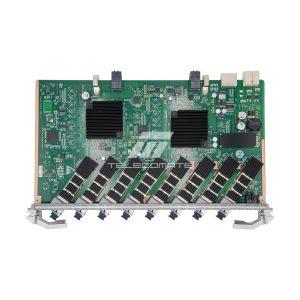
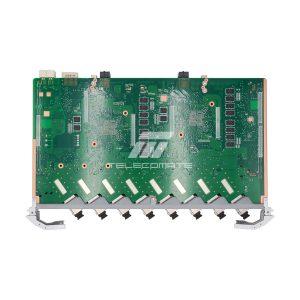
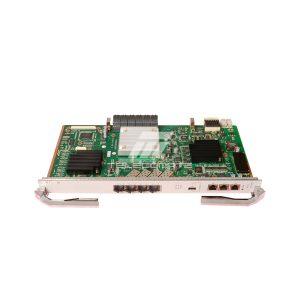
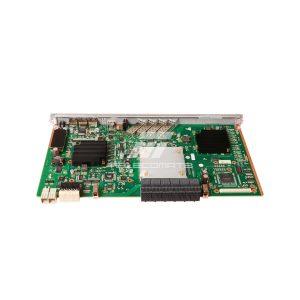
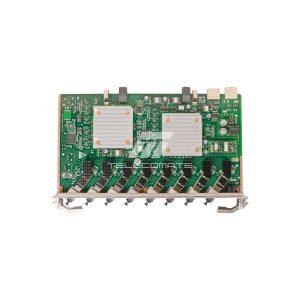
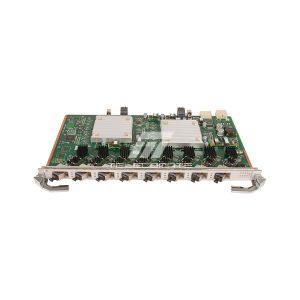
Huawei H901XGSF MA5800 series 16-port XG-GPON interface board with XG-PON N1/N2a optical module
![]()
| Item | H901XGSF |
| Service ports | |
| Port | 16 |
| Forwarding capability | 80 Gbit/s |
| Rate mode | Asymmetric rate |
| T-CONTs per PON port | 2048 |
| Service flows per PON board | 16368 |
| Maximum frame size | 2052 bytes |
| Maximum number of MAC addresses | 16384 |
| Maximum distance difference between two ONUS under the same pon port | 40km |
| FEC | Bidirection |
| CAR group | Supported |
| HQoS | Not supported |
| Variable-length OMCI | Supported |
| ONU-based shaping or queue-based shaping | Supported |
| Type B protection(dual-homing) | Supported |
| Type B protection(single-homing) | Not supported |
| 1588v2 | Not supported |
| Rogue ONT detection and isolation | Supported |
| Automatic shutdown at high temperature | Supported |
| Energy saving for service boards | Supported |
| D-CCAP | Not supported |
| GPON SFP Module Specification | |
| Type | N1 Module: One-fiber bi-directional optical module, N1 N2a Module:One-fiber bidirectional optical module, N2a |
| Operating Wavelength | N1/N2a Module: Tx: 1577nm Rx: 1270nm |
| Encapsulation Type | SFP+ |
| Port Rate | N1/N2a Module: Tx: 9.953 Gbit/s Rx: 2.488 Gbit/s |
| Minimun Output Optical Power | N1 Module: 2 dBm N2a Module: 4 dBm |
| Maximum Output Optical Power | N1 Module: 6 dBm N2a Module: 8 dBm |
| Maximum Receiver Sensitivity | N1 Module: -27.5 dBm N2a Module: -29.5 dBm |
| Optical Connector Type | SC |
| Optical Fiber Type | Single-mode |
| Overload Optical Power | N1 Module: -7 dBm N2a Module: -9 dBm |
| Extinction Ratio | N1/N2a Module: 8.2 dB |
| Dimensions (W x D x H) | 23.30 mm * 257.90 mm * 399.20 mm |
| Power Consumption | Static: 42 W; Maximum: 83 W |
| Operating temperature | -40°C to +65°C |
I have MA5800 with CSHF card. If I use XG-PON and XGS-PON ONTs mixed on a port. How can they share the download/upload bandwith?
When XG-PON and XGS-PON ONTs are mixed on the same PON port of an MA5800 with a CSHF card, they share the same optical wavelength for downstream but use different upstream channels.
In the downstream direction, both XG-PON and XGS-PON ONTs receive data from the same 10 Gbps wavelength. So if the XG-PON ONTs are using 5 Gbps, the remaining 5 Gbps can still be used by the XGS-PON ONTs. The total downstream capacity is shared dynamically among all ONTs connected to that port, depending on traffic demand and DBA (Dynamic Bandwidth Allocation) scheduling.
In the upstream direction, it’s different:
XG-PON uses a 2.5 Gbps upstream channel.
XGS-PON uses a 10 Gbps upstream channel.
Which control boards does MA5800 use?
MPLA / MPLB
Provides system control, switching, clock processing, security, and uplink interfaces (GE/10GE).
What is the main architectural advantage of the MA5800?
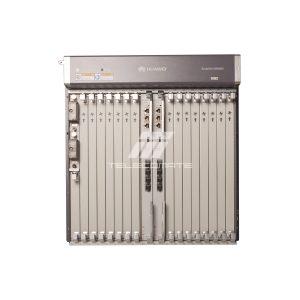
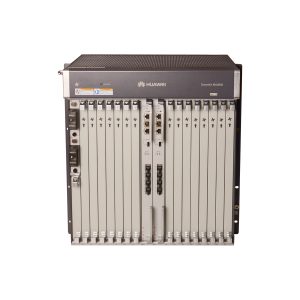
MA5800 adopts a distributed architecture, meaning each service board has independent forwarding capability. This ensures higher performance, enhances reliability, and supports large-scale 10G PON deployments compared with MA5600T’s centralized architecture.
What sub-rack models are available in the MA5800 series?
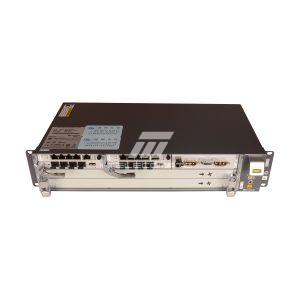
*MA5800-X2: 2 service slots
*MA5800-X7: 7 service slots
*MA5800-X15: 15 service slots
All models share the same software system and service boards.
What are the differences between MPLA and MPLB? What versions are available?
MPLA and MPLB both integrated with4*GE/10GE uplink port, the difference is that MPLA supports 100G slot bandwidth, while MPLB supports 200G.
Currently available version are H901/H902/H903/H907MPLB and H901/H902/H903/H905MPLA.
| Weight | 3.0000 kg |
|---|---|
| Dimensions | 49.0000 × 33.0000 × 8.0000 cm |
| MA5800 |
Robert –
The price is lower than other suppliers and the logistics speed is not bad and the test report is also very detailed.
Herman –
Compared with my former partner, Telecom is really trustworthy. In all aspects, it provides customers with the best choice, and this board also makes me feel comfortable with it.
Darian –
The maximum distance between the two ONUs under the same PON port is 40km, enough to meet my needs.