
Introduction
In Huawei OptiX OSN 1800 series, the Master and Slave Subrack configuration is a common expansion solution used to increase service capacity and support more optical boards. By connecting multiple subracks together, network operators can expand the number of available slots and improve the flexibility of transmission network deployment.
However, not all OSN 1800 models support Master/Slave subrack configurations. When purchasing or deploying OSN 1800 equipment, it is important to confirm the model compatibility, hardware version, and software requirements.
Which Huawei OSN 1800 Models Support Master and Slave Subrack?
1. Huawei OptiX OSN 1800 II Enhanced — The Most Common Master/Slave Subrack Solution
Huawei OptiX OSN 1800 II Enhanced is one of the most widely used models in the OSN 1800 family and is commonly deployed with Master and Slave subrack expansion.
In this configuration:
- The Master subrack provides core control functions, including system management, clock synchronization, and cross-connect functions.
- The Slave subrack is used to expand service slots and increase board installation capacity.
- Multiple subracks can be managed as one system through Huawei network management systems.
Typical applications include:
- Metro optical transmission networks
- Enterprise private networks
- Data center interconnection
- Multi-service access networks
For customers who need additional service capacity, OSN 1800 II Enhanced Master/Slave configuration is usually the preferred solution.
2. Huawei OptiX OSN 1800 II TP — Compatibility Needs Confirmation
Huawei OptiX OSN 1800 II TP is also part of the OSN 1800 II platform. Some versions may support subrack expansion, but compatibility depends on the specific hardware version and software release.
Before deployment, customers should confirm:
- Master and Slave subrack model compatibility
- Software version consistency
- Controller board support
- Backplane connection requirements
A proper configuration check is recommended before purchasing used or refurbished equipment.
3. Huawei OptiX OSN 1800 V / V Pro — Usually Deployed as a Single High-Capacity Subrack
Huawei OptiX OSN 1800 V Pro is designed for higher-capacity transmission scenarios.
Compared with OSN 1800 II series, it provides:
- Higher service capacity
- More available slots
- Larger switching capability
- Better support for high-density network nodes
Because of its integrated high-capacity design, OSN 1800 V/V Pro is usually deployed as a standalone subrack instead of using traditional Master/Slave expansion.
4. Huawei OptiX OSN 1800 I Enhanced — Not Recommended for Master/Slave Expansion
OSN 1800 I Enhanced is a compact transmission platform mainly designed for edge access applications.
Its characteristics include:
- Smaller physical size
- Limited service slots
- Lower expansion capability
Due to hardware resource limitations, it is generally not selected for Master/Slave subrack deployment.
OSN 1800 Master and Slave Subrack Compatibility Summary
| Model | Master/Slave Subrack Support | Recommended Application |
|---|---|---|
| OSN 1800 II Enhanced | ✅ Supported | Most common expansion solution |
| OSN 1800 II TP | ⚠️ Depends on version | Specific deployment scenarios |
| OSN 1800 V / V Pro | Usually not required | High-capacity transmission nodes |
| OSN 1800 I Enhanced | ❌ Not recommended | Small access networks |
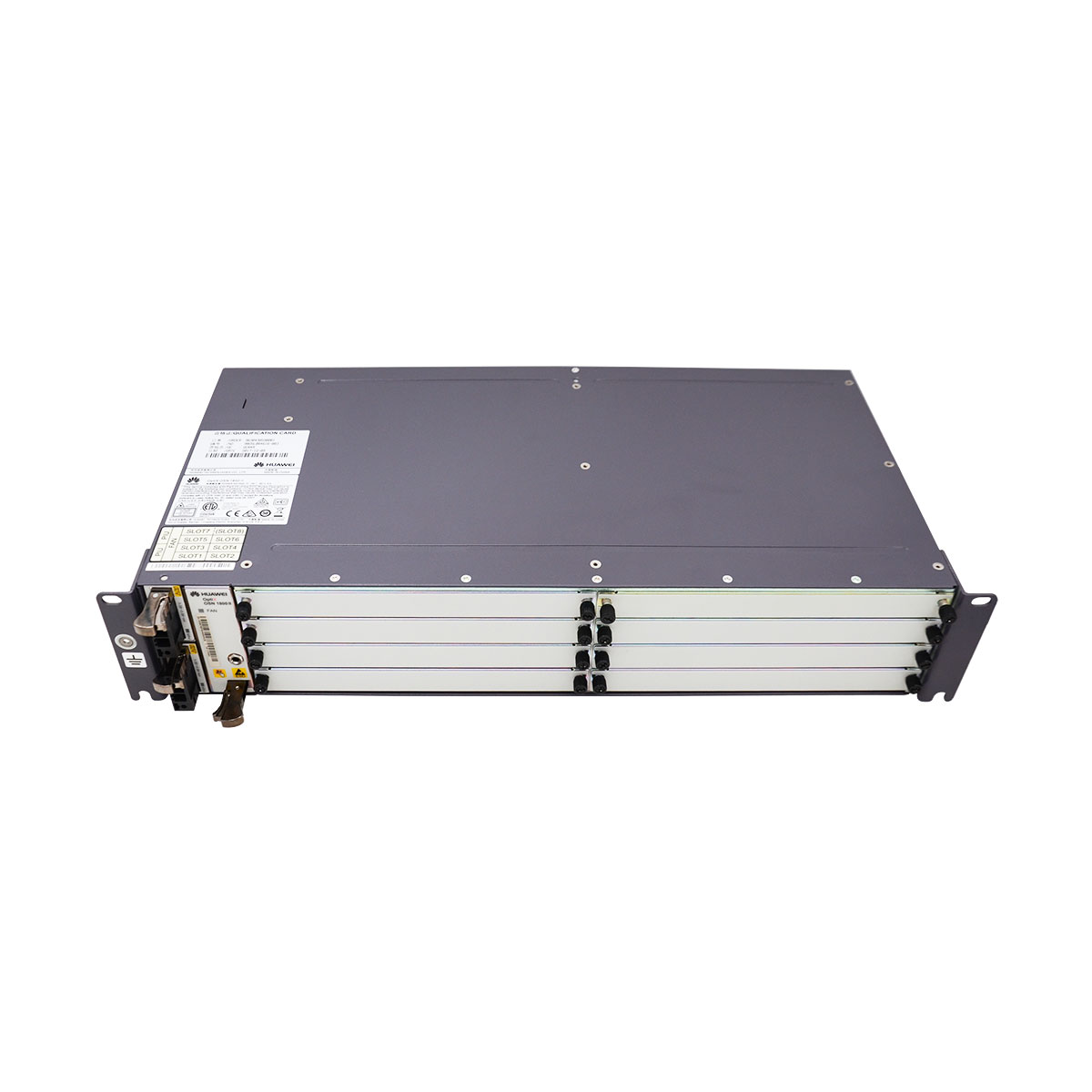
Huawei OptiX OSN 1800 II
Huawei OptiX OSN 1800 II supports 8 board slots, with 2xANK1PIU DC power module, without service board
#HuaweiOSN1800 #OptiXOSN1800 #HuaweiTransmission #OTNNetwork #WDMTechnology #OpticalTransportNetwork #TelecomEquipment #FiberOpticNetwork #MetroNetwork #NetworkInfrastructure

Leave a comment