
INDUSTRIAL ETHERNET VS COMMERCIAL ETHERNET DIFFERENCES
OFFICIAL TECHNICAL OVERVIEW & HARDWARE DATASHEET
DOCUMENT ID: IE-CE-COMP-2026-06
REVISION: 1.0
EXECUTIVE SUMMARY
The fundamental divergence between Industrial Ethernet and Commercial Ethernet lies not in the protocol stack, but in the physical, environmental, and operational philosophies governing their hardware design. While both are rooted in the IEEE 802.3 standard, Industrial Ethernet switches are engineered for deterministic performance, extreme environmental resilience, and long-term reliability in machine-to-machine (M2M) and supervisory control and data acquisition (SCADA) environments. Conversely, Commercial Ethernet is optimized for high-density data throughput, user connectivity, and cost-efficiency in climate-controlled enterprise settings. This datasheet provides a comprehensive technical breakdown of the hardware differentiators, highlighting ruggedized construction, enhanced electromagnetic compatibility (EMC), extended temperature ranges, and redundant power architectures that define carrier-grade industrial infrastructure.
ARCHITECTURE & CHASSIS DESIGN
MECHANICAL ENVELOPE AND ENVIRONMENTAL SEALING
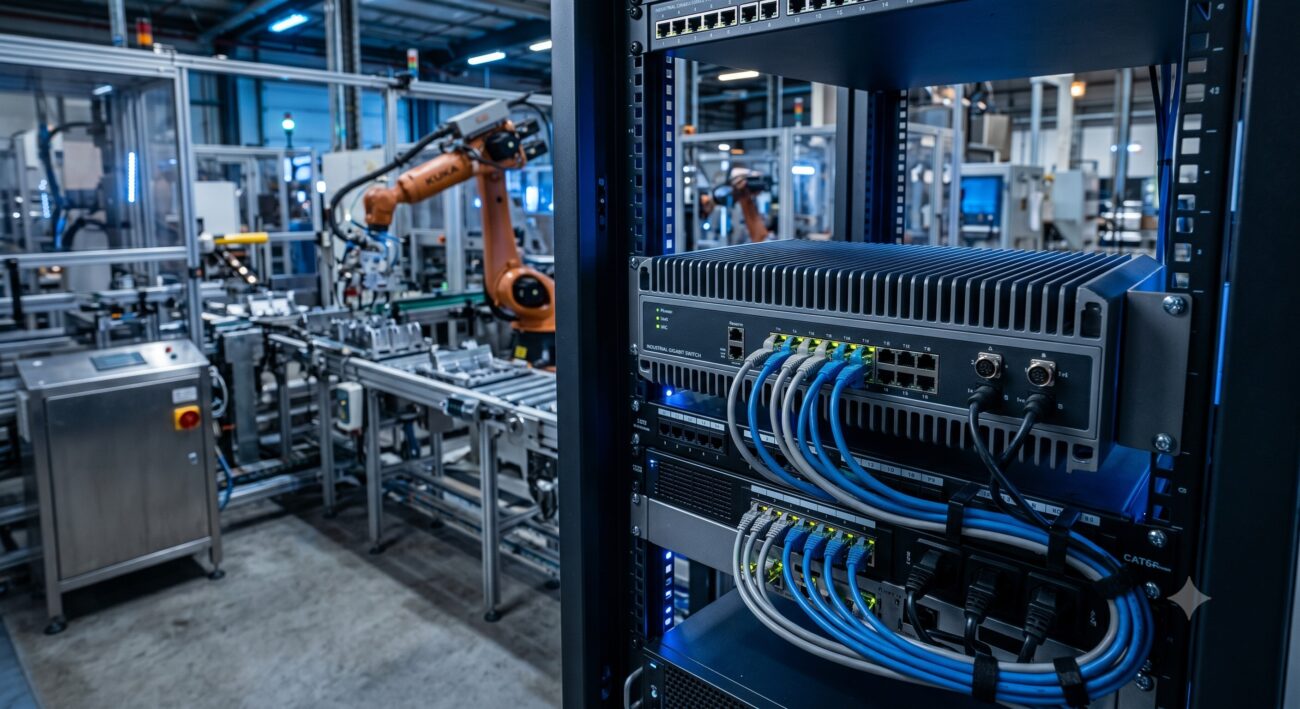
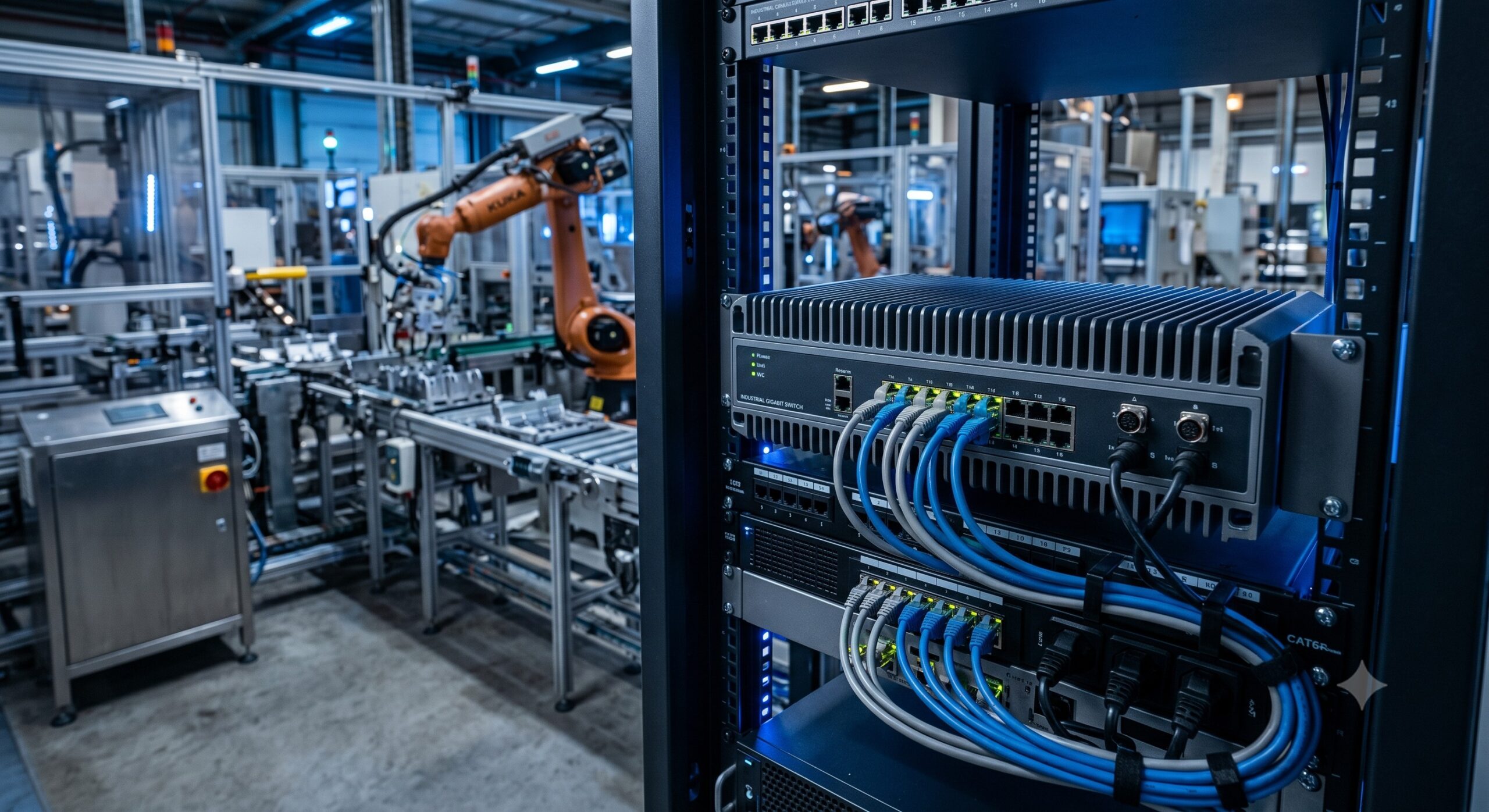
The hardware platform for Industrial Ethernet applications is characterized by a fanless, conduction-cooled chassis, typically constructed from heavy-gauge, corrosion-resistant aluminum or galvanized steel. This design philosophy ensures protection against particulate ingress (IP40 or higher ratings) and resistance to mechanical shock and vibration, compliant with IEC 60068-2-6. The form factor is often compact, such as a 1RU or 2RU chassis with depth constraints suited for shallow cabinet installations, contrasting sharply with the deep, high-volume server racks typical of Commercial Ethernet deployments which rely on active forced-air convection cooling and are sensitive to dust accumulation.
CONNECTORIZATION AND INTERFACE RUGGEDIZATION
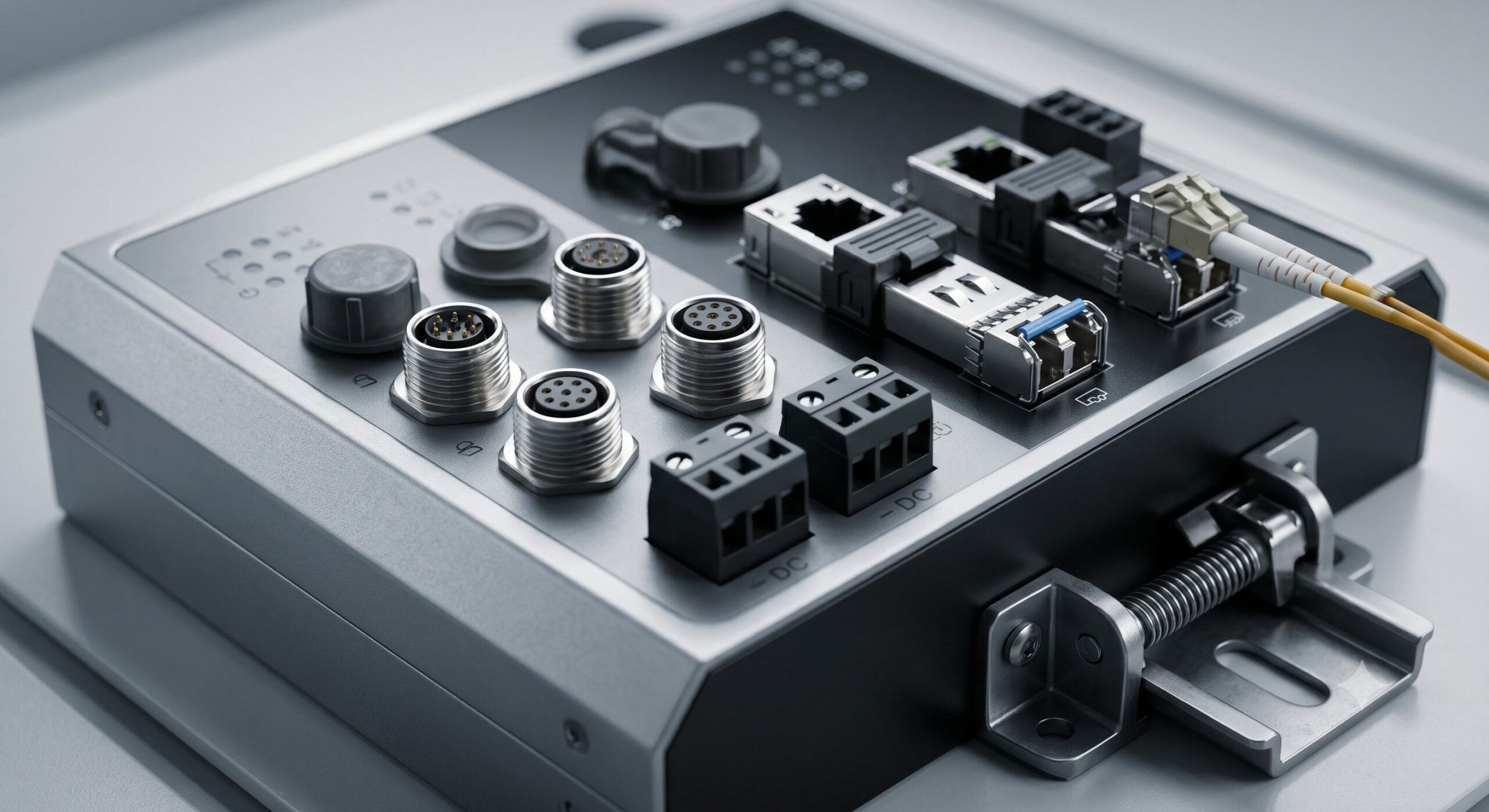
Critical to the operational integrity in industrial settings is the use of heavy-duty, locking connectors such as M12 or RJ45 with robust latching mechanisms, replacing the standard, unsecured RJ45 connectors found in commercial switches. Furthermore, industrial platforms incorporate pluggable terminal blocks for DC power inputs and alarm relays, facilitating direct integration with field control systems. The chassis is designed to support DIN-rail or panel mounting, providing mechanical stability in environments subject to constant motion and vibration.
HARDWARE FEATURES
REAL-TIME DETERMINISTIC PROTOCOL SUPPORT
While Commercial Ethernet manages best-effort traffic with protocols like TCP/IP and UDP, Industrial Ethernet hardware integrates dedicated ASIC-level processing to support real-time communication protocols including PROFINET, EtherNet/IP, EtherCAT, and SERCOS III. This includes hardware timestamping (IEEE 1588v2) and cut-through switching capabilities that guarantee microsecond-level latency, ensuring synchronization accuracy for coordinated motion control and process automation.
ENHANCED ELECTROMAGNETIC COMPATIBILITY (EMC) AND IMMUNITY
Industrial Ethernet hardware is rigorously tested for high immunity to electromagnetic interference (EMI) and electrostatic discharge (ESD), complying with standards such as IEC 61000-4-2, -3, -4, -5, and -6. The hardware design integrates ferrite beads, common-mode chokes, and shielding at the port level to suppress transients from high-power machinery, welding equipment, and variable frequency drives—a capability absent in commercial equipment which lacks the necessary shielding to survive such harsh electrical environments.
DUAL REDUNDANT POWER SUPPLIES AND ALARM CONTACTS
Unlike Commercial Ethernet switches that typically operate with a single AC power supply, Industrial Ethernet hardware features dual redundant, hot-swappable power input modules supporting a wide range of DC voltages (e.g., 12V to 48VDC or 110/220VDC) to align with plant battery backup systems. The inclusion of a Form-C relay alarm contact provides real-time notification of power or link failures, enabling proactive maintenance and failover orchestration without requiring a dedicated management IP address.
COMPLIANCE & STANDARDS
ENVIRONMENTAL AND INDUSTRIAL CERTIFICATIONS
The hardware is certified for operation across a wide ambient temperature range from -40°C to +75°C, ensuring functionality in unheated environments, cold storage, or solar-exposed outdoor cabinets. It meets the hazardous location requirements for Class 1 Division 2 (C1D2) areas, ATEX Zone 2, and IECEx standards, allowing deployment in oil refineries, chemical plants, and grain processing facilities. Commercial Ethernet equipment is generally restricted to 0°C to 40°C and lacks any hazardous location approvals.
TELECOM AND CARRIER-GRADE COMPLIANCE
Industrial Ethernet platforms adhere to Telcordia GR-1089-CORE and GR-63-CORE for NEBS Level 3 certification, ensuring resilience against fire, earthquake, and extreme temperature variations. The hardware meets the ETSI 300 019 series for environmental conditions and EN 50155 for railway applications, which mandates stringent shock and vibration tolerance. Commercial Ethernet hardware does not undergo these exhaustive qualification processes, making it unsuitable for critical infrastructure.
TECHNICAL SPECIFICATIONS
| Parameter | Industrial Ethernet | Commercial Ethernet |
|---|---|---|
| Form Factor | 1RU / 2RU Fanless, DIN-rail / Panel Mount | 1RU / 2RU Deep chassis with active fans |
| Operating Temperature | -40°C to +75°C | 0°C to 40°C (5°C to 35°C typical) |
| Ingress Protection (IP) | IP40 (Sealed enclosure) | IP20 (Open vents) |
| Power Supply | 12-48V DC, Redundant, Alarm Contact | 110-240V AC, Non-redundant |
| Switching Capacity | Up to 128 Gbps (Non-blocking) | Up to 1 Tbps (Oversubscribed) |
| Deterministic Protocols | PROFINET, EtherNet/IP, EtherCAT (ASIC) | TCP/IP, UDP (Software-based) |
| Mean Time Between Failures (MTBF) | 1,000,000+ Hours | 50,000 – 200,000 Hours |
| Environmental Certifications | NEBS L3, IEC 61850, EN 50155, ATEX | UL, FCC, CE (Commercial only) |
ORDERING OPTIONS
The hardware platform is available in a variety of factory-configured options to suit diverse application needs, including base units with 8, 16, or 24 ports, optional Gigabit SFP uplink modules, and a range of software feature licenses for Layer 3 routing, network redundancy (MRP, RSTP), and security (802.1X, ACL). All units ship with a comprehensive accessory kit including DIN-rail clips, terminal block connectors, and a serial console cable. The platform supports a 5-year hardware warranty and has a proven Mean Time Between Failures (MTBF) in excess of 1,000,000 hours, underscoring its role as a permanent asset in the operational technology (OT) landscape.
DEPLOYMENT RECOMMENDATION SUMMARY
The selection between Industrial and Commercial Ethernet hardware is a strategic decision predicated on the environmental context and application requirements. For mission-critical operations requiring deterministic data delivery, extreme temperature resilience, and long life-cycle support in non-climate-controlled environments, the ruggedized Industrial Ethernet platform provides an unmatched total cost of ownership (TCO) through reduced downtime and extended service intervals. Commercial Ethernet remains the optimal choice for high-bandwidth, short-life-cycle enterprise networking. This hardware platform represents the culmination of our engineering expertise, delivering carrier-grade reliability for the industrial digital transformation.
📥 Download Technical Specification
Click the button below to view or download the full official PDF datasheet.

Leave a comment