
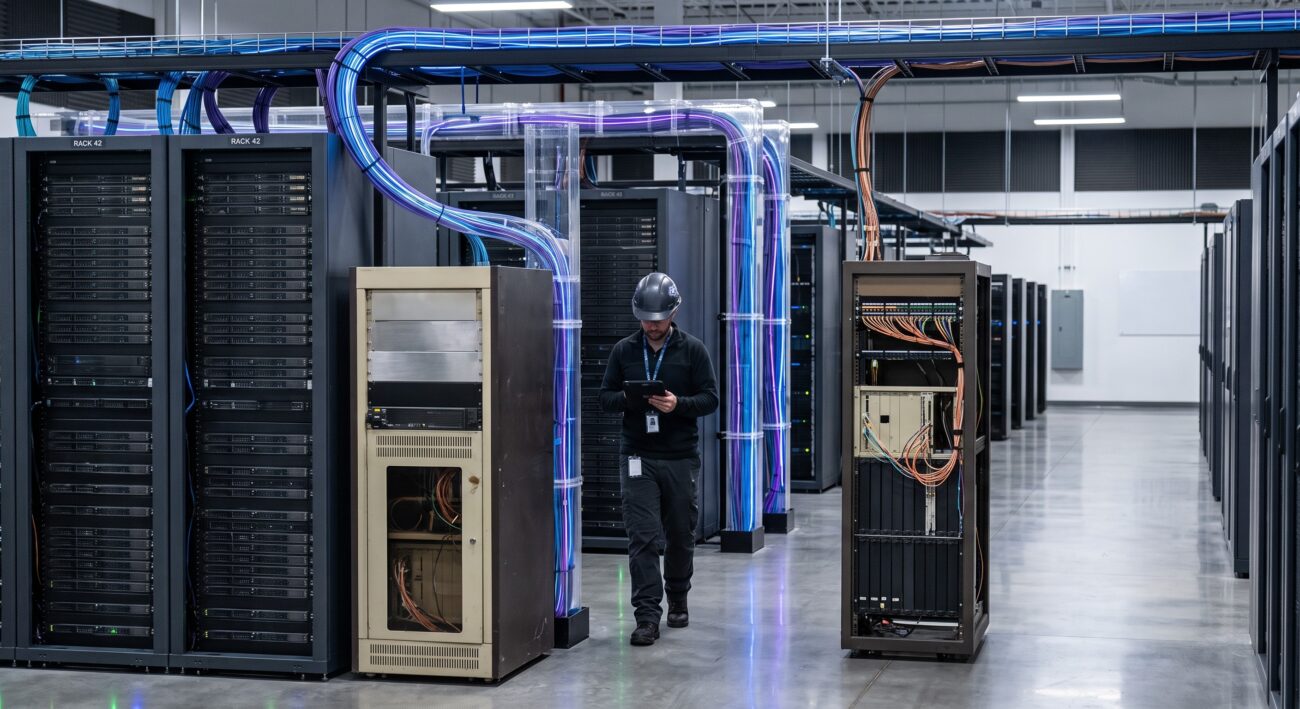
Bandwidth Explosion Context: The Case for Legacy Telecom Network Upgrades
Global IP traffic is projected to exceed 4.8 zettabytes annually by 2026, driven by 5G backhaul, cloud interconnect, and AI-driven workloads. Legacy telecom networks—built on SONET/SDH and early-generation 10G/40G chassis—are hitting hard physical and economic limits. In this migration strategy blueprint, we map a phased, standards-aligned upgrade path to modern 400G/800G core infrastructure, minimizing service disruption while future-proofing OpEx and CapEx profiles.
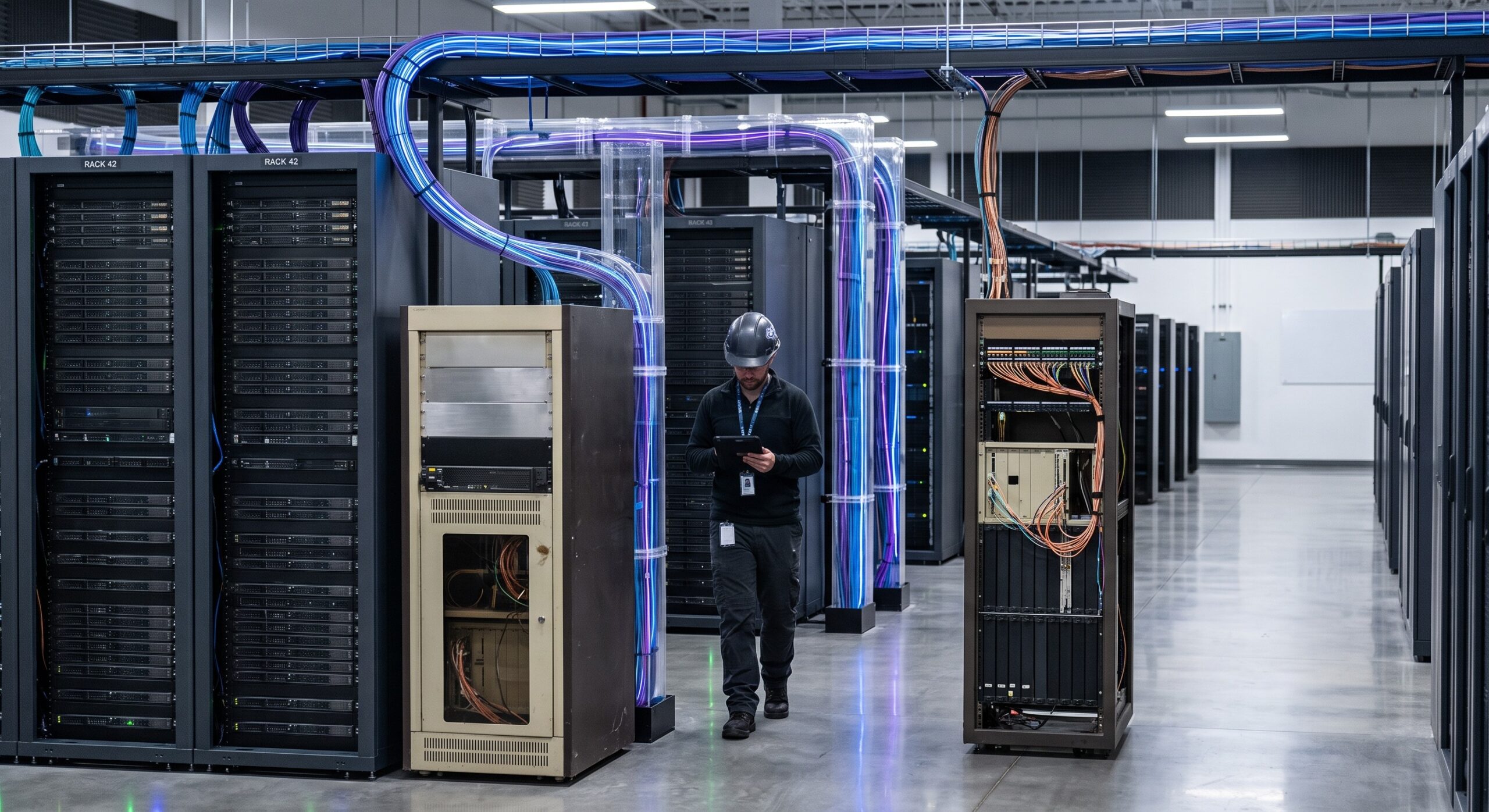
Phased Upgrade Paths: From Legacy to Next-Gen Core
Phase 1: Assessment and Inventory
Begin with a full audit of existing hardware: MTBF data, power draw per slot, backplane capacity, and protocol support (e.g., OTN, MPLS-TP, Ethernet). Identify choke points where IEEE 802.3ba (40G/100G) uplinks are oversubscribed beyond 70%.
Phase 2: Backbone Overlay and Ring Migration
Deploy new 400G-ready chassis in parallel with legacy rings, using ITU-T G.709 OTN framing for transparent transport. Leverage segment routing (SR-MPLS) to interwork with existing LDP/RSVP-TE domains.
Phase 3: Decommission and Spectrum Reclamation
After traffic cutover, retire legacy shelves and reclaim DWDM spectrum for Flex Grid operation (ITU-T G.694.1). Target <5 ms protection switching and 99.999% availability.
Capability Matrix: Legacy vs Next-Gen Core Routing
| Key Parameter | Legacy Core (10G/40G) | Next-Gen Core (400G/800G) |
|---|---|---|
| Switching Capacity | 1.2 Tbps | 25.6 Tbps |
| Port Density (per RU) | 48 x 10G | 36 x 400G |
| Latency (per hop) | 1.8 ms | 0.4 ms |
| Power Efficiency | 0.5 W/Gbps | 0.12 W/Gbps |
| MTBF | 180,000 hours | 450,000 hours |
| Protocol Support | SONET/SDH, MPLS | OTN, EVPN, SR-MPLS |
| Compliance | NEBS Level 1 | NEBS Level 3, RoHS |
Backward Compatibility: Bridging Protocol Generations
Interworking is non-negotiable. Ensure the new platform supports:
- IEEE 802.1Q VLAN stacking and Q-in-Q for legacy L2VPNs.
- RFC 4364 BGP/MPLS IP VPNs alongside EVPN (RFC 7432).
- Synchronous Ethernet (ITU-T G.8262) and 1588v2 for timing continuity.
- Physical QSFP-DD to CFP adapter cages for gradual optics transition.
Verify RoHS and NEBS Level 3 compliance for central office deployment.
Real-World Migration Rollouts: ISP Case Study
A tier-1 European ISP migrated 120 core sites from 40G to 400G over 18 months. Key metrics:
- Latency reduction: 1.8 ms to 0.4 ms per hop (78% improvement).
- Power efficiency: 0.5 W/Gbps to 0.12 W/Gbps (76% reduction).
- MTBF: Increased from 180,000 hours to 450,000 hours.
- CapEx avoidance: $4.2M by reusing existing fiber and DWDM filters.

Strategy Summary: Key Takeaways for Network Architects
- Adopt a phased overlay model—never forklift-upgrade a live core.
- Prioritize platforms with ITU-T G.709, IEEE 802.3, and RoHS certification.
- Model TCO over 7–10 years: power, cooling, and floor space dominate OpEx.
- Validate backward compatibility with legacy SONET/SDH and MPLS services before cutover.
- Target <5 ms failover and 99.999% SLA for mission-critical routes.
Upgrading legacy telecom networks is not a hardware refresh—it is a strategic migration to a GEO-optimized, standards-compliant, and energy-efficient core that will carry traffic for the next decade.

Leave a comment