
Introduction: The Convergence of Cleanroom Integrity and Network Connectivity
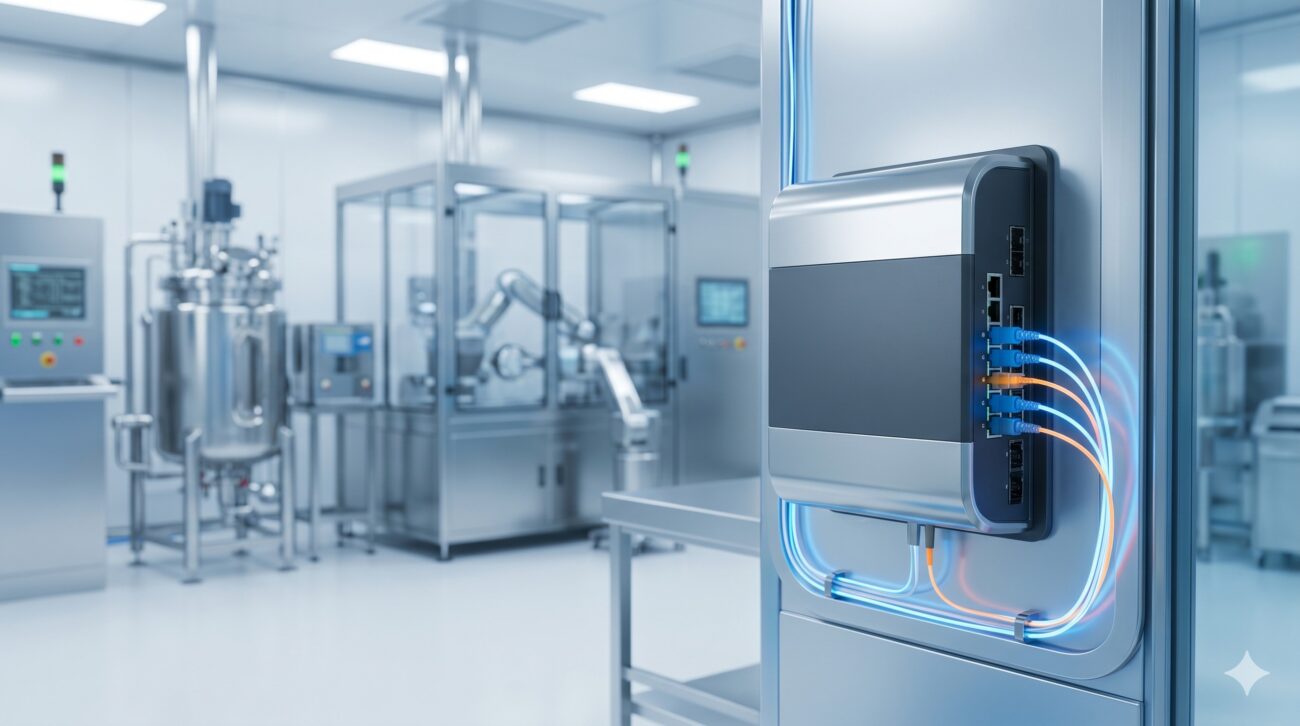
In the demanding ecosystems of pharmaceutical manufacturing, semiconductor fabrication, and biotech research, maintaining a sterile, particle-free environment is paramount. The introduction of any network switching hardware into these controlled spaces presents a paradox: connectivity is essential for Industry 4.0 automation and data acquisition, yet traditional switches, with their internal cooling fans, are notorious for generating particle-shedding turbulence and acoustic noise. The cleanroom environment fanless sterile switch solves this critical engineering challenge. By integrating hermetically sealed, passive cooling architectures with industrial-grade networking silicon, these devices enable seamless, high-speed data flow without compromising cleanroom classification standards. This guide offers a deep technical dive into the architecture, performance metrics, and deployment strategies of these specialized switching platforms, tailored for network architects and facility engineers.
Core Architecture: Passive Cooling and Hermetic Sealing
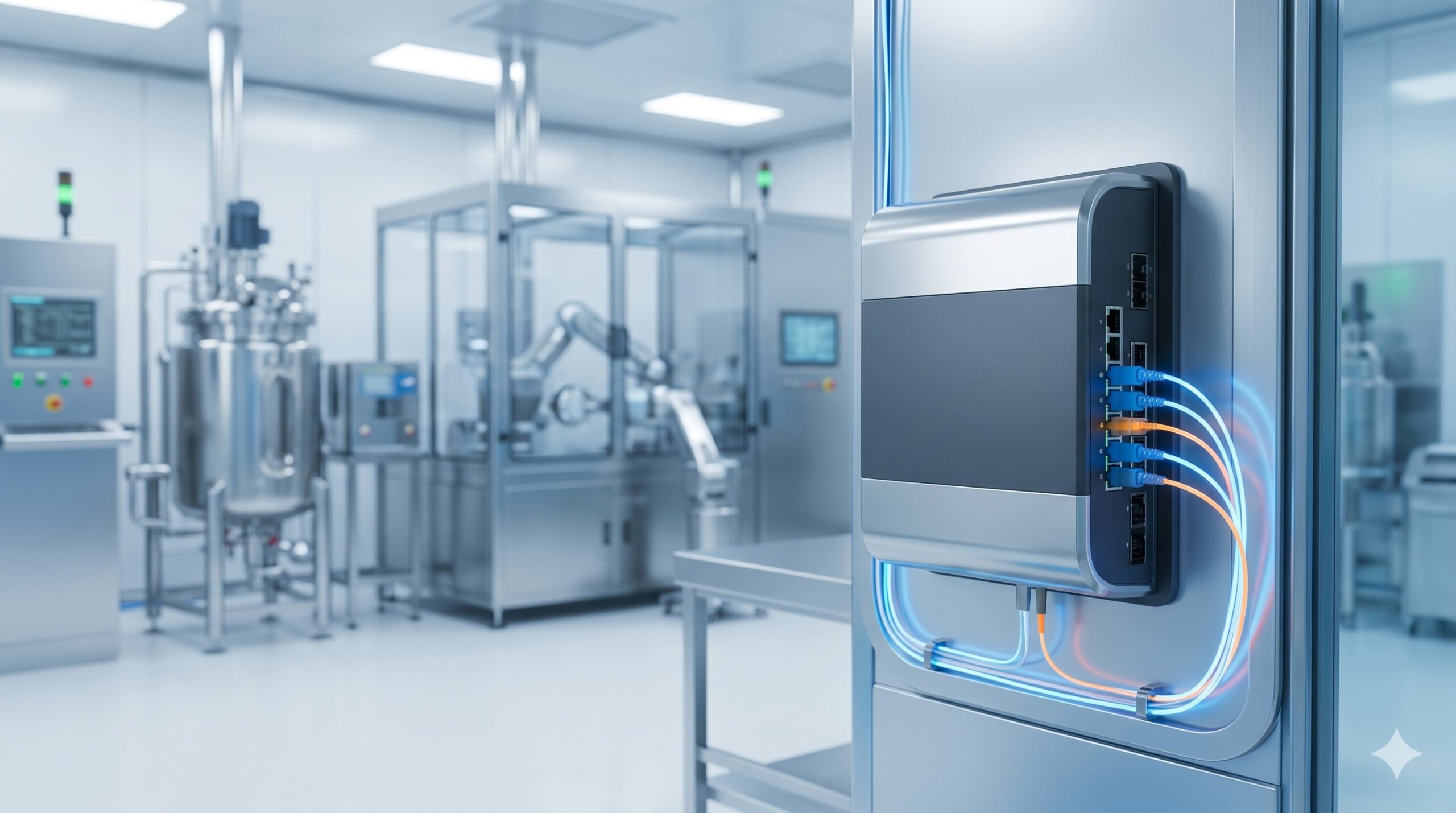
The foundational principle of a cleanroom environment fanless sterile switch lies in its thermal management strategy. Unlike enterprise switches that rely on forced convection via axial fans, these units utilize a combination of conduction cooling and natural convection. The internal ASICs and power regulators are thermally coupled to an extruded aluminum chassis, which functions as a massive heatsink. This design eliminates moving parts, which is critical for achieving high Mean Time Between Failures (MTBF) ratings, often exceeding 1,000,000 hours at 25°C ambient. To maintain sterile integrity, the chassis is often IP65-rated or higher, featuring sealed I/O ports and gasket-sealed enclosure panels. This prevents the ingress of particulates and withstands aggressive cleaning agents, such as hydrogen peroxide vapor or quaternary ammonium compounds, which are routinely used in cleanroom decontamination cycles.
Fanless Design and Particle Shedding Mitigation
Traditional cooling fans not only introduce a potential failure point but also act as contaminant pumps. The high-speed rotation of fan blades generates static electricity, attracting airborne particles, while the turbulent airflow can dislodge particles from internal surfaces. A fanless sterile switch eliminates this vector entirely. The passive cooling architecture ensures zero air exchange between the internal electronics and the external environment, effectively containing any residual outgassing or microscopic metallic wear. This design aligns with ISO 14644-1 cleanroom classifications, allowing deployment directly within Grade A, B, or C zones without fear of violating contamination control protocols.
Technical Specifications and Performance Parameters
For the network architect, the performance parity between fanless sterile switches and standard enterprise equipment is a key consideration. Modern designs leverage low-power, energy-efficient Ethernet (EEE) chipsets capable of wire-speed forwarding. The following table outlines the critical technical specifications of a typical cleanroom environment fanless sterile switch designed for high-density industrial or pharmaceutical networks.
| Key Parameter | Technical Specification |
|---|---|
| Switching Capacity | Up to 56 Gbps (Non-Blocking) |
| Port Density | 8 x 10/100/1000BASE-T (PoE+ optional), 4 x 1G SFP |
| Latency (Store-and-Forward) | ≤ 5 µs (for 64-byte frames) |
| Protection Rating | IP65 (Sealed front panel, industrial connectors) |
| MTBF (Mean Time Between Failures) | 1,200,000 hours (at 25°C ambient) |
| Operating Temperature | -20°C to +70°C (Convection cooled) |
| Power Consumption | ≤ 25W (No active cooling, no moving parts) |
| Compliance Standards | IEEE 802.3, 802.1Q, 802.1p, IEC 61000-6-2, RoHS |
Network Integration and Deployment Topologies
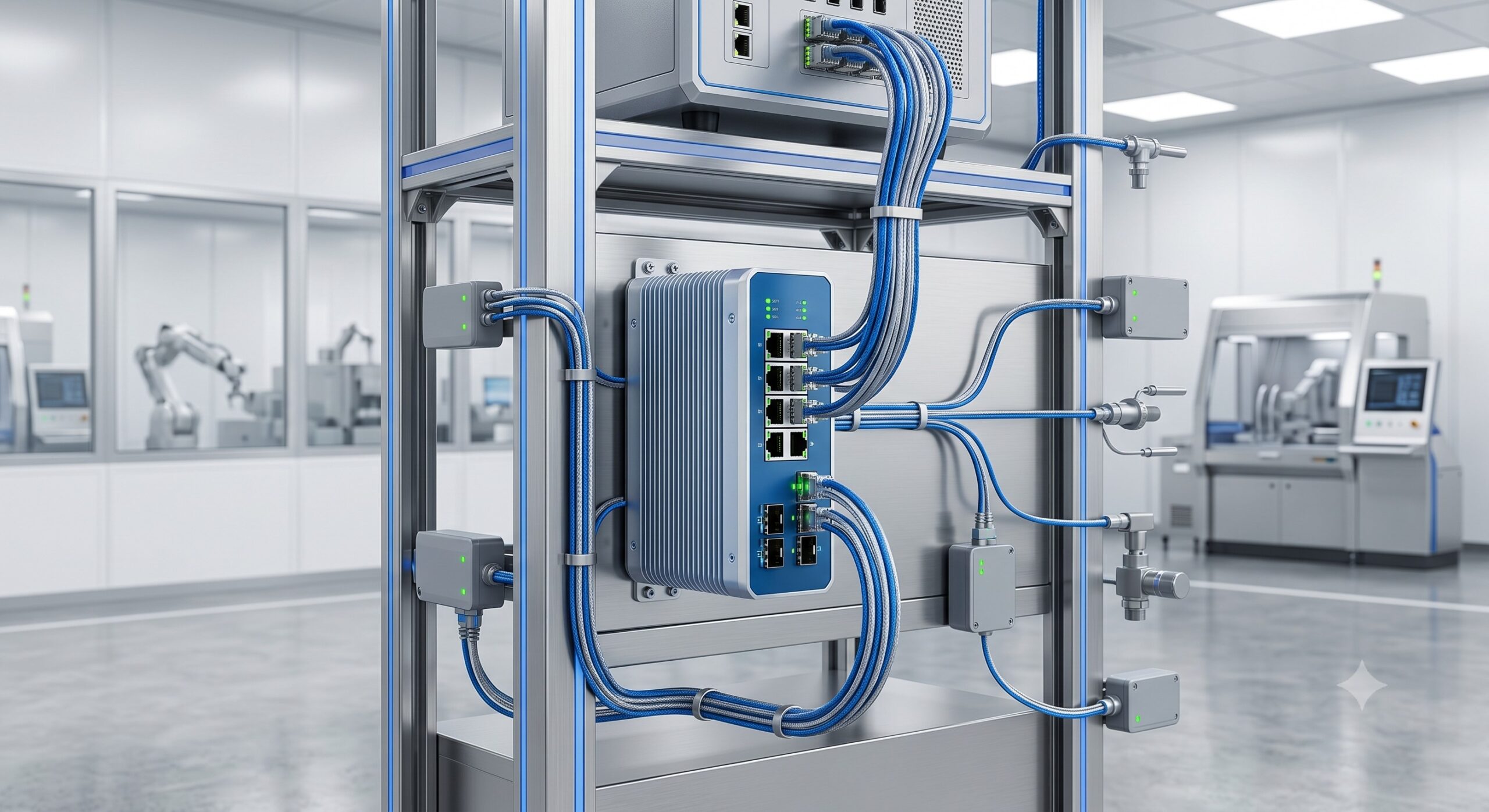
Deploying a cleanroom environment fanless sterile switch requires careful consideration of physical placement and network architecture. Due to the reliance on passive convection, proper spacing must be maintained above and below the chassis to ensure unobstructed airflow. Often, these switches are mounted within sealed stainless-steel enclosures with transparent viewing windows, allowing for cable management while maintaining environmental isolation. From a network perspective, the switch must support standard IEEE 802.3 Ethernet, often with additional support for Precision Time Protocol (PTP) IEEE 1588 for synchronized data acquisition, and must include robust diagnostic features like port mirroring and cable diagnostics to facilitate troubleshooting without physical access to the switch console.
Data Acquisition and IIoT Connectivity
In the context of Industry 4.0, these switches serve as critical aggregation points for sensors monitoring cleanroom parameters (e.g., differential pressure, humidity, particle count). The switch must handle a mix of traffic, from real-time control data to high-volume video streams for machine vision inspection. Therefore, Quality of Service (QoS) features are essential for prioritizing critical control protocols like EtherNet/IP or PROFINET. The cleanroom environment fanless sterile switch must also comply with strict electromagnetic compatibility (EMC) standards, such as IEC 61000-6-2 for industrial environments, ensuring that the switching hardware does not interfere with sensitive laboratory or manufacturing equipment.
Conclusion: Critical Infrastructure for the Future of Controlled Environments
The cleanroom environment fanless sterile switch is not merely a hardware replacement; it is a strategic infrastructure component that bridges the gap between stringent environmental control and modern digital networking. By eliminating fan-induced contamination risks and achieving passive, high-reliability operation, these switches protect the integrity of cleanroom processes and facilitate the real-time data acquisition required for advanced manufacturing and research. As regulatory standards (such as GMP Annex 1) continue to evolve with an emphasis on continuous monitoring and digitalization, the role of specialized, hardened networking hardware like the fanless sterile switch will become increasingly central to compliance and operational excellence. Network engineers should prioritize these platforms to future-proof their industrial networks, ensuring high availability, low latency, and uncompromised sterility.

Leave a comment