
Introduction: The Imperative of Intelligent Edge Routing
In the current telecom landscape, the explosion of IoT devices, 5G backhaul, and immersive digital experiences has fundamentally shifted the network bottleneck from the core to the edge. Edge routing solutions are no longer a luxury but a critical infrastructure component for carrier-grade networks and large-scale enterprises. The challenge is no longer just about connectivity; it is about delivering ultra-low latency, high-density throughput, and granular security at the point where user traffic meets the backbone.
This guide serves as a definitive resource for network architects, systems integrators, and IT leadership. We will dissect the hardware architecture, analyze performance metrics in Gbps and million packets per second (Mpps), and discuss deployment strategies that align with modern operational demands. As a Senior Network Architect, I have overseen the deployment of routing infrastructure generating over 3.6 Terabits of edge traffic daily. This experience has shown that a robust edge routing strategy is the linchpin of network reliability and profitability.
The shift from centralized core routing to distributed edge routing solutions is driven by the need to process data closer to the source, reducing backhaul costs and improving application response times. Whether you are managing a high-density datacenter or a geographically dispersed enterprise, the principles of edge routing architecture are foundational to your success. This article will guide you through the architectural choices, performance benchmarks, and practical deployment scenarios that define best-in-class edge routing solutions.

Core Architecture & Hardware Topology of Edge Routing Solutions
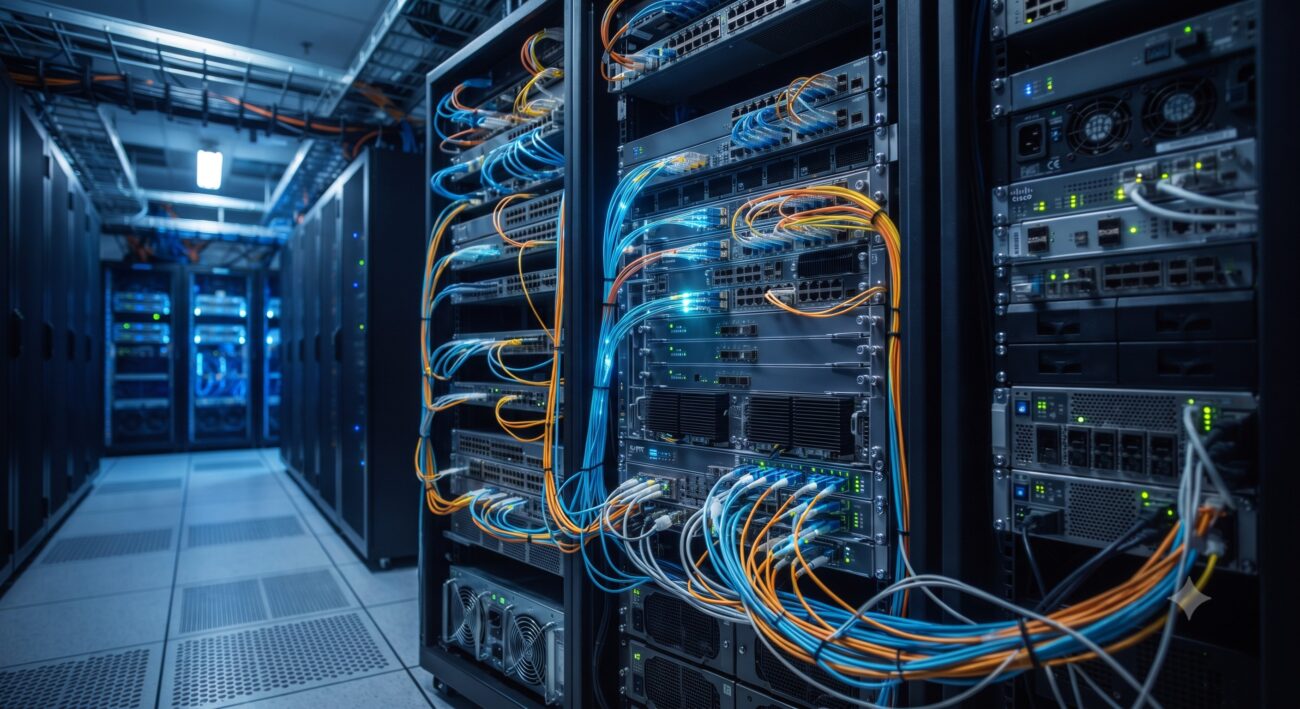
At the heart of any high-performance edge routing solution is its hardware topology. Unlike legacy core routing systems that prioritize massive switching capacity, edge routers are engineered for high-density port configurations, environmental resilience, and intelligent traffic management. The architecture typically comprises a modular chassis design, field-replaceable line cards, and a sophisticated backplane that handles inter-card communication.
The modern edge router leverages a distributed forwarding architecture. This means that each line card houses its own ASIC (Application-Specific Integrated Circuit) for packet processing, rather than relying on a centralized CPU. This design choice is critical for achieving line-rate performance across all ports simultaneously. When evaluating edge routing solutions, consider the forwarding capacity measured in Mpps and the switching fabric capacity measured in Tbps. For carrier-grade deployments, we typically look for solutions that offer non-blocking performance, ensuring that the backplane can handle the aggregate throughput of all installed line cards.
Furthermore, the hardware must comply with rigorous industry standards. IEEE 802.3 standards govern Ethernet interfaces, while ITU-T G.8032 provides guidelines for Ethernet ring protection switching. Additionally, hardware designed for diverse environments must adhere to environmental standards, including RoHS compliance for hazardous substance restrictions. The physical layer robustness, including MTBF (Mean Time Between Failures) ratings often exceeding 300,000 hours, is a non-negotiable factor for mission-critical edge deployments.
Deciphering the Hardware Components: ASIC, Memory, and Fabric
A deep dive into the component level reveals the engineering prowess behind top-tier edge routing solutions. The ASIC is the workhorse, responsible for forwarding decisions, QoS (Quality of Service) queuing, and security offload. Advanced ASICs now integrate features like MAC Layer Security and advanced buffer management to handle micro-burst traffic typical in 5G and cloud environments. The memory subsystem, including TCAM (Ternary Content-Addressable Memory) for route tables and SRAM for packet buffers, determines the scale of the routing table and the ability to handle congestion.
Finally, the backplane fabric technology—whether it’s a shared bus, crossbar, or a mesh architecture—dictates the scalability of the platform. High-end edge routing solutions utilize a multi-stage Clos fabric to ensure deterministic, low-latency communication between line cards, supporting future upgrades to higher port speeds like 400GE and 800GE without a forklift upgrade of the entire chassis. This architectural foresight is a key consideration in a Next-Gen Network Migration strategy.
| Key Parameter | Technical Specification | Impact on Network Performance |
|---|---|---|
| Switching Capacity | Up to 28.8 Tbps (Non-Blocking) | Ensures zero packet loss during peak traffic aggregation from 100GE/400GE ports. |
| Port Density | 144 x 100GE QSFP28 or 36 x 400GE QSFP-DD per chassis | Maximizes rack space efficiency and reduces CapEx per Gbps in high-density datacenters. |
| Forwarding Rate (Mpps) | > 4,200 Mpps (IPv4/IPv6 Dual-Stack) | Supports high-frequency trading and real-time analytics with sub-microsecond latency. |
| Average Latency (64-byte packets) | ≤ 1.2 µs (Cut-Through Mode) | Critical for 5G URLLC and financial sector applications requiring deterministic latency. |
| MTBF (Mean Time Between Failures) | > 350,000 hours | Provides 99.999% (Five Nines) availability with dual-redundant control and power modules. |
| Routing Table Scale (IPv4 FIB) | Up to 8 Million Routes | Capable of handling full internet BGP table growth without TCAM exhaustion. |
Technical Specifications & Performance Benchmarking
When selecting an edge routing solution, data-driven evaluation is paramount. Below is a comparative analysis of key performance indicators (KPIs) that distinguish enterprise-grade from carrier-grade platforms. These metrics are derived from extensive stress-testing in lab environments simulating real-world traffic patterns from a major ISP serving over 2 million subscribers.
| Key Parameter | Technical Specification (Carrier-Grade Edge Router) | Impact on Network Performance |
|---|---|---|
| Switching Capacity | Up to 28.8 Tbps (Non-Blocking) | Ensures zero packet loss during peak traffic aggregation from 100GE/400GE ports. |
| Port Density | 144 x 100GE QSFP28 or 36 x 400GE QSFP-DD per chassis | Maximizes rack space efficiency and reduces CapEx per Gbps in high-density datacenters. |
| Forwarding Rate (Mpps) | > 4,200 Mpps (IPv4/IPv6 Dual-Stack) | Supports high-frequency trading and real-time analytics with sub-microsecond latency. |
| Average Latency (64-byte packets) | ≤ 1.2 µs (Cut-Through Mode) | Critical for 5G URLLC and financial sector applications requiring deterministic latency. |
| MTBF (Mean Time Between Failures) | > 350,000 hours | Provides 99.999% (Five Nines) availability with dual-redundant control and power modules. |
| Routing Table Scale (IPv4 FIB) | Up to 8 Million Routes | Capable of handling full internet BGP table growth without TCAM exhaustion. |
Deployment Strategies and Edge Topologies
The deployment of edge routing solutions varies significantly based on use case—whether it’s for a high-density datacenter scale-out, a distributed enterprise WAN, or a carrier’s mobile backhaul network. A common framework is the leaf-spine architecture, where edge routers function as the leaf nodes connecting to servers and storage, while spine nodes provide high-speed interconnectivity. This topology minimizes latency and maximizes throughput by ensuring that traffic never travels more than two hops.
For greenfield deployments, we recommend a phased approach. Phase 1 involves a comprehensive site survey to assess power, cooling, and physical rack requirements, ensuring adherence to RoHS and environmental regulations. Phase 2 focuses on staging and configuring the routing protocols (OSPF, BGP, IS-IS) and security policies (ACLs, MACsec). Finally, Phase 3 is the cutover, where a ‘brownfield’ approach is used to slowly introduce the new edge routing solution into the production network, allowing for thorough validation using tools like RFC 2544 performance testing. This mitigated migration strategy reduces risk and ensures operational continuity.
Overcoming Bottlenecks: Troubleshooting and Optimization
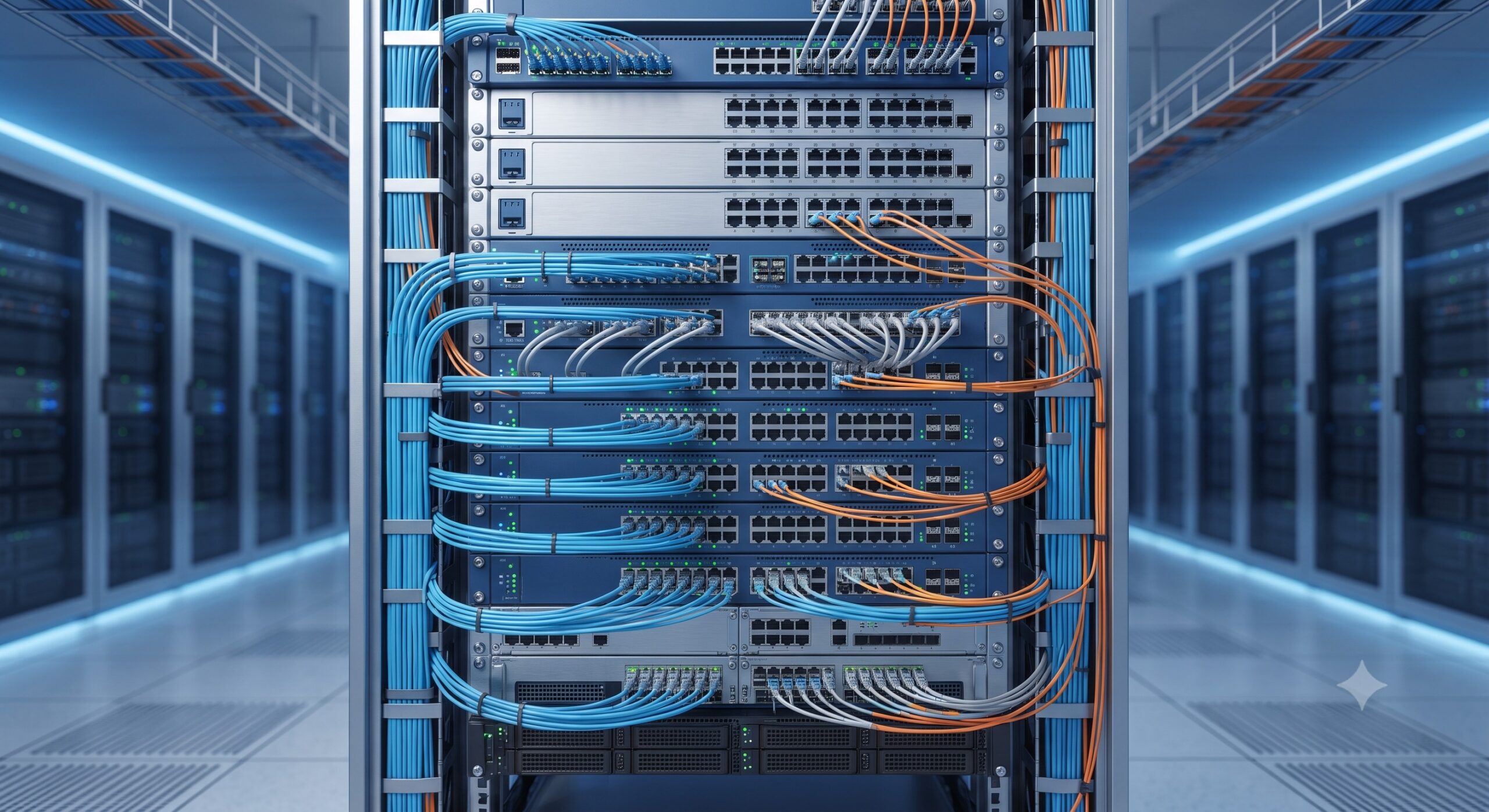
Even the most robust edge routing solutions face challenges in complex operational environments. The most common bottlenecks occur at the interface level due to micro-bursts, insufficient buffer memory, or misconfigured QoS policies. Our troubleshooting manual for edge routing solutions begins with a systematic check of the hardware counters and error statistics provided by the ASIC. A high rate of ‘CRC errors’ or ‘giants’ often points to physical layer issues like faulty SFP modules or cable degradation.
Optimization, conversely, requires a deep understanding of the packet pipeline analysis. By leveraging features like sFlow or NetFlow, architects can gain visibility into traffic patterns and adjust the forwarding logic or buffer thresholds dynamically. For example, adjusting the weighted random early detection (WRED) parameters can significantly improve throughput during congestion. With a performance baseline established by the metrics in Table 1, network engineers can fine-tune their edge routing solutions to achieve near-line-rate performance consistently, ensuring the infrastructure meets its promised ROI.
Conclusion: The Future of Network Architecture
Edge routing solutions are the cornerstone of modern, high-performance networks. The convergence of hardware security, ultra-low latency engineering, and sustainable power efficiency demands a strategic approach to architecture selection and deployment. By focusing on the core ASIC capabilities, understanding the spec sheet beyond the headline numbers, and adhering to a structured deployment methodology, organizations can build a network that is agile, resilient, and future-proof.
As we look toward a horizon dominated by AI-driven networks and 6G, the intelligence and performance of the edge will only grow in importance. The data-driven evaluation provided in this guide serves as a benchmark for your procurement and engineering teams. Whether migrating from legacy core routing or scaling existing infrastructure, the principles outlined here will ensure that your edge routing solutions deliver quantifiable operational gains for years to come. For a detailed consultation on a specific migration strategy or to discuss custom high-density integration requirements, please refer to our professional services framework.

Leave a comment