
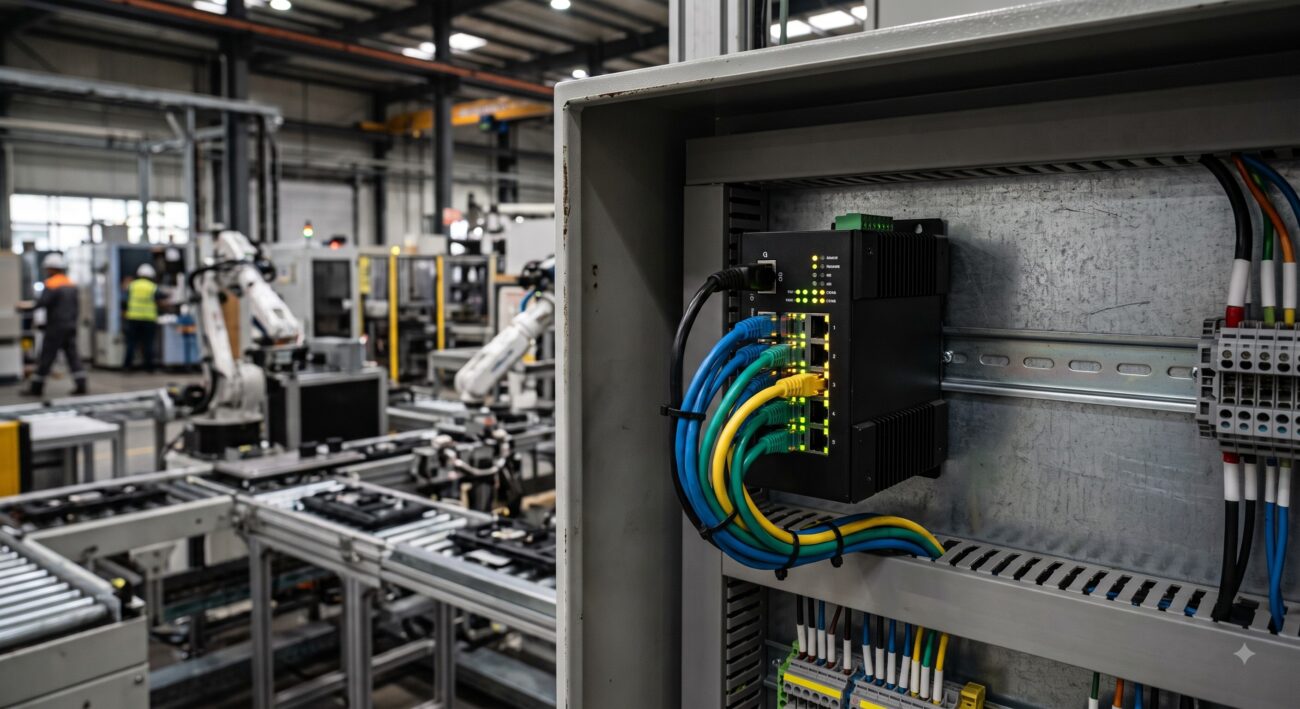
Introduction: The Critical Role of the Industrial Ethernet Switch in Modern Industry 4.0
In the demanding environments of Industry 4.0, the network is the nervous system of the operation. At the heart of this infrastructure lies the Industrial Ethernet Switch, a device engineered not just for data throughput, but for resilience, precision, and reliability in conditions that would cripple standard commercial networking equipment. As operational technology (OT) and information technology (IT) converge, the selection and deployment of these switches have become critical to achieving operational excellence, data integrity, and tangible ROI. This guide provides a deep dive into the architecture, specifications, and real-world applications of industrial Ethernet switches, drawing on the latest industry developments and expert best practices .
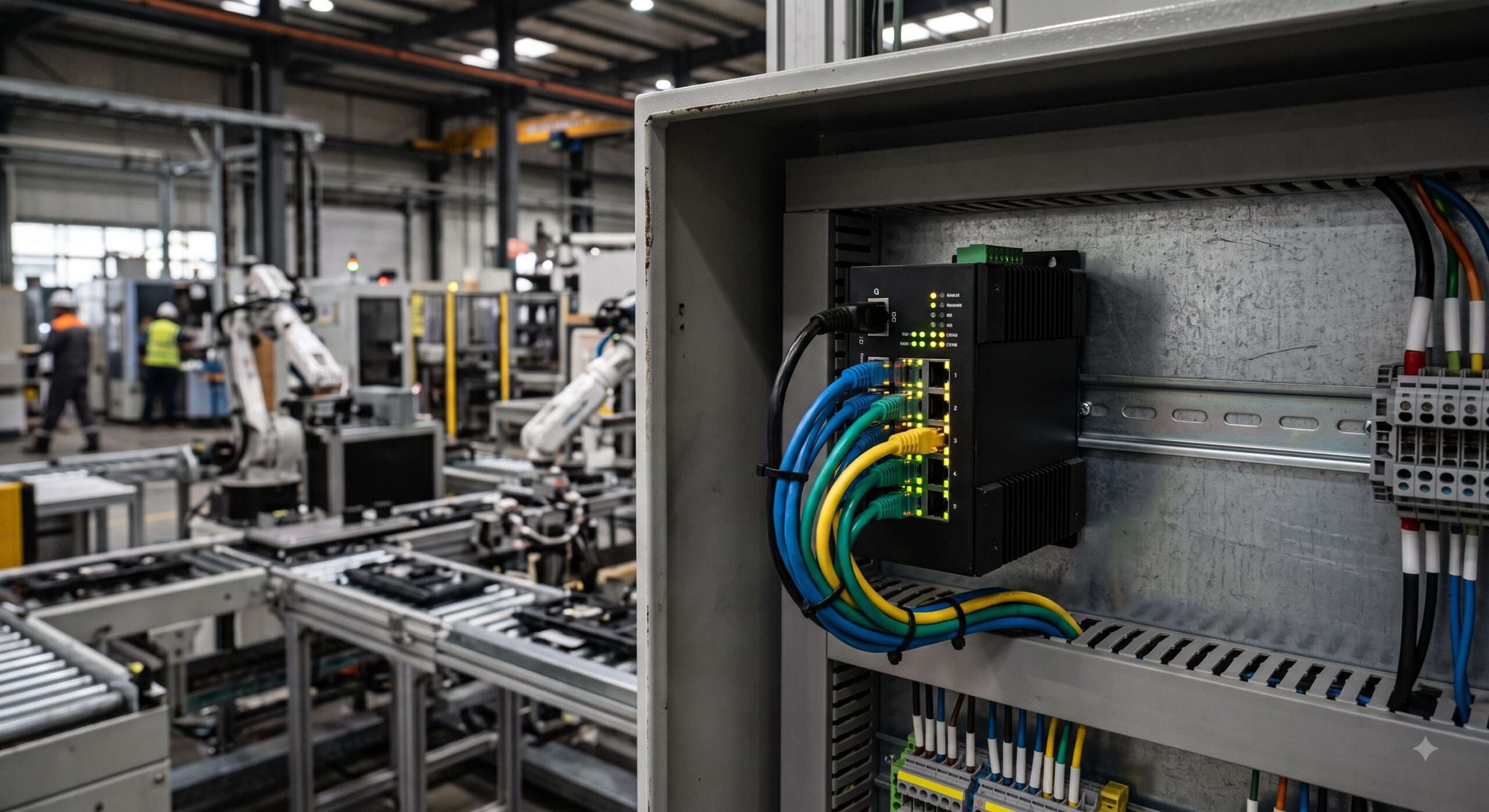
Core Architecture: Rugged Hardware vs. Commercial Equivalents
The fundamental differentiator of an industrial Ethernet switch lies in its physical and logical architecture. While a commercial office switch is designed for a climate-controlled environment, industrial switches are built to withstand extreme temperature swings, high vibration, electromagnetic interference (EMI), and high humidity. These devices typically feature fanless convection cooling designs to eliminate a point of mechanical failure and are housed in IP30, IP67, or even higher-rated ruggedized enclosures to protect against dust, moisture, and water ingress .
Hardware Resilience: The MTBF Advantage
Mean Time Between Failures (MTBF) is a critical metric in industrial networking. To meet rigorous Service Level Agreements (SLAs), these switches incorporate hardened components and redundant power supply inputs. The internal ASICs are often selected for their extended temperature ranges and advanced traffic management capabilities, including hardware-based IEEE 1588 Precision Time Protocol (PTP) support. This hardware-level timestamping is essential for motion control and coordinated robotics, enabling synchronization down to the microsecond level and ensuring deterministic network behavior .
Understanding Industrial Protocols and Compliance Standards
Beyond physical ruggedness, true industrial compatibility is defined by protocol support and compliance. An Industrial Ethernet switch must seamlessly integrate with established industrial ecosystems. This often includes native support for PROFINET RT, EtherNet/IP, and Modbus/TCP, allowing for automatic device discovery and integration with control systems like Rockwell or Siemens .
Compliance with international standards is non-negotiable in critical infrastructure. In sectors like power generation and distribution, compliance with IEC 61850-3 and IEEE 1613 is mandatory, ensuring the switch can operate in the harsh electrical environment of a substation . For hazardous locations such as oil and gas facilities, intrinsic safety features are paramount, often requiring support for Ethernet-APL (Advanced Physical Layer) to power and connect field devices directly in Ex Zones 0, 1, and 2 .
Deployment Scenarios: Layer 2 vs. Layer 3 and Topology Considerations
Selecting the correct class of switch is a critical first step. The choice between a managed and unmanaged switch depends on the need for network visibility, control, and performance. Unmanaged switches, offering plug-and-play simplicity, are suitable for simple point-to-point connections or adding a few edge devices. However, for complex, mission-critical applications, managed switches are essential .
Layer 2 Switching: Optimizing the Local Network
A managed Layer 2 switch is the workhorse of the industrial edge. It provides the essential tools for segmenting traffic via VLANs, prioritizing data with Quality of Service (QoS), and ensuring network reliability through redundancy protocols like Rapid Spanning Tree Protocol (RSTP), Media Redundancy Protocol (MRP), and proprietary ring protocols like N-Ring. These protocols enable sub-50ms healing times—and in some cases, as low as 20ms—which is crucial for minimizing downtime in automated processes . High-fiber-port-density models from vendors like Belden and Cisco, which offer up to 34 ports in a rugged 19-inch form factor, are designed for high-volume aggregation applications like intelligent transportation systems (ITS) and mass transit .
Layer 3 Switching: Enabling Network-Wide Connectivity
For large, sprawling campus networks connecting multiple subnets, a Layer 3 switch is required. These devices offer hardware-based routing between up to 28 IP subnets, enabling efficient traffic flow across the entire plant network without relying on an external router. They support dynamic routing protocols like OSPF and BGP, and provide advanced security through Access Control Lists (ACLs). This makes them ideal for core infrastructure where data aggregation and security are paramount .
| Key Parameter | Technical Specification & Industry Standards | Real-World Impact & Deployment |
|---|---|---|
| Switching Capacity | 24 Gbps to 40 Gbps (Layer 3 models achieve up to 40Gbps wire-speed) | Ensures non-blocking, full-line rate forwarding for high-traffic edge aggregation, supporting high-bandwidth applications like machine vision . |
| Network Redundancy | Sub-50ms recovery via MRP, RSTP, or ERPS (G.8032), and zero-recovery time via PRP/HSR (IEC 62439-3 Clause 4/5) | Guarantees maximum network uptime (e.g., 99.999% availability) by enabling automatic failover; critical for process control and substation automation (IEC 61850-3) . |
| Port Configuration & Power | Combinations of 10/100/1000BASE-T (RJ-45), 100/1000BASE-X (SFP Fiber), and PoE+/++ (up to 30W/60W per port) | Enables flexible connectivity and direct powering of edge devices (cameras, APs) via a single cable, lowering installation cost . |
| Environmental & Compliance | Operating Temp: -40°C to +75°C/+85°C; IP30/IP67, IEC 61850-3, IEEE 1613, PROFINET Certified | Allows reliable deployment in harsh, vibration-prone, and hazardous environments (Ex Zones 0,1,2) across sectors like transportation, mining, and oil & gas . |
| Hardware Security & Management | IEEE 802.1X, SSH, SSL, HTTPS, SNMPv3, MAC Layer Security, and centralized management (e.g., AMF, Cisco IND) | Provides robust protection against unauthorized access and cyber threats (MAC/IP filtering), while simplifying complex network management and diagnostics . |
Beyond Connectivity: Security, Power, and Predictive Maintenance
The modern Industrial Ethernet switch has evolved into a security and management endpoint in its own right.
Hardening the OT Perimeter with MAC Layer Security
With the convergence of IT and OT, network security is a top concern. Modern industrial switches incorporate robust security features to protect against both internal and external threats. This includes IEEE 802.1X with RADIUS for port-based authentication, MAC address filtering, and support for secure management protocols such as SSH, SSL, HTTPS, and SNMPv3 . Advanced platforms are also adopting SDN-based micro-segmentation for granular control of device-to-device communication, effectively containing any potential security breaches .
Power over Ethernet (PoE) for the Edge
In remote edge deployments, delivering power is as critical as delivering data. Power over Ethernet (PoE) simplifies deployment by combining power and data transmission over a single Ethernet cable. Industrial PoE switches, supporting IEEE 802.3af (PoE), 802.3at (PoE+), and even 802.3bt (PoE++), are used to power IP cameras, wireless access points, and industrial IoT sensors directly from the switch. A key engineering consideration is the switch’s total PoE power budget—often requiring a separate power supply to meet the aggregate demand of devices . The ability to deliver full power over extended distances via long-reach SFP fiber runs is another critical feature in large-scale deployments .
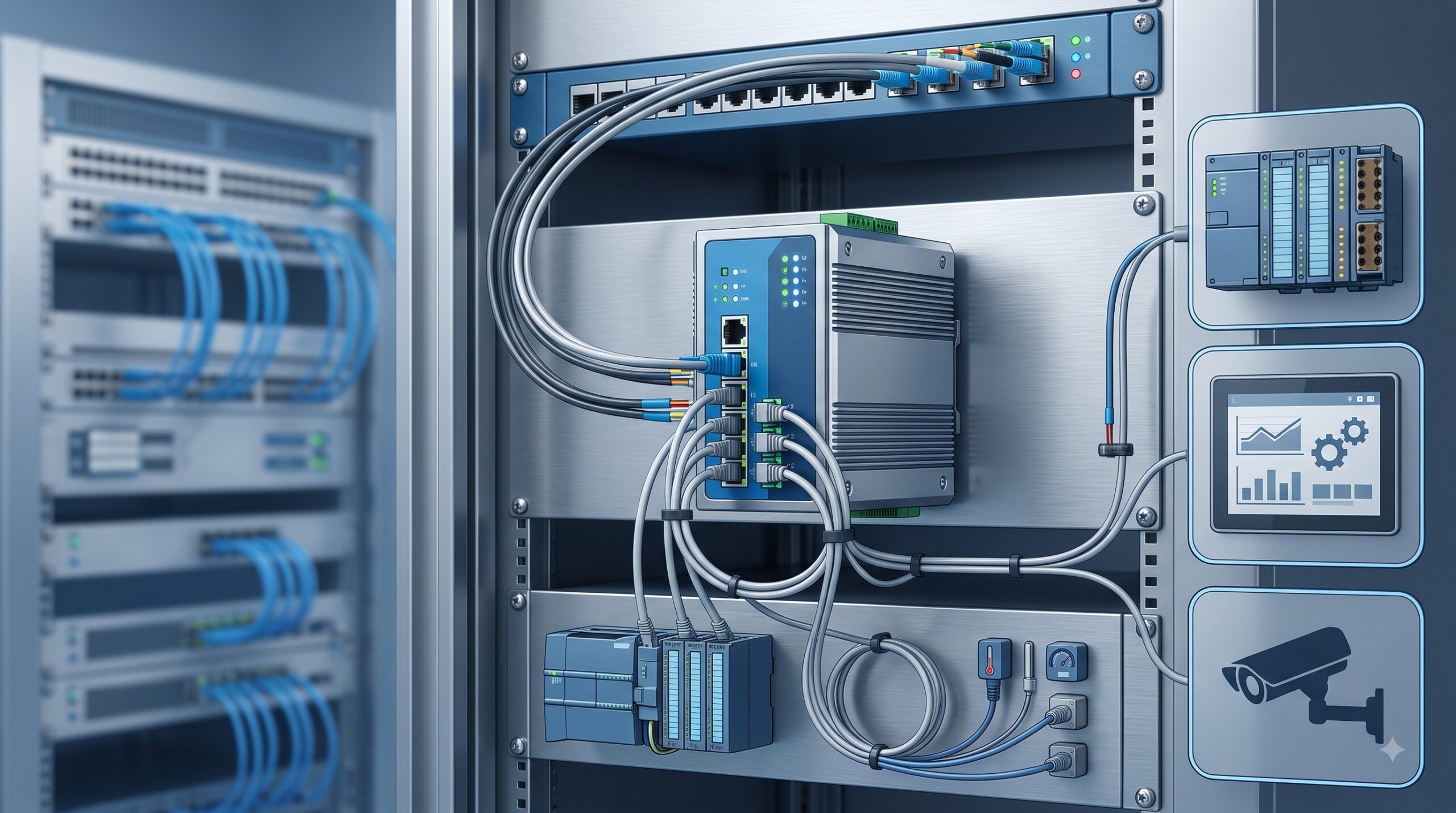
Conclusion: The Industrial Switch as the Core of the Resilient Enterprise
The Industrial Ethernet Switch is far more than a simple network hub; it is a purpose-built industrial computing platform designed to ensure the deterministic, reliable, and secure operation of our most critical infrastructure. From the coal mine to the factory floor, the transportation network to the power grid, the choice of switch architecture—from rugged hardware and compliance to redundancy and security protocols—directly impacts operational reliability and efficiency . As the industry moves toward greater automation, machine learning, and edge computing, the industrial Ethernet switch will continue to serve as the foundational element of these next-generation networks, making it a core component for any CTO, network architect, or systems integrator.

Leave a comment