


TNV1EMS20

0 Reviews Write a review
SKU2036064
AvailabilityIn Stock
WarrantyUp to 36 months i
×
Warranty Policy
We provide a comprehensive warranty policy.
Refer to the table for more details.

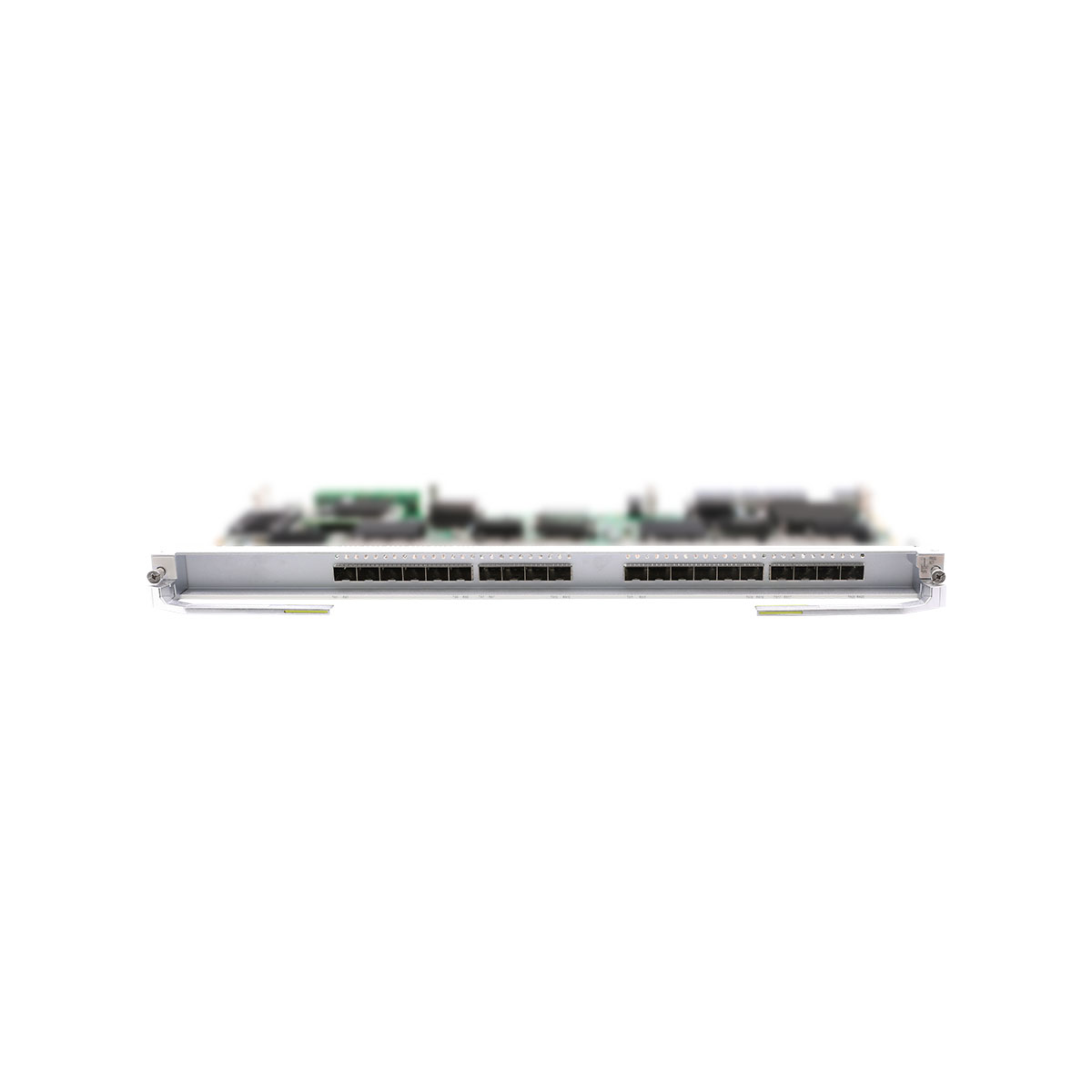
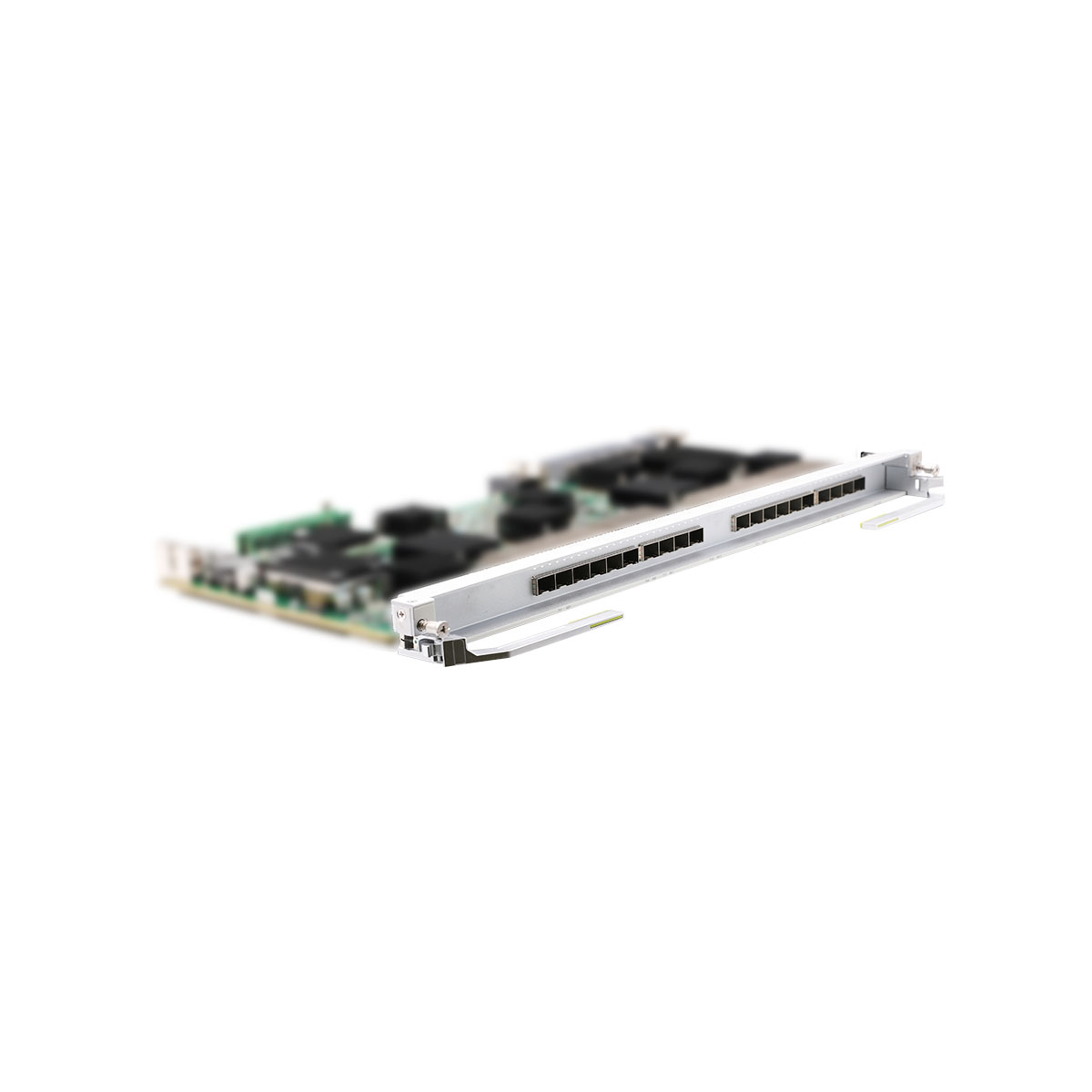
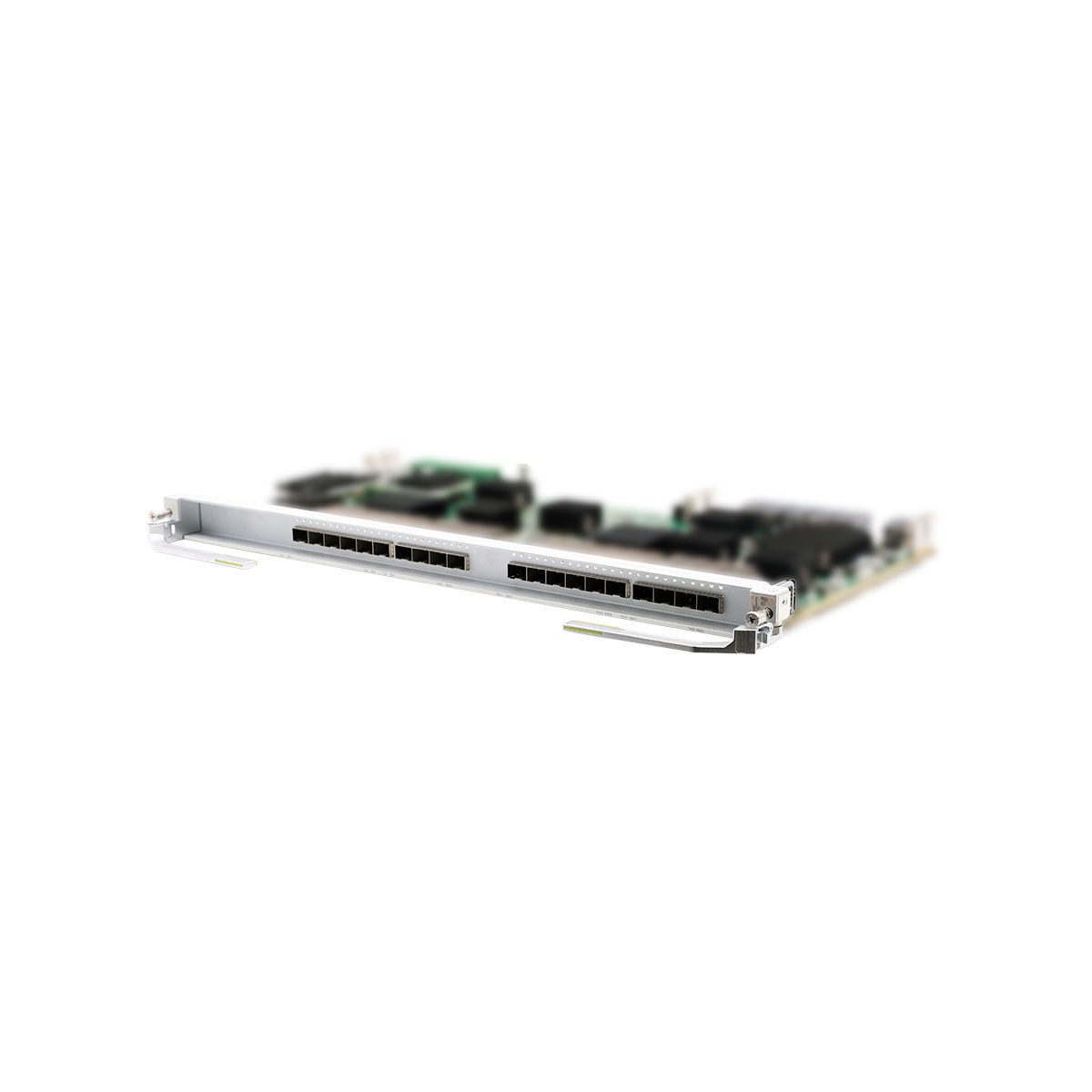
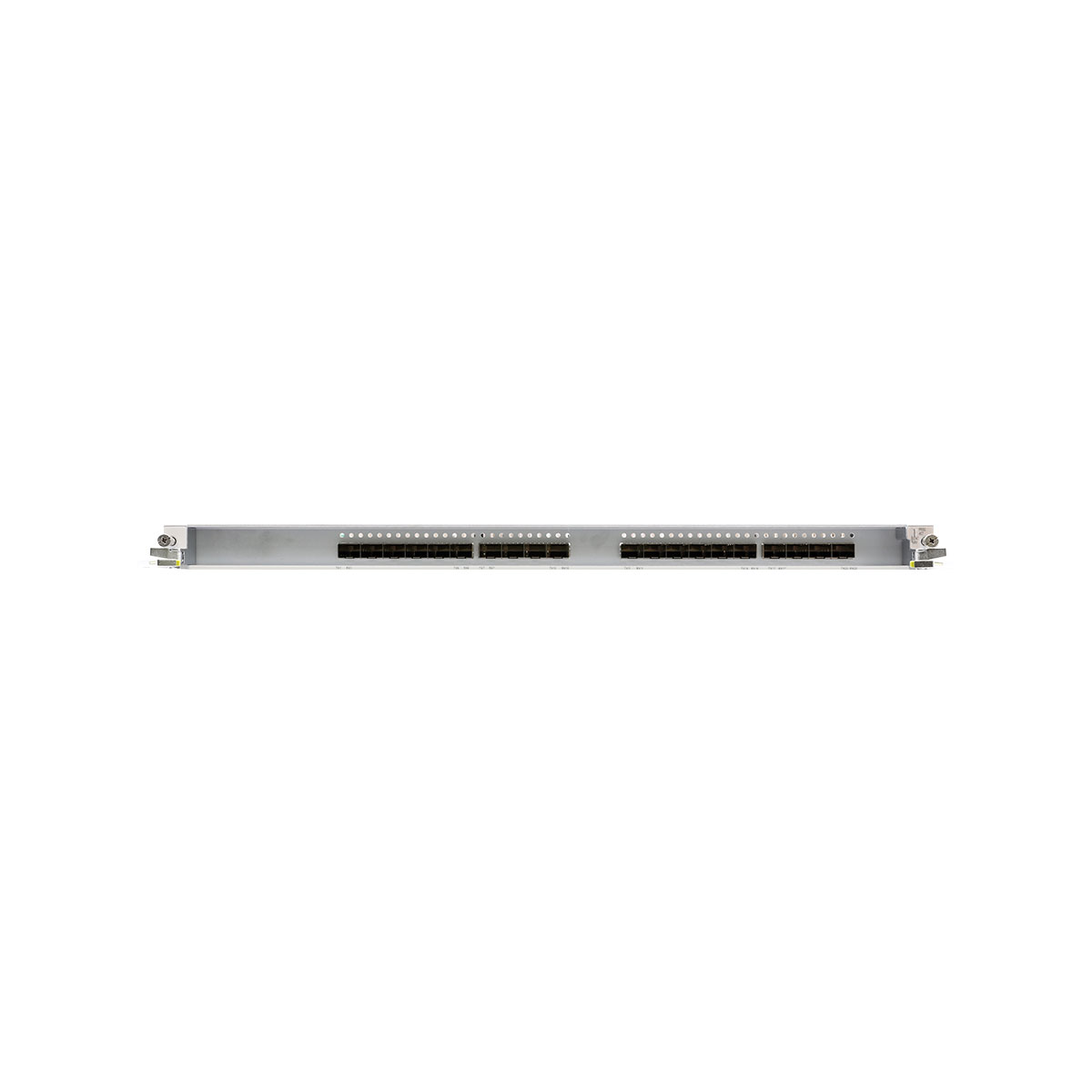
Huawei OptiX OSN 9800 TNV1EMS20 20-port Ethernet Service Processing Board

Description

TNV1EMS20 Overview

TNV1EMS20 20-port Ethernet Service Processing Board, applied to Huawei OptiX OSN 9800 M24/U32/U64.

To meet ultra-large cross-connect capacity and bandwidth requirements, Huawei presents the OptiX OSN 9800 product series. The OptiX OSN 9800 product series include the OptiX OSN 9800 U64, U32, P18 and universal platform subracks. Applied at the electrical layer, the OptiX OSN 9800 U64 and U32 subracks share boards by using unified software and hardware platforms, and can work with the OptiX OSN 9800 universal platform subrack and P18 subrack, OptiX OSN 8800 platform subrack and T16 subrack, and OptiX OSN 6800 optical subracks in WDM and OTN systems.

The TNV1EMS20 board has only one variant: TNV1EMS20.


Valid slots for the TNV1EMS20 board in a M24/U64/U32 subrack

Device Number of Occupied Slots Physical Slot Logical Slot
OptiX OSN 9800 M24 2 (IU1, IU13), (IU2, IU14), ……, (IU11, IU23), (IU12, IU24) IU1 to IU12
OptiX OSN 9800 U32 Enhanced 1 IU1 to IU32 IU1 to IU32
OptiX OSN 9800 U32 Standard 1 IU1 to IU32 IU1 to IU32
OptiX OSN 9800 U64 Enhanced 1 IU1 to IU64 IU1 to IU64
OptiX OSN 9800 U64 Standard 1 IU1 to IU64 IU1 to IU64
Item TNV1EMS20
Functions and Features of the TNV1EMS20 Board
Basic function Transmits/Receives twenty Ethernet services, encapsulates and maps the Ethernet services into SDH signals, and forwards the SDH signals to the SDH plane for transmission. The maximum uplink bandwidth of the EMS20 board is 2 x 2.5 Gbit/s.
NOTE:
  • The maximum uplink bandwidth of ports ip1 to ip10 or ip11 to ip20 on the EMS20 board is 2.5 Gbit/s.
  • When VC-12 signals are bound to a VCTRUNK, the maximum upstream bandwidth of the EMS20 board is 2 x 1.25 Gbit/s.
  • Ports on the EMS20 board are divided into two areas: external ports ip1 to ip10 and internal ports VCTRUNK1 to VCTRUNK64 and VB1 to VB16 (for LAN services). External ports ip11 to ip20 and internal ports VCTRUNK65 to VCTRUNK128 and VB17 to VB32 (for LAN services) belong to another area. Services cannot be configured or bound across areas.
Bound bandwidth 32 x VC-4, or 96 x VC-3, or 1008 x VC-12
Maximum uplink bandwidth 2 x 2.5 Gbit/s
NOTE:
When VC-12 signals are bound to a VCTRUNK, the maximum upstream bandwidth of the EMS20 board is 2 x 1.25 Gbit/s.
Number of services 4000. A maximum of 32,000 MAC addresses can be dynamically learned.
Bound Path Level VC-12, VC-3, VC-4, VC-12-Xv (X ≤ 63), VC-3-Xv (X ≤ 24), and VC-4-Xv (X ≤ 8).
Encapsulation formats
  • HDLC
  • LAPS
  • GFP-F
Port working mode
  • 10GE LAN optical port: 10GE Full-Duplex
  • GE electrical port: 10M Full-Duplex, 100M Full-Duplex, 1000M Full-Duplex, Auto-Negotiation
  • GE optical port: 1000M Full-Duplex, Auto–Negotiation
  • FE optical port: 100M Full-Duplex
NOTE:
  • All ports on the EMS20 board support FE optical ports, GE optical ports and GE electrical ports.
  • Only TX1/RX1 and TX11/RX11 ports support 10GE optical ports.
  • The FE electrical signals are accessed through the GE electrical port in 100M full-duplex mode.
Overhead processing
  • Supports the OTN frame format and overhead processing defined by ITU-T G.709. The mapping process complies with ITU-T G.7041 and ITU-T G.709.
  • Supports the setting and query of the J1, J2, C2 and V5 bytes.
Traffic control
  • Auto-negotiation flow control (supported only by GE ports)
  • Non-auto-negotiation flow control
Traffic monitoring Supports port-based and VCTRUNK-based traffic monitoring.
QinQ Supported
Ethernet data frame format IEEE 802.3, Ethernet II, IEEE 802.1q, IEEE 802.1p
Maximum frame length for a port The MFL value ranges from 1518 bytes to 9600 bytes with a default value of 9600 bytes. Supports a jumbo frame containing a maximum of 9600 bytes.
EPL service Supports PORT-based transparent transmission.
EVPL service
  • Supports PORT-shared EVPL services.
  • Supports VCTRUNK-shared EVPL services.
    • The services are isolated by VLAN tags.
    • The services are isolated by QinQ tags.
EPLAN service
  • Supports the EPLAN services that are based on the IEEE 802.1d MAC bridge.
  • Supports a maximum of 2 x 16 VBs. The maximum number of logical ports for each VB is 74.
  • Blacklist, static MAC address, and dynamic MAC address sharing 2 x 16K: Supports the blacklist that can contain 512 records and also the static MAC address table that can contain 512 records. A maximum of 2 x 16K dynamic MAC addresses are supported.
  • Supports the self-learning of the source MAC address. The aging time of the MAC address can be set and queried.
  • Supports the configuration of static MAC routes.
  • Supports the query of dynamic MAC addresses.
NOTE:
EMS20 boards support SVL bridge learning modes. Ensure that all bridges on a board apply the same learning mode.
EVPLAN service
  • Supports the EVPLAN services that are based on the IEEE 802.1q virtual bridge and IEEE 802.1ad provider bridge.
  • Supports data isolation based on VB+VLAN.
  • Supports a maximum of 2 x 16 VBs. The maximum number of logical ports for each VB is 74.
  • Supports the setting of a maximum of 4095 VLAN filtering tables.
NOTE:
EMS20 boards support SVL and IVL bridge learning modes. Ensure that all bridges on a board apply the same learning mode.
VLAN technology Supports a total number of 4095 VLANs, which comply with IEEE 802.1q/p.
MPLS technology Not supported
VCTRUNK specifications
  • Maximum number of VCTRUNKs supported by one EMS20 board: 2 x 64
  • Configuration principles are as follows:
    • A VCTRUNK can be bound to a maximum of eight VC4s, 24 VC3s or 63 VC12s.
    • VC4/VC3 is divided into two areas: [VC4-1 ~ VC4-16], [VC4-17 ~ VC4-32]. Different areas of VC4/VC3 cannot be bound to the same VCTRUNK.
    • VC-4 can be bound as VC-3/VC-4 channels
      • Only [VC4-1 ~ VC4-8] and [VC4-17 ~ VC4-24] can be bound as VC-12 channels.
      • [VC4-1 ~ VC4-8] and [VC4-17 ~ VC4-24] cannot be bound to the same VCTRUNK.
NOTE:
VCTRUNK1 to VCTRUNK64 can be bound to VC4/VC3 partitions [VC4-1 ~ VC4-16], VCTRUNK65 to VCTRUNK128 can be bound to VC4/VC3 partitions [VC4-17 ~ VC4-32].
Traffic classification Supports traffic classification based on PORT, PORT+VLAN, PORT+SVLAN, and PORT+SVLAN+CVLAN.
Traffic policing Committed access rate (CAR), two rate three color marker (trTCM) compliant with RFC 4115
NOTE:
  • Ports ip1 to ip10 and VCTRUNK1 to VCTRUNK64 can be configured with CAR ID ranging from 1 to 512.
  • Ports ip11 to ip20 and VCTRUNK65 to VCTRUNK128 can be configured with CAR ID ranging from 513 to 1024.
Traffic shaping Supports queue shaping on ports.
Congestion avoidance Supports random early detection (RED).
Congestion management CoS, supporting SP and WRR scheduling algorithms.
Class of service (CoS) Supports CoS types including simple, VLAN priority, DSCP, and IP TOS.
NOTE:
  • Ports ip1 to ip10 and VCTRUNK1 to VCTRUNK64 can be configured with CoS ID ranging from 1 to 14.
  • Ports ip11 to ip20 and VCTRUNK65 to VCTRUNK128 can be configured with CoS ID ranging from 15 to 28.
LPT Supports P2P LPT and P2MP LPT in compliance with Huawei proprietary protocol.
NOTE:
Supports the setting of the point-to-multipoint strict or non-strict mode.
SDH SNCP Supported
NOTE:
Functions as a service sink board.
SDH ASON Supported
LAG
  • Supports manual link aggregation and static link aggregation.
  • Supports the load sharing mode and non-load sharing mode.
  • Complies with IEEE 802.3ad and IEEE 802.1ax.
NOTE:
LAG can be configured between ports ip1 to ip10 or ip11 to ip20.
DLAG
  • Supports static DLAGs.
  • Supports non-load sharing DLAGs.
  • Complies with IEEE 802.3ad and IEEE 802.1ax.
LCAS Dynamically increases or decreases the bandwidth and protects the bandwidth in compliance with ITU-T G.7042.
BPS Supported
PPS Supported
STP/RSTP Supports STP/RSTP in compliance with IEEE 802.1w.
MSTP Not supported
IGMP Snooping Supports protocol enabling in compliance with IGMPv1 and IGMPv2.
LLDP Supported
Ethernet service OAM Supports Ethernet service OAM that complies with IEEE 802.1ag
NOTE:
Supports CC, LB tests, and LT tests in compliance with IEEE 802.1ag and OAM ping in compliance with Huawei proprietary protocol.
Ethernet port OAM Supports Ethernet service OAM that complies with IEEE 802.3ah
NOTE:
Supports OAM auto-discovery, remote loopbacks, fault detection, and link performance detection in compliance with IEEE 802.3ah, and selfloop detection in compliance with Huawei proprietary protocol.
RMON Supports RMON of the Ethernet performance of Ethernet ports and VCTRUNKs.
Port mirroring Supports ingress and egress mirroring.
Physical clock Supported
NOTE:
SFP electrical modules do not support physical clock.
IEEE 1588v2 Not supported
Port type querying Supported
Test frame Supports test frames in GFP bearer modes.
MAC layer loopback Supports MAC inloops and outloops.
PHY layer loopback Supports PHY inloops and outloops.
2M ASON Supported
NOTE:
Only supported when the 9800 M24 is used.
Query/Setting of port status Supported
Response to ping Not supported
Quantity 2000

Additional information

Reviews

There are no reviews yet.

Be the first to review “TNV1EMS20”

Your email address will not be published. Required fields are marked *

21  ⁄    =  3

Back to Top

Search For Products

Product has been added to your cart