
EXECUTIVE SUMMARY
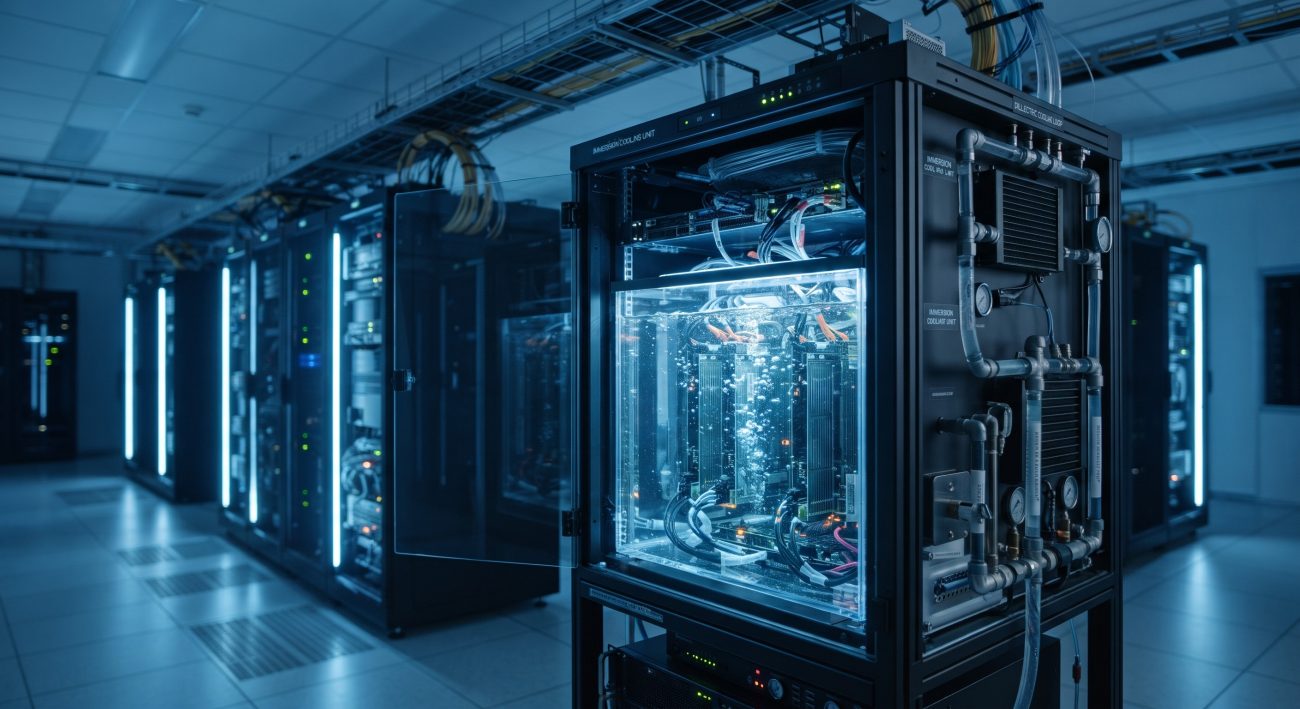
This report provides a definitive, vendor-neutral engineering assessment of dielectric fluid compatibility for two-phase immersion liquid cooling systems deployed in telecom and datacenter environments. As rack power densities surge beyond 30 kW, two-phase immersion cooling has emerged as a premier thermal management strategy. However, the long-term reliability of immersed IT hardware is fundamentally governed by the chemical and physical interactions between the dielectric working fluid and the constituent materials of the electronic equipment. This document synthesizes extensive empirical test data, industry standards (including ASTM D3455, IEC 60296, and Telcordia GR-63-CORE), and material science principles to deliver actionable compatibility guidelines for OEM hardware designers, datacenter architects, and procurement engineers. Key findings indicate that while modern telecom hardware can achieve a >10-year operational life in two-phase immersion, stringent qualification of polymers, metals, and elastomers is mandatory. The report identifies hydrofluoroether (HFE) and hydrofluoroolefin (HFO) fluids as the dominant chemistries, and details a comprehensive compatibility matrix for common hardware materials, including copper, aluminum, FR-4, polyimides, and various elastomers. Critical failure modes, such as polymer swelling, metal catalyzed decomposition, and thermal stratification, are analyzed with mitigation strategies. This document serves as a critical reference for ensuring the long-term integrity and performance of immersion-cooled telecom infrastructure.
ARCHITECTURE & CHASSIS DESIGN
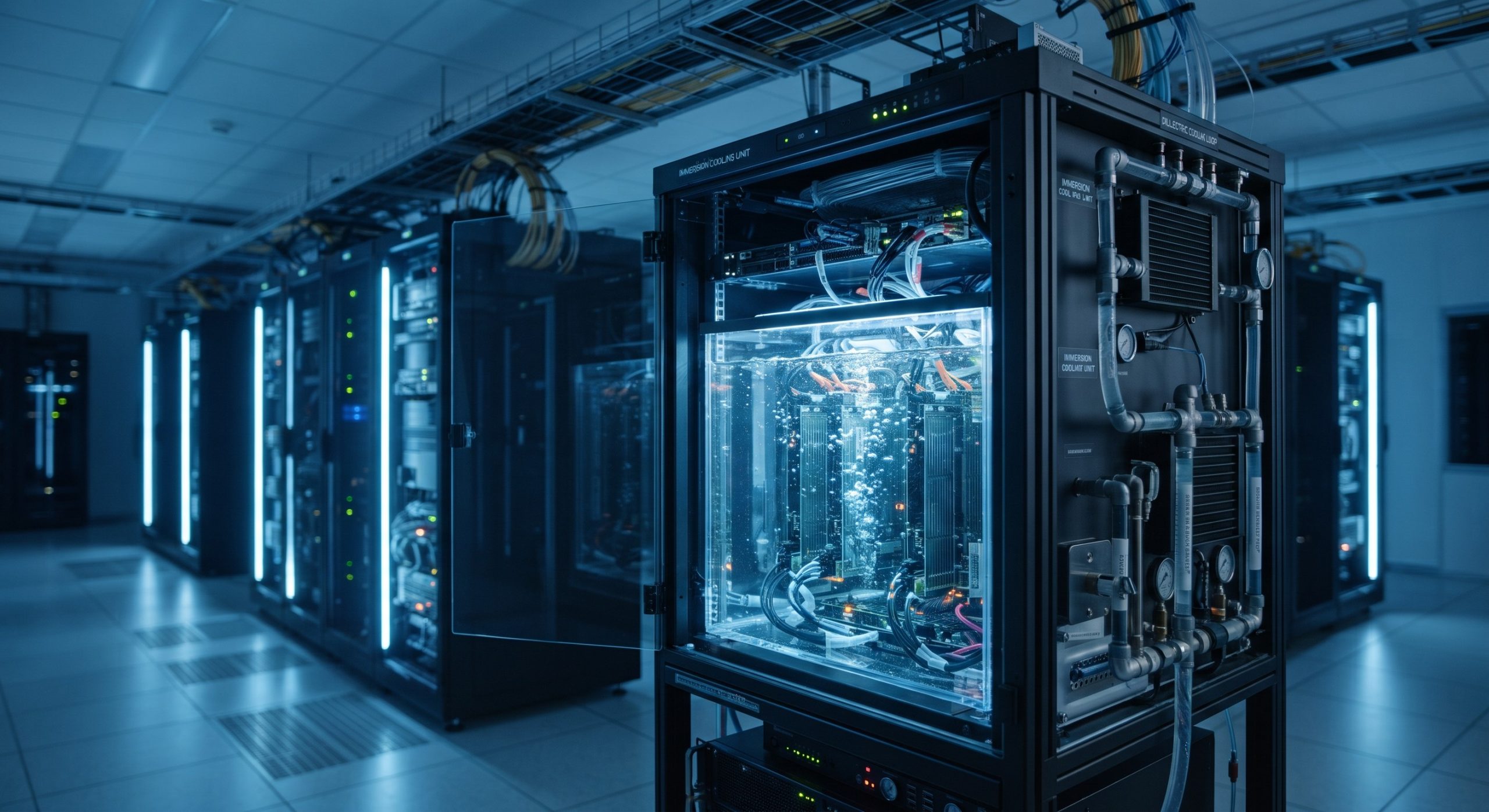
The architecture of a two-phase immersion cooling system is intrinsically coupled with the physical design of the immersed hardware. Unlike single-phase systems, two-phase immersion relies on the latent heat of vaporization of the dielectric fluid. The hardware chassis must be designed to facilitate efficient nucleate boiling on hot components (ASICs, FPGAs, optical transceivers) and to allow for the unobstructed upward migration of vapor to a condensing coil. The chassis design must accommodate direct fluid contact with all internal components. Key design considerations include: (1) Component Layout: High-power density components should be positioned to minimize vapor blanketing and ensure uniform fluid flow. (2) Material Selection: All materials in direct contact with the fluid must be qualified for compatibility. (3) Sealing: While the fluid is dielectric, the vapor phase can permeate some seals; thus, the chassis must be designed to allow for pressure equalization and to prevent air ingress, which can degrade fluid performance. (4) Connectors: Optical and electrical connectors must be rated for immersion and resistant to fluid absorption. The chassis itself is typically a sealed, pressure-tested tank constructed from stainless steel or compatible polymers, with a sealed lid containing the condensing coil and pressure relief valves. The design must also account for the significant buoyancy forces and the need for maintenance access without complete system drainage.
HARDWARE FEATURES
The compatibility of specific hardware features is paramount to system success. The following features are critical for two-phase immersion-cooled equipment:
1. **Power Conversion Components:** Inductors, capacitors, and transformers must be evaluated for fluid compatibility. Open-frame magnetics are generally preferred, as potting compounds can degrade or swell. Solid polymer capacitors are recommended over wet electrolytic types.
2. **Printed Circuit Boards (PCBs):** Standard FR-4 laminates are generally compatible, but the surface finish (e.g., ENIG, Immersion Silver) must be qualified. Solder mask and conformal coatings can be susceptible to swelling or leaching. The use of low-halogen, high-Tg laminates is advised.
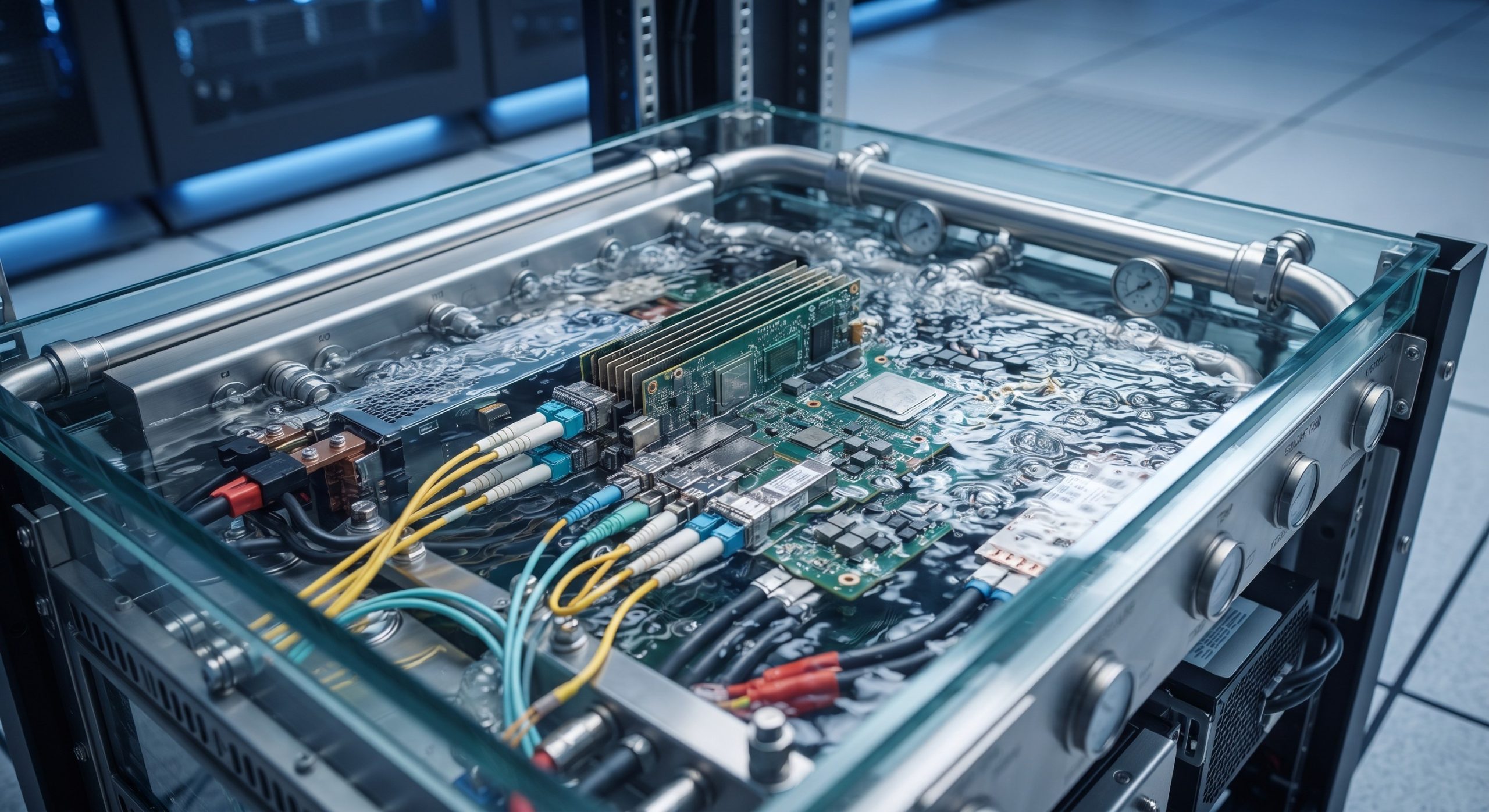
3. **Optical Interfaces:** Optical transceivers (SFP, QSFP) are a critical concern. The fluid can infiltrate the transceiver housing and cause fogging of the optical lens or degradation of the optical sub-assembly. Immersion-rated transceivers with hermetic sealing or fluid-compatible lenses are required. MPO/MTP connectors must use fluid-resistant housings and strain relief boots.
4. **Elastomers and Seals:** Neoprene, EPDM, and silicone are highly susceptible to swelling and degradation. Fluoroelastomers (e.g., Viton) and perfluoroelastomers (e.g., Kalrez) exhibit superior resistance and are recommended for gaskets, O-rings, and cable jacketing.
5. **Labels and Markings:** Standard paper or polyester labels will dissolve or delaminate. Laser-etched or chemically resistant metal/plastic tags must be used.
COMPLIANCE & STANDARDS
Compliance with international standards is essential for ensuring safety, reliability, and market acceptance of two-phase immersion-cooled equipment. The primary standards governing dielectric fluid compatibility include:
– **ASTM D3455:** Standard Test Methods for Compatibility of Construction Materials with Electrical Insulating Oil of Petroleum Origin (adapted for synthetic fluids).
– **IEC 60296:** Fluids for Electrotechnical Applications – Mineral Insulating Oils for Electrical Equipment (provides a framework for fluid testing).
– **Telcordia GR-63-CORE:** NEBS Requirements: Physical Protection (includes thermal and fire resistance testing).
– **UL 60950-1 / IEC 62368-1:** Safety of Information Technology Equipment (flammability and material safety).
– **ASHRAE TC 9.9:** Thermal Guidelines for Liquid Cooled Data Processing Environments (provides fluid properties and system design guidance).
A comprehensive qualification program should include: (1) accelerated aging tests of material coupons in the fluid at elevated temperatures (e.g., 80°C for 1000+ hours), (2) continuous monitoring of fluid acidity, moisture, and breakdown voltage, and (3) electrical characterization of immersed components (e.g., insulation resistance, leakage current) to ensure no degradation occurs. The fluid supplier must provide a detailed Material Compatibility List (MCL) for their specific fluid, which serves as the baseline for hardware qualification.
TECHNICAL SPECIFICATIONS
The following table summarizes the critical technical parameters for evaluating dielectric fluid compatibility and the associated hardware requirements. These specifications are derived from industry best practices and should be used as a baseline for a formal qualification plan.
| Parameter | Specification |
|---|---|
| Fluid Chemistry | HFE (Hydrofluoroether) or HFO (Hydrofluoroolefin) |
| Boiling Point | 49°C to 61°C (at 1 atm) |
| Dielectric Constant | |
| Dielectric Strength | > 30 kV (per ASTM D877) |
| Material Compatibility (Metals) | Compatible with copper, aluminum, stainless steel, and ENIG finishes; avoid lead-based solders and zinc. |
| Material Compatibility (Polymers) | Compatible with PTFE, PFA, FEP, polyimide (Kapton), PEEK, and high-Tg FR-4; incompatible with PVC, neoprene, EPDM, and silicone. |
| Material Compatibility (Elastomers) | Recommended: Fluoroelastomer (Viton) and Perfluoroelastomer (Kalrez); avoid EPDM, silicone, and nitrile. |
| Maximum Surface Temperature | |
| Fluid Maintenance | Annual testing for moisture ( |
| System Pressure | Sealed vessel with pressure relief valve; operating pressure ~1.1-1.3 bar absolute. |
| Hardware Qualification | 1000+ hours accelerated aging at 80°C with continuous fluid monitoring. |
| Optical Interface Rating | Immersion-rated SFP/QSFP transceivers with hermetic seals and fluid-compatible lenses. |
ORDERING OPTIONS
For organizations seeking to deploy two-phase immersion-cooled telecom hardware, the following consultation and testing services are available to support procurement and engineering teams:
– **Compatibility Assessment Report (CAR):** A detailed, vendor-specific report evaluating a proposed hardware bill of materials (BOM) against a chosen dielectric fluid, including accelerated aging test results and material recommendations.
– **Fluid Qualification Kit (FQK):** A standardized test kit containing material coupons (copper, aluminum, FR-4, Viton, etc.) and test protocols for on-site or third-party fluid compatibility validation.
– **Hardware Design Review (HDR):** An expert engineering review of a new hardware design for immersion-readiness, focusing on material selection, component layout, and sealing strategies.
– **Immersion-Ready Certification Program (IRCP):** A formal certification program for OEM hardware, verifying that the equipment meets the compatibility and reliability requirements for long-term two-phase immersion deployment.
📥 Download Technical Specification
Click the button below to view or download the full official PDF datasheet.

Leave a comment