
The Network’s Critical Crossroads: Bridging the Layer 2 vs Layer 3 Decision
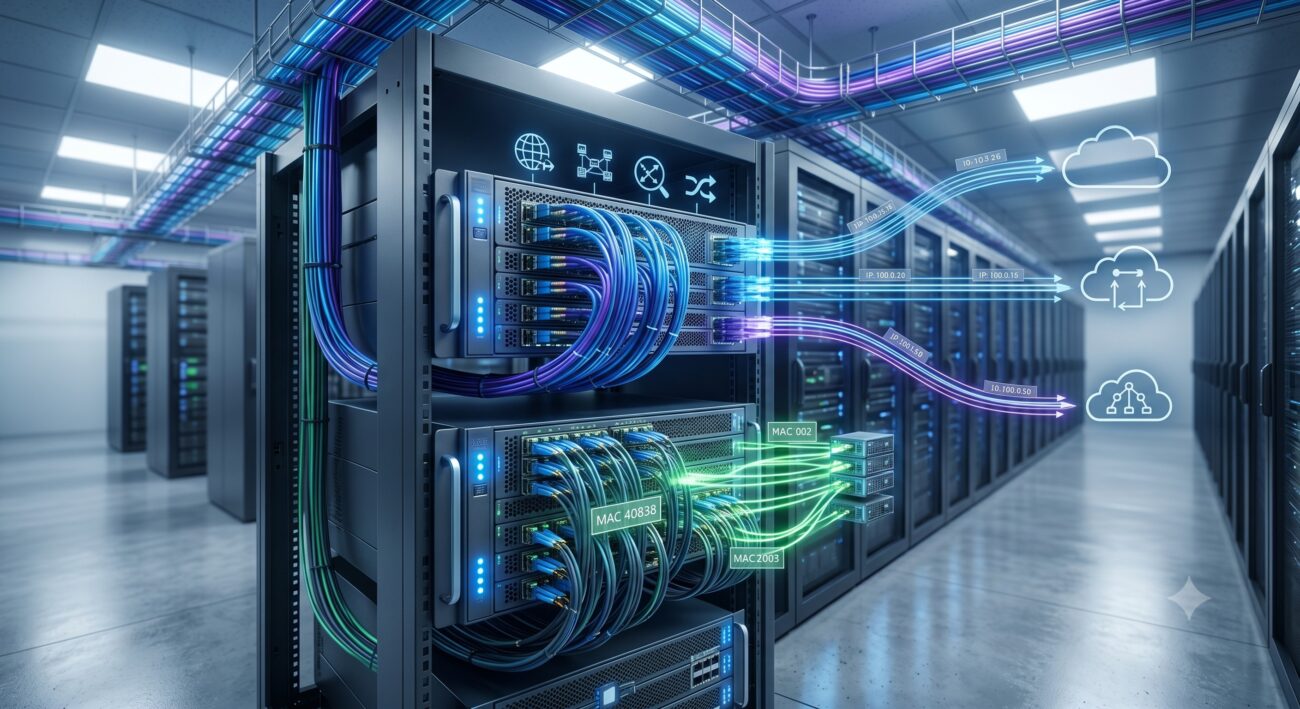
In the hyper-connected landscape of modern enterprise and carrier-grade telecom, the choice between a Layer 2 switch and a Layer 3 switch is far more than a technical checkbox. It is a foundational architectural decision that dictates network performance, security, scalability, and ultimately, the bottom line. As data consumption surges and latency-sensitive applications like AI, IoT, and 4K/8K video streaming become ubiquitous, network architects must reevaluate the traditional boundaries of the OSI model. This guide provides a comprehensive, data-driven analysis of Layer 2 versus Layer 3 switching, moving beyond simplistic comparisons to explore the internal architectures, hardware specifications, and deployment strategies that define modern networking. We will dissect the silicon, analyze the protocols, and provide a roadmap for making the optimal choice for your unique infrastructure needs, ensuring your network is not just functional, but future-ready.
Core Architecture & Hardware Topology: The Silicon Behind the Ports
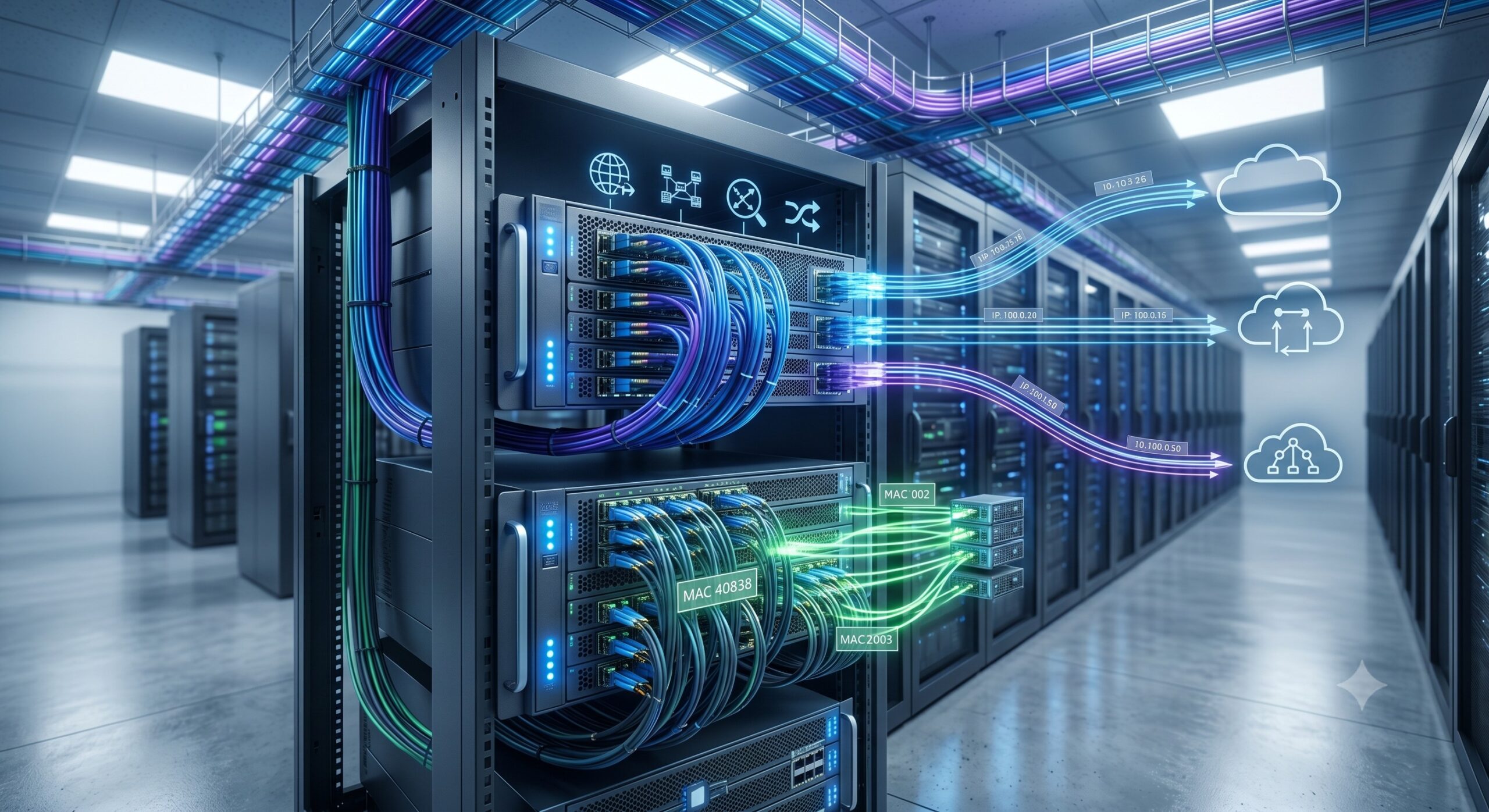
The fundamental difference between a Layer 2 and Layer 3 switch is not merely software-based; it is deeply rooted in the hardware architecture, specifically the Application-Specific Integrated Circuit (ASIC) that drives packet processing. A Layer 2 switch operates at the Data Link Layer, using MAC addresses to forward frames. Its ASIC is designed for high-speed, low-latency frame switching, operating as a learning bridge. The forwarding logic is simple: learn the source MAC address, associate it with a port, and forward frames based on the destination MAC address. This is typically done at wire-speed with minimal processing overhead.
Conversely, a Layer 3 switch incorporates routing intelligence directly into the hardware. It functions as a switch and a router, capable of making forwarding decisions based on both MAC addresses and IP addresses. The ASIC in a Layer 3 switch features a routing engine that can perform route lookups, calculate the best path, and rewrite packet headers (including TTL and checksum) at near wire-speed. This is often referred to as hardware-based routing or wire-speed routing, a critical differentiator from traditional software-based routers that are significantly slower and less scalable. Modern Layer 3 switches integrate a Ternary Content-Addressable Memory (TCAM), a specialized memory that allows for high-speed parallel searches of routing tables and ACLs, enabling line-rate performance even with complex rules.
| Key Parameter | Layer 2 Switch | Layer 3 Switch |
|---|---|---|
| Primary Function | Frame switching (MAC Addresses) | Packet routing (IP Addresses) & Frame Switching |
| OSI Layer | Data Link Layer (Layer 2) | Network Layer (Layer 3) |
| Switching Capacity (Example) | 176 Gbps – 1.4 Tbps | Up to 100+ Tbps (Modular Chassis) |
| Forwarding Rate (Mpps) | Up to 100 Mpps | 100 – 1000+ Mpps |
| Latency (Microseconds) | 1-5 µs (Cut-Through) | 3-10 µs (Store-and-Forward) |
| VLAN Support | Yes (IEEE 802.1Q) | Yes (IEEE 802.1Q) |
| Routing Protocols | None | RIP, OSPF, BGP, ISIS |
| Security | Port Security, 802.1X | ACLs, 802.1X, Advanced Firewall Features |
| Scalability | Limited to Broadcast Domain | Highly Scalable, Hierarchical Design |
| Typical Deployment | Access Layer | Distribution & Core Layers |
Logic Layer Deep Dive: From Frames to Packets
Layer 2 Switching: The MAC Address Domain
The operational domain of a Layer 2 switch is a single broadcast domain, or a VLAN (Virtual Local Area Network). Its primary function is to create a collision domain per port and learn the MAC address table to efficiently forward frames. The key protocols governing Layer 2 operation include IEEE 802.1D (Spanning Tree Protocol – STP) and its variants like IEEE 802.1w (Rapid Spanning Tree Protocol – RSTP), which are essential for preventing loops in redundant topologies. When a frame destined for an unknown MAC address arrives, the switch floods it out all other ports in the VLAN, an operation that becomes inefficient in larger networks. The benefits of Layer 2 are its simplicity, low latency, and zero configuration overhead for end devices. However, it is limited by its lack of traffic segmentation and its susceptibility to broadcast storms.
Layer 3 Switching: The IP Routing Intelligence
A Layer 3 switch introduces the ability to route traffic between different subnets and VLANs, effectively breaking down the broadcast domain limitations of a flat Layer 2 network. It supports standard routing protocols such as RIP (Routing Information Protocol), OSPF (Open Shortest Path First), and BGP (Border Gateway Protocol) for dynamic route learning and exchange. The routing table in a Layer 3 switch can hold a multitude of routes, and the hardware forwarding engine uses the destination IP address to determine the best next-hop. The key advantage is scalability. By segmenting the network into smaller subnets, broadcast traffic is contained, security is enhanced through ACLs, and the network can be designed with a structured, hierarchical architecture. The latency for a Layer 3 route lookup in hardware is often measured in microseconds, rendering the performance hit negligible compared to the operational gains.
Performance Benchmarking: Latency, Throughput, and MTBF
Network performance is the ultimate arbiter in hardware selection. The switching capacity, measured in Gigabits per second (Gbps) or Terabits per second (Tbps), defines the total data throughput the backplane can handle. A modern enterprise Layer 2 switch might offer a switching capacity of 176 Gbps, while a high-end modular Layer 3 switch can exceed 100 Tbps. Latency is another critical metric. Cut-through switching, common in high-performance Layer 2 switches, can achieve latencies as low as 1-2 microseconds. However, Layer 3 switches, employing store-and-forward switching to inspect the entire packet for routing decisions and error checking, typically see latencies of 3-10 microseconds. This trade-off is often acceptable for the added functionality.
Mean Time Between Failures (MTBF) is a crucial reliability metric, often exceeding 300,000 hours for carrier-grade enterprise switches from vendors like Cisco, Arista, or Juniper. The reliability is further enhanced by redundant power supplies, hot-swappable fans, and modular line cards. Forwarding Rate, expressed in Millions of Packets Per Second (Mpps), indicates the device’s ability to handle small packet traffic. For instance, a standard 48-port Gigabit Layer 3 switch might have a forwarding rate of approximately 131 Mpps. These specifications, published by vendors and validated by independent testing like the Miercom reports, are critical for capacity planning and ensuring the hardware can sustain peak traffic loads without performance degradation, adhering to ITU-T Y.1541 quality-of-service standards.
ISP Case Study: Scaling a Regional Network with Layer 3
Consider a regional Internet Service Provider (ISP) managing a network of 500+ aggregation sites. Historically, they used a flat Layer 2 architecture for each metropolitan area, leading to massive broadcast domains, STP reconvergence issues during link failures, and difficulty in implementing QoS policies. After a comprehensive performance audit, they migrated to a Layer 3 switch architecture using OSPF as their dynamic routing protocol. Each aggregation site was assigned a unique subnet, and the core switches were upgraded to high-density Layer 3 switches with a forwarding rate exceeding 500 Mpps.
The results were quantifiable. The network’s average latency dropped by 15% due to more efficient routing, and the network convergence time after a failure decreased from over 30 seconds to sub-second (SLA (Service Level Agreement) adherence. Additionally, by implementing Access Control Lists (ACLs) at the Layer 3 level, they were able to isolate customer traffic and mitigate the impact of a DDoS attack on a single customer, preventing it from affecting the entire metro area. This deployment exemplifies how the strategic implementation of Layer 3 switching can transform operational efficiency and network resilience.
The Verdict: A Coexistence, Not a Conflict
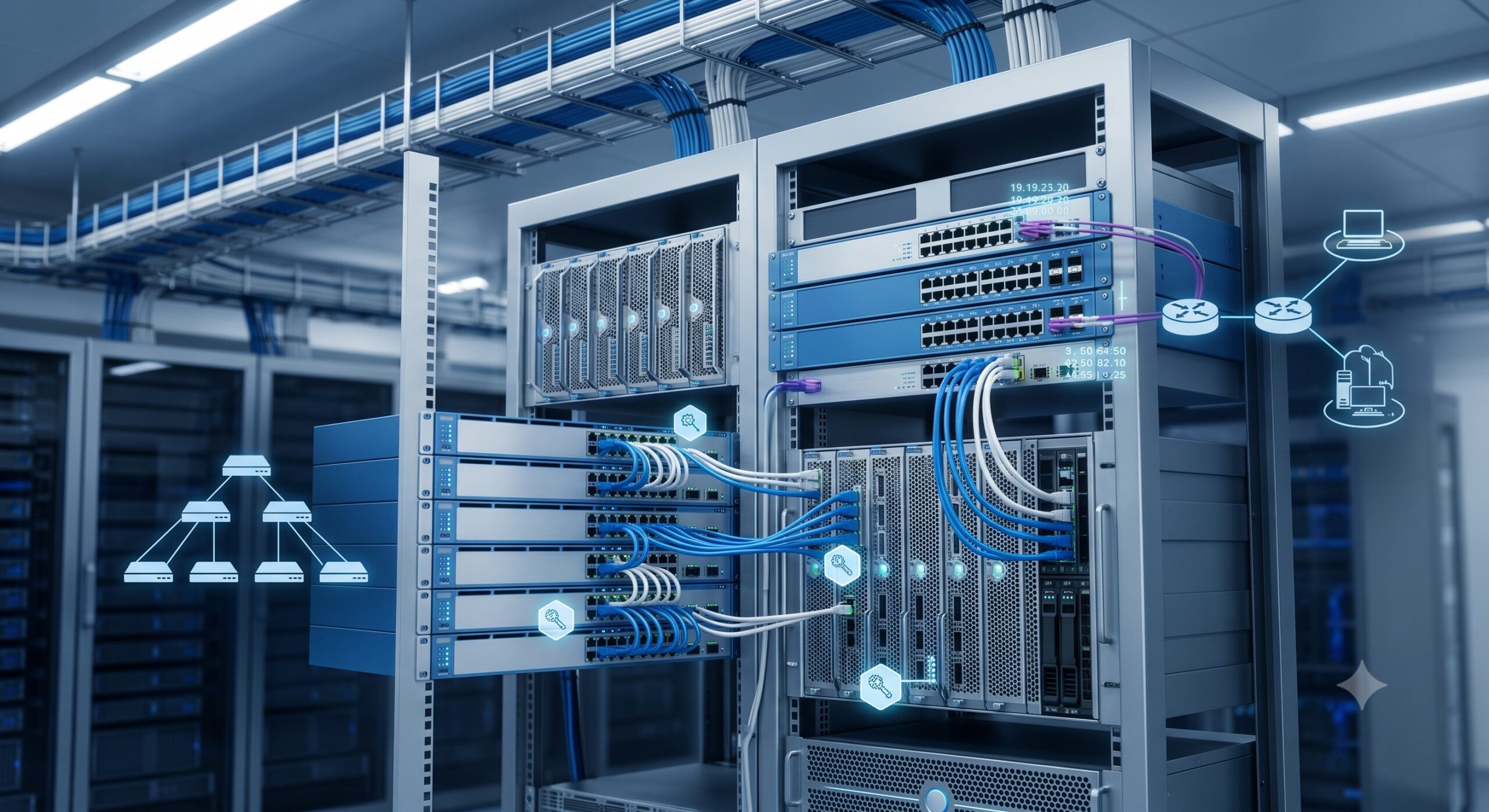
The decision between a Layer 2 and a Layer 3 switch is not a binary choice of ‘good’ versus ‘bad’. It is about selecting the right tool for the right job. The modern network is a hybrid ecosystem where Layer 2 and Layer 3 switches coexist harmoniously. Layer 2 switches are the workhorses of the access layer, providing high-density, cost-effective connectivity for end-user devices, IoT sensors, and IP phones. Their simplicity and low latency make them ideal for this role. Conversely, Layer 3 switches are the brains of the distribution and core layers, providing the routing intelligence, security, and scalability necessary to interconnect these access domains and connect to the wider WAN.
Network architects should embrace this synergy. The key is to design with intent: use Layer 2 where speed and simplicity are paramount, and deploy Layer 3 where scalability, security, and policy enforcement are required. The evolution of technology, with the advent of Programmable ASICs and SDN (Software-Defined Networking), is blurring these lines further, but the fundamental architectural principles remain. The ultimate guide to switching is a guide to understanding your data’s journey and selecting the hardware that facilitates it with the greatest efficiency, reliability, and foresight. By moving beyond the marketing gloss and focusing on the underlying hardware, specifications, and operational context, you will architect a network that not only meets today’s demands but is poised for the challenges of tomorrow.

Leave a comment