
EXECUTIVE SUMMARY
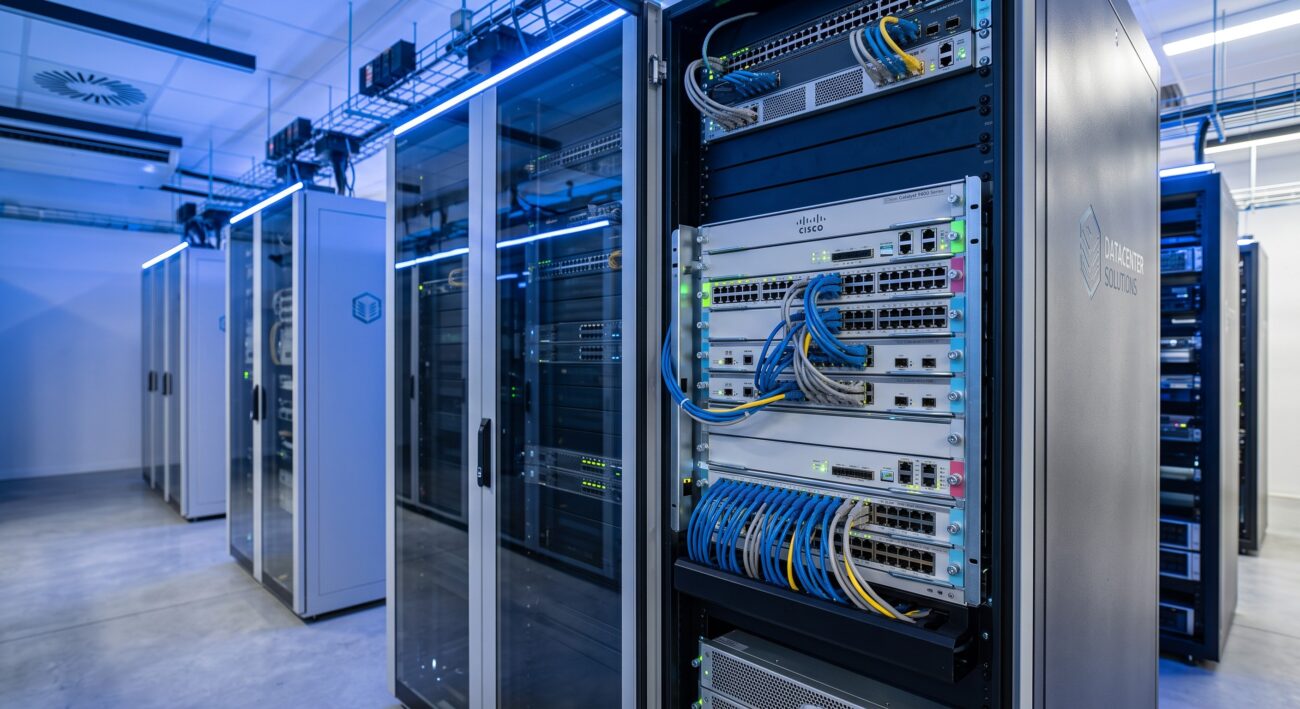
The Cisco Catalyst 9400 Series High-Availability Chassis Architecture represents the pinnacle of modular enterprise switching, engineered to deliver uncompromising uptime, deterministic performance, and investment protection for the most demanding campus core and aggregation layers. This official technical overview details the hardware foundation, redundant subsystems, and architectural innovations that enable the Catalyst 9400 to serve as the resilient backbone of modern, intent-based networks. It is purpose-built for organizations that require continuous operation, seamless scalability, and superior quality of experience for mission-critical applications.
ARCHITECTURE & CHASSIS DESIGN
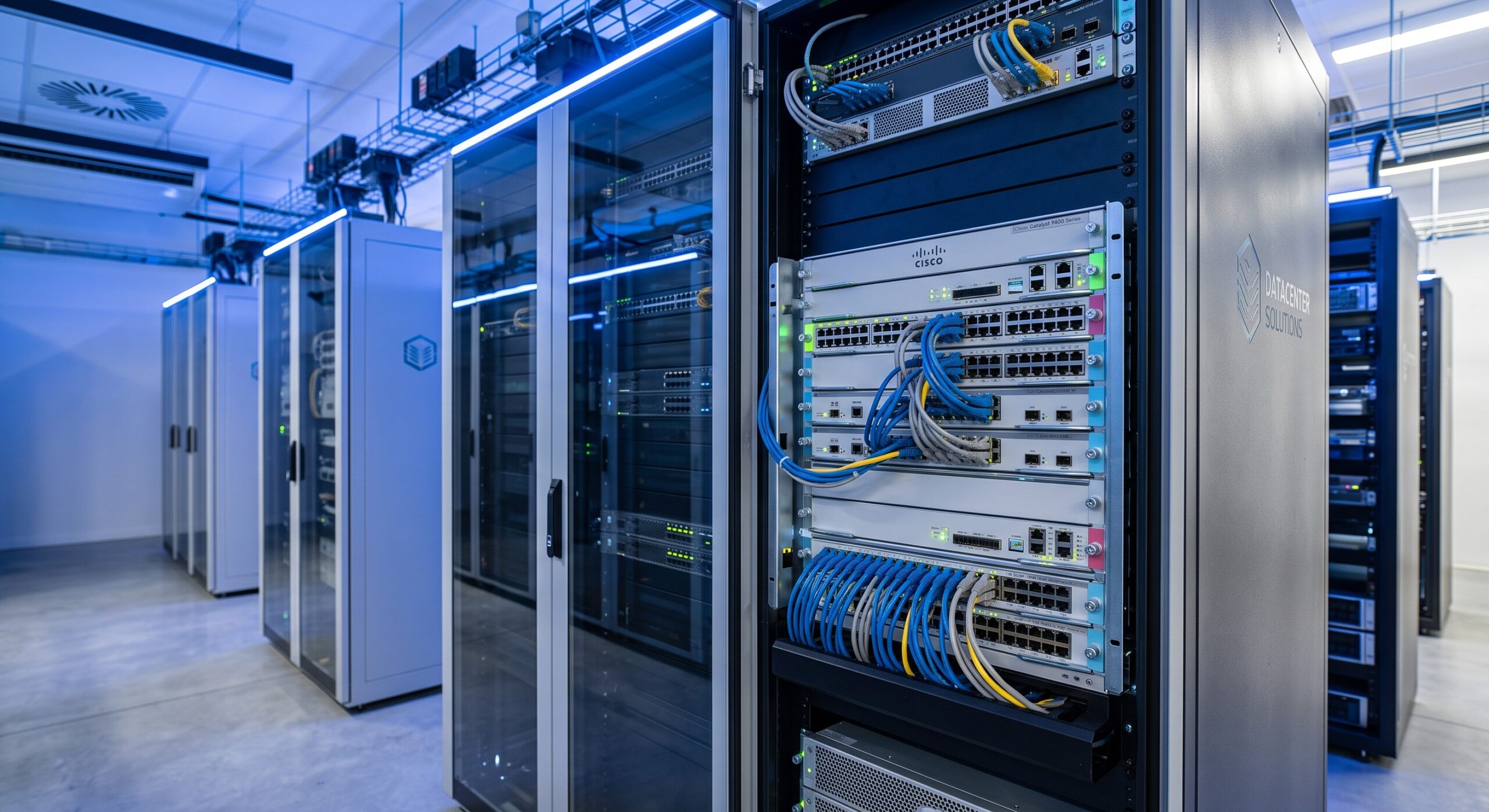
The Catalyst 9400 Series is a family of modular switches available in 4-slot, 7-slot, and 10-slot chassis configurations, all sharing a common, non-blocking architecture designed for high availability. The chassis backplane is engineered to support full line-rate forwarding across all slots simultaneously, eliminating oversubscription and ensuring predictable latency for all traffic types. A key architectural principle is the separation of the control plane, data plane, and power subsystems, allowing for independent redundancy and in-service upgrades.
The system utilizes a passive backplane design, which significantly enhances reliability by removing active components from the chassis midplane. All active forwarding logic resides on the Supervisor Engines and line cards. This design choice minimizes single points of failure and simplifies cooling by allowing for a more direct front-to-back airflow path.
At the heart of the system is the Supervisor Engine, which houses the central forwarding ASIC and the multi-core control plane CPU. The Catalyst 9400 supports dual Supervisor Engines in a 1:1 redundant configuration. In this mode, one supervisor is active while the other is in hot-standby, continuously synchronizing state information. Upon a failure event, a switchover occurs in sub-second time, with no disruption to data plane forwarding or existing network sessions.
HARDWARE FEATURES
The Catalyst 9400 Series is defined by its comprehensive suite of high-availability features. The chassis supports N+1 or N+N power supply redundancy, with intelligent power management that can prioritize power to critical line cards during a source failure. The fan tray is also a redundant, field-replaceable unit with multiple individual fans, allowing the system to maintain adequate cooling even if a single fan fails.
All line cards and supervisor engines are hot-swappable, meaning they can be inserted or removed without powering down the chassis. This capability is fundamental to the platform’s in-service software upgrade (ISSU) and in-service hardware upgrade (ISHU) features, which allow for software updates and hardware replacements with zero downtime.
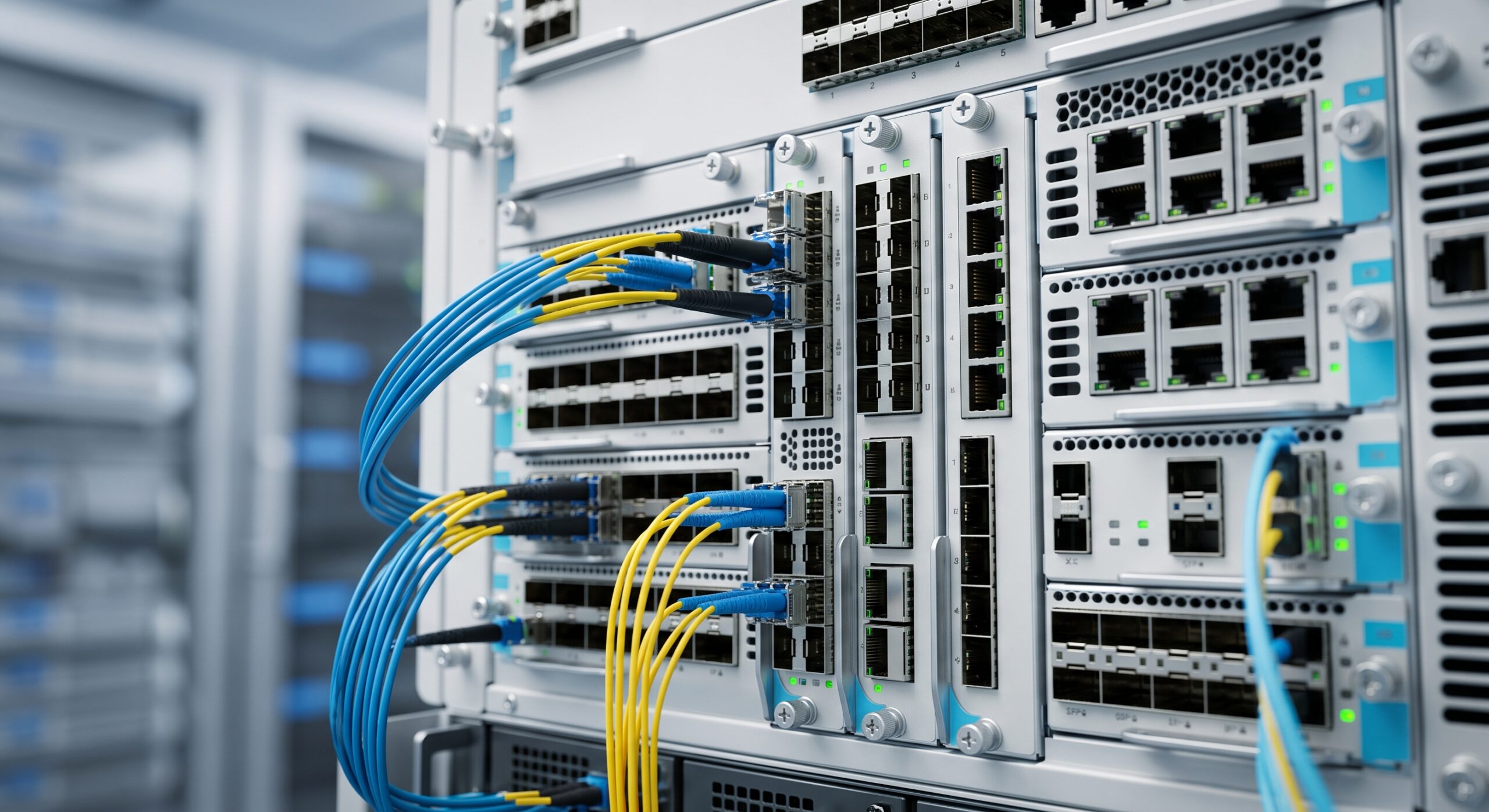
The chassis also features a dedicated management port, USB interfaces for file storage, and a console port for out-of-band management. The front panel of the supervisor engine includes a comprehensive set of LEDs for rapid visual status assessment of power, system health, and redundancy states.
COMPLIANCE & STANDARDS
The Cisco Catalyst 9400 Series is designed to meet a broad range of international and industry standards, ensuring interoperability, safety, and environmental compliance. The platform adheres to strict electromagnetic compatibility (EMC) and safety certifications, including but not limited to UL 60950-1, IEC 60950-1, EN 60950-1, AS/NZS 60950.1, and CSA C22.2 No. 60950-1-03. It also complies with the latest RoHS and WEEE directives, reflecting Cisco’s commitment to environmental sustainability. Network protocol support is exhaustive, including full compliance with IEEE 802.1Q, 802.1ad, 802.1AX, and 802.3 standards, as well as comprehensive IPv4 and IPv6 routing protocols.
TECHNICAL SPECIFICATIONS
The following table summarizes the key technical parameters of the Cisco Catalyst 9400 Series chassis architecture.
| Parameter | Specification |
|---|---|
| Chassis Form Factors | 4-slot (4RU), 7-slot (7RU), 10-slot (10RU) modular chassis |
| Total Switching Capacity | Up to 9.6 Tbps (with dual Supervisor Engines in 10-slot chassis) |
| Forwarding Rate | Up to 3.6 Bpps (Billion packets per second) |
| Redundancy | 1:1 Supervisor Engine redundancy, N+1/N+N Power Supply, Redundant Fan Tray |
| Power Supply Options | 1200W AC, 2100W AC, 2100W DC |
| Airflow | Front-to-Back |
| Hot-Swappable Components | Supervisor Engines, Line Cards, Power Supplies, Fan Tray |
| Management Interfaces | 10/100/1000 Management Port, Console (RJ-45 and USB), USB Storage Ports |
| Protocol Support | IPv4, IPv6, MPLS, VPLS, LISP, OTV, VXLAN, BGP, OSPF, EIGRP, ISIS, PIM, etc. |
| High Availability Features | ISSU, ISHU, NSF/SSO, BFD, HSRP, VRRP, GLBP |
| Environmental Compliance | RoHS, WEEE, ENERGY STAR (select models) |
| Safety Certifications | UL 60950-1, IEC 60950-1, EN 60950-1, CSA C22.2 No. 60950-1-03 |
ORDERING OPTIONS
Cisco Catalyst 9400 Series configurations are ordered by selecting a chassis model, one or two supervisor engines, power supplies, a fan tray, and desired line cards. The platform is designed to be forward-compatible, with a roadmap that supports future supervisor and line card generations within the same chassis, protecting the initial investment.
Common SKU components include:
– Chassis: C9404R, C9407R, C9410R
– Supervisor Engine: C9400-SUP-1, C9400-SUP-1XL
– Power Supply: C9400-PWR-AC-1200, C9400-PWR-AC-2100, C9400-PWR-DC-2100
– Fan Tray: C9400-FAN
– Line Cards: C9400-LC-48U, C9400-LC-48UX, C9400-LC-48P, C9400-LC-24S, and others.
📥 Download Technical Specification
Click the button below to view or download the full official PDF datasheet.

Leave a comment