
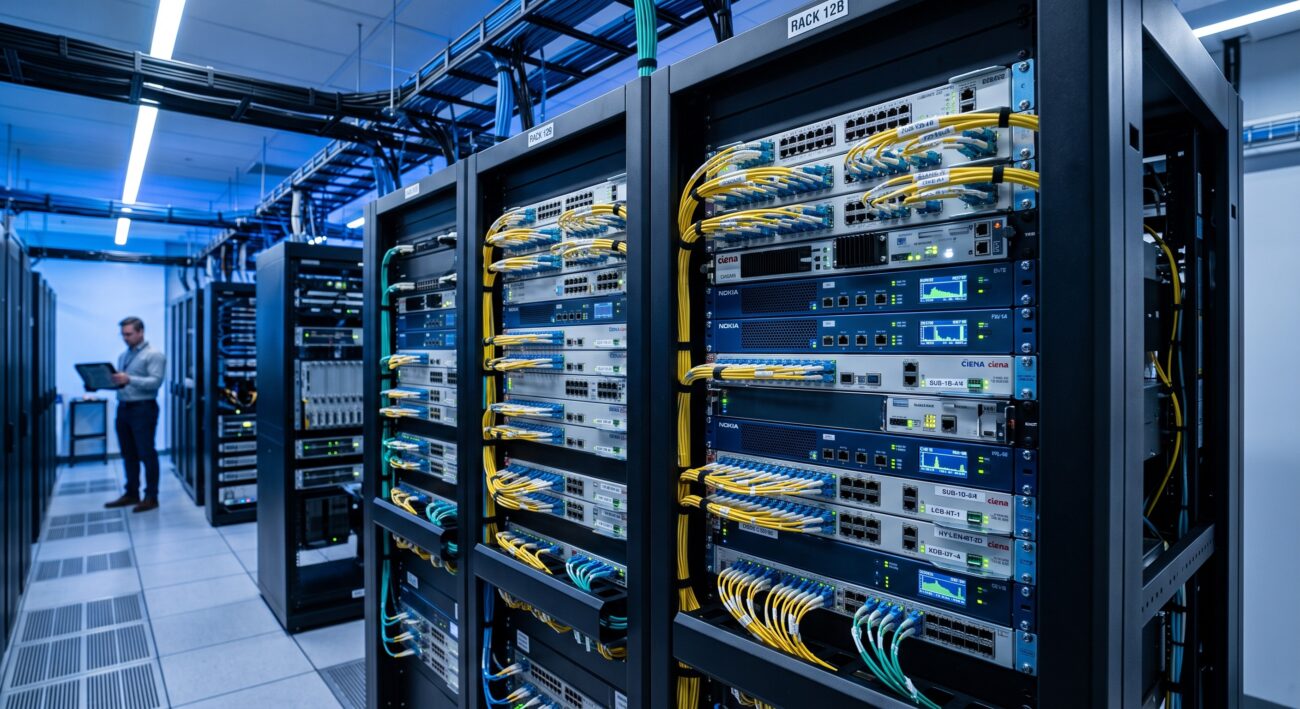
PRODUCT IDENTIFICATION
The Submarine Cable Terminal Equipment (SCTE) platform represents the apex of optical transmission engineering, purpose-built to serve as the terrestrial demarcation point for high-capacity submarine fiber optic cable systems. This carrier-grade hardware series is designed to interface seamlessly with wet-plant repeaters and branching units, providing the essential electrical-to-optical conversion, signal regeneration, and performance monitoring required for transoceanic and regional subsea networks. The SCTE series bridges the gap between long-haul submerged infrastructure and terrestrial core networks, offering a comprehensive suite of transmission, multiplexing, and protection capabilities that ensure the integrity and availability of critical global data traffic.
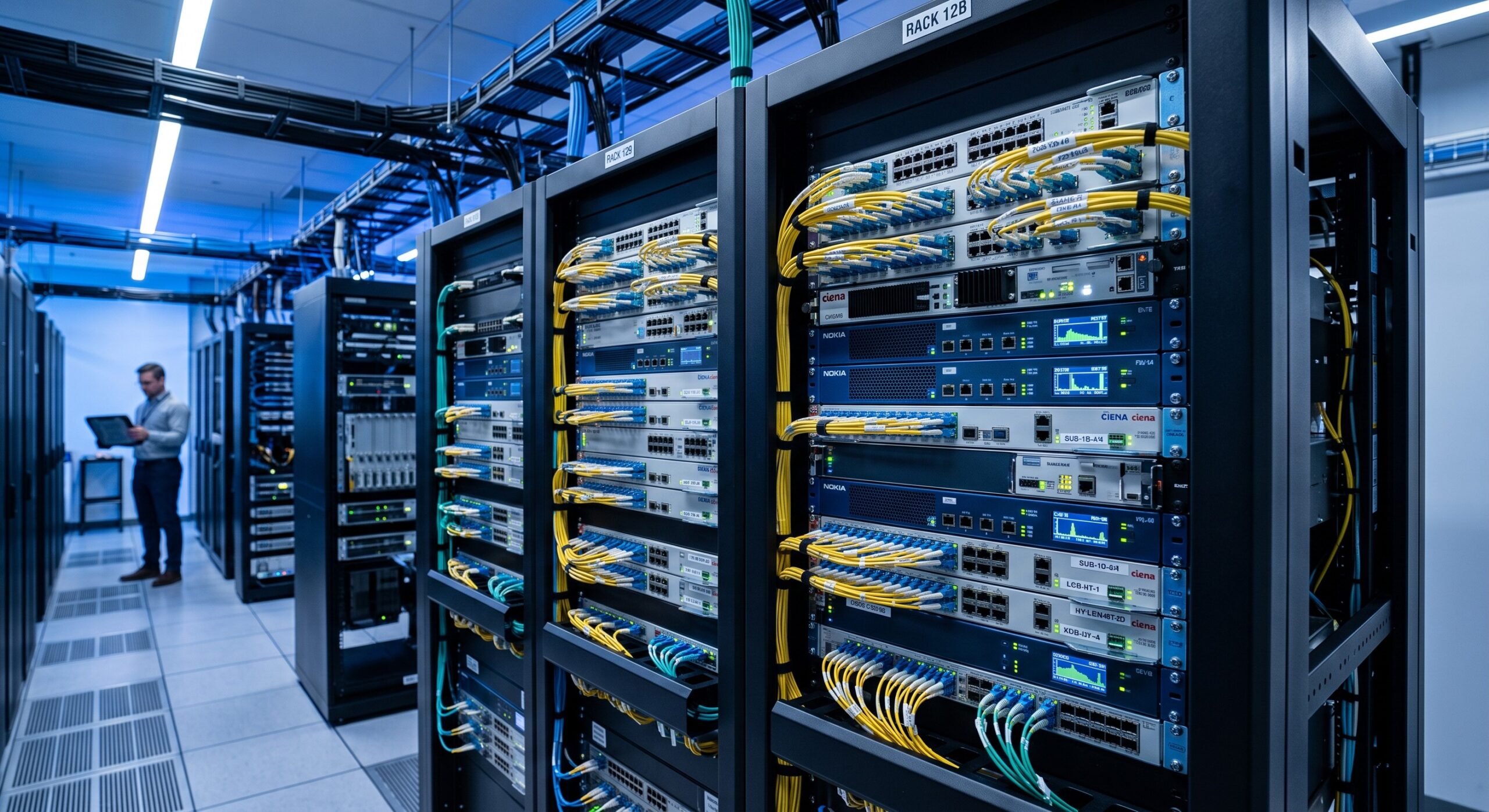
SYSTEM HARDWARE TOPOLOGY
The SCTE platform is architected around a high-availability, fully redundant hardware topology. The core chassis is a modular 7RU frame that houses redundant power supply units (AC or DC), a pair of active/standby system control modules, and up to twelve pluggable tributary and line interface cards. The chassis backplane incorporates a non-blocking switch fabric with a total switching capacity of 3.2 Tbps, enabling any-to-any connectivity between line-side and client-side interfaces. The system is designed for both 1+1 and N+1 equipment protection schemes, with automatic failover mechanisms that route traffic through the protection path in under 50 milliseconds upon detection of a fault. The hardware topology emphasizes spatial separation of critical components, with front-access removable fans and power supplies that support hot-swappable maintenance without service interruption.
DATA & CONTROL PLANE CAPABILITIES
The SCTE hardware architecture separates data and control planes to optimize performance and resilience. The data plane, driven by a high-performance optical engine, leverages advanced coherent detection technology supporting dual-polarization QPSK up to 64-QAM, delivering per-wavelength capacities of 200G, 400G, and 600G over ultra-long-haul distances. The control plane is managed by a redundant pair of embedded processors running a hardened real-time operating system, which handles topology discovery, wavelength assignment, and automatic power balancing across the fiber pair. The platform supports a full complement of GMPLS-based control plane protocols, enabling dynamic restoration, and is fully compatible with SDN frameworks via NETCONF/YANG for centralized network management and provisioning. This dual-plane design provides deterministic performance for both control traffic and high-volume data payloads.
COMPONENT BREAKDOWN
A detailed component breakdown illustrates the modularity and scalability of the SCTE series. The line interface cards support a range of optical amplifiers and line monitoring equipment. The power distribution system implements an advanced energy-efficient design with 80 PLUS Platinum-rated AC rectifiers, supporting both grid and battery backup feeds. The timing and synchronization unit, compliant with ITU-T G.8262 for Synchronous Ethernet and with provisions for IEEE 1588v2 PTP for high-precision time distribution, ensures network synchronization for latency-sensitive applications. Environmental sensors are embedded throughout the chassis to monitor temperature, voltage, and fan status, providing granular data for the fault management and performance monitoring systems. A dedicated craft interface with an LCD panel enables local provisioning and diagnostics, while integrated remote management is available through a dual Ethernet management port setup.
| Parameter | Specification |
|---|---|
| Form Factor | 7RU Modular Chassis (19-inch rack mount) |
| Switching Capacity | 3.2 Tbps (Non-blocking) |
| Power Supply | 1+1 or 2+2 Redundant, -48V DC / 100-240V AC |
| Fiber Interfaces | Support for SMF-28, G.652 and G.655 |
| Modulation Formats | DP-QPSK, 8-QAM, 16-QAM, 64-QAM |
| Wavelength Range | 1528.77 – 1563.86 nm (C-Band) |
| Wavelength Grid | 50 GHz ITU-T G.694.1 |
| Forward Error Correction | SD-FEC, HD-FEC, Concatenated FEC |
| Survivability | Automatic Protection Switching ( |
| Management Interfaces | SNMP, TL1, NETCONF, RESTCONF |
| Environmental | Operating: 5°C to 40°C | Storage: -40°C to 70°C |
| Relative Humidity | 5% to 85% (Non-condensing) |
| Safety Certifications | UL 60950-1, CSA 22.2 No. 60950-1, EN 62368-1 |
| EMC Compliance | FCC Part 15 Class A, EN 55032, EN 55024 |
OPERATIONAL SPECS MATRIX
Parameter Specification
Form Factor 7RU Modular Chassis (19-inch rack mount)
Switching Capacity 3.2 Tbps (Non-blocking)
Power Supply 1+1 or 2+2 Redundant, -48V DC / 100-240V AC
Fiber Interfaces Support for SMF-28, G.652 and G.655
Modulation Formats DP-QPSK, 8-QAM, 16-QAM, 64-QAM
Wavelength Range 1528.77 – 1563.86 nm (C-Band)
Wavelength Grid 50 GHz ITU-T G.694.1
Forward Error Correction SD-FEC, HD-FEC, Concatenated FEC
Survivability Automatic Protection Switching (
📥 Download Technical Specification
Click the button below to view or download the full official PDF datasheet.

Leave a comment