
PRODUCT IDENTIFICATION
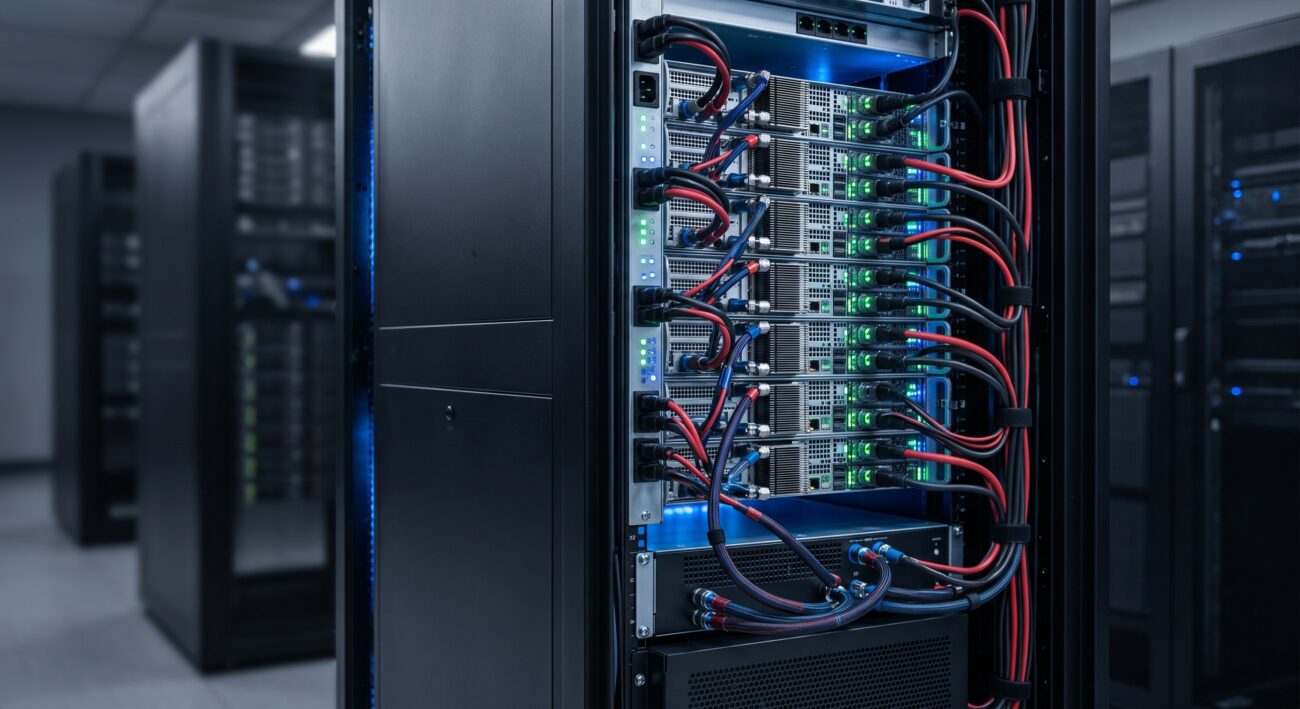
The 48V DC Power Liquid-Cooled Server Rack Cabinet Electrical Blueprint represents a paradigm shift in high-density compute infrastructure for telecom central offices, edge data centers, and carrier-grade network facilities. This document serves as the authoritative systems engineering reference for the integrated electrical, thermal, and mechanical architecture of the liquid-cooled 48V DC rack cabinet platform. The solution addresses the critical industry challenge of deploying high-performance server and networking equipment in space-constrained, power-limited environments where traditional air-cooling has reached its thermodynamic limits. By combining direct-to-chip liquid cooling with a native 48V DC power distribution backbone, this cabinet architecture eliminates the inefficiencies of cascaded AC-DC-AC conversion, reduces overall power delivery losses by up to 12%, and enables rack power densities exceeding 60 kW per cabinet footprint. The platform is designed for seamless integration into existing -48V DC telecom power plants while supporting emerging 48V DC microgrid architectures, Open Rack V3 (ORV3) power shelves, and high-efficiency VRM topologies.

SYSTEM HARDWARE TOPOLOGY
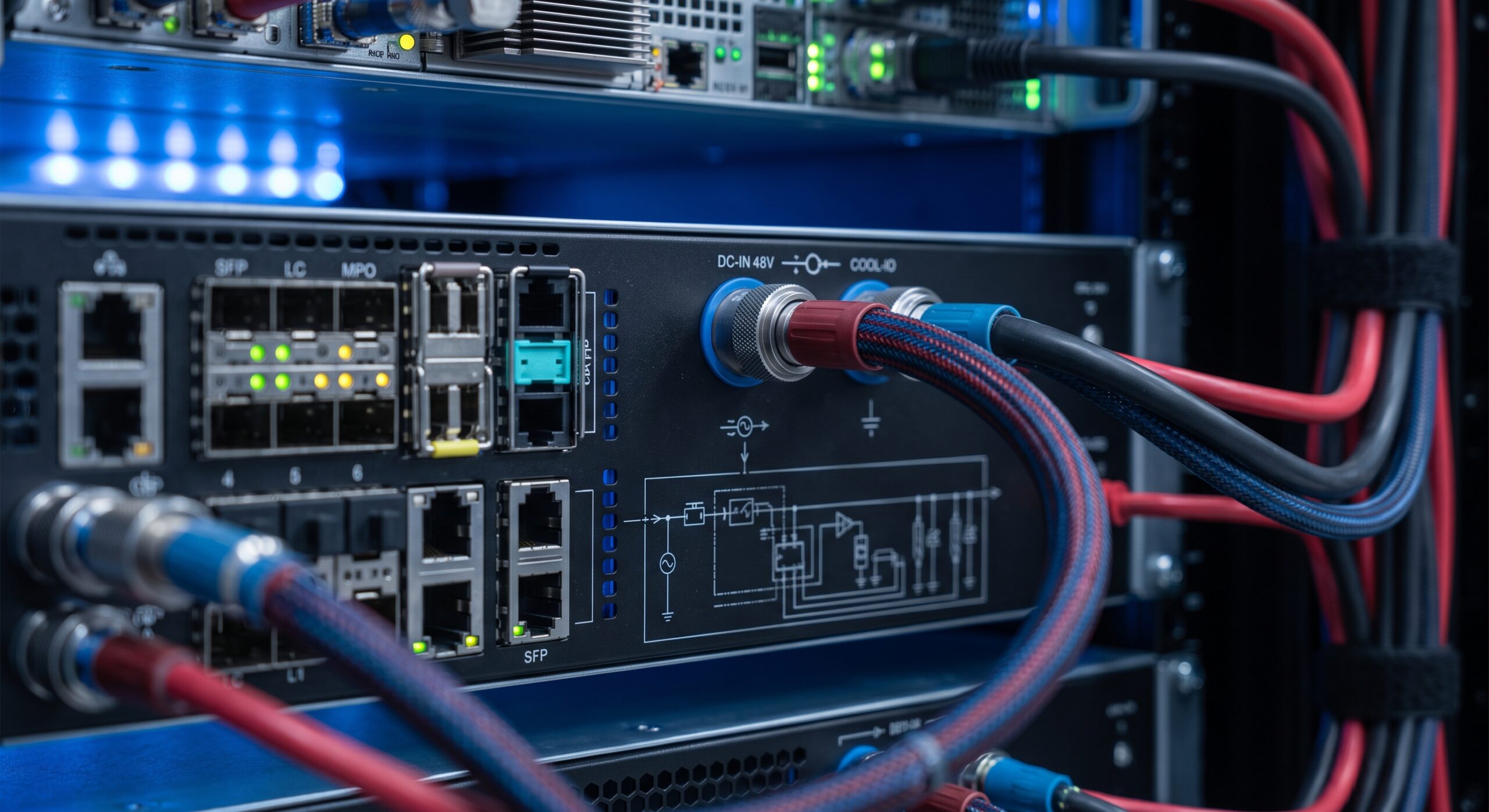
The cabinet employs a hierarchical power distribution topology with dual independent 48V DC busbars rated at 1200A continuous per bus, fed from either a centralized rectifier plant or an integrated 48V DC power shelf. Each busbar features redundant feeds with automatic transfer switching (ATS) capable of seamless failover in under 4 milliseconds. The liquid cooling loop comprises a primary facility water circuit and a secondary technology cooling system (TCS) circuit, interfaced through a liquid-to-liquid heat exchanger (LLHX) with integrated leak detection and automatic isolation valves. Server nodes connect to the manifold via blind-mate quick disconnects (QD) rated for 10,000 mating cycles with zero drip upon disconnection. The cabinet supports up to 48 compute sleds across 12 vertical zones, each zone independently cooled and power-monitored via intelligent power distribution boards (iPDBs) with per-outlet current, voltage, and energy telemetry. The backplane is a passive orthogonal midplane with 48V DC power and liquid manifold passthrough, minimizing failure points and enabling front-to-back serviceability of all active components.
DATA & CONTROL PLANE CAPABILITIES
Each compute zone incorporates a dedicated rack management controller (RMC) that aggregates telemetry from iPDBs, coolant flow meters, temperature sensors, pressure transducers, and leak detection ropes. The RMC exposes data via Redfish, SNMP v3, and MQTT northbound interfaces, enabling integration with DCIM platforms and network management systems. The cabinet supports Precision Time Protocol (PTP) IEEE 1588v2 and SyncE for time-sensitive applications, with a dedicated timing backplane distribution network. Power capping and throttling policies can be enforced per sled, per zone, or per cabinet through the RMC, with closed-loop control between power draw and coolant flow rate to maintain optimal PUE. The control plane is secured with TPM 2.0 roots of trust, signed firmware images, and role-based access control (RBAC) with audit logging to support zero-trust operational models.
COMPONENT BREAKDOWN
The cabinet assembly comprises the following principal subsystems: (1) Structural chassis — a 42RU, 600mm wide, 1200mm deep welded steel frame with seismic bracing rated to Zone 4 and integrated cable management; (2) 48V DC power distribution — dual 1200A busbars, 48V DC circuit breakers, iPDBs with 40A per-outlet capacity, and ORV3-compatible power shelf interface; (3) Liquid cooling manifold — stainless steel 316L primary loop with 1.5-inch tri-clamp fittings, secondary loop with EPDM hoses and blind-mate QDs, LLHX rated at 80 kW thermal transfer; (4) Rack management — dual redundant RMCs with 1GbE management ports, environmental sensors, and leak detection; (5) Cable management — vertical and horizontal cable managers, fiber routing spools, and power cable strain relief brackets.
OPERATIONAL SPECS MATRIX
| Parameter | Specification |
|---|---|
| Form Factor | 42RU, 600mm W x 1200mm D chassis |
| Power Input | 48V DC nominal (36V–60V range), dual 1200A busbars |
| Power Capacity | Up to 60 kW per cabinet (configurable to 80 kW) |
| Cooling Type | Direct-to-chip liquid cooling, secondary loop |
| Coolant Interface | Blind-mate QD, 10,000 mating cycles, zero drip |
| Thermal Transfer | 80 kW LLHX capacity, 1.5-inch tri-clamp |
| Management | Dual redundant RMC, Redfish/SNMP/MQTT |
| Leak Detection | Rope sensor with automatic isolation valves |
| Seismic Rating | Telcordia Zone 4 |
| Operating Temperature | 5°C to 45°C (facility water dependent) |
| Compliance | NEBS Level 3, IEC 62368-1, ORV3, RoHS 3 |
REGULATORY COMPLIANCE
The platform is designed to meet the following standards: IEC 62368-1 for electrical safety, IEC 60529 for ingress protection (IP20 minimum), Telcordia GR-63-CORE for NEBS Level 3, Telcordia GR-1089-CORE for EMC and electrical safety, ETSI EN 300 019 for environmental durability, and Open Compute Project ORV3 specifications for 48V DC power distribution. Liquid cooling components comply with IEC 60335-2-40 and ASHRAE Standard 90.4 for energy efficiency. The cabinet is RoHS 3 and REACH compliant.
📥 Download Technical Specification
Click the button below to view or download the full official PDF datasheet.

Leave a comment